How Russian intelligence agencies recruit fire adjusters in Ukraine through AdSense advertising
Russian hackers and intelligence agencies spend huge budgets and efforts to bypass AdSense filters and run ads in Ukraine. And sometimes they succeed.


Russian hackers and intelligence agencies spend huge budgets and efforts to bypass AdSense filters and run ads in Ukraine. And sometimes they succeed.
Russian hackers and intelligence agencies spend huge budgets and efforts to bypass AdSense filters and run ads in Ukraine. And sometimes they succeed.
I already told you last Friday about how illegal casino advertising sneaks into Telegram Ads.
Today’s column is about holes in Google’s AdSense system. This mechanism for automatic advertising placement is used by thousands of Ukrainian online platforms and media. And, as it turned out, sometimes "initiatives" of Russian special services fall into this trap.
I managed to track it through all the stages, and now we can tell others about it.
On Sunday morning I went to my work email (well, who doesn’t have to :)) and saw an email from a reader. He complained about the ads on our site and attached screenshots. It was indeed an AdSense ad, but very strange.
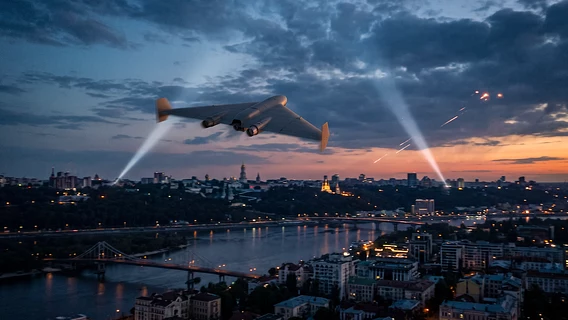
The banner depicted a guy with a smartphone filming a drone crashing into an industrial facility with a Ukrainian flag. “A set of operators. Filmed and sent,” the image read.
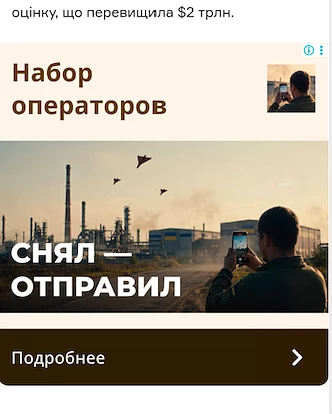
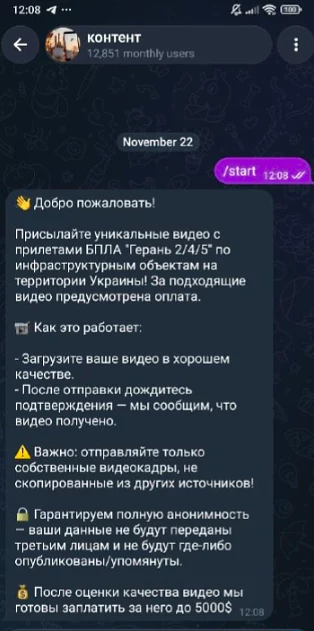
Our reader went further and followed the link. It led to a Telegram bot that had almost 13,000 subscribers. We checked what exactly it was offering. It turned out to be a spy bot that, for a reward, calls on Ukrainians to film the landing sites of Geran drones over Ukrainian facilities.
It immediately became clear to me what kind of banner it was, and my colleague and I went to the AdSense account. There, using the keyword “UAV”, we managed to find 7 similar advertising campaigns (banners), which we immediately disabled. And within a few hours, the advertiser account itself, which we complained about, disappeared.
It’s worth mentioning the account itself separately. In AdSense advertising, you can view information about the customer by clicking on the letter "i" in the upper corner of the banner.
In our case, the customer was a company from Kazakhstan — Adv Digital Technology LLP. Finding its website was easy: it provides services for setting up advertising on various platforms, including AdSense.
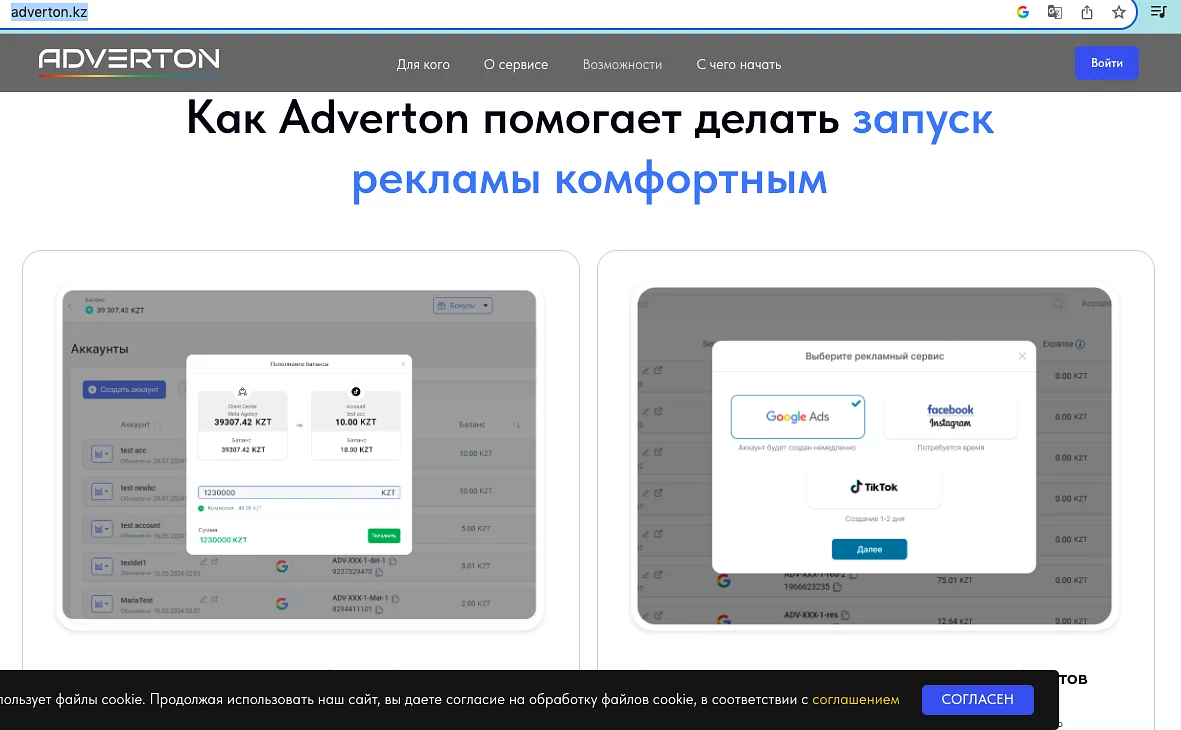
As we know, Google services have not been working in Russia since 2022. However, representatives of Russian special services can easily contact such an agency in Kazakhstan, pay for services with a Visa/Mastercard card, and set up targeting for Ukraine. And so the campaign is launched.
Does AdSense vet its advertisers? That’s a separate story. Ad serving on Ukrainian media sites is based on a real-time auction (RTB — Real-Time Bidding), which is triggered in a split second when the page loads. The choice of a specific ad depends on a combination of targeting algorithms, advertiser bids, and market specifics.
When a reader opens a page, an instant auction takes place between advertisers, where the ad with the highest Ad Rank wins. Even an expensive banner that no one clicks on can lose to a cheaper, but more relevant ad for the user.
In our case, the account is replenished from a foreign card, and the campaign settings specify geotargeting: "Ukraine" (or specific front-line cities and regions). To Google algorithms, this looks like a regular international advertising campaign for a Kazakh business.
In Google Ads, millions of ads are reviewed daily, mostly by neural networks, rather than humans. Attackers bypass them using techniques called cloaking and visual manipulation.
When a Google moderator robot follows a link from an ad for verification, the attackers' server shows it a "white" site (for example, a blog about technology, news, or an online store). When a real user with a Ukrainian IP address follows the same link, there is an instant redirect to a Telegram bot.
The neural network also does not see the image of a drone as a call to violence — for it, it is simply a “technology” or “illustration for the news.” The text on the banner is also written without stop words (for example, instead of direct appeals, they write: “Saw it in the sky? Be the first to report” or “Operational monitoring of the situation”), which imitates Ukrainian monitoring channels.
So, Russian special services have found another channel for recruiting corrections for shelling.
When we wonder where such discouraged people who agree to such cooperation come from, it is worth thinking first of all about how they get information about such “earnings”. There will always be discouraged people. But we can and must reduce the channels for the spread of Russian propaganda in Ukraine. Especially when it comes to large platforms like Telegram or AdSense — there are not so many of them.
I have already forwarded the information about this AdSense advertisement and the company from Kazakhstan to the SBU chatbot. I have also written a separate request to the company itself — I wonder if they fully understand what they are involved in. Although, as an acquaintance from Almaty told me, they are obviously just making money and the war in Ukraine does not really concern them. Unfortunately.
And last night we caught another banner with Russian propaganda in AdSense. They multiply there quite quickly:(