Хочете будувати кар’єру в Data Science та AI? Vodafone Big Data Lab відкриває новий набір —>
Наталя ХандусенкоAI Eng
22 July 2026, 13:20
2026-07-22
"Eyes" for AI: A quadriplegic developer taught Claude Code to see hardware and displays through a camera
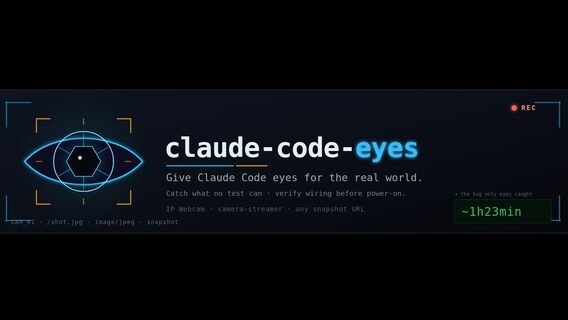
A Brazilian quadriplegic IT specialist has created an open source tool called claude-code-eyes, which allows an autonomous AI agent to see physical equipment through a camera and fix interface bugs without human intervention.
A Brazilian quadriplegic IT specialist has created an open source tool called claude-code-eyes, which allows an autonomous AI agent to see physical equipment through a camera and fix interface bugs without human intervention.
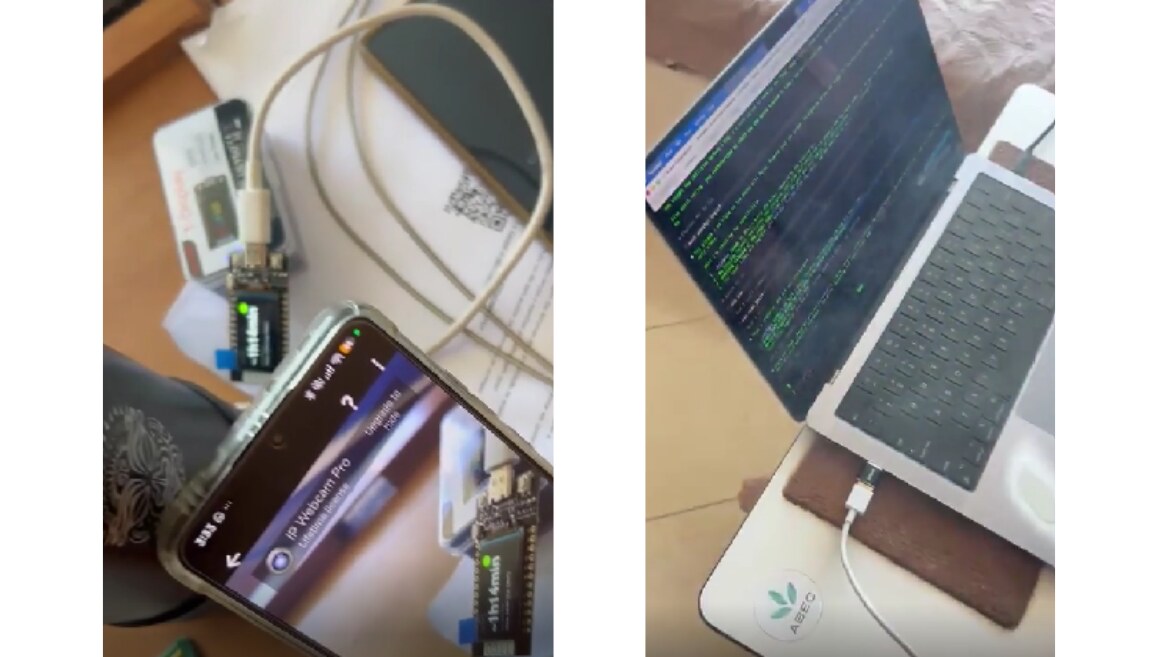
While working on a project based on the ESP32 microcontroller, the developer wanted to see if Claude Code could independently complete the entire development cycle — from writing firmware and configuring relays to testing and over-the-air (OTA) updates. The AI coped with the task, but there was a problem: the text on the small connected display was displayed incorrectly, the IT guy said on Reddit.
For a developer with limited mobility, the process of transmitting visual information was too tedious: he had to take a screenshot or photo, send it to himself via WhatsApp, upload it, and only then upload it to the chat with Claude. Realizing that this manual process was slowing down work, the IT professional decided to automate the “vision” for AI and turn it into a full-fledged skill of the tool.
The created skill claude-code-eyes allows Claude Code to receive images directly from any camera pointed at the board or display (this could be an old Android smartphone with the IP Webcam app, a Raspberry Pi Camera, or any other source with a snapshot URL). After receiving the frame, the AI analyzes it like a regular file, detects defects, edits the code, reflashes the microcontroller, and checks the result again.
Thanks to this, Claude detects errors that no unit test can detect: distorted fonts, text cut off at the edge of the screen, or incorrectly connected wires.
The developer paid special attention to the system's self-diagnosis:
Protection against hallucinations: if the image is blurry or taken from too far away, the AI refuses to make assumptions and will ask you to adjust the camera.
Checking the connection: a blank frame is not perceived as "no errors", but as a reason to check the health of the camera itself.
Technically, the solution is implemented as concisely as possible — about 100 lines of Bash code and a SKILL.md configuration file. The tool is distributed under the MIT open license, is installed with a single command, and can even independently scan the local network in search of an IP camera.
The project code and a short demo are available in an open repository on GitHub .
Як нейромережі бачать вільну та незалежну Україну? Тест dev.ua
Нейронні мережі для генерації зображень бачать світ по-своєму, їхню логіку зрозуміти часом зовсім неможливо. Але таки хочеться. На честь Дня Незалежності України редакція dev.ua вирішила провести невеликий експеримент.
Ми задали чотирьом різним нейронним мережам п’ять однакових запитів: «прапор України», «День Незалежності України», «український Крим», «перемога України» та «українці». Отриманими результатами ми ділимося з вами нижче.
У TikTok тепер можна генерувати фон за допомогою нейромережі. Ми протестували її та ділимося результатами
У TikTok з’явилася нова функція «Розумний фон». З її допомогою як фон для тіктоків можна підставляти згенеровані нейромережею зображення. Редакція dev.ua протестувала цю технологію і ділиться своїми враженнями.
As AI-powered development continues to evolve with innovations like camera-assisted hardware recognition, ensuring that Android applications meet platform requirements is equally important for a successful release. Focusing on Google Play Compliance helps developers prepare their apps for policy standards, testing requirements, and a smoother publishing process, allowing innovative AI-driven applications to reach users with confidence. https://12playtesters.com/















As AI-powered development continues to evolve with innovations like camera-assisted hardware recognition, ensuring that Android applications meet platform requirements is equally important for a successful release. Focusing on Google Play Compliance helps developers prepare their apps for policy standards, testing requirements, and a smoother publishing process, allowing innovative AI-driven applications to reach users with confidence. https://12playtesters.com/