Хочете будувати кар’єру в Data Science та AI? Vodafone Big Data Lab відкриває новий набір —>
Ігор Вишневський That's Life
31 August 2026, 09:00
2026-08-31
“The team called it the ‘Excel ship’ because the data took a long time to get to us.” CDTO of the Ministry of Veterans Affairs — on what is hindering the digitalization of veteran services and how to deal with it
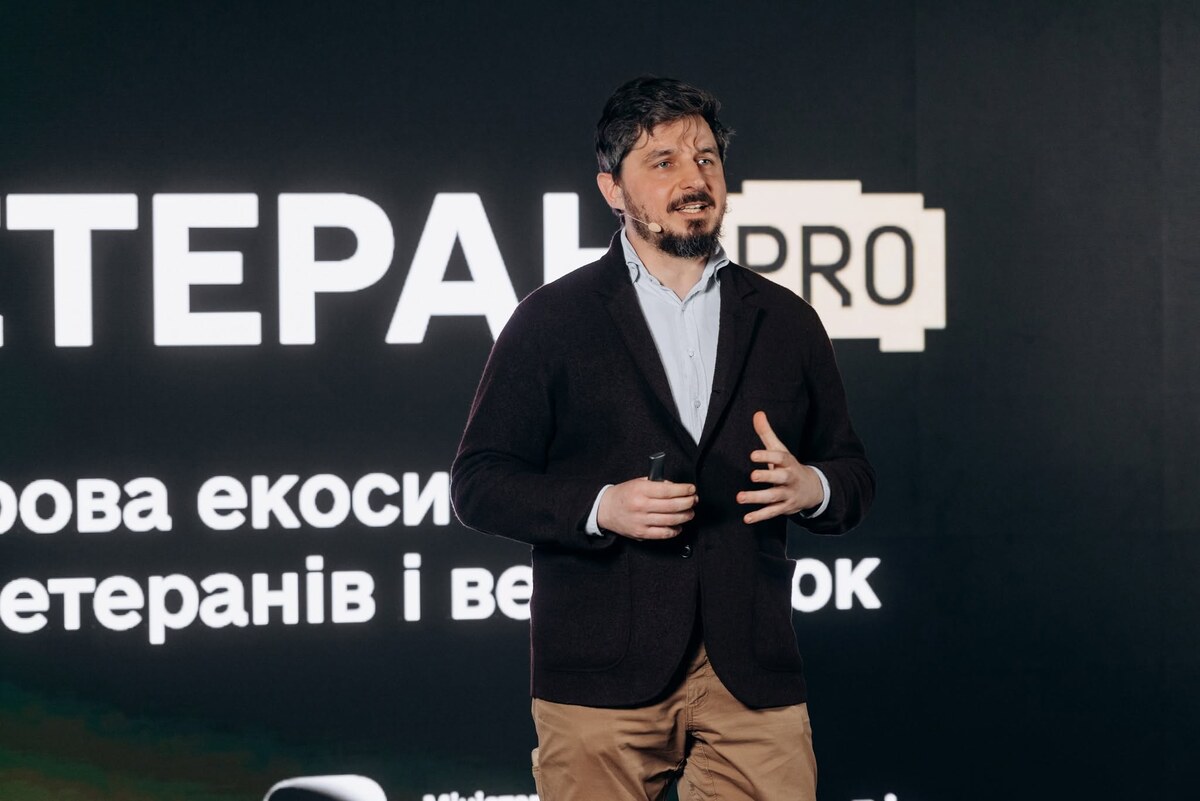
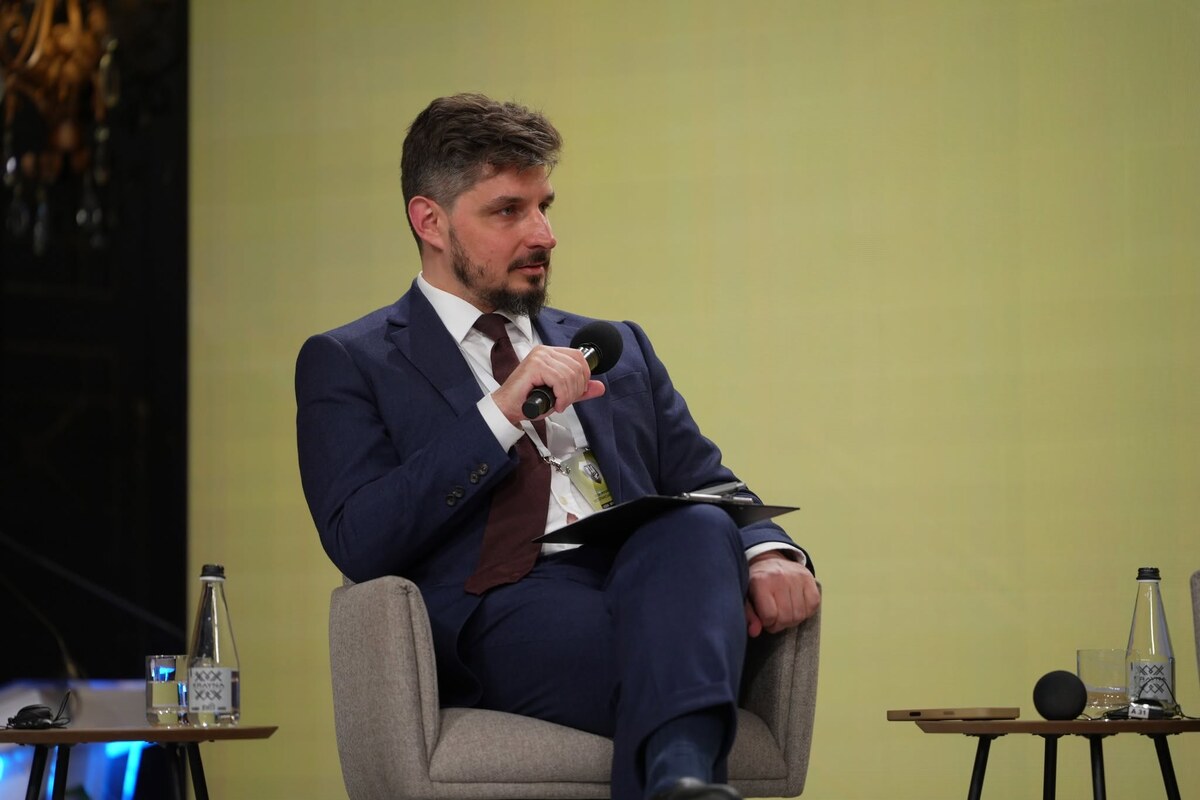
The current CDTO of the Ministry of Veterans Affairs, Oleh Shymansky, has already managed to participate in the launch of a number of the most well-known digital products in Ukraine — while still working at the Ministry of Defense, he attracted international support for the creation of «Army+», «Reserve+», «eVLK», and the «Oberig» registry.
Now he has other tasks at the Ministry of Veterans — together with his team, he is developing a veterans registry, a platform with opportunities for veterans veteranpro.gov.ua and digital services for veterans in «Diya», transferring state processes from paper to online, building a CRM system for veteran support specialists and implementing AI tools in veteran services. A separate direction is data, cybersecurity and international partnerships, thanks to which a significant part of new digital products are created.
The current CDTO of the Ministry of Veterans Affairs, Oleh Shymansky, has already managed to participate in the launch of a number of the most well-known digital products in Ukraine — while still working at the Ministry of Defense, he attracted international support for the creation of «Army+», «Reserve+», «eVLK», and the «Oberig» registry.
Now he has other tasks at the Ministry of Veterans — together with his team, he is developing a veterans registry, a platform with opportunities for veterans veteranpro.gov.ua and digital services for veterans in «Diya», transferring state processes from paper to online, building a CRM system for veteran support specialists and implementing AI tools in veteran services. A separate direction is data, cybersecurity and international partnerships, thanks to which a significant part of new digital products are created.
We asked the CDTO of the Ministry of Veterans Affairs about the digital projects being implemented under his leadership; cybersecurity risks and the work done to protect sensitive information from hostile influences; the use of AI tools; factors that hinder digitalization in his sector of work, and where he draws his motivation to drive these complex processes. All this and much more is discussed in the interview.
Who is Oleg Shymansky?
Oleg Shymansky is responsible for the direction of digital transformation of veteran services and the development of the digital ecosystem at the Ministry of Veterans Affairs.
Previously, he also worked at the Ministry of Economy and reform support projects. In particular, he headed the Good Governance Fund in Ukraine for the UK government.
Since the beginning of the full-scale war, he joined the 128th Battalion of the 112th Brigade of the TRO, and was later seconded to the International Department of the Ministry of Defense. Since April 2022, he has joined the Office for Support of Change at the Ministry of Defense.
In May 2024, he initiated the creation of the Council of Reform Donors to attract international assistance in the defense sector, which included 35 governments of donor countries. He negotiated and attracted funding for key initiatives for the digitalization of the Ministry of Defense, in particular: «Army+», «Reserve+», «eVLK», the opening of recruiting centers and equipping the state registry «Oberig» with IT equipment.
Since March 2025, Deputy Minister for Veterans Affairs.
«One of my first tasks at the Ministry of Veterans Affairs was to set up Wi-Fi. No one canceled being an anykey user.»
— The position of CDTO is relatively new for government agencies. What was your personal motivation to work in this role?
— Digitalization has always been my open gestalt, I always wanted to deal with computers, networks and do a little coding. I wrote my first website back in the 90s, but then everything somehow leaned more towards managerial work. The position of CDTO was interesting to me, because digitalization is not about scanning paper documents into PDF. First of all, it is when you really rebuild how a service or internal bureaucratic process works. You simplify it using IT tools, automatic data exchanges and everything else. For me, this is a great combination of management experience, changemaking in the government, along with a long-standing desire to use digital tools that are close and understandable to me. At the same time, one of my first tasks at the Ministry of Veterans Affairs was to set up Wi-Fi in general, so no one canceled being an anykey’schik.
Well, the digitalization of services for veterans is interesting because it is a relatively new area and everything is at an early stage.
There was no digitalization here until 2024. And one of the first things our team did was grapple with sending scanned Excels, printed documents, and digitizing the backlog of data in plates that were not entered into the war veterans registry.
Our registry (the Unified State Registry of War Veterans — Ed.) is actually a database on which digital services continue to operate. It stores all data about a veteran and his status. For example, this data is used to operate services for veterans in «Diya» in the «Veteran Pro» section, which is seen by veterans.
And services for veterans are even more important, because for them the ability to receive a service online often has a completely different weight. You may still be serving, be far from home, undergoing treatment after an injury, or simply physically unable to go to government institutions. Then a digital service may actually be the only way to receive a government service at all. And therefore the issue of process automation carries additional value.
— What key digital projects/services/products are being implemented in the work of the ministry with your direct participation or initiative? What is their functionality?
— The main project we continue to work on is the registry of war veterans. This is the basis of all services and one of the priorities of the government. It is important not only to have data on the status of a veteran, but also to see more information about their needs in order to move to more proactive service provision. Currently, this information is lacking.
The data in the registry itself is also not always clean, so, for example, some people do not receive a veteran’s ID card from «Diya.» If the wrong RNOKPP is entered in the registry or the full name does not match, the «e-ID» is not created.
All corrections of information in the registry actually go through the Ministry of Veterans. And a small department of several people corrects data for the whole of Ukraine. Of course, this is inefficient. Therefore, we are now launching access to the registry for commissions that provide statuses. Because the data should be updated where they are created. It will be much faster. And there will be no need to send a bunch of Excel sheets with statuses or updates.
The second major area is the services themselves. Currently, «Diya» has 10 services, which are collected in the «Veteran Pro» section. Five of them are exclusively for veterans: searching for a support specialist, data from the Unified State Register of Veterans, compensation for a civilian car, veteran sports, and the status of a person with a disability as a result of the war. Another five are services where special conditions apply to veterans: e-Housing, housing voucher, e-Recovery, compensation for workplace arrangement, and grants for veterans and their family members.
The logic here is simple: if a service can be done in «Diya», it should be in «Diya». This is an application that people are already used to.
Separate digital services are not all we do. There are still a lot of programs and opportunities for veterans. Previously, people simply did not know about some of them, and it was difficult to find the necessary information. That is why we have collected them on the Veteran Pro platform. Now there are about 3,000 programs from the state, regions, and communities.
If there is not enough information or if government agencies start sending a veteran from one institution to another, there is a support specialist who can advise what to do. His contacts are also in «Diya»: the veteran can go in, find a specialist, and call him directly.
— Who are the main donors to your digital projects?
— We are supported by international donors. And this is good, because the development of services is carried out at the standard price of the IT market.
Over the past year, out of ten of our developments, we probably only financed one with state funds.
Everything else was funded by our partners from Britain, Germany, the EU, Sweden, Canada, and other countries.
Donors are interested in this direction, because digitalization brings concrete results. We launch a service and immediately see how many people have used it. We launched compensation for civil vehicles — we already have 150,000 compensations paid. We launched an updated e-Veteran ID card — in 2-3 months, 180,000 ID cards were automatically generated. These are concrete results and value for the end user, that is, for the veteran. Donors understand this.
«When asked how many veterans live in a specific region, we cannot say that the data in the registry accurately reflects the real number.»
— Please name three factors that, in your opinion, are hindering digitalization in your field of work?
— The first is that historically, a lot of data is on paper. And even if we create some kind of database, transferring all this information there takes an unrealistic amount of time, because it is in paper form in all regions.
The second blocker is data purity. Our registry was created from other registries. The data structure was different, there was no normal validation either, a lot of information was entered simply in strings. The most striking example is addresses. The registry has an «Address» field, but information was entered in it on an application-based basis. That is, a person could indicate the address that was convenient for them. Therefore, when asked how many veterans live in a specific region, we cannot say that the data in the registry exactly corresponds to the real number. And this complicates, for example, planning budgets to support veterans. Another example is military units.
We are currently modernizing access to the registry for military commissions and have begun to look at how the data is recorded. And it turned out that the same military unit has over 3,800 name variants. As a result, the database contains about 150,000 unique names of military units that granted status.
And the third is money. Digital developments are quite expensive. Cybersecurity and licenses for various software products are a separate expense item. Now we buy licenses for routers, which cost tens of thousands of dollars a year. And it is very difficult to find such financing. Even if you have a piece of hardware, without a license it cannot be updated, which can lead to cyber incidents.
— What services or procedures in your field still remain completely paper-based and create the most problems? What exactly is holding them back from moving to an online format?
— When we arrived, data on granting veteran statuses was transferred to the Ministry of Veterans Affairs in very different Excel files. These files had to be manually checked, errors corrected, and uploaded to the registry. This could take months. The team called it the «Excel ship,» because the data really took a very long time to get to us. Moreover, the Excel itself could be anything: extra characters, Latin instead of Cyrillic, or errors in the numbers. Processing a file with a thousand lines could take a whole day.
But the favorite option is scanned Excel. That is, Excel was printed, signed, scanned and sent via electronic document management. This is not a joke, we really received data that way.
The first step was to create a data cleaning script that structured files with statuses. Through it, we cleaned over 300,000 records of typical errors and massively uploaded them to the registry. Then we made a single template with field validation for operational commands. But even that didn’t stop people from creating their own versions of the tables. Now we are moving away from Excel altogether. We are providing interfaces to users in the agencies where statuses are provided and updated: with normal validation, the ability to immediately see the error and correct it.
A separate CRM system was launched for support specialists. Because the register is in fact a set of statuses and data. But it does not show what this person specifically needs right now. And it is important to understand this.
Therefore, the CRM now stores veterans' requests, complaints, and needs. And we can now look not only at individual requests, but also systematically — at what people come with most often.
Choosing a CRM was a long and painful process. Most of the offers were SaaS with an average check of about $8 per month per user. Multiply this by several thousand, and you start counting the costs very quickly. Therefore, after a long choice, we took an open-source system and refined it to our requirements. The system already has about 3,000 users. And this definitely turned out to be a more optimal solution than buying some ready-made cloud solution.
— Do you use artificial intelligence or automatic data analysis tools in the work of your ministry? What kind of solution is this? How do you control the risks of algorithm errors?
— An AI chatbot is already operating on the Veteran Pro portal. This is in fact a RAG system: it works with verified information and helps find the right service or answer.
With the added speech-to-text and text-to-speech, you can just talk to the bot. You can bombard it with questions even at 2 am. And, by the way, it understands Ukrainian. Because if you are creating a state service for people, it should understand not only Ukrainian, but also Ukrainian from life. Now we are thinking about what its call sign should be (suggestions are welcome).
We are building all this together with our partners from Amazon and ElevenLabs. And we have a fairly complex architecture, because the first thing we thought about was guardrails. Because this is a chatbot of the state portal, and it has no right to make a mistake. Any failure will be perceived as incorrect advice from the state.
Therefore, there are several levels of validation of the generated content. Several different models determine the intent at the input, after generation the result is separately evaluated and, if necessary, the response is regenerated. It is very important that the final message to the user is validated.
And the next step is actually an agent service based on a chatbot. Not just answering questions, but helping to do something: get some kind of information, create a request to a support specialist. But that’s still in the plans.
— How do you solve the problem of personnel shortage in the public sector for IT specialists, given the difference in salaries of IT specialists in the private and public sectors?
— Of course, there is a shortage of personnel. It is difficult for the civil service to compete with private business. But the price of cyber incidents can, unfortunately, be very high.
This problem is partially solved by international aid — it allows you to attract strong specialists. However, a professional in-house team is still needed to manage all products.
The demand here is not only for technical specialists. We need business analysts, product owners — people who can work both in the civil service and in international aid.
Because even if the development itself is partially done by an external team, there should still be people inside who understand what exactly is being built, why the user needs it, and where the product should go next.
«Cybersecurity is not about setting something up once and forgetting it»
— In the face of constant cyberattacks from the Russian Federation, do you pay attention to protecting your department’s registers, information systems, and electronic documentation? What efforts are being made in this regard?
— Cybersecurity is extremely important, because it involves confidential and sensitive data. We have conducted several cyber audits with the State Service for Special Communications. We are currently looking for funding to purchase a SIEM system. The ministry has also been transferred to Microsoft 365, where there is control over end devices and various security policies.
In general, cybersecurity is not about setting something up once and forgetting about it. It is about constant auditing, monitoring, updates, licenses, and people. Therefore, we also invite cybersecurity architects to join the team.
— What lessons has your department learned from recent cyber incidents or data leaks in the public sector?
— One of the main lessons is that data protection depends not only on how the state stores it, but also on who the person transfers it to. There are so many applications now that ask for personal data.
You have no idea how much data can be collected every time you click «I accept the terms.» Therefore, I would like to remind everyone, especially veterans, to think carefully about who to share your personal information with.
This can be a tax number, address, or phone number — data that allows you to identify a person.
The state here is limited by fairly strict legislation: there are requirements for data storage, control, and responsibility for their protection. And with private services, it is worth looking separately at what data they collect and how they will then use it. In the public sector, the state is responsible for protecting this data, but in other cases, much more responsibility lies with the person himself.
— What are the three main tasks you set for yourself in the digitalization of your sector of activity?
— It is important for me that the minister strongly supports digitalization and understands the importance of developing digital services. This helps to move faster. In short, we now have three main tasks.
The first is the registry. We need to improve the quality of information so that the registry is not limited to just data on status, but actually works as a basis for services.
The second is to simplify business processes and eliminate paper documents. It’s not just about moving what’s already there online, but looking at how to optimize it better.
And the third is a proactive and client-oriented approach through support specialists. We want people to not just look for where to go and what to do, but for the system to be able to better understand their needs and help with them.