Хочете будувати кар’єру в Data Science та AI? Vodafone Big Data Lab відкриває новий набір —>
Ігор Вишневський Hot News
17 August 2026, 09:00
2026-08-17
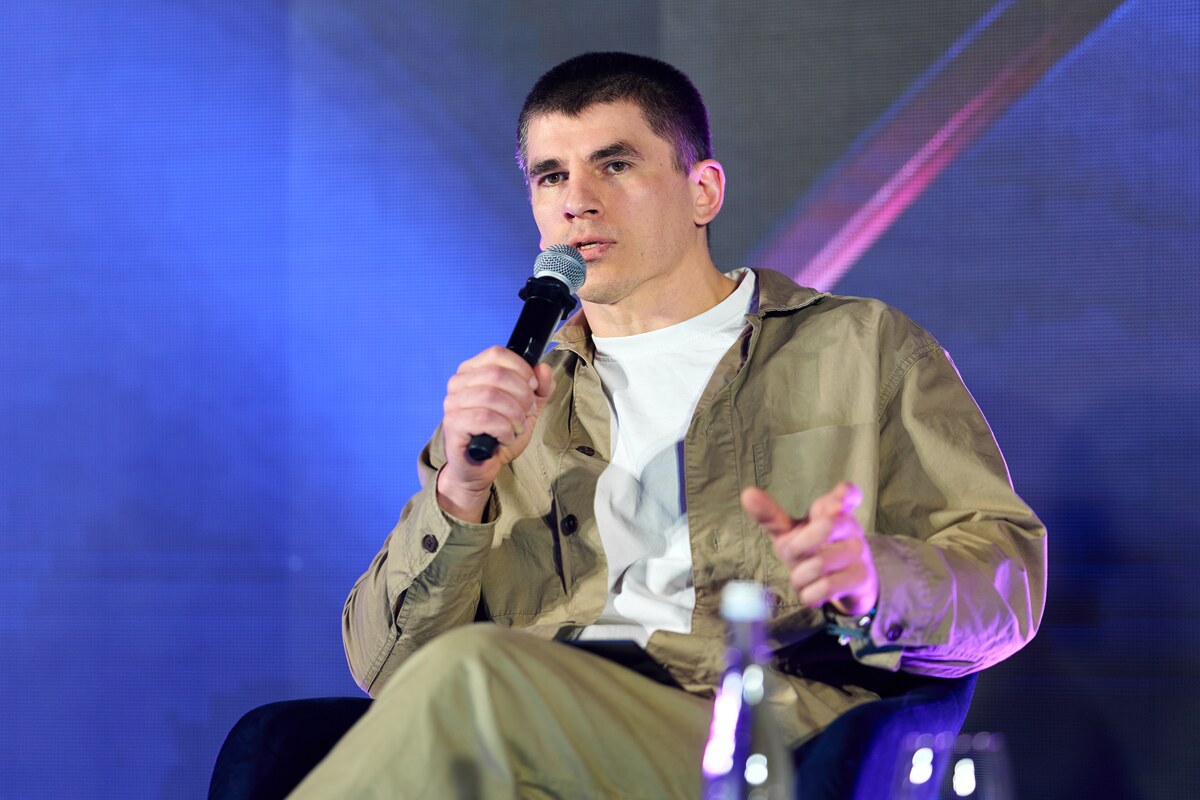
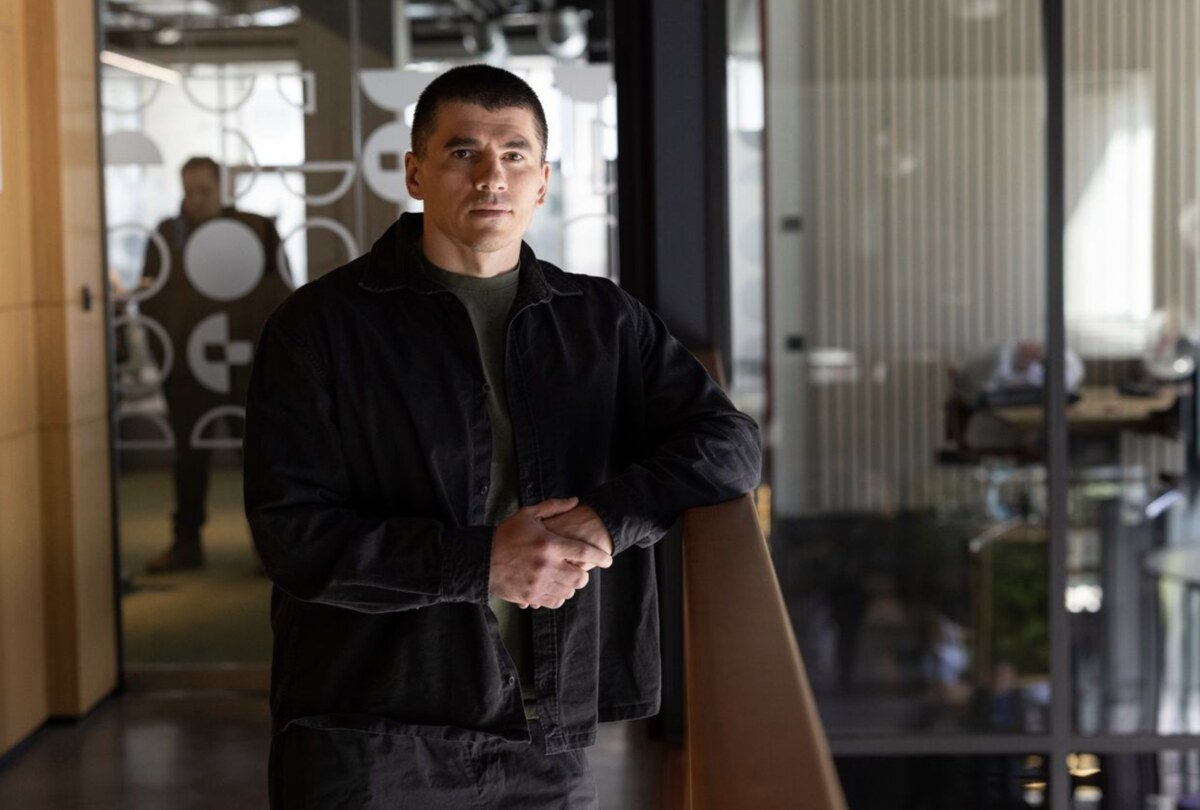
"I am against 'digital concentration camps', but for open data." A great interview with one of the country's main 'digitalizers', Oleksandr Tsybort
CDTO of the Ministry of Economy Oleksandr Tsybort joined the ministry almost two years ago, in September 2024, leaving a successful business in the field of e-commerce. During this time, he managed to implement the «Pulse» platform, which collects feedback from entrepreneurs on the work of state bodies, significantly advance the digitalization of issuing licenses and permits through «eDozvil», and also begin the launch of the labor market ecosystem «Obriy». These are the most public and media products associated with Tsybort’s name, but he oversees much more issues in the ministry, and not all of them are directly related to digitalization.
CDTO of the Ministry of Economy Oleksandr Tsybort joined the ministry almost two years ago, in September 2024, leaving a successful business in the field of e-commerce. During this time, he managed to implement the «Pulse» platform, which collects feedback from entrepreneurs on the work of state bodies, significantly advance the digitalization of issuing licenses and permits through «eDozvil», and also begin the launch of the labor market ecosystem «Obriy». These are the most public and media products associated with Tsybort’s name, but he oversees much more issues in the ministry, and not all of them are directly related to digitalization.
We spoke with him just after his official re-election and another «big reshuffle» in the government. One of the country’s main «digitizers» told us why he is «driven» to implement huge projects; what he thinks about the work of CDTOs in various government agencies; what team he relies on in the ministry and who is involved in the development of the aforementioned products outside of it; where to look for grantees and how to deal with bureaucracy.
Tsybort also shared how he started his journey in e-commerce, what motivated him to connect his business with accessories for Apple technology, and why a portrait of Steve Jobs hangs in his office. About this and more — in the interview.
Content
Who is Oleksandr Tsybort?
Oleksandr Tsybort was born in 1989 in the city of Netishyn, Khmelnytskyi region, and received a higher law degree from the Ostroh Academy University. He is a serial e-commerce entrepreneur with over a decade of experience in online retail. In particular, he founded and headed the iLounge company (an online store of accessories for Apple technology), the iLab service center network, as well as the Casexy.com brands (custom stylish iPhone cases) and Sleepets.com (trackers and other gadgets for pets).
Since September 2024, Oleksandr Tsybort has held the position of Deputy Minister of Economy of Ukraine for Digital Development, Digital Transformations and Digitalization (CDTO), where he is responsible for the digitalization of the economic sector, business deregulation, labor market reform, and other issues.
Everything is in place. The Ministry of Economy’s digital projects will continue despite the change of government
— The Ministry of Economy has been headed by a new minister (Olexandr Kravchenko replaced Oleksandr Sobolev — Ed.). Are there any risks for the digital projects you are implementing due to the change in the vision of the new leadership?
— We have already had a strategy session with the new minister, and one-to-one conversations. I am sure that the tracks that we have launched and that are already ongoing will be continued. Of course, there will be some new focuses in the vision, new priorities and accents. The new prime minister will place a special emphasis on sustainability — and in my portfolio these are programs that help businesses maintain continuity of work regardless of external conditions. Plus, I have been given directions for the restoration of business and its work in front-line territories.
That is, now it turns out that I am a CDTO who is still involved in business operations. Although I previously had a direction for regulating small and medium-sized businesses, I have been leading it for over a year. So my functional position is broader than the role of CDTO. This is digitalization combined with business, and we in the team describe it as the Digital Economy.
— During the government reshuffle, weren’t you offered other positions? For example, to head the Ministry of Digital Affairs, given your experience in implementing large digital projects within the state?
— I continue to work in my role, so this in itself indicates that its relevance has been preserved. The proposals may have been different, but my main proposal has been accepted. And this is that I will continue to work as Deputy Minister of Economy.
A «midget» salary, CEO duties. Why Oleksandr Tsybort changed business to civil service
— Let’s get back to why you took this position in the first place. What could make a successful business person go to a place that eats away at their nerves, all their working and non-working hours, but doesn’t bring any «personal exhaust» in terms of mercantile interest?
— I definitely feel the «personal exhaust», but it’s just not related to money. I was interested in the opportunity to build something that works for millions of people at the same time. In business, you scale for years, while a state product covers the entire country from day one. In addition, there is a feeling that now is the moment when the digitalization of the state is still taking shape, and there is a chance to lay the right architecture, rather than correcting other people’s mistakes.
The CDTO position I hold is definitely about enthusiasm and about people who believe in changes in the country. But not everyone can «fit in». The salary I receive here, of course, allows me to support myself and my family, but it clearly does not correspond to the scale of the tasks and the commercial market.
For me, one of the key indicators of work now is the people who come to work for our team. These are specialists with skills and competencies who could «sell» themselves on the commercial market for a much higher price tag. But this is not about the price tag, but about values. It is difficult to compare anything with this motivation.
However, the financial indicator is important, and if we could offer a higher salary, then it would be much easier to bring new people into this system. Because new people are exactly what is needed now.
— About the salary of a CDTO in one of the key ministries. What is your salary?
— The salary of a CDTO is open information, it is in the declarations, there is nothing to hide here: somewhere in the range of 100,000 UAH. The issue is not in the specific figure, but in the systemic gap: the state competes for the same people as the private tech sector, but cannot offer market conditions. Because of this, some vacancies remain unfilled for months, and strong candidates go where the market pays.
— How do you generally assess this state experience in introducing CDTO positions in various bodies?
— As an experiment, I consider it a success. People appeared who came with a clear product mindset, and not with the logic of «as always done.» But the result is very uneven between the bodies — it depends on the specific person and on how much the minister is willing to give them a mandate.
— When you took on this position, did you imagine your current function, involvement, and workload in this way?
— I had no idea what it would be like, because everything was so spontaneous. At that time, I wasn’t even in Ukraine, I was abroad, but my family and I wanted to return.
Already during an interview with Yulia Svyrydenko, who was the Minister of Economy at the time, I was able to assess what challenges the Ministry of Economy faces in terms of «digital» and how I can become part of this transformation process.
Even then, I was interested in taking on the digitization of licenses, permits, and other cases that are directly related to business. After all, I myself have experience in both business and IT development. I am a developer who created my own successful online store from scratch. And during my time working in the government, I also improved in terms of bureaucracy and how this system works. So now it is easier for me to overcome the obstacles that people from the «other camp» put up, let’s call it that.
— And who do you mean by «the other camp»?
— Well, I would say in general about people who do not support modern digital changes and OpenData. There are actually a lot of them, some of them have a significant influence.
I myself am against «digital concentration camps» and none of us are building them. But I am for transparency, for open data, for all decisions to be analytically based on accessible and truthful data.
Borodatyuk’s post and 5 interviews after it
— You mentioned the interview with Svyrydenko. And how many interviews were there for this position?
— In general, there were quite a few applicants who applied for the competition. I think I had up to five interviews. In addition to communicating with Yulia Svirydenko, I also had an interview with Mykhailo Fedorov, who was generally responsible for the direction of digitalization in the government.
Finding a job took quite a long time, because I submitted my CV in the spring of 2024, and I went to Ukraine with the offer at the end of the summer.
However, for me it was evidence that you can get into high positions in the government transparently, without any shady agreements and political games. Because at that time I was not from politics at all. I didn’t really understand what was going on there.
— Do you understand now?
— Now it’s much better. It’s like 3D chess — it’s definitely good for the brain. I used to exist in my own closed e-commerce bubble, where the world is much smaller. And then you’re thrown into the ocean! It took me about six months to get my bearings. At first, I just kept quiet and observed at most meetings. However, many people gave me useful advice. Without this advice, I probably wouldn’t have «lived» in my position until today.
— And, actually, where did you send your resume? Because earlier Artem Borodatyuk said at some event that it was his agency that supposedly «sent you» for this role.
— It all started when I saw his post — the government is looking for a «digitizer» for the Ministry of Economy. The post interested me, but at the time I just skimmed through it. Then I remembered him.
At that time, Artem and I didn’t really communicate and weren’t friends. We only knew each other because we ran into each other at some business conferences in Kyiv. But I dared to write to him and ask for feedback — what would he think if someone like me applied for this position? We started communicating more actively, and eventually I applied.
Who brings ideas to life — within and outside the Ministry of Economy?
— Tell us about your team within the ministry. What exactly is done by internal forces?
— I have two departments under my command, as well as the Digitalization Department and the Intellectual Property Department. We have about 100 people who shape policy: draft laws, resolutions, and their legal support. Everything related to policymaking and regulatory work is concentrated in the ministry.
On the other hand, everything related to the product part works through donor programs. There are very few people in the ministry who are responsible for the product. Again, primarily because of the salary. So the product team in all projects is about 30 people.
We have a CTO in our team who brings it all together, there are PMs, in particular, there is an IT-PM. There are also BAs who develop this very vision, there is a Team Lead. That is, we have a purely product structure, but without executors.
We have to rely on the project offices created thanks to grantors. For example, in our case with «Obriy», Google provides a grant, and the project is also supported by the «Partnership for a Strong Ukraine» Foundation. When this money appears, you can already build a team through the Ukrainian implementer.
For example, we are currently creating a project office for «Obriya» under the auspices of the Ministry of Economy. The people involved in its work are not formally civil servants, but they work with us in the same team. We already have up to 10 people in «Obriya», but we will increase the team.
As for the projects themselves, like any other software development for the state, everything happens through tenders. During the tenders, it is determined who will directly develop the software. However, in Ukraine, these are usually very clear players, and there are not many of them. By the way, regarding «Obriya», we will try to recruit different teams, because speed is important to us. We need to write the modules that we have planned as quickly as possible. Therefore, there will be different teams in order to cover the maximum of the govtech market.
— You said that now many people with great professional backgrounds are joining your team. What, besides motivation for change, can a position in the public sector give them?
— Salaries are one of the key blockers why we can’t form a cool top management in the country. But I think it’s more of a political issue.
By the way, even people from the educational programs where I myself gave lectures came to us. Hearing about the projects we were building, two people from the KSE course came straight to my team — one to the Ministry of Economy, and the other to the project office for «Obriya.»
For them, it seems to me, the main value is the social advancement and experience that you won’t get anywhere else. In addition, your CV looks completely different afterwards. Such work really greatly improves the «hard» and «soft» skills that are valuable in the market. After working in the government, it will be much easier to get a job in any company or corporation.
— When you took office, did you already have a rough vision of the products you are currently overseeing?
— I have a CDTO folder on my desktop, and in it is a one-pager for June 7, 2024. When I took office, I showed it to everyone.
It identifies priority projects that I want to implement. I was already working on smart goals back then and wanted to bring this logic into state structures. My proposals concerned projects such as eDozvil, the public investment platform Ukraine Facility, and pulse.gov.ua.
Actually, all of this worked, it’s just that not all projects are digital, so some of them are led by other deputy ministers. We restarted «Pulse», and now it also has a cool effect. Next, we will integrate this into «Diya» and other services. We intend to create a separate registry for this, and move a little towards White Label, so that institutions can create their own brands for feedback. But in such a way that we receive this date in a separate registry.
This file also spelled out the goals — for example, to digitize 10 licenses and permits in 2024. Therefore, I already had a vision for many issues, but «Obriy», for example, is not here, this idea arose already in the process of work.
The Ministry of Economy had a desire to work with grants for reskilling and upskilling and digitize them. This is where «Obriy» began, which grew into a large-scale labor market reform. When I met with Mikhail Fedorov and we discussed various projects, he also emphasized that the labor market was the least digitized at that time. I don’t even remember when we came up with the name «Obriy», but it was definitely within the team.
— And what does pitching your projects actually look like? Let’s say you have a vision of how to solve a certain state problem with the help of some digital product. But where to get the funds?
— I’m preparing a concept, infographics based on a specific idea, and I already understand the mechanics of how it should work in terms of product. And most importantly, what it will give, why do it, what is the value.
To «sell» this product, you need to convey this value to key stakeholders. Well, after that you need to think about financing, because all our projects are not built on budget funds. Now, when practically the entire budget goes to defense, it is unrealistic to create even an MVP with budget funds. Therefore, together with the minister to whom you have already «sold» the idea, you need to «sell» this idea to donors. When USAID was there, it was easier, when it was gone, it became more difficult. But communicating with grantees is a very important skill for deputy ministers.
Only when political support, money, understanding of how to build a team and who will implement it come together, can it turn into a project. Then an experimental resolution is written, submitted to the government and adopted. This gives a start to the MVP of some state product.
— Are you saying that before releasing an MVP of some product, you need to fix it legally through some experimental regulation? Are there no easier ways?
— It’s simply impossible in the public sector otherwise. I remember one of my first conversations with Mikhail Fedorov, and he told me back then: the most valuable result of work is when there is already a result in the form of a standard.
All our activities are measured by regulations, and there is little that can be done that is not described in the regulations. Everything rests on this. And this is the most difficult thing, because it requires facilitation between everyone in the government, as well as in parliament, if it is involved.
— But the functionality of any digital products, and government products are no exception, is very fluid. How should regulations keep up with it?
— This is the biggest blocker that slows down development. But thanks to these experimental regulations, we have the opportunity to be relatively fast.
In practice, this is done simply by making changes to the experimental regulation. If these changes are small, it is a fairly quick procedure. Especially if it is a priority for the minister.
The resolution quite often contains details, for example, by amount or by technical solution. In addition to the resolution, there is a technical task, which is based on the resolution. On the basis of this TOR, the development of the product itself is already being carried out. But if the development is not on track and there is no «eline» with the resolution, it is impossible. It will not be missed and such a function simply will not appear in the product.
We keep our hands on the Pulse. What is in the CDTO project portfolio of the Ministry of Economy and
— Can you list all the projects you are currently working on? Maybe you can tell us about some that have not been announced publicly?
— The biggest focus right now is 100% «Obriy». I am personally closely involved here, every week we organize brainstorming sessions with the team. In addition, we have a separate strategic board, where I have gathered, among others, representatives of the job search business — Work.ua, Robota.ua, Jooble in Ukraine, etc.
Next is «eCheck». It is also in focus, and we are working on digitizing checks in the country. «ePermit» — we are converting the most frequent licenses and contracts from paper to digital. By the way, within the framework of this project, there was recently the first application of AI together with Google.
Another big track is deregulation. We are writing a law where we want to transfer another 150 permits to the declarative principle in order to remove barriers for business and enable rapid market entry.
We also mentioned the Pulse project — it’s about solving business problems based on entrepreneurs’ own feedback. By the way, there’s a public dashboard there, which you can also view. We’ve also built an internal dashboard of business problems, which already has over 500. We track the problems we’re solving, and there are over 130 of them today.
Now, our projects are being joined by RUKOPYS, a project to digitize handwritten documents, of which there are actually a lot. The problem with handwritten documents in government institutions is the years of accumulated archives that are physically impossible to digitize manually. RUKOPYS is a dataset for training AI to recognize Ukrainian handwritten text, and the first step towards automating the processing of these archives instead of people who have been manually transferring data into systems for years.
European integration is a separate block that includes a lot of normative work, in particular a large area of intellectual property. I would also like to mention the large program «Own Business», which we are currently transforming. Starting in September, it will be changed, and there will be two streams — one grant for starting a business, and the other for scaling it.
We are also developing a strong internal institution for digital, building the State Enterprise «Digital». We want this State Enterprise to become the implementer and the single point of entry and exit for all digital projects of the Ministry of Economy, which, in fact, are related to the economic sector. It is also about building internal competence — to write something and develop code.
For example, the State Enterprise «Diya» works in a similar way. Today, of course, we are far from them, but this is an example of what is already well-built in the country — when one institution has united and closed many state projects.
There are other initiatives we are working on, but these are all at the concept stage, pre-seed. That is, they still need to be «sold» to stakeholders and there are no resolutions on them yet.
— Business Ombudsman Anka Feldhausen claimed that the Pulse platform needs improvement, as entrepreneurs provide their feedback too generally. This statement was made 3-4 months ago. Have there been any changes since then?
— Anka’s feedback was fair at the time. Since then, we have refined the feedback collection mechanism — adding more structured questions instead of free text, which gives teams more specific input to work with.
— Who are the donors to your largest projects? Were any of them ever put at risk after problems with funding from USAID?
— Changes in USAID funding affected some areas. We reviewed prioritization and looked for alternative sources — some projects were managed to be maintained at the expense of other donors and internal resources. There are no critical stops at the moment. Currently, the main donors are GIZ (German Society for International Cooperation), the Partnership for a Strong Ukraine Foundation, Google, UKDev (this is the brand of international aid and partnerships of the UK government).
— Digitalization is carried out primarily to save both labor and financial resources. Can you outline the impact and effectiveness of your products in specific numbers?
— We count this systematically where there are already completed products: reduction in the time for processing applications, the number of procedures converted to digital format, the number of users of «Pulse» and «Obrius». For example, we currently have more than 600,000 ratings and 40,000 reviews for «Pulse». The dashboard of business problems has more than 500 system problems, a significant part of which has already been resolved, the rest is in progress. For «Obrius», we launched a voice AI assistant that accepts calls during non-working hours or during air alarms. During testing, it accepted 2,700 calls, reduced the average response time to citizens to 18 seconds, and ensured almost 100% coverage of applications during non-working hours and during air alarms. During working hours, the assistant took on 20% of typical applications.
What’s on «Obriya»? About labor market reform that should reach remote villages
— The strategic goal of «Obriya» is called the return of more than 4 million citizens to economic activity. But this is only a digital product, while the causes of unemployment are much deeper. Today I returned from a very crowded village where there is no normal road. It is actually cut off from the world. I doubt that the residents of this village will believe that thanks to «Obriya» they will have a job…
This is the most common question. So I’m actually a little disappointed that we started positioning «Obriy» specifically as a digital product. In fact, it is digital, but it is not digital in terms of its «front».
We started working on labor market reform with Deep Research. And that included interviews with different people, including those living in remote villages and small towns across Ukraine. So «Obriy» will work, in particular, for those people you said are our target.
«Obriy», first of all, involves the internal restructuring of state institutions and the mutual integration of registers. We are thinking about how to connect local governments to this work, as you know, there are mobile ASCs today. We are thinking about a partnership with «Ukrposhta», and with all those institutions that are available in the most remote offline points.
People from small and remote settlements will be able to communicate with a career counselor who will analyze the person’s profile through the «Obriy» system. The system will suggest all regional employment opportunities, and the career counselor will pass them on to a specific person.
«Obriy» is about the fact that we, as a country, will have super-class analytics and a tool through which we can effectively attract people to the labor market, effectively provide them with grants for retraining, effectively consult them, and interact with them.
In the context of «Obriy», we in the team almost never talk about «IT». The digital segment is not key here.
— I read a big article about «Obriy» in one of the publications. It also says that we are waiting for completely digital employment…
— We do this, first of all, at the request of the business itself. Such an option is indeed provided in the next module, and it seems to me that this will be one of the most important modules in Obria.
We responded to the request of employers because this fully electronic form of employment aims to deregulate various aspects in the sphere of the State Labor Service and State Employment Centers. Currently, this procedure involves a lot of paperwork and some physical contact, and its digitalization will simplify everything as much as possible.
Companies will be able to hire and fire employees digitally, giving them significant flexibility.
— It was previously reported that some of the functions of «Obriye» should be tested by the end of June, and the full launch of the first module will take place in July. Is everything going according to plan?
— Testing is on schedule, we have received feedback from the first group of users and are already making changes to individual modules. A full launch of the first module is planned for the near future.
Business is on Apple, but in use Samsung
— Your businesses were built around the Apple brand. Is this just a business strategy or do you have some personal reverence for Apple products?
— No, there is no reverence (as proof of this, Oleksandr Tsybort jokingly shows his current phone — Samsung Galaxy Fold 7 — Ed.) to the camera during a video call.
I guess you could call me an Apple fan. I even have a metal portrait of Steve Jobs hanging on the wall in my office, a gift from my father. But I built my business model not on love for the brand, but on an understanding of the large and stable demand around an ecosystem that is constantly being updated. It’s pragmatic.
— Is the portrait of Jobs instead of the traditional portrait of the president or next to it?
— (Olexander Tsybort smiles — Ed.). In fact, I don’t have any idols. That’s why this portrait of Jobs is valuable as a product and as a memorable gift. But my business around Apple was born because I myself loved and continue to love their products. I’m already waiting for the iPhone Fold to come out, then maybe I’ll switch from Samsung back to Apple. This form factor was just interesting to me and I find it super useful in my work.
In addition, for some time I collected old Apple models like the iPhone 2G, and in the office there is part of the «museum» that I put together. In short, the business was built on an interest in Apple technology, but on accessories, not on the technology itself.
We had some attempts to enter the technology, but the Apple white goods market was very unclear and difficult. Although now there are more white goods, there is a certain breakthrough, and I am happy about it. I think that government initiatives also play a significant role in this. Such as, for example, the eCheck project, which is built around digitizing checks.
Own websites in the 11th grade and the first 150 UAH for an interactive map. How Oleksandr Tsybort’s IT career began and where it is now
— Finally, I want to ask, how did you get into digital products and e-commerce business? You are a lawyer by education.
— In my childhood and youth, I lived in Netishyn. The Ostroh Academy was nearby. So at that time I chose higher education from those areas that, firstly, were represented there, and, secondly, from what my father advised (Sergiy Tsybort is a well-known businessman in this region — Ed.).
In my father’s opinion, a legal education could help me in various areas of activity. By the way, I cannot deny this, because that is exactly what happened. Because, having gone into business, I felt that it would be very good to at least understand the «rules of the game» and be able to read them.
And in a position in the public sector, I think it would be difficult without a legal education, because we constantly work with regulatory documents.
I received a law degree, but did not go into classical legal practice. My first attempts to earn money were related to the resale and service of gadgets, while I was still a student. I did not want to develop as a lawyer within a law firm — the trajectory there is too predictable, and I was more interested in building something from scratch, when there is no ready-made template. This is how the direction of e-commerce arose in my life, which I was interested in even before studying at the Ostroh Academy.
Again, I developed my dad’s first website when this activity was just starting to take off. At the same time, I also created a news website, essentially a blog that I ran on Apple technology. I wrote articles and talked about their new products. After some time, I added an online store to this news website, where I started selling Apple accessories. At that time, it was called iPhone Market.
By the way, while still studying at the academy, I built a scientific blog for the educational institution and its students, which still exists today. It is an online project of a scientific nature, where teachers and students have the opportunity to publish their research.
— Do I understand correctly that you created websites while still a schoolboy?
— I created my first website on my own in the 11th grade. Without any basic education in this area, as well as the current opportunities provided by AI, we spent a long time surfing the Internet and looking for how to do it. I remember the website that everyone lived on — Stack Overflow. You could find a lot of information there.
I probably won’t remember exactly, but I only remember that back then I was making websites using some tool that was available from Microsoft. I would design these websites, then «upload» them — but back then they were simple HTML websites.
I, in turn, learned to write in HTML in computer science classes. Body, head, and that was it. I picked up knowledge on the Internet and turned it all into something working. You buy hosting, try to upload it all there, it works — you are very happy.
And when my father says: «I still need to make a website, so you do it, not play games,» then additional motivation is added. Then I earned my first money at the academy: I developed an interactive map of the regions on «flash», which was then integrated into the website. I earned 150 UAH then and I remember well that three banknotes seemed like some kind of unreal money to me at that time.
— And when did you earn your first big money?
— I’m telling you, 150 UAH seemed like an unrealistic amount of money to me at the time. But seriously, that was when I started actively working on the iLounge online store.
— In boxing, there is a rating of the best boxers, regardless of weight category, pound-for-pound. And where would you place yourself in the rating of the best digitalizers? Are you in the top three?
— In my view of the world, people from the Ministry of Digital Economy should probably be in the top three, because they initiated these processes at the state level.