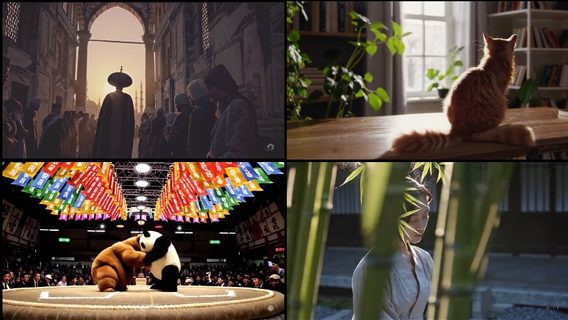
YouTuber Marques Brownlee got early access to OpenAI's Sora video generator, which launched on Monday, and shared his first impressions.
In February of this year, OpenAI introduced Sora, a text-to-video AI model that was initially available to teams evaluating the model for potential harm and risk.
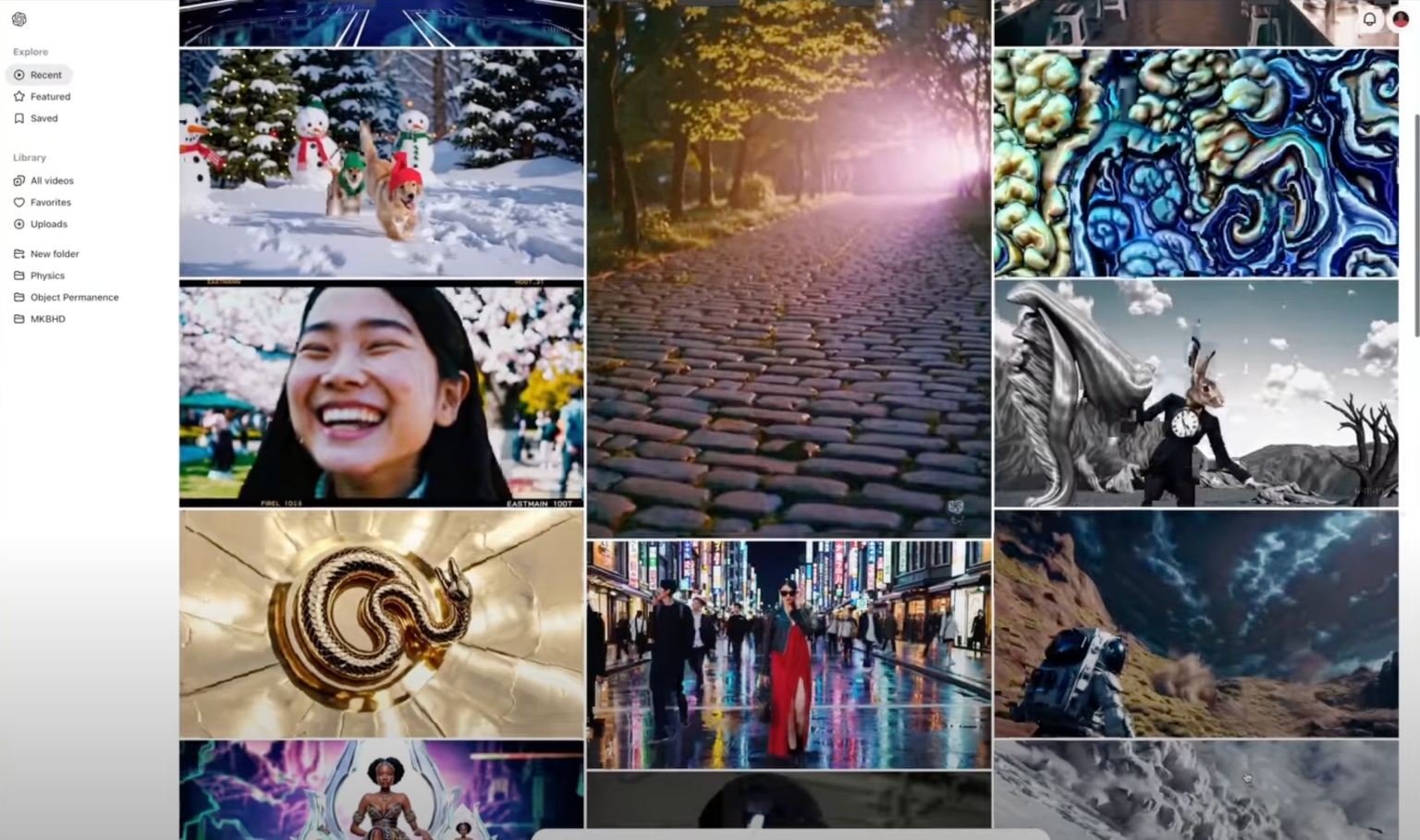
As told by Marques Brownlee in his video review, Sora is hosted on Sora.com . It is noteworthy that the tool is not built into ChatGPT, but is a separate product.
Videos on the Sora home page can be bookmarked for later viewing in the Saved tab, organized into folders, and view the text hints that were used to create them. According to Brownlee, Sora can create videos from uploaded images and prompts, as well as edit already created videos, writes TechCrunch.
With the "Re-mix" feature, users can describe the changes they want to see in the video, and Sora will try to incorporate them into the newly created clip. Re-mix has a "power" setting that allows users to define how radically they want Sora to alter the target video, with higher values resulting in videos with more artistic freedom.
According to Brownlee, Sora can generate video footage at resolutions up to 1080p, but the higher the resolution, the longer the video is generated. 1080p takes 8x longer than 480p, the fastest option, while 720p takes 4x longer.
Brownlee said the average 1080p video took "a couple of minutes" in his testing. "And this is now, when almost nobody uses this technology," he said. "I wonder how long it will take before it becomes available to everyone."
In addition to creating one-off clips, Sora has a "storyboard" feature that allows users to string together prompts to create scenes or video sequences. This should help with consistency, which is probably a known weakness of AI video generators.
Source: TechCrunch
Disadvantages of Sora
Sora suffers from the same shortcomings as other generation tools, namely object persistence issues. In Sora's video, objects pass in front of or behind each other in a nonsensical manner, disappearing and reappearing for no apparent reason.
Legs are another big source of trouble for Sora. Whenever a person or animal with legs has to walk for a long time in the clip, Sora confuses the front legs with the back legs. According to Brownlee, the legs will "swap" places in an anatomically impossible way.
Source: TechCrunch
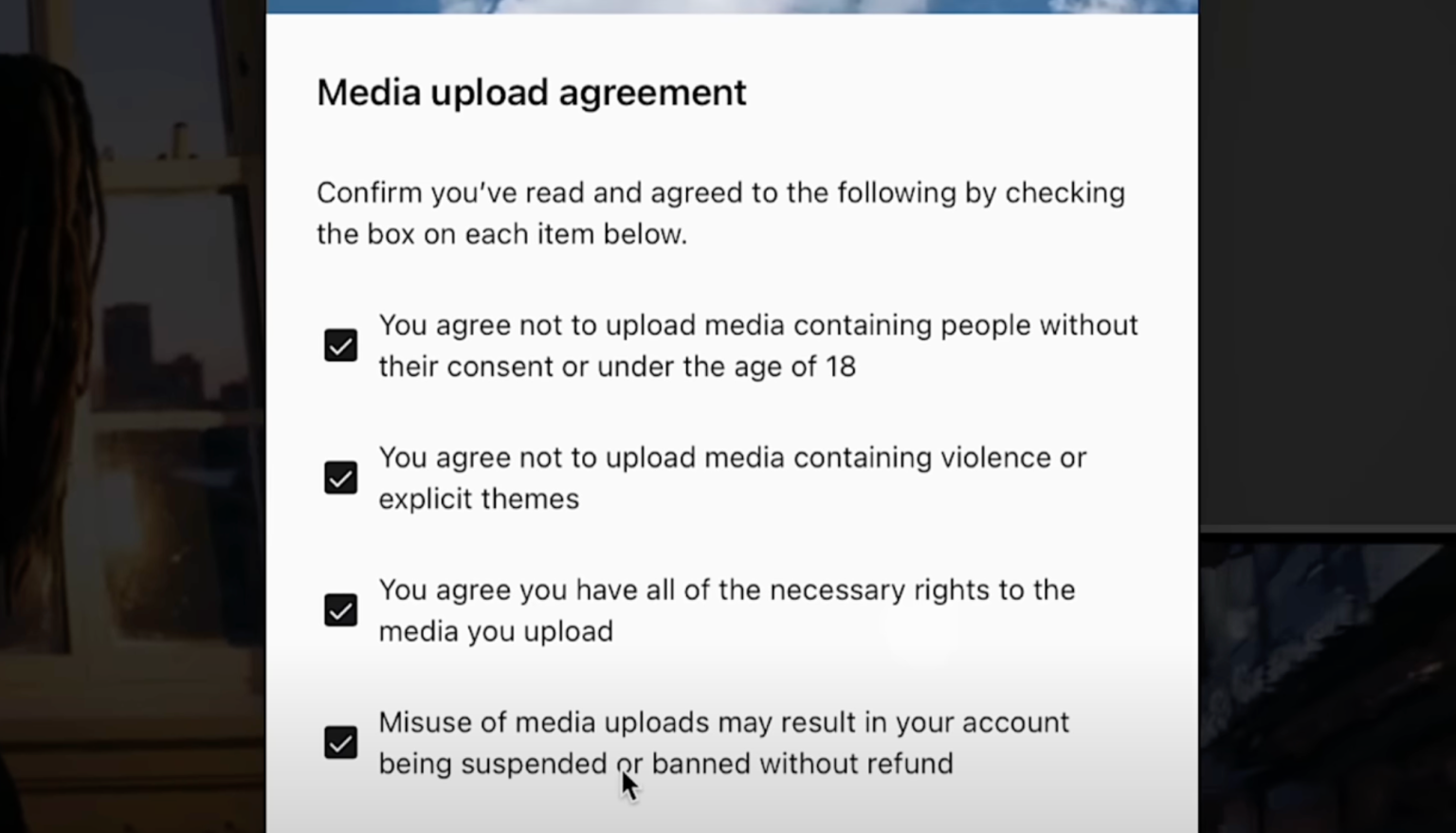
Sora has a number of built-in safeguards that prevent creators from creating videos with people under 18, violence, or "explicit themes" that may infringe on third-party copyrights. Sora also doesn't generate videos from images of public figures, recognizable characters or logos, Brownlee said, and puts watermarks on each video — albeit visual ones that can be easily cut out.
So what is Sora for? According to the blogger, the video generator can be used to create title slides in a certain style, animation, abstracts and stop motion. But he doesn't recommend it for anything photorealistic.
"It looks like it's an AI-generated video, but you can tell pretty quickly that it's an AI-generated video," he said of most of Sora's clips. "Things just get really shaky."
Як нейромережі бачать вільну та незалежну Україну? Тест dev.ua
Нейронні мережі для генерації зображень бачать світ по-своєму, їхню логіку зрозуміти часом зовсім неможливо. Але таки хочеться. На честь Дня Незалежності України редакція dev.ua вирішила провести невеликий експеримент.
Ми задали чотирьом різним нейронним мережам п’ять однакових запитів: «прапор України», «День Незалежності України», «український Крим», «перемога України» та «українці». Отриманими результатами ми ділимося з вами нижче.
У TikTok тепер можна генерувати фон за допомогою нейромережі. Ми протестували її та ділимося результатами
У TikTok з’явилася нова функція «Розумний фон». З її допомогою як фон для тіктоків можна підставляти згенеровані нейромережею зображення. Редакція dev.ua протестувала цю технологію і ділиться своїми враженнями.