Хочете будувати кар’єру в Data Science та AI? Vodafone Big Data Lab відкриває новий набір —>
Олександр КузьменкоThat's Life
17 January 2025, 17:24
2025-01-17
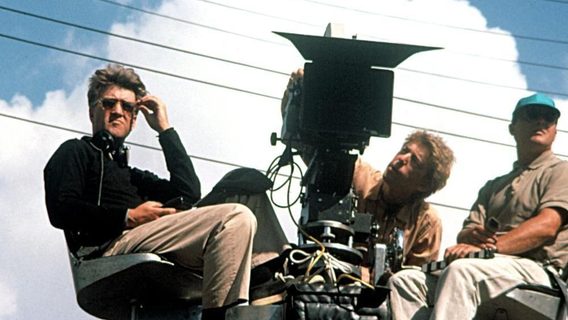
"57 seconds of growth and fire, and three seconds of vomiting." What were the first films of legendary director David Lynch, who passed away at the age of 78
Cult director David Lynch, who died on January 15 after being forced to relocate due to wildfires in the US, is best known as the creator of the TV series Twin Peaks and the films Mulholland Drive, Blue Velvet and Dune.
However, before Lynch’s most popular films were released, there was his first short film, which lasted only 60 seconds and had a budget of $150. We tell you about the early work of the great director.
Cult director David Lynch, who died on January 15 after being forced to relocate due to wildfires in the US, is best known as the creator of the TV series Twin Peaks and the films Mulholland Drive, Blue Velvet and Dune.
However, before Lynch’s most popular films were released, there was his first short film, which lasted only 60 seconds and had a budget of $150. We tell you about the early work of the great director.
First earnings and a difficult life in Philadelphia
Early in his career, Lynch enrolled at the Pennsylvania Academy of the Fine Arts. He believed it was a much better place than his previous schools, as the environment was conducive to creative endeavors.
During this period he met his first wife, Peggy Reavy, and lived with his family in a high-crime area of Philadelphia. This period of his life, more than any other, influenced the formation of his artistic perception, opening his eyes to the violence and horror of the world.
«We lived cheaply, but the city was full of fear. A child was shot in the street. We were robbed twice, our windows were broken into, and our car was stolen. The first time the house was broken into was only three days after we moved in. The feeling was so close to extreme danger, and the fear was so strong. There was violence, hatred, and filth. But the biggest impact on my entire life was this city,» David Lynch recalled.
To support his family, Lynch worked as a printmaker while working on his first short films at the Academy. He was initially drawn to cinema because he wanted to see his paintings in motion, hoping to realize this dream by working on animation projects.
David Lynch’s early films
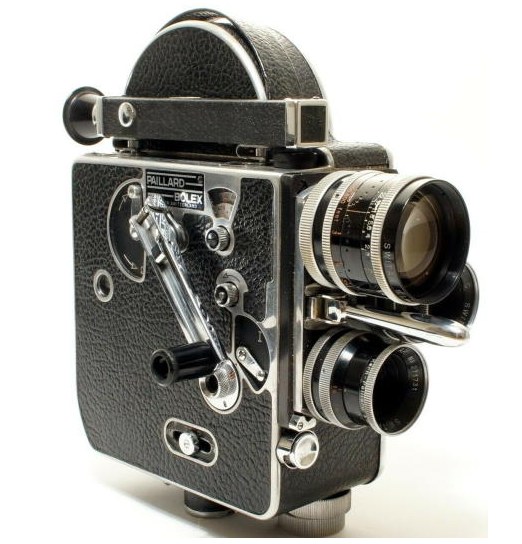
Lynch bought the cheapest 16 mm camera he could find and spent $150 of his own money to finance his first short film, Six Men Getting Sick (Six Times) in 1967. It was described as «57 seconds of growth and fire, and three seconds of vomit.»
David Lynch’s first camera
This experimental short film tied for first place at the annual Academy Awards. The film so impressed his classmate, Barton Wasserman, that he offered Lynch $1,000 to create a film installation at his home.
Although his first attempt was unsuccessful, Lynch used the remaining funds to create the four-minute short film The Alphabet (1968), which combined animation with live action. The project starred his wife as a mysterious character who recited the alphabet using pictures of horses until she spilled blood all over the bed.
«One night, my niece Peggy had a bad dream and struggled to say the alphabet in her sleep. So that’s how ‘The Alphabet’ started. Everything else was just subconscious,» the director said about what inspired him to make the film.
Lynch submitted The Alphabet to the newly formed American Film Institute, requesting $7,200 to make another short film, The Grandmother. The institute agreed to help finance the work, initially offering him $5,000 of the proposed budget of $7,200, but later giving him an additional $2,200.
Starring people he knew from work and college, and filmed in his own home, «Grandma» is about a boy who «grows» a grandmother from seed who can take care of him.
The painting that brought Lynch recognition
In 1971, the then-beginning director moved to Los Angeles to study at the AFI Conservatory, where he began working on a project called Back to the Garden. However, the chaotic atmosphere of the school frustrated Lynch, and he even considered dropping out. However, the dean considered Lynch one of the best students — he encouraged him to stay and focus on a new project: Eraserhead.
Despite a lack of funds and personal problems, Lynch continued to work on the film, working as a paperboy and borrowing money from his father, but the project dragged on for 5 years.
The film «Eraser Head» depicts a haunted industrial wasteland, and the anxieties and fears come to life in a visually stunning and mysterious way. Although the film was not an immediate hit, it eventually gained recognition at midnight box office and captivated audiences. It became a powerful statement from an extremely talented director who created something extraordinary.
After completing «Eraser Head,» Lynch hoped to work on his unfinished project, «Ronnie Rocket.» However, he realized that working on «The Elephant Man» would be a more profitable and accessible option for producers.
Considered by many to be Lynch’s greatest triumph, The Elephant Man is a historical drama that uses the concept of the grotesque to explore what it means to be human. The film tells the true story of John Merrick, a physically mutilated 19th-century Londoner, raising deep questions about society’s prejudices and fear of the «strange other.»
The Elephant Man had an all-star cast—John Hurt, Anne Bancroft, and Anthony Hopkins—as well as commercial success, critical acclaim, and eight Academy Award nominations.
In the wake of this success, Lynch attempted a larger-scale project, an adaptation of Frank Herbert’s science fiction epic Dune, but it proved to be the biggest disappointment of his career. The film was a box office failure, grossing only $30 million on a $40 million budget, and was widely panned by critics.
Lynch later admitted that pressure from producers and contractual obligations stifled his creativity. «Looking back, I realize that it was no one’s fault but my own. Maybe I shouldn’t have made this picture, but I saw so many possibilities for what I loved, and this was the structure in which I could realize them,» the director later said.
After that, David Lynch quickly restored his reputation with the neo-noir thriller Blue Velvet, and later directed the cult classics Wild at Heart, Mulholland Drive, and Twin Peaks.
Why did David Lynch die?
In the summer of 2024, David Lynch announced that he had been diagnosed with emphysema, and therefore he stopped leaving his house.
«I have emphysema from long-term smoking, and so I’m housebound, whether I like it or not. I can’t go outside. And I can only walk a short distance, then I run out of oxygen», — he told Sight & Sound magazine.
According to Deadline, he was forced to leave his home when devastating fires broke out in Los Angeles in early January. According to sources, the forced move to his daughter’s house worsened David Lynch’s health, which is why the prominent director died on January 15.