Хочете будувати кар’єру в Data Science та AI? Vodafone Big Data Lab відкриває новий набір —>
Олександр КузьменкоІсторії
3 December 2024, 14:39
2024-12-03
Pat Gelsinger, who worked on the creation of Wi-Fi and USB technologies, was supposed to pull Intel out of a deep crisis, but failed and resigned as CEO. How did the company end up in this position
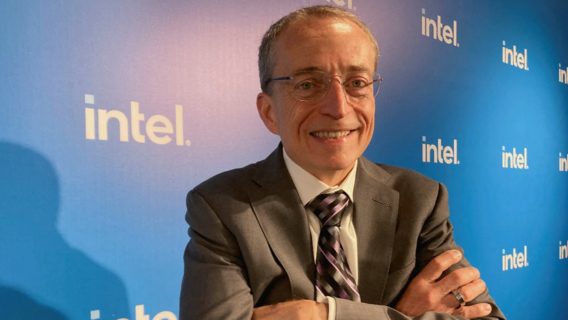
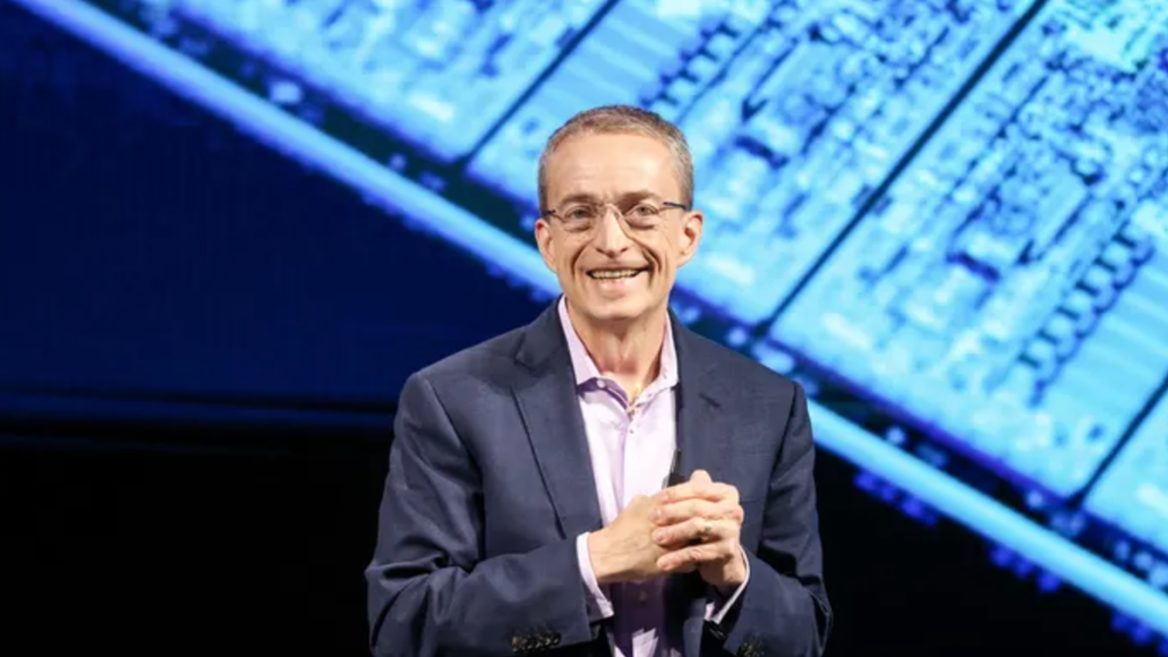
On December 1, Intel, which is currently experiencing not the best of times, announced that its CEO Pat Gelsinger is stepping down. He dedicated nearly 30 years of his career to Intel and worked on the launch of technologies such as Wi-Fi and USB, as well as the famous Intel Core and Xeon processor series.
When Gelsinger returned to the company in 2021, it was already in stagnation, and the task of an experienced top manager was to improve its situation. We tell how he failed to cope with this task, and why Intel is now in an even bigger crisis.
On December 1, Intel, which is currently experiencing not the best of times, announced that its CEO Pat Gelsinger is stepping down. He dedicated nearly 30 years of his career to Intel and worked on the launch of technologies such as Wi-Fi and USB, as well as the famous Intel Core and Xeon processor series.
When Gelsinger returned to the company in 2021, it was already in stagnation, and the task of an experienced top manager was to improve its situation. We tell how he failed to cope with this task, and why Intel is now in an even bigger crisis.
What is known about Pat Gelsinger
Pat Gelsinger first joined Intel at the age of 18 in 1979. He was the lead architect of the 4th generation 80486 processor, which was introduced in 1989.
Gelsinger became the company’s first Chief Technology Officer, and at the age of 32 he was named the youngest vice president in Intel history. Pat Gelsinger led key technology developments including Wi-Fi, USB, Intel Core and Intel Xeon processors, and 14 chip projects. He also started the Intel Developer Forum as a counterpart to Microsoft’s WinHEC.
In September 2009, he left Intel and joined EMC as president and chief operating officer. In 2012, he became CEO of cloud computing and virtualization technology company VMware. It became the first commercially successful company to virtualize the x86 architecture. In 2010, Pat Gelsinger was named the best CEO in America by Glassdoor’s annual employee survey.
He returned to Intel as the new CEO on February 15, 2021, when investor Third Point Management called for a reorganization of the company due to falling shares. Taking over as CEO, Pat Heslinger inherited decades of bad company decisions and had to change course.
How Intel, which was the leading manufacturer of chips in the world, slipped into a deep crisis
Intel has a rich history as a leading player in the semiconductor market. From introducing the first programmable microprocessor to replacing magnetic core memory with DRAM, the company has long been at the forefront of the market. However, in recent decades, the company has had problems keeping up with new technologies.
For example, it was advertised by Apple as a supplier of chips for the iPhone, but later Intel lost competition to Samsung.
After that, the company ignored the potential of graphics processors in consumer electronics, and lost potentially profitable opportunities to supply hardware for video game consoles and high-end mobile devices. AMD supplied chips for Sony’s PS4 and PS5 consoles, and its processors are expected in the next generation as well.
What made Intel’s situation worse was that the company found itself on the sidelines of the artificial intelligence boom, with leading players in the field looking to build AI systems instead turning to Jensen Huang’s Nvidia.
Unlike Nvidia, which mostly focuses on the development of chips and related software, or AMD, which began to pay less attention to the production of GPUs and focus on CPUs, Intel, on the contrary, announced that it will start making video cards and chips for AI. The company does a bit of everything, and this may be the reason it lags behind its competitors.
Trouble with Intel processors
Problems befell Intel even in its home field — the production of consumer processors. It has at least two lawsuits over instability issues with its 13th and 14th generation Raptor Lake processors.
Processors became voracious due to overvoltage issues, and while Intel issued fixes and replaced the failed units, the problem was so widespread that it caused problems in high-end systems and consumer PCs.
Every technology company faces hardware issues. AMD, for example, had issues with its recently released Ryzen 9000 processors.
However, the troubles with Raptor Lake were long-standing, and it took Intel a long time to resolve them. According to experts, this reaction «undermined the credibility of the Intel brand».
Problems with the production of chips
Intel has lost significant market share in chip manufacturing to Taiwanese manufacturer TSMC, which makes them for many of Intel’s competitors. While TSMC itself is trying to meet demand, customers simply don’t want to switch to Intel.
When Gelsinger took over at Intel, he introduced a course correction for the company, which included the construction of two manufacturing plants in Arizona at a cost of $20 billion. The media reacted positively to Gelsinger’s appointment and attributed the nearly 8% increase in Intel’s stock price to the decision.
In May 2021, Gelsinger was interviewed by Leslie Stahl of 60 Minutes. He stated that Intel plans to catch up with TSMC and Samsung within the next five years. He announced the planned modernization of the Intel plant in New Mexico at a cost of $3.5 billion.
However, costs for Intel’s planned plants in Arizona and two more in Ohio have skyrocketed compared to initial projections. The Arizona plants, which Intel expects to be operational in 2025, have been hit by construction delays. And in September, the company Broadcom, which produces network and radio chips, tested Intel’s technological process and came to the conclusion that it is not yet ready for full production.
However, Intel’s business also won several valuable victories. In September, Amazon AWS agreed to produce its next-generation artificial intelligence chip at Intel’s 18A factories. Earlier, Intel concluded a similar agreement with Microsoft.
However, finding the money to pay for 18A quickly turned into an existential crisis. Intel’s annual sales have fallen by $24 billion, or 30%, since Gelsinger took over. In 2022, the company’s free cash flow became negative. As of the end of June, Intel spent $12.6 billion more than it received annually. Investors reacted to the cascade of problems, sending Intel shares down nearly 60% this year.
To appease Wall Street, Gelsinger was forced to make painful decisions. In August, he announced $10 billion in cost cuts that included laying off 15,000 workers — 5 percent of Intel’s workforce. He also cut capital spending by $5 billion and suspended Intel’s dividend.
Then, in September, he announced more radical actions: the production of Intel processors will be officially separated into a separate subsidiary. Intel Foundry will become an independent subsidiary with «clearer separation and independence» from the rest of Intel. Gelsinger also postponed plans to build a new plant in Germany worth $32 billion, as well as new facilities in Poland.
The company also asked for help from the US government. Intel is counting on money from the US CHIPS Act signed by President Biden to spur domestic chip manufacturing to help pay for some new 18A chip factories. In March, the company received $8.5 billion in direct financing under the CHIPS program and $11 billion in loans. But the money is tied to Intel reaching certain milestones, and it hasn’t received any funds yet.
Disappointment in Gelsinger’s efforts
On December 1, 2024, Intel CEO Pat Gelsinger was forced to resign after the board of directors became frustrated with the company’s slow progress in getting out of the crisis.
Intel CFO David Zinsner and executive vice president Michelle Johnston Holthouse are now serving as interim co-chairmen while the board of directors searches for Gelsinger’s replacement, the company said in a statement. Frank Gowry, Intel’s independent chairman of the board, will serve as interim chief executive.
Intel investors, eager to see changes at the company, reacted positively to Gelsinger’s resignation. On Monday, the company’s shares rose 6% in New York, but then turned back. They were down 0,5% at $23.93 at the close in New York, down 52% year-to-date.
Pat Gelsinger’s successor will face the same set of problems he was appointed to solve, as well as the consequences of bad decisions made by his predecessors. A seat that was once the most coveted seat in the $500 billion chip industry is now up in flames.
The next CEO will have to contend with competitors with greater resources and catch up in AI, while showing that Intel can be the innovative company it once was.