How to turn seasonal peaks into sustainable app growth
Seasonality is constantly changing the landscape of the mobile app market: some niches show record profits, while others experience a decline. While leaders create holistic seasonal strategies that resonate with the audience on social networks and stores, others are limited to only cosmetic changes like a holiday icon. How to build an effective strategy for a seasonal boost — tells Yuliana Yukhimenko, ASO Specialist at Inspiro (by Boosta).
Seasonality is constantly changing the landscape of the mobile app market: some niches show record profits, while others experience a decline. While leaders create holistic seasonal strategies that resonate with the audience on social networks and stores, others are limited to only cosmetic changes like a holiday icon. How to build an effective strategy for a seasonal boost — tells Yuliana Yukhimenko, ASO Specialist at Inspiro (by Boosta).
Why seasonality matters in the mobile industry
Depending on the topic, niches have their seasons, and this is easily confirmed by research focused on downloads and profit. The specifics of the chosen niche dictate their own rules for product strategies:
when is the best time to release a new application;
when is the best time to update the old one;
what changes will bring profit;
which features to show to the user.
Here’s how it works in specific niches:
Games. The peak falls on school holidays. In different geographies, these peaks may differ depending on regional characteristics. In Europe and North America, this is June-August, in the countries of the southern hemisphere — the period from December to February, and in China — the period of Chinese New Year. The Chinese have many days off, and children receive red envelopes with money, which they gladly spend on games.
Online stores struggle for traffic during the pre-holiday period (Christmas, Valentine’s Day) and sales periods (Black Friday, Cyber Monday).
Productivity apps are usually most relevant in the period before and after the New Year, as well as in September at the beginning of the so-called «business year.»
Below, I will detail five steps that will help prepare a product for seasonality and maximize its potential.
Step 1. Prepare the product for seasonality
First of all, you should determine whether your niche is seasonal. To do this, use the Appmagic / Sensortower tools and look at the trends of your applications or competitors.
Next, create a calendar of relevant events for your audience: for example, sporting events. Such a calendar is usually unique for each product and allows you to plan changes in advance. If we know the peaks of seasonality, it is worth preparing the application in advance for a boost due to changes in functionality.
Lifehack 1. Even events that are not directly related to your topic work well. For example, for fitness apps in Ukraine, the content «How not to overeat during the winter holidays» may be relevant, and for language services, additional English lessons on football vocabulary during the World Cup.
Lifehack 2. If you plan to work with seasonality on an ongoing basis, it is worth creating blocks in the application that will always contain seasonal content. For example, seasonal templates for Instagram stories (for Christmas, Easter, February 14), or seasonal selections of recommendations (music, articles, books). This way, each seasonal activity will take less time and effort to develop.
Once the product is functionally ready for the season, the next task is to ensure maximum visibility in stores and take advantage of the organic capabilities of the platforms.
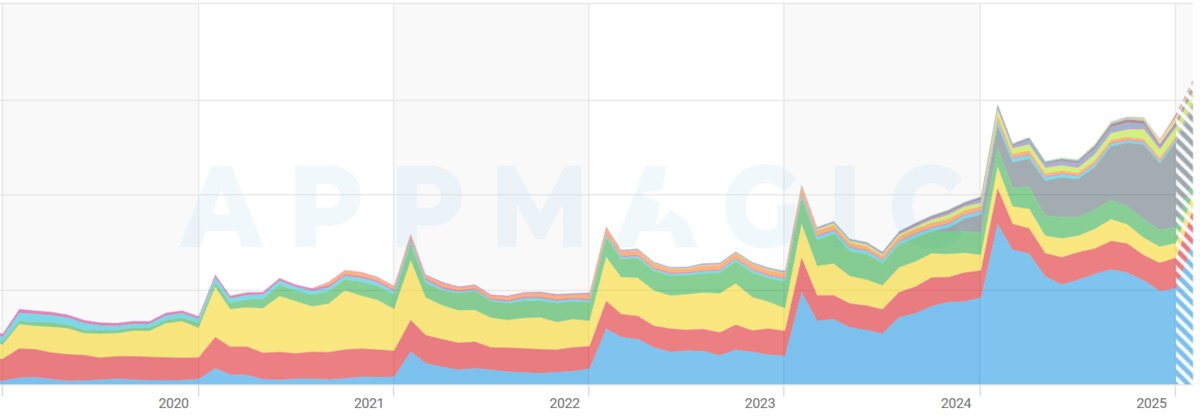
Seasonal revenue peaks in January for English learning apps (source: Appmagic)
Step 2. Consider organic page promotion
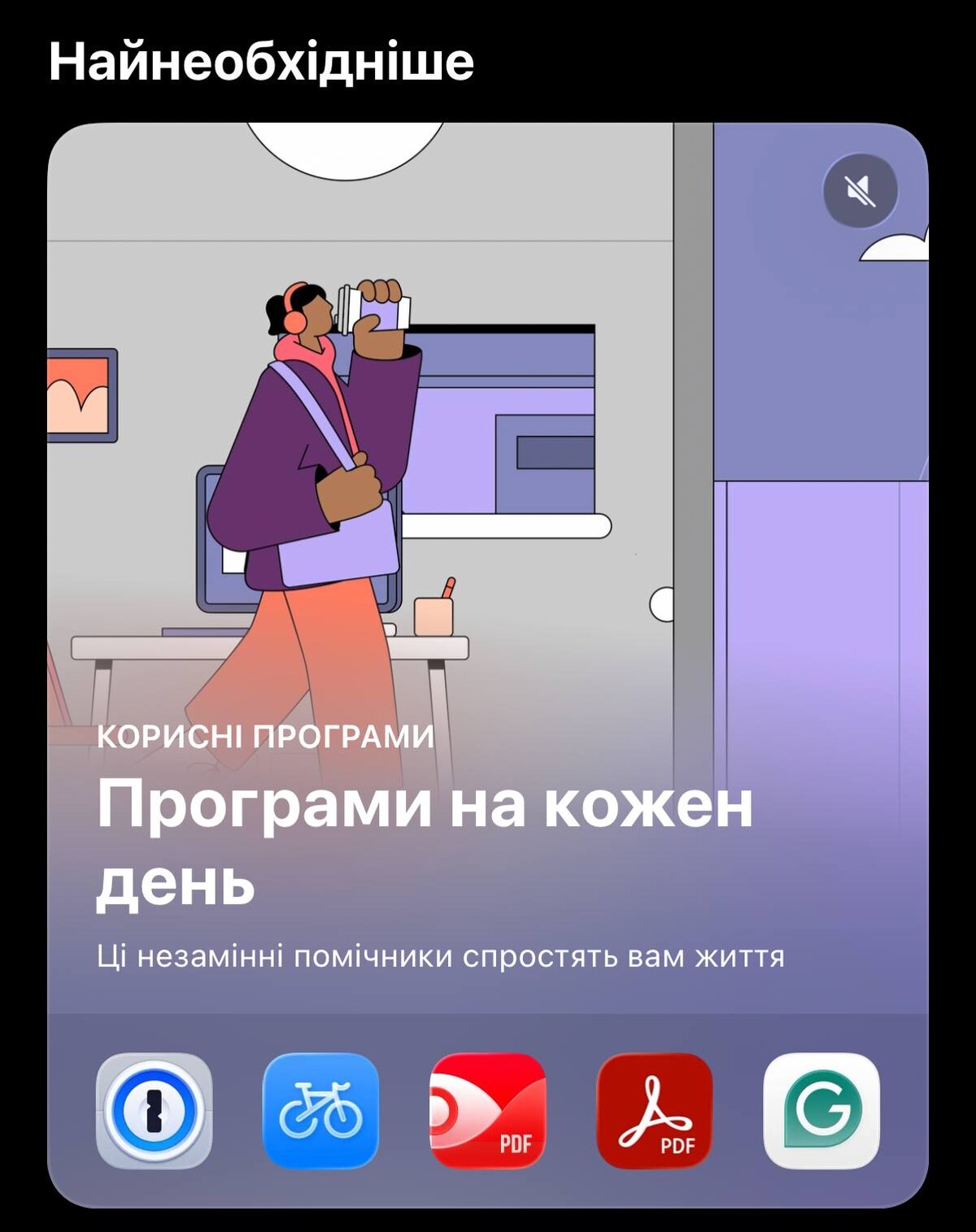
One of the features of app stores is the ability to promote your seasonal product updates to a wide audience using the In-app Events / Promotional Content tool. They can be established in Apple / Google’s author selections and bring in conditionally free traffic. This gives a lot of advantages — attracting new users, better retention of old ones, and, of course, higher profits.
Lifehack 1. Keep an eye on the curated stories and optimize your product for them. For example, every year the App Store has a «Back to School» curated collection.
Lifehack 2. Use DeepLinks for AppStore In-app Events to improve the user experience by targeting users to the exact segment of the application that suits their intent.
Organic visibility on stores largely depends on how accurately a product matches real user search queries. That’s why the next step is to work with seasonal semantics.
A selection of applications from the App Store
Step 3. Adjust semantics to the season
The semantic core responds to user needs in the product. On the one hand, if more users need fitness apps in the winter, semantics will increase due to different search query options.
On the other hand, some keywords may lose relevance completely. For example, queries about Christmas gifts are almost non-existent in the summer, and interest in watching the World Cup only arises once every four years.
Therefore, it is worth reviewing the semantic core not only when there is a seasonal change, but regularly. After all, user needs are changing, and competitors are just waiting for the opportunity to take advantage of this.
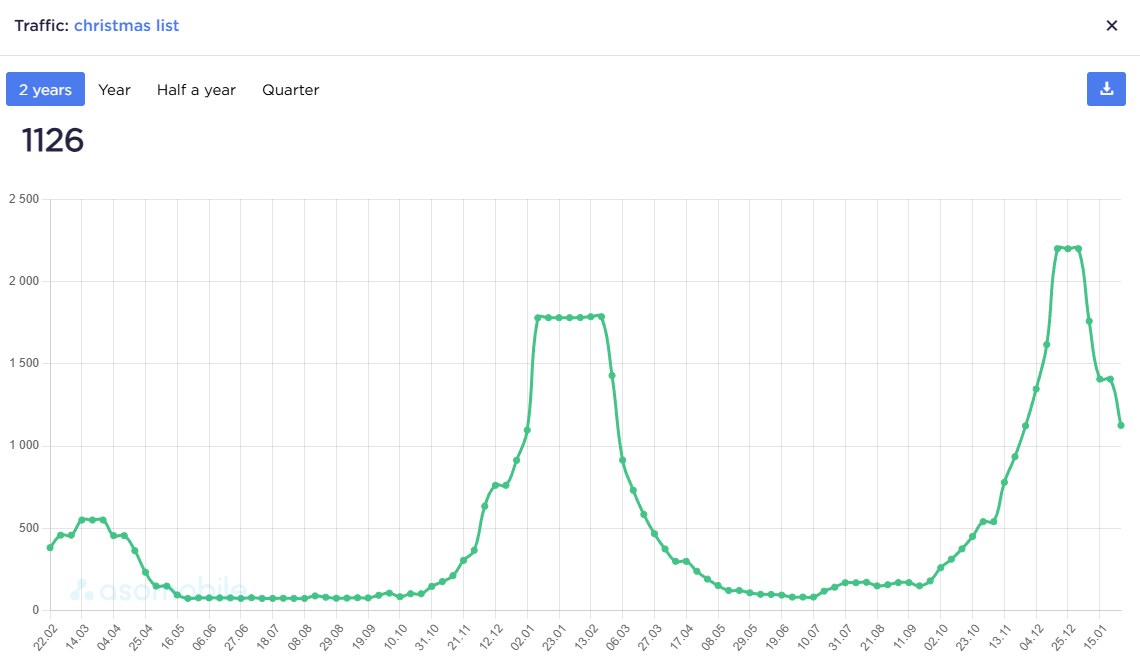
Traffic changes for the keyword 'christmas list' over the last two years — peaks in the winter season (source: Asomobile)
Lifehack 1. In addition to using keywords in metadata, you can use the same keywords in the visual part. Even by writing keywords in screenshots, there is a chance to increase the conversion rate from search results to downloads.
Lifehack 2. Many seasonal keys can be found in the semantics of previous years' competitors, which makes it possible to plan semantic changes in advance.
Even the most perfectly chosen semantics won’t work to their full potential if the app page doesn’t convince the user to install the product. This is where visual communication comes into play.
Step 4. Visual changes are a must-have, but snowflake icons are not enough
Seasonal updates are often limited to decorative elements: snowflakes, pumpkins or holiday accessories on icons. However, the fact of a visual change alone does not guarantee a traffic boost. The visual should not only carry the message «We have updated, we are relevant», but also say «You will get something more with us». After analyzing product changes and search trends, it is worth focusing on those features that are most relevant to the user during this particular season.
Lifehack 1. Changing the icon will affect two placements — the app’s visibility from search (download conversion rate) and the already downloaded app on the desktop. Changing the screenshots will only affect users from search. However, both elements have great potential if used correctly, so it’s worth testing both.
Lifehack 2. The first screenshots on the application page will play the most important role. You should not put seasonal functionality on the last screenshots, it is better to weave them into the main ones.
When the product is ready, the semantics are adapted, and the visual presentation enhances the value of the updates, you can scale the result through paid engagement channels.
Step 5. Plan promotional activities depending on the seasons
During the holidays, advertising rates change radically: before the holidays, there is a «boom» as all the companies in the world compete with each other to get users. And after the holidays, everyone usually stops their aggressive campaigns.
In addition to changing rates, approaches to customer acquisition are also changing. During this period, it is worth acting depending on the size of the application and budgets: attract customers before and after the «boom» or invest money in the «boom», because there may be more traffic at this time.
Life hack 1. You shouldn’t blindly trust the trends of past years, because trends change, and the market never stands still. A solution that worked yesterday may fail today due to three key factors: changing algorithms, external context, and audience fatigue.
Life hack 2. All of the above life hacks can be applied to advertising approaches.
All of these steps work together, not in isolation. The greatest impact occurs when a team builds a continuous cycle of planning, testing, and optimization.
Instead of a conclusion
The key to effective seasonality is a closed loop: plan, analyze, improve. The quality of the plan directly affects the result, and a thorough analysis of past campaigns forms the basis for future victories. The ideal analysis provides answers on three levels:
statements of fact («What worked?»);
understanding the reason («Why did it work?»);
mechanism of influence («How exactly did it work?»).
But all of these answers should work towards one main goal — the movement of your North Star metric.