Хочете будувати кар’єру в Data Science та AI? Vodafone Big Data Lab відкриває новий набір —>
Наталя ХандусенкоWork
18 September 2026, 13:11
2026-09-18
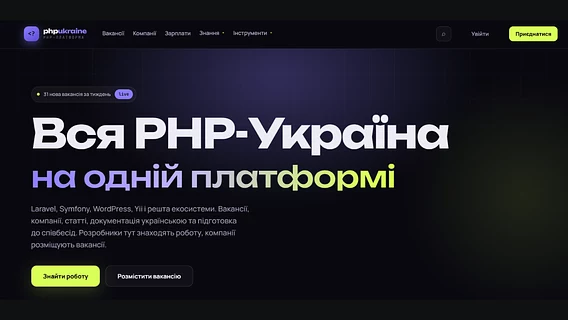
A Ukrainian developer has created a single platform for PHP specialists. How PHP Ukraine brings together vacancies, companies, knowledge and tools in one place
The Ukrainian IT market is saturated with general job search platforms, but highly specialized ecosystems remain rare. In an effort to solve the problem of information fragmentation for PHP specialists, experienced developer Mykhailo Levytskyi launched his own project that combines vacancies, analytics, tools, and knowledge into a single system.
The Ukrainian IT market is saturated with general job search platforms, but highly specialized ecosystems remain rare. In an effort to solve the problem of information fragmentation for PHP specialists, experienced developer Mykhailo Levytskyi launched his own project that combines vacancies, analytics, tools, and knowledge into a single system.
From your own need to the product
Mykhailo Levitsky is a Senior PHP Developer with almost nine years of experience in IT. He started his career with classic web development (WordPress, WooCommerce, OpenCart, Joomla), after which his main stack became PHP and Laravel. The IT professional has devoted the last almost five years to the development of internal business systems, CRM, HRM, API, integrations and automation of business processes. In addition to the main stack, the developer also has experience working with the Go language.
The idea of creating a platform arose naturally when Mykhailo began preparing for interviews and was faced with the fact that the necessary information was posted on dozens of different resources.
When I started to look more actively at vacancies and prepare for interviews, I once again encountered the fact that information about PHP is very scattered. Vacancies are on different platforms, information about companies is separate, materials for preparing for interviews have to be collected from different sources, and documentation is mostly in English.
Initially, the author planned to limit himself to a job aggregator, but quickly realized the need to scale the idea. Thus, the concept of PHP Ukraine was born.
"PHP Ukraine is an independent platform for the Ukrainian PHP ecosystem, which brings together vacancies, companies, salaries, developers, knowledge, and tools in one place. I am more interested in developing the product vertically around PHP, that is, staying within the same ecosystem, but gradually covering more needs of developers and companies," explains the Senior PHP Developer.
How PHP Ukraine works
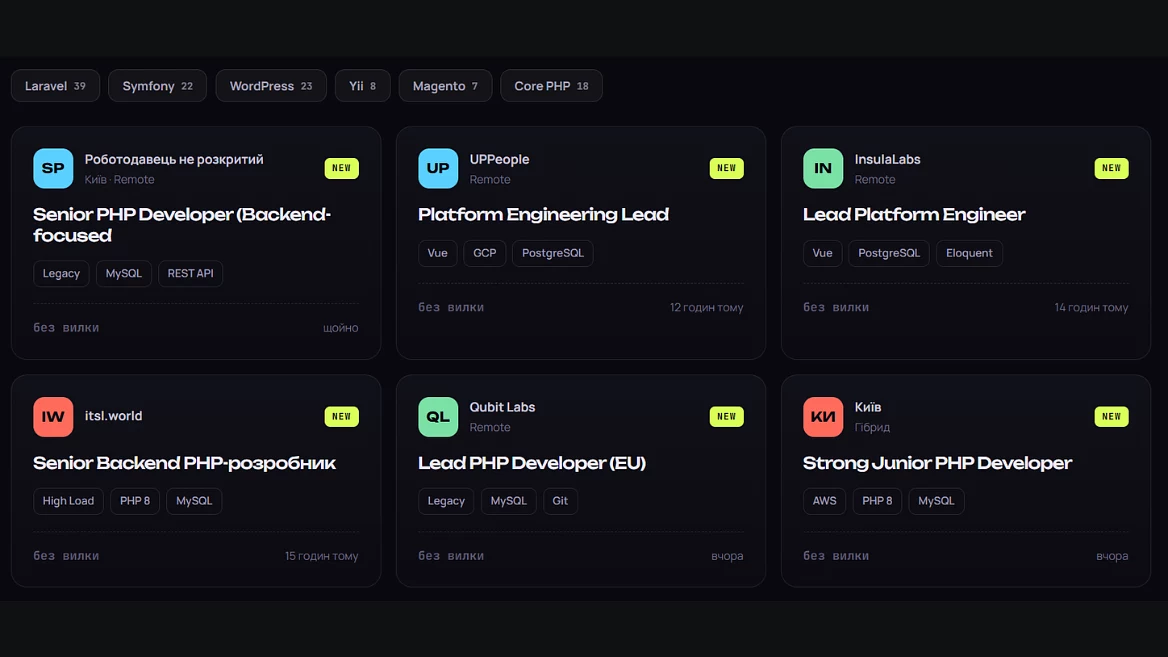
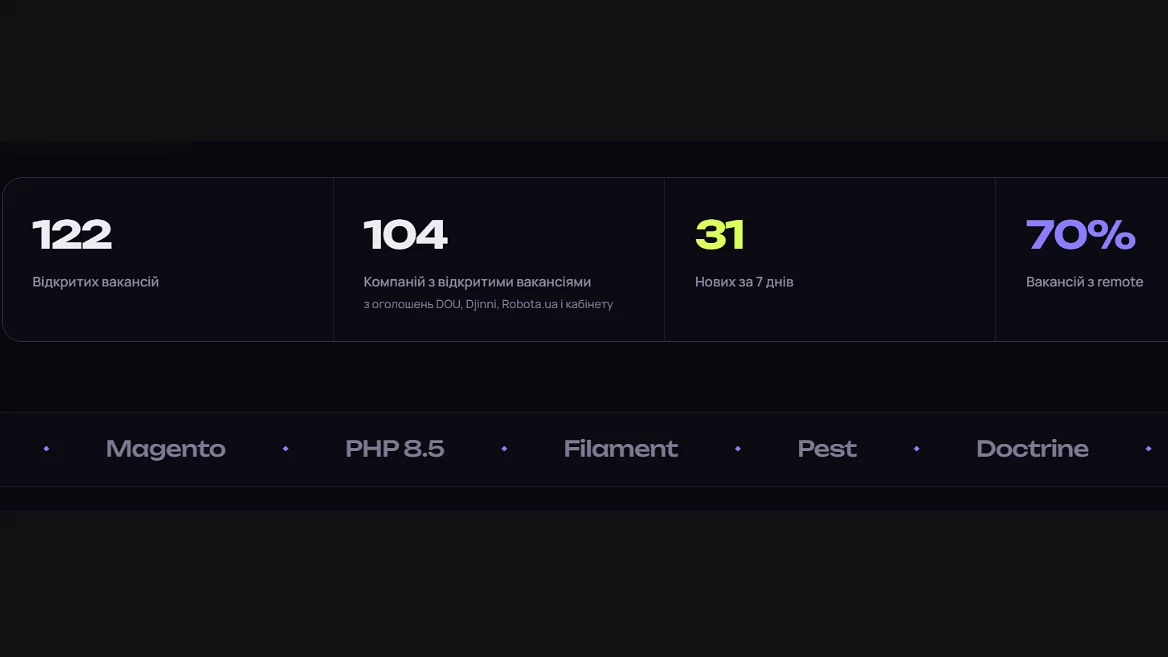
The central element of PHP Ukraine is the vacancies module. Every hour, the system collects offers from leading platforms (DOU, Djinni, robota.ua) and processes them: filters out irrelevant positions, normalizes data (stack, level, salary, work format) and removes duplicates. In addition, employers can post vacancies directly.
The platform covers several key areas
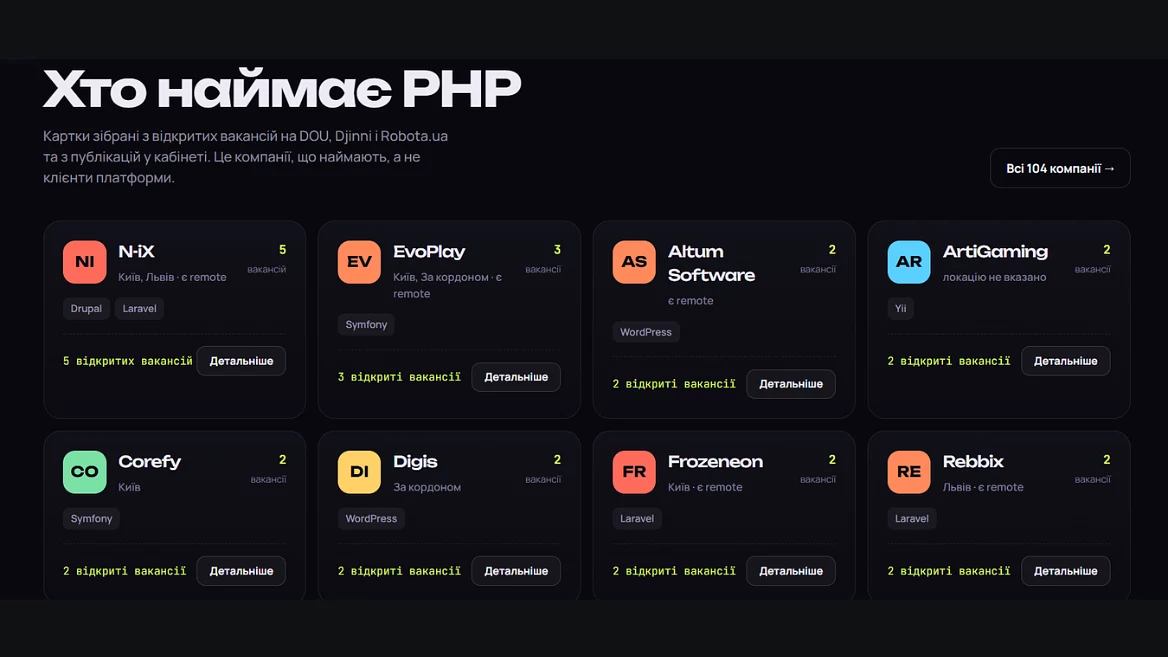
Company directory: profiles with stack, locations, hiring history, and page verification option.
Salaries and analytics: comparison of the offered salaries in vacancies with the salary expectations of candidates (aggregated and anonymous).
Personal accounts: separate interfaces for candidates (review tracker, selection of vacancies for the stack) and employers (hiring management by stages).
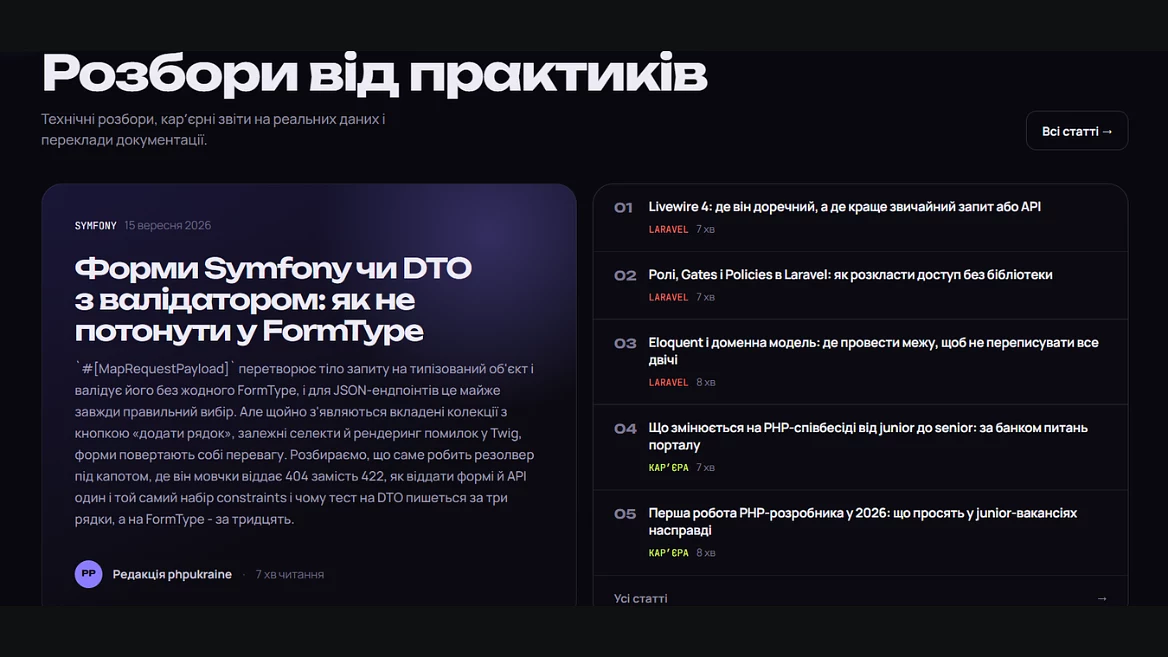
Knowledge base and tools: 117 interview question cards, 67 pages of documentation in Ukrainian, 34 articles, and 28 online tools for developers (working with JSON, Base64, JWT, Regex, etc.).
Privacy: own analytics without using cookies and storing IP addresses.
A module is currently under development that will allow developers to publish their own projects — open-source libraries, SaaS products, or PHP packages.
The role of AI and the technical stack of the project
Mykhailo began developing the platform in early September 2026 and is implementing it independently. To speed up processes, he actively involves artificial intelligence.
“I write the code in conjunction with Claude Code. I define the architecture, business rules and constraints, and set tasks. Coding agent helps with implementation, refactoring, and testing. Separately, AI is used to prepare drafts of content: an agent is launched on the local PC once an hour, which prepares materials for review. There is no automatic publication — nothing gets on the site without my proofreading,” the developer shares.
Mykhailo emphasizes that AI is not used to generate statistics — all figures and market analytics are calculated solely on the basis of real data from the database.
Technical architecture of the platform:
Backend: PHP 8.4, Laravel 13, PostgreSQL 17.
Frontend: Livewire, Alpine.js, Tailwind CSS 4, Vite (without using React/Vue).
Admin panel: Filament.
Code quality: Pest (autotests), PHPStan (static analysis at level 8).
Infrastructure: VPS in Docker, FrankenPHP application server, Cloudflare R2 for files.
Architectural approach: Domain-Driven Design (DDD), the code is divided into 9 autonomous modules.
Development cost and monetization
Currently, the project is fully funded by the author's own funds. Direct financial costs are insignificant and limited to paying for VPS, domain, and email services. Mykhailo calls his own time his main investment.
The platform is in Early Access and is completely free.
"There is no monetization right now. First, I want to understand which parts of the product developers and companies really need, and then build a business model around that. I would like to leave the basic capabilities for developers free, and consider monetization through B2B services for companies, employer branding, and advanced analytics," Mykhailo notes.
Current stage and future plans
Since the public announcement took place recently, the project is currently in the stage of collecting initial feedback, testing hypotheses, and indexing by search engines.
The developer's immediate plans include:
Direct parsing of career pages: collecting vacancies directly from company websites, not just from job boards.
Personalized subscriptions: notifications about new vacancies based on specified filters.
In-depth market analytics: highlighting trends by technology (Laravel, Symfony, databases) and comparing supply and demand.
Transparency rule: introduction of a mandatory indication of the salary range for vacancies published directly on PHP Ukraine.
Launch of the products section: an opportunity for IT professionals to present their own developments within the community.
Mykhailo Levytsky's main long-term goal is to make PHP Ukraine the first and main resource that Ukrainian PHP developers will turn to for job search, market analysis, training, and presentation of their own projects.