Марія БровінськаThat's Life
27 October 2025, 08:22
2025-10-27
Hong Kong scientists have invented an effective alternative to solar panels. How "solar windows" work, converting more than 6% of light into energy
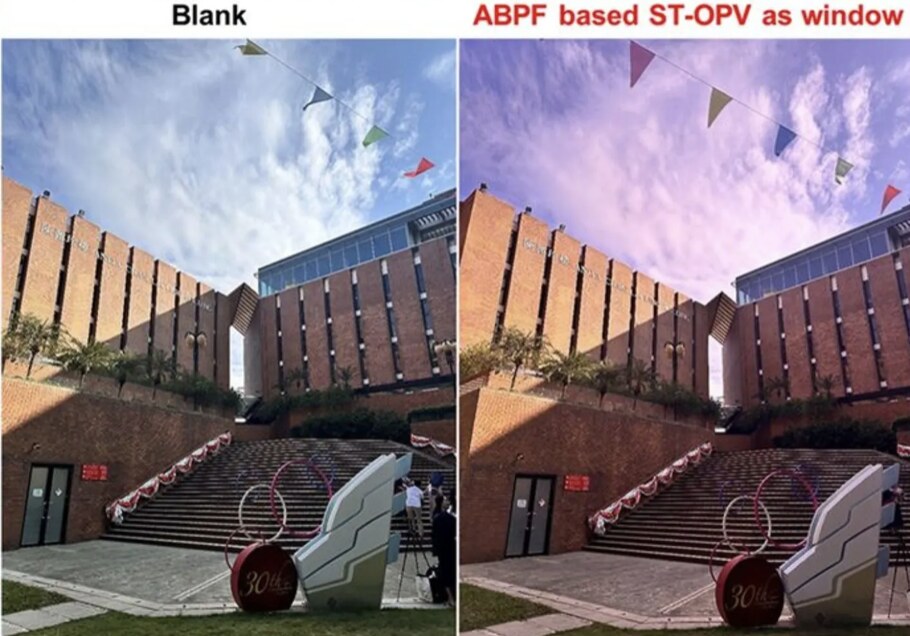
Scientists from the Hong Kong Polytechnic University have taken another step towards a world where every window generates electricity and architecture becomes part of the energy grid. They have introduced breakthrough technology for semi-transparent solar cells, created a new method for evaluating materials for «solar windows,» and achieved a record light conversion efficiency of 6,05%.
Scientists from the Hong Kong Polytechnic University have taken another step towards a world where every window generates electricity and architecture becomes part of the energy grid. They have introduced breakthrough technology for semi-transparent solar cells, created a new method for evaluating materials for «solar windows,» and achieved a record light conversion efficiency of 6,05%.
Hong Kong scientists have created a technology that is many times more efficient than solar panels. Transparent solar windows from PolyU have achieved record efficiency: 6,05% of light is now converted into energy. The development demonstrates improved thermal insulation and operational stability, writes interestingengineering.com. They can be used as windows, screens, facade decoration.
How it works
A team led by Professor Gan Li and researcher Yu Jiangsheng developed the FoMLUE (Figure of Merit for Light Utilization Efficiency) metric, a new parameter that evaluates how well materials utilize light in semi-transparent solar cells (ST-OPV).
This ratio takes into account three key factors:
light transmission — how transparent the window remains;
the energy gap of the material;
the current density that the element can generate.
Using FoMLUE, the scientists were able to select the best combinations of materials and create translucent solar panels that surpassed all previous results. With their low manufacturing cost, eco-friendly composition and natural color when exposed to sunlight, solar windows could play a key role in creating energy-generating architecture. The researchers believe that with the right materials, buildings will soon be able to capture solar energy without sacrificing design or visibility.
Semi-transparent solar cells (ST-OPV) based on ternary materials with the highest FoMLUE values demonstrated improved thermal insulation and stability compared to other samples and achieved a record light utilization efficiency of 6,05%. Photo: PolyU.
Savings in action
Unlike traditional panels, transparent solar cells can be integrated into windows, facades or displays without disrupting the design. They simultaneously transmit light and generate energy — ideal for smart buildings, electric vehicles and greenhouses.
The researchers found out how location affects the efficiency of solar windows. This was helped by a transient model to simulate electricity generation, cooling and heating effects of buildings. Applying the model to 371 cities across China, the scientists found that more than 90% of them would save significantly on their electricity bills. The best results were achieved in regions with hot summers and mild winters, where the annual total energy savings reached 1.43 GJ per square meter.
This discovery suggests that double-glazed windows with transparent solar panels could be particularly effective in tropical and subtropical climates, where there is a lot of sunlight and a high need for air conditioning.
Great prospects
Scientists are confident that transparent solar cells will become a key component of sustainable cities of the future.
«Our results demonstrate that such materials are not only effective but also adaptable to different climates. This opens up great prospects for commercial use in 'smart' windows,» says Professor Li.
A similar technology was previously invented by American engineer Jim Poll. He created renewable electricity technology by improving ClearPower windows so that they could work as solar panels.
And experts at the American company WAVJA, based in New York, have created tiny globes — ranging from just over an inch to almost four inches in size — that can use both sunlight and artificial light to generate electricity.
Austrian scientists have also created miniature solar panels that can be installed on drones.
Kyivstar, Vodafone Ukraine, and lifecell are testing solar power plants in certain regions. Will this solution help maintain a stable network for 10 hours?