Промо на dev.uaAI Eng
30 July 2026, 10:00
2026-07-30
PRACTIK: How a Ukrainian manufacturer of dry dog and cat food uses AI in operational processes
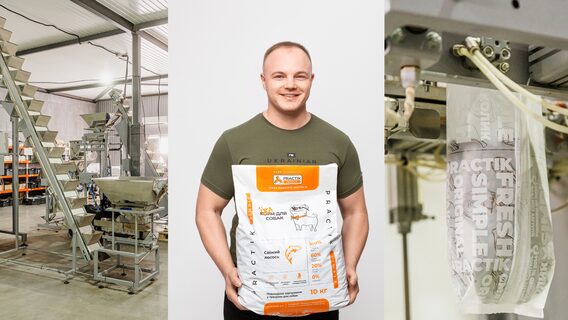
The founder of the PRACTIK brand, Ivan Zubarev, told dev.ua how the Ukrainian manufacturer of dry dog and cat food uses artificial intelligence in production, customer service, and recipe development, and why the company fundamentally leaves certain decisions only to humans.
The founder of the PRACTIK brand, Ivan Zubarev, told dev.ua how the Ukrainian manufacturer of dry dog and cat food uses artificial intelligence in production, customer service, and recipe development, and why the company fundamentally leaves certain decisions only to humans.
— Only a lazy person has written about AI in the last two years. Why did you at PRACTIK decide to integrate technology into feed production and how does your approach differ from the general trend?
Most companies are implementing artificial intelligence with one goal in mind: to make things cheaper. Fewer people on support, faster content, an answering machine that politely sends the client to nowhere. The buzzword «AI» has been added to press releases, but the processes themselves have remained old.
We have been producing food according to FEDIAF (European Pet Food Federation — ed.) recommendations for over 11 years, and we approach it differently. For us, AI is not a way to cut corners and remove humans from the process. It is a microscope that allows us to understand more deeply what is really happening in the body of pets and how food affects their quality of life.
― How exactly does this work in practice? For example, in your column «Worry that has proof»?
When most consumers see «spirulina» or «salmon» on a package, they are left with just a word that could be hiding real benefits or just a pretty label. We believe that pet parents have the right to know what each ingredient does to their pet’s body.
In this section, we explain everything directly, without vague formulations: what function the component performs, why it is in this form, and what it provides. For example, why spirulina is not a decorative supplement, or how beef and salmon work differently on muscle tone, coat, and joints.
AI helps us instantly cross-check each such explanation with the FEDIAF scientific base and research by veterinary nutritionists and translate it into plain language. But the final text is always checked by a specialist from our team. By the way, all these materials can be read on our blog in the «Scientifically about ingredients» section.
― What about customer support? AI is usually associated with annoying chatbots…
That’s why we didn’t replace people with robots. Our AI analyzes calls and correspondence, catching moments when a client has a difficult or unusual situation. It immediately notifies the team so that a person can connect to the issue before it becomes a problem.
And the «Leave a message for the owner» form on the site works like this: AI automatically determines the relevant department and directs the request there, and I personally read each letter. So your feedback always reaches the person responsible for the brand, and doesn’t get lost between the desks.
― Technologies as error prevention. Do you apply this directly in production, during the manufacture of pellets?
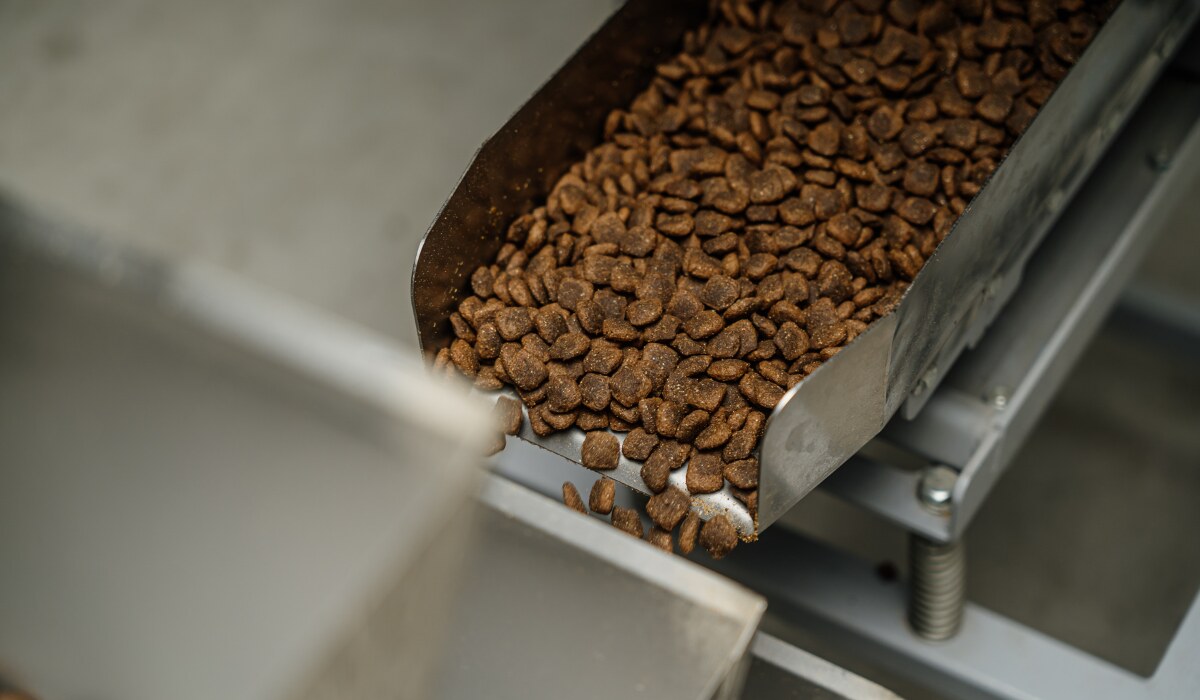
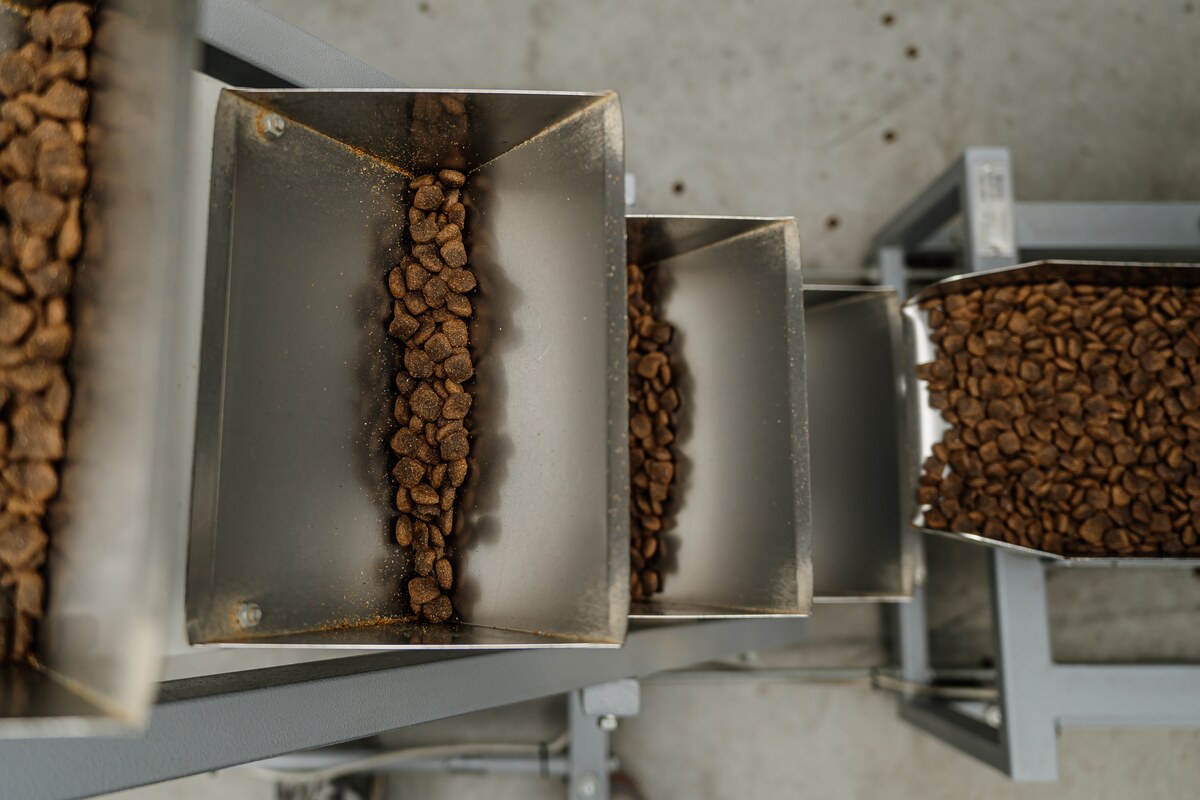
Yes, and this is one of the most interesting cases. We photograph the product at different stages of production, and AI analyzes the geometry and structure of the granules, comparing batches with each other. The system sees micro-deviations that a person might miss in a large flow.
Previously, everything depended solely on the eye and experience of a technologist. Now, AI provides a human eye where it is physically impossible to check each batch manually. Thanks to this, the pack you buy today is no different in quality from the one you bought a year ago.
― How is AI involved in the development of new recipes?
It helps us track new international research in animal nutrition and compare our recipes with current scientific data. The algorithm notices patterns between an ingredient and its effect on the body that are easy to miss in a huge data set. So the diet changes with science, not with the fashion for «superfoods.»
When we’re working on a new diet—for example, for large breed cats—AI reduces the time it takes to find relevant studies and helps assess the evidence base. Then our nutritionists get to work. The recipe is based on both the experience of the technologist and rapid data analysis. This allows us to develop new diets faster and without any compromises on safety.
«It sounds like AI is permeating the entire company. What’s going on inside your operational processes?»
We have dashboards that pull up the results of all advertising campaigns in real time — we make decisions based on data, not guesswork.
In recruiting, AI helps with initial resume analysis and structuring interview results, but it does not automatically screen out anyone or replace an HR specialist.
In addition, AI transforms product matrices, launch calendars, and ingredient databases into clear structures. Our own «vibe coder» allows us to launch AI solutions in days, without waiting months for external contractors.
― As far as we know, you are preparing an external AI project for pet parents. What is it about?
Yes, we are soon launching an independent AI food composition analyzer. Pet parents will be able to send a photo or link to any food — ours or competitors — and receive an objective analysis based on metrics that we have developed based on 11 years of PRACTIK experience.
We are building this not for profit, but because we are not afraid of open comparison. A person will be able to check for themselves, without our prompting, whether what they are feeding their pet is truly whole food, and not just food with a pretty label.
― Is there a line where you say stop to algorithms? What decisions would you never trust to artificial intelligence?
AI only works when there is clear context and data validated by a human «product champion.» We fundamentally leave three things to the team:
Final formulation decisions. The cost of error is too high when it comes to animal health.
Assessing the safety and quality of ingredients. No matter how «wow» the AI describes them.
Hiring people for a team. Here, the choice is always made by a person, not an algorithm.
The responsibility for the product and the lives of pets lies with the company, not the neural network.
― How would you summarize the role of technology at PRACTIK today?
In each of the directions, AI remains a tool, not a replacement for a person. We have one goal: for pets to live longer and healthier, and for every pet parent to understand why the bowl has such and such a composition. This is our «School of Love» in practice — not just producing food, but teaching responsible choices.
«Чи є у мене талант, якщо комп’ютер може імітувати мене?». Штучний інтелект пише книги авторам Amazon Kindle. The Verge поспілкувався з авторами та виявив багато цікавого
Письменники-романісти використовують штучний інтелект для створення своїх творів. Видання про технології The Verge поспілкувалося з письменницею Дженніфер Лепп, яка випускає нову книгу кожні дев’ять тижнів, й дізналося про те, як працює штучний інтелект для написання романів. Наводимо адаптований переклад статті.
Have important news to share? Message our Telegram bot
Key events and useful links in our Telegram channel