Хочете будувати кар’єру в Data Science та AI? Vodafone Big Data Lab відкриває новий набір —>
Вікторія ГорбікAI Eng
24 January 2025, 09:00
2025-01-24
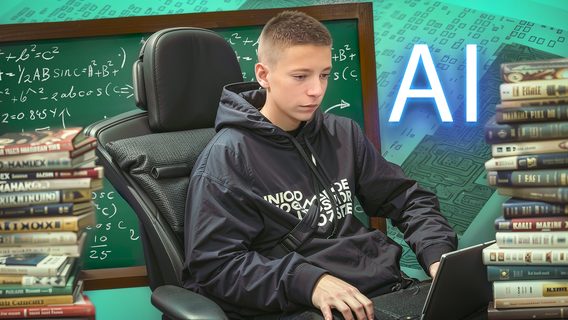
"Advanced Encyclopedia." A 15-year-old high school student has swapped sports for technology and is developing an AI assistant to help with learning. How teachers view it
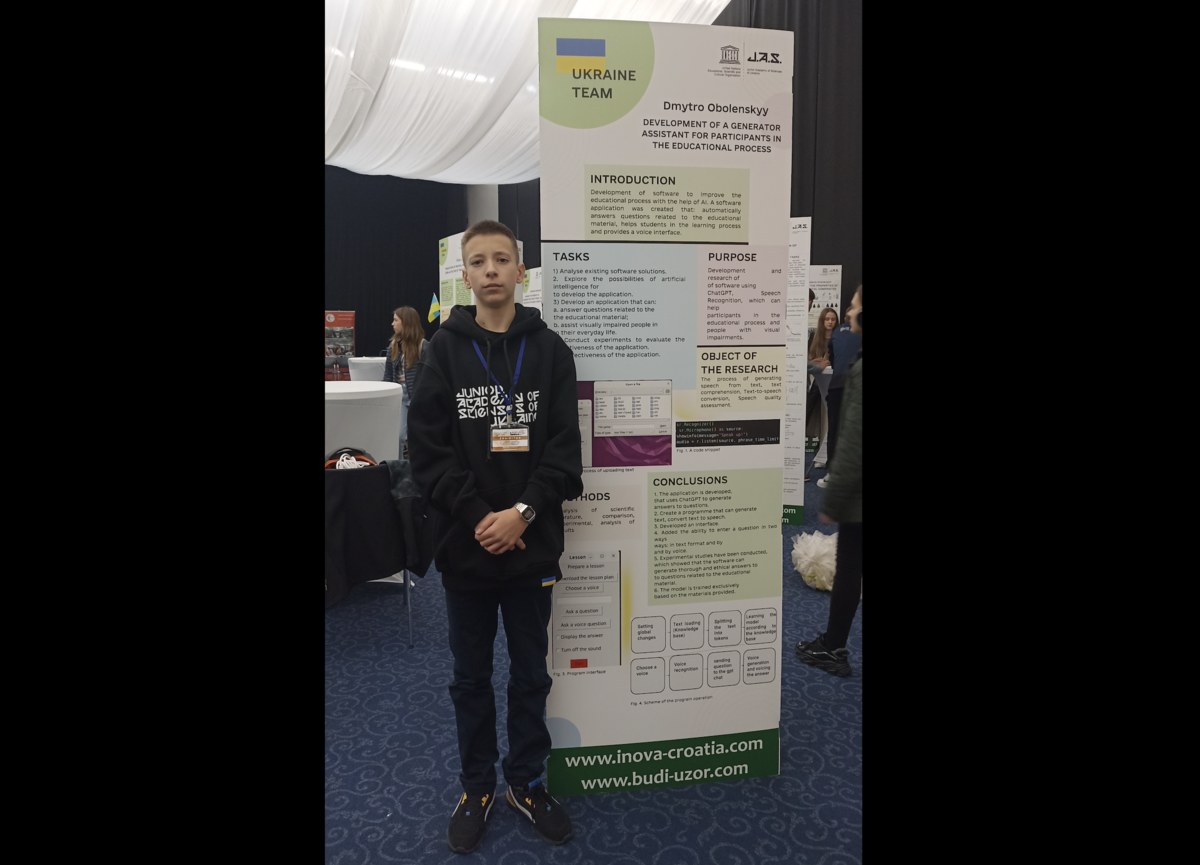
15-year-old Dmytro Obolensky, a 10th grade student at the Brovary Monomax Lyceum and a Member of the National Center «Small Academy of Sciences», played football as a child. However, he has been interested in robotics for two years now. He followed in the footsteps of his father, a programmer. The guy developed an AI assistant that aims to help educators in their studies, and whose answers can be trusted (unlike ChatGPT).
Dmytro told dev.ua what attracts him to the technical field, how the assistant generator he created will help in the learning process, and in what direction the guy plans to develop further.
15-year-old Dmytro Obolensky, a 10th grade student at the Brovary Monomax Lyceum and a Member of the National Center «Small Academy of Sciences», played football as a child. However, he has been interested in robotics for two years now. He followed in the footsteps of his father, a programmer. The guy developed an AI assistant that aims to help educators in their studies, and whose answers can be trusted (unlike ChatGPT).
Dmytro told dev.ua what attracts him to the technical field, how the assistant generator he created will help in the learning process, and in what direction the guy plans to develop further.
Programming instead of football
Dmytro Obolensky lives in Brovary with his father, a programmer, his mother, an economist, and his younger brother. As a child, he, like most boys, was fond of football. However, he decided not to become the future Ronald, because at the age of 13 he was captivated by the technical sphere. The guy accidentally came across a video on YouTube, where they talked about robotics and programming. He began to study the topic in more detail and, as he recalls, realized that it was not difficult, and even very interesting.
«Robotics attracts me with the opportunity to see the magic, how virtual code somewhere on the screen can turn into real action that can be seen in the real, not binary world,» the guy says.
Dmytro Obolensky (Photo from personal archive)
Dmytro taught himself to program. It all started with a book by Paul Berry, «Head First. Python,» which he was given as a gift. It is an easy-to-understand guide to Python, created on the basis of the latest achievements in cognitive science. According to the guy, everything in the book was useful to him. He believes that with the help of the information collected there, he learned to program from scratch. Further, the help of his father greatly contributed to his studies.
The guy liked Python the most, but he says that he also often uses C++, and in the future he plans to learn C#.
At the source
Later, the Small Academy of Sciences of Ukraine (MAS) entered Dmytro’s life when, in the 9th grade, a friend suggested that he write his own project. In September of last year, the idea of developing it was not long in coming.
During online learning, Dmytro noticed that many of his classmates had difficulty understanding the lesson topic, especially in physics. Students sought explanations from various artificial intelligences, such as ChatGPT, Gemini, Copilot, which in turn gave them incorrect answers.
What can an AI assistant do?
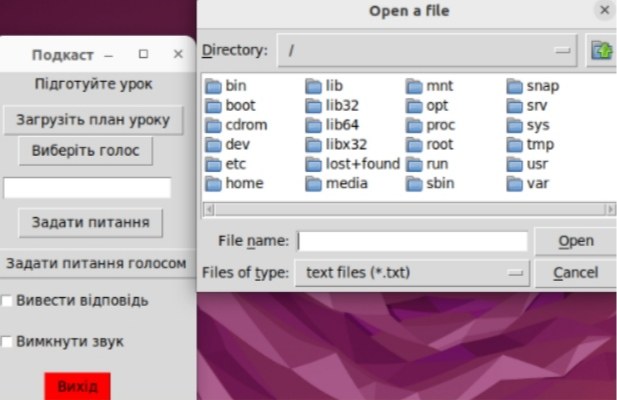
The solution developed by Dmitry works as follows:
download the lesson plan as a text file;
ask a question on the necessary topic.
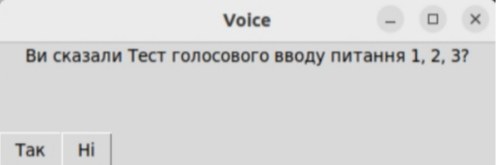
Screenshot from the AI assistant program
The AI assistant will provide answers in text or voice messages. In addition, the program has the ability to identify voices for asking questions and has a voice interface, which can help people with visual impairments.
Screenshot from the AI assistant program
The program takes answers exclusively from the information provided, which in turn almost completely eliminates the possibility of an incorrect answer. Dmytro is sure that the solution can be useful for students or various support services that are usually asked monotonous questions.
«Advanced Encyclopedia»
The first users and testers of the AI assistant were Dmytro’s classmates. «It is people like them that my project is primarily aimed at,» the guy noted.
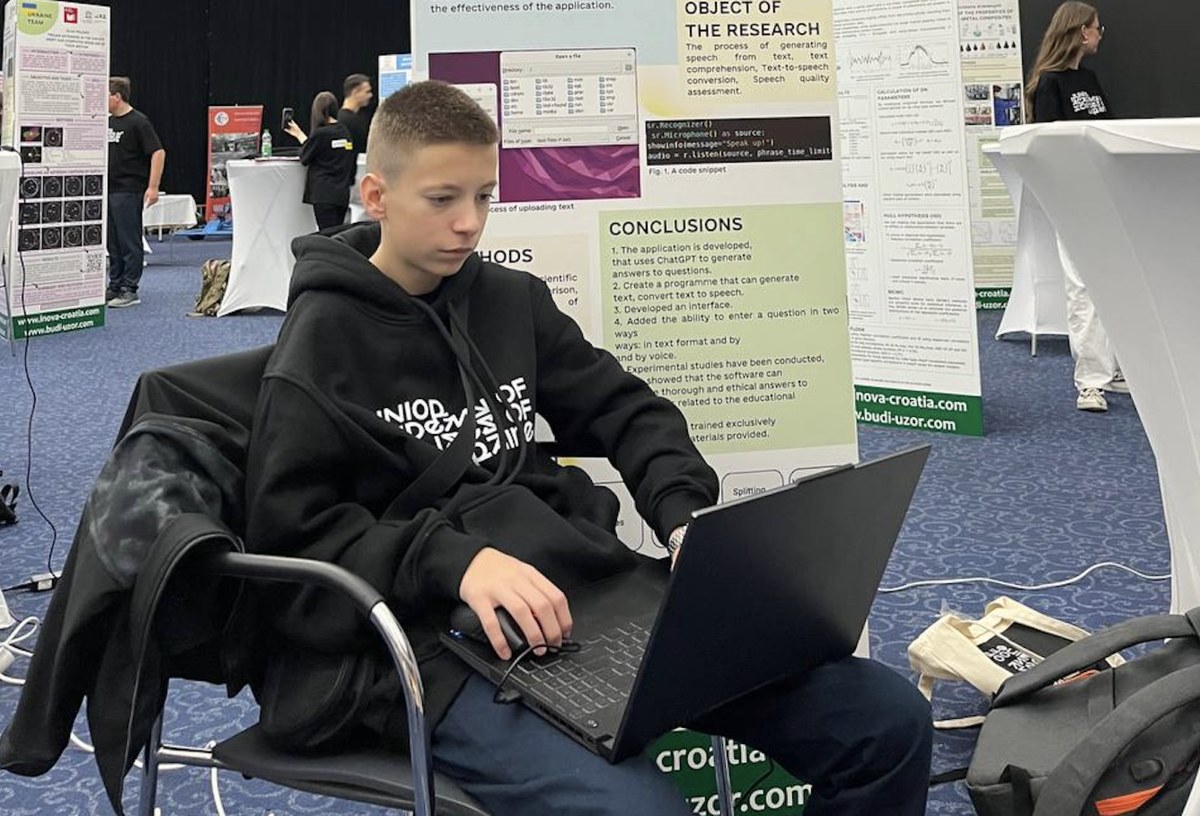
Dmytro Obolensky (Photo from personal archive)
According to reviews, the students liked the program. «Because it was something new and something that really works,» adds the young developer. The teachers were not too opposed to its use, but considered the solution, according to Dmytro, only as an advanced encyclopedia.
«The program will help people use the necessary parts of AI work in an easier way and be confident in the result,» the young developer emphasized.
About the details of the process
The program is written in Python. In addition, the guy used ChatGPT in his work. It took Dmytro about a month to develop it. The most difficult and unexpected stage was the forced transition to a newer version of ChatGPT.
Dmytro Obolensky (Photo from personal archive)
The project is currently in the final stage of development:
it is possible to choose the size of the interface,
voice recognition and generation added.
Additionally, Dmytro translated the AI assistant into English.
Participants, money and recognition
The guy did all the work himself, sometimes asking for help from his scientific supervisor, mathematics and computer science teacher Olena Zhiglii. However, in the future, the developer plans to invite someone to help with releasing the solution on various platforms, such as the Microsoft store and Google Play.
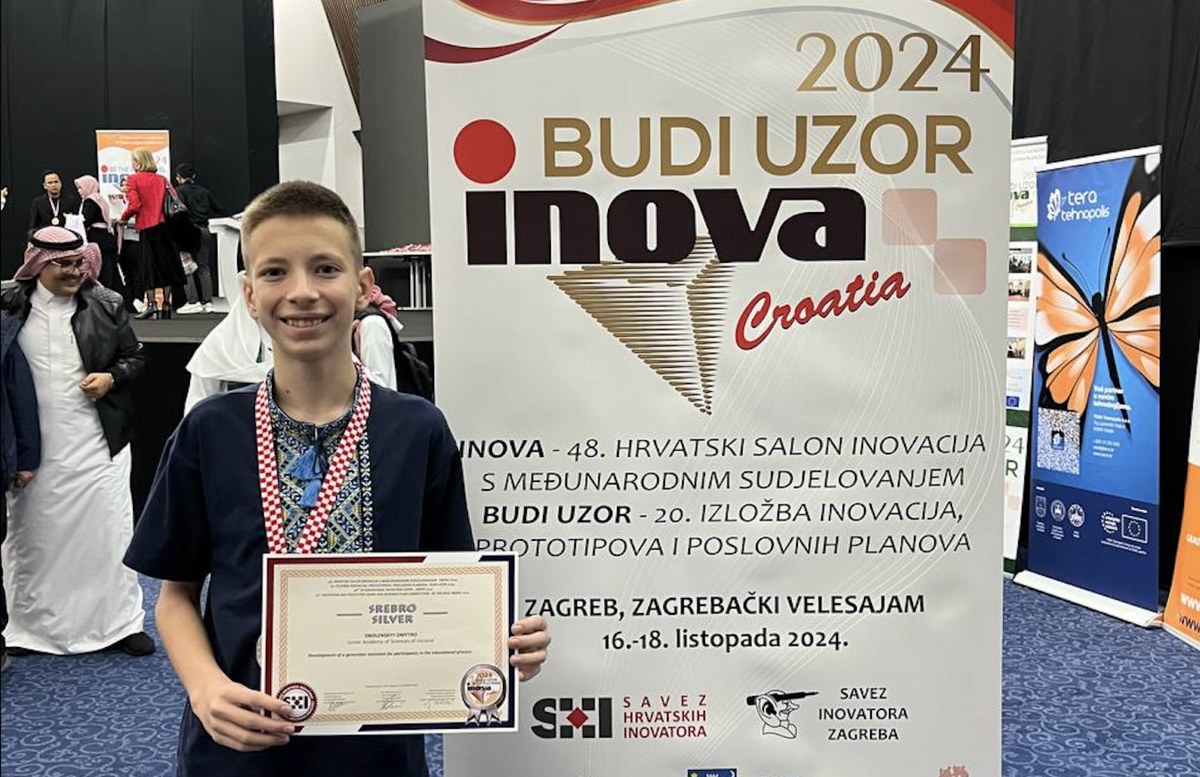
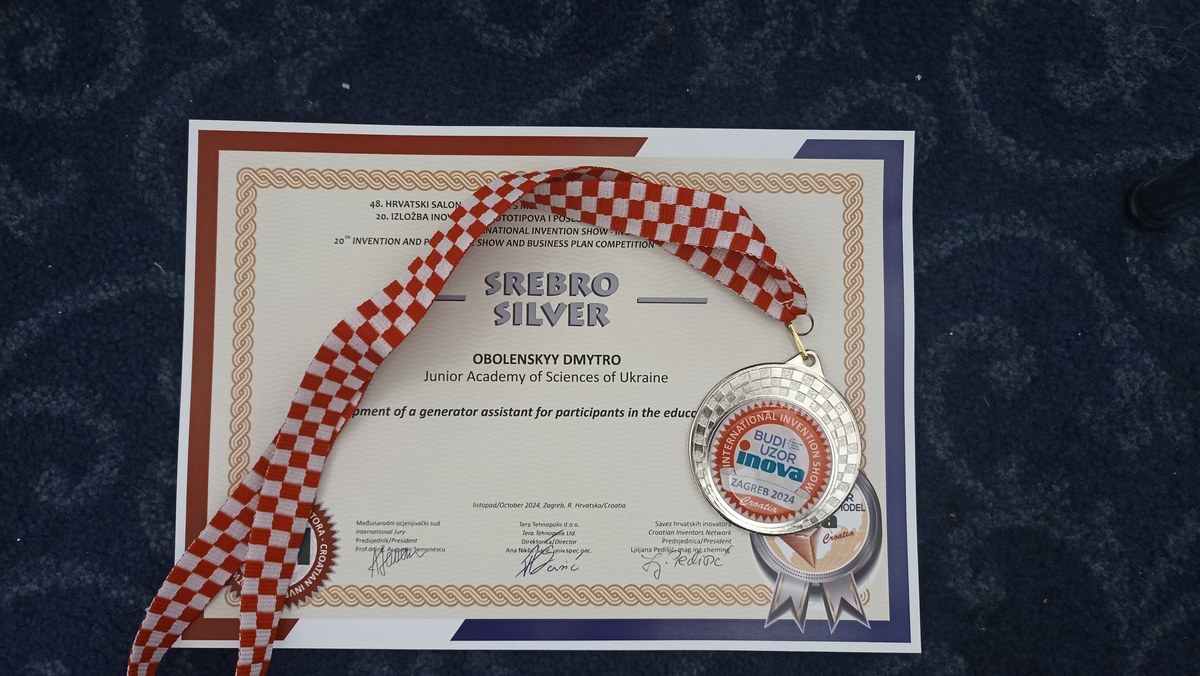
Silver award for Dmitry Obolensky at the international innovation competition INOVA 2024 (Photo from Dmitry’s personal archive)
Dmytro did not invest money in the development, only his knowledge and skills. He still wants the project to be completely free, and people who want to support it could send funds to him personally.
The project has already been recognized at the international innovation competition INOVA 2024, held in mid-October last year in Zagreb, Croatia, where it took second place.
About plans
For now, Dmitry is forced to suspend work on the solution. All his attention is currently occupied by a new project that can help our military. However, he does not leave the idea of developing an AI assistant. As soon as he manages to free up time, the guy plans to take up the opportunity to distribute the program on various platforms, in particular, Microsoft store or Google Play, where people from all over the world will be able to use it.
After graduation, the young developer is already planning to enter Kyiv Polytechnic Institute to fulfill his dream of becoming a programmer. However, he doesn’t dare to think too far ahead.
«Unfortunately, nowadays it’s hard to even think about what might happen in 10 years, both with the project and with myself. Therefore, I just live, learn, dream, and work on my developments,» says Dmytro.
«I found out that you can actually make chatbots for money, and I thought, ‘That’s pretty cool. Wow.’» The story of a 15-year-old school programmer who has been on the «you» side of technology since he was 7
«Prevent wars and promote peace.» A 16-year-old startuper has developed a solution that will protect Ukrainian drones from electronic warfare and accelerate victory
Як нейромережі бачать вільну та незалежну Україну? Тест dev.ua
Нейронні мережі для генерації зображень бачать світ по-своєму, їхню логіку зрозуміти часом зовсім неможливо. Але таки хочеться. На честь Дня Незалежності України редакція dev.ua вирішила провести невеликий експеримент.
Ми задали чотирьом різним нейронним мережам п’ять однакових запитів: «прапор України», «День Незалежності України», «український Крим», «перемога України» та «українці». Отриманими результатами ми ділимося з вами нижче.
У TikTok тепер можна генерувати фон за допомогою нейромережі. Ми протестували її та ділимося результатами
У TikTok з’явилася нова функція «Розумний фон». З її допомогою як фон для тіктоків можна підставляти згенеровані нейромережею зображення. Редакція dev.ua протестувала цю технологію і ділиться своїми враженнями.