Хочете будувати кар’єру в Data Science та AI? Vodafone Big Data Lab відкриває новий набір —>
Марія БровінськаAI Eng
22 October 2026, 09:00
2026-10-22
“Previously, they asked for up to $1 million for such an application.” How a director from Odessa creates programs for filmmakers with the help of AI without knowing how to code
For 14 years, Serhiy Pudych dreamed of a tool that would help him organize his archive of dozens of hard drives. Now he has DriveShelf, which has reduced the search for the necessary files from 30–60 minutes to 30 seconds, and several other applications for filmmakers. Claude Code writes the code for him, and Serhiy himself determines what problem to solve, tests the result and releases products on the App Store. He says that creating applications has become more accessible than ever, and the main challenge now is marketing and sales. We tell the story of an artist who became a vibecoder.
For 14 years, Serhiy Pudych dreamed of a tool that would help him organize his archive of dozens of hard drives. Now he has DriveShelf, which has reduced the search for the necessary files from 30–60 minutes to 30 seconds, and several other applications for filmmakers. Claude Code writes the code for him, and Serhiy himself determines what problem to solve, tests the result and releases products on the App Store. He says that creating applications has become more accessible than ever, and the main challenge now is marketing and sales. We tell the story of an artist who became a vibecoder.
Who is Serhiy Pudych?
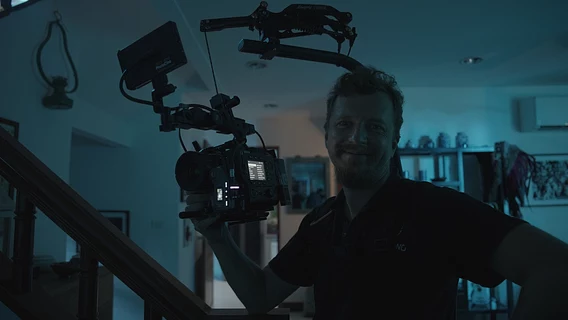
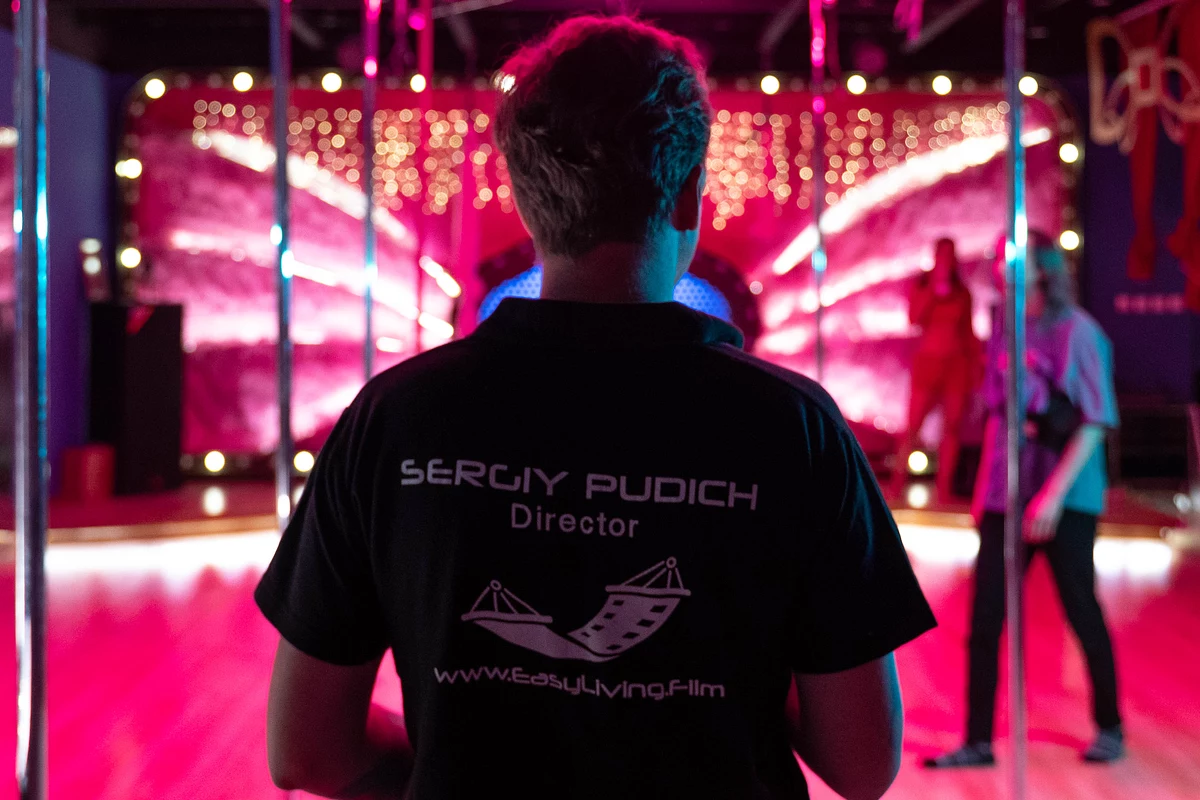
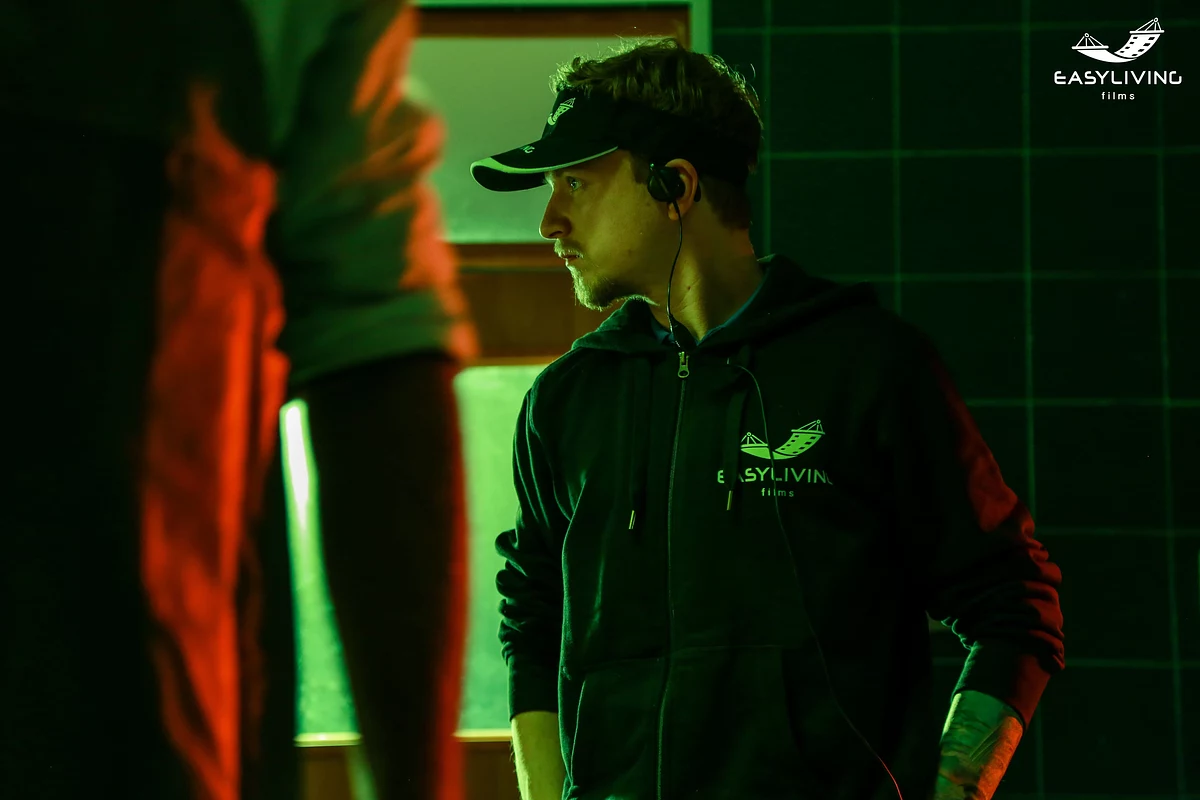
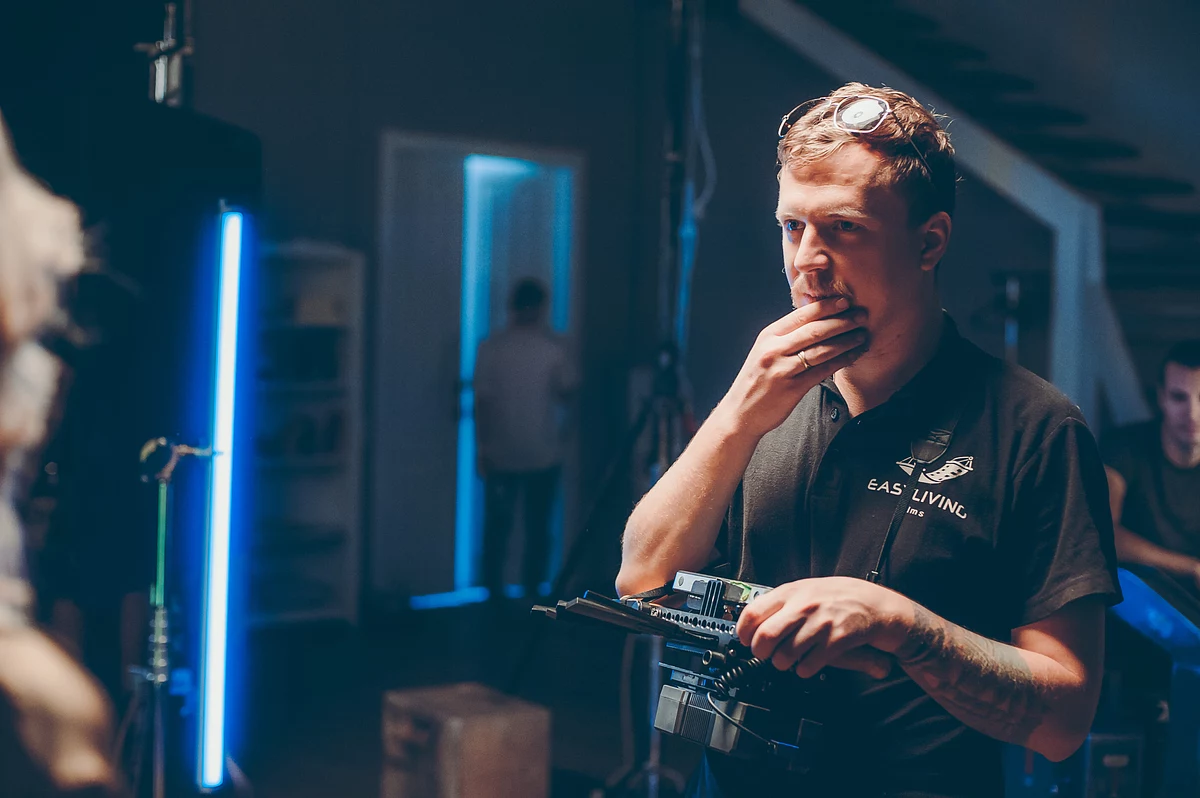
Serhiy Pudych is a director and cinematographer from Odessa. He graduated from Odessa National University with degrees in Political Science and Psychology, but has been working in the video and film industry since 2012. At the same time, he opened his own production company, EasyLiving Films.
In Ukraine, Serhiy shot documentaries, feature shorts, commercials, and social ads for USAID, NDI, and Active Community. In 2015, his social ad, Chain of Good, went viral — the video was shared on social media, including by the Prime Minister of Ukraine.
From 2016 to 2019, Serhiy lived and worked in Kyiv, and then moved to Asia: first to China, and from 2022 to Thailand. There he continues to develop his production.
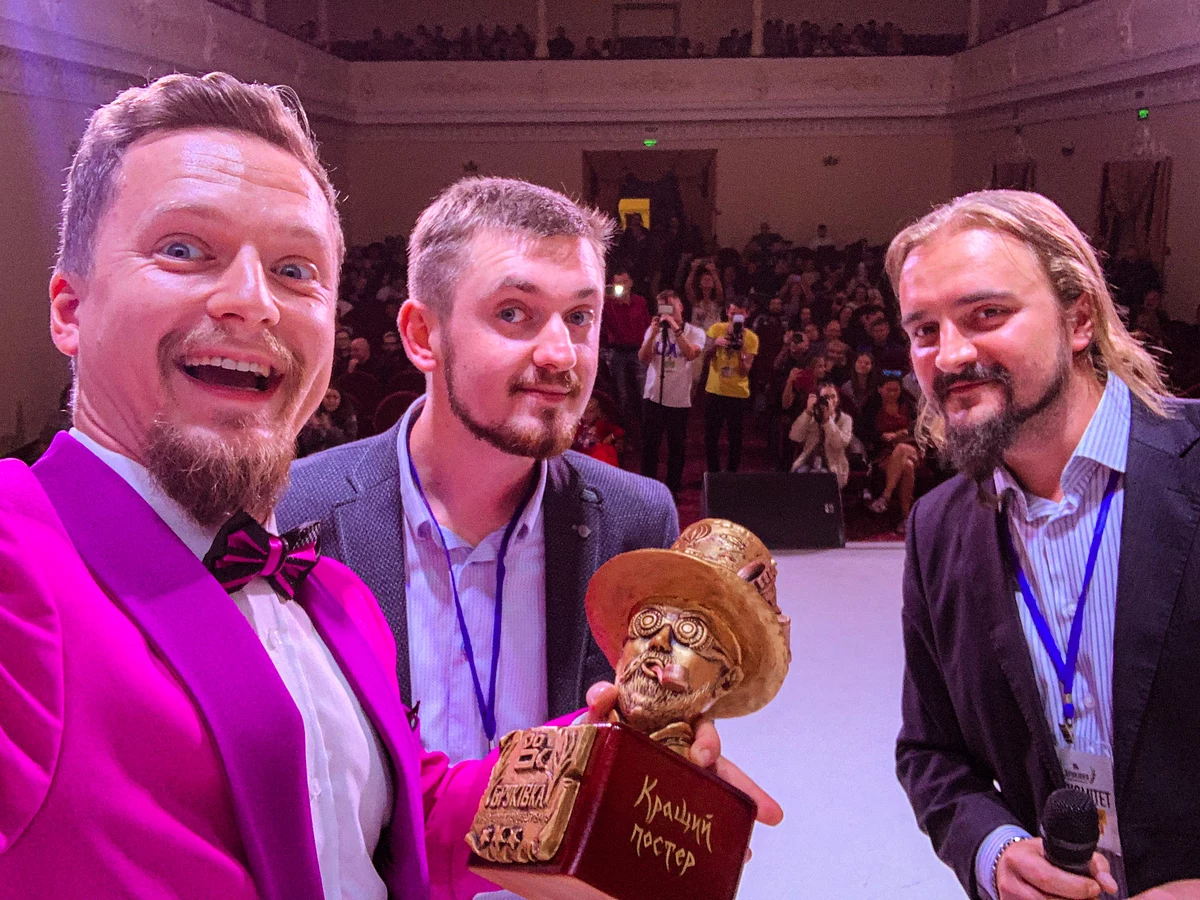
During this time, his documentary and feature short films have won over 50 festival awards. The film "Train "Kyiv-War"" received a number of awards and was released in cinemas in Ukraine. Serhiy also filmed interviews with actors for HBO — in particular, the projects "White Lotus" and "Sympathetic", worked on the set of Bloomberg, created videos for UN agencies, the EU Delegation and commercial brands.
In 2026, another direction appeared in his professional life — software development. Not because the director decided to change profession and go into IT. He simply began to solve his own work problems with the help of artificial intelligence.
Serhiy now has apps for filmmakers that he sells through the App Store. At the time of our conversation, he had already talked about eight of his own apps and was continuing to work on new ones. They are all collected at easyfilm.io .
An application that started with a single line in the terminal
Serhiy took the first step in development because of a fairly mundane problem: he needed to download videos from YouTube for editing. The free programs he found didn’t meet his needs. Some didn’t support 4K downloads, others showed ads or required a monthly subscription.
Serhiy asked Claude a simple question: is there a way to download a video? The AI suggested a terminal command. Serhiy entered it and the video downloaded. Then he thought: is it possible to turn this command into a full-fledged application so that you don’t have to enter it manually every time, but just press a button?
“He replied: I’ll do it now — and he really did it all himself,” recalls Serhiy.
For about a week, he refined the result, adding useful features — and that’s how his personal video downloader for editing was born. He can’t publish it on the App Store due to Apple’s restrictions on this type of application, so he uses it for his own needs.
But it was this experiment that showed him that AI can not just suggest solutions, but help create full-fledged programs.
“It wasn’t very big, but everything worked great, and I realized that with the help of AI I could make applications — things I had always dreamed of, but couldn’t do due to my lack of IT experience,” says Serhiy.
Before Claude Code, he had never developed applications at all. Therefore, he cannot compare how much time such work took before: without AI, he simply would not have created them.
"I say what I need, and he does it"
At first, Serhiy tried to understand the process. He asked Claude to write the code, and then manually transferred its parts into Xcode. He himself did not know programming: he could navigate where to insert a fragment, noticed the brackets, and could read English instructions. After a few months, he realized that even this was not necessary.
Now, in his latest projects, Serhiy doesn’t open the code and check how it looks. Claude Code writes it himself, and the director describes the desired result in plain language.
"I just say what I need, and he does it. How it works is probably some kind of magic," he says.
The division of roles in this collaboration is quite simple. Serhiy finds a problem, determines what the application should be like, and decides how to use it. The AI writes the code, and the human tests the result and explains what is not working properly, what needs to be changed, and what features should be added.
"I’m like a project manager, and he codes. He listens to me, sometimes suggests better solutions. That’s how we have a well-established work system," describes Serhiy.
He compares the process to how his children use YouTube or Netflix: if they can’t type yet, they simply dictate what they want to find. It’s about the same way he communicates with AI — he doesn’t write code, but formulates tasks.
If something doesn’t work, Serhiy doesn’t try to find the error in the code himself. He describes the problem to Claude and asks him to fix it. He says he always adds “please” and tries to calmly explain what result he needs.
However, there is one important condition: Sergey does not ask the AI to invent the products for him. He tried to suggest that Claude come up with problems for filmmakers that could be solved by the application. But the result did not suit him: the AI suggested ideas that did not relate to his own experience.
That’s why all of his applications start with a personal need. Serhiy encounters a problem in his work, understands what a solution should look like, creates it for himself, and then offers it to other filmmakers who may have the same problem.
23 hard drives, 30 second search and 4 TB of free space
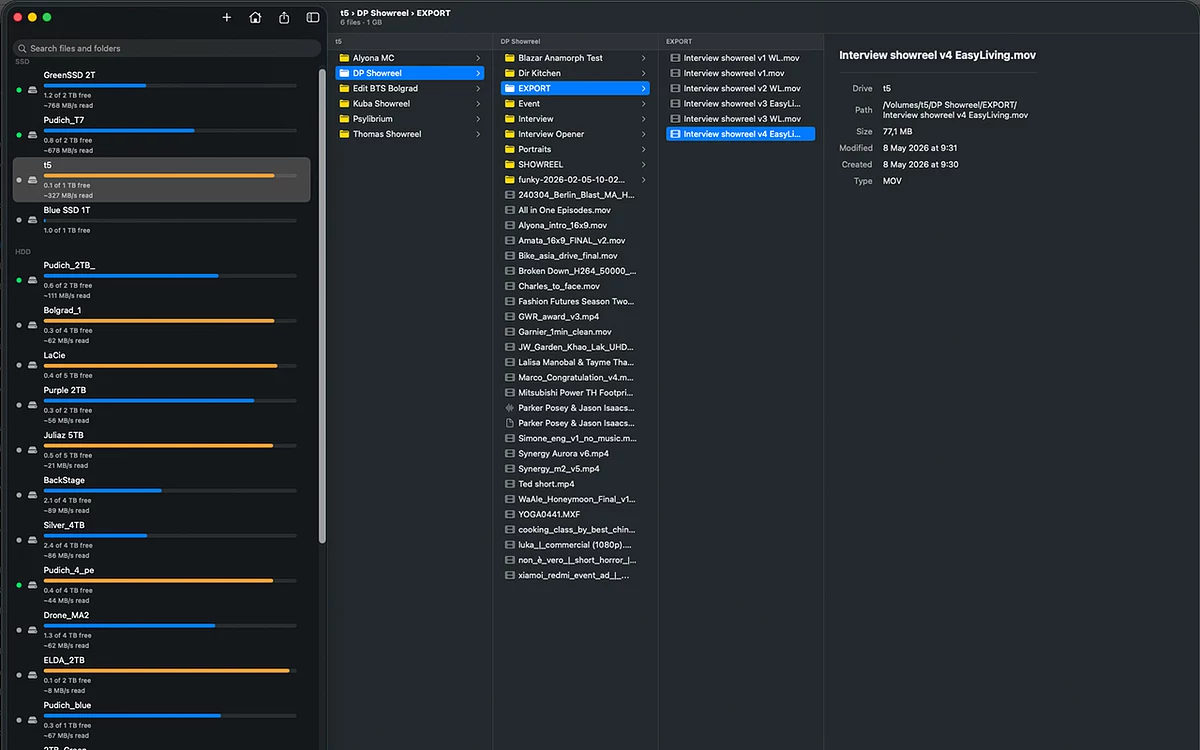
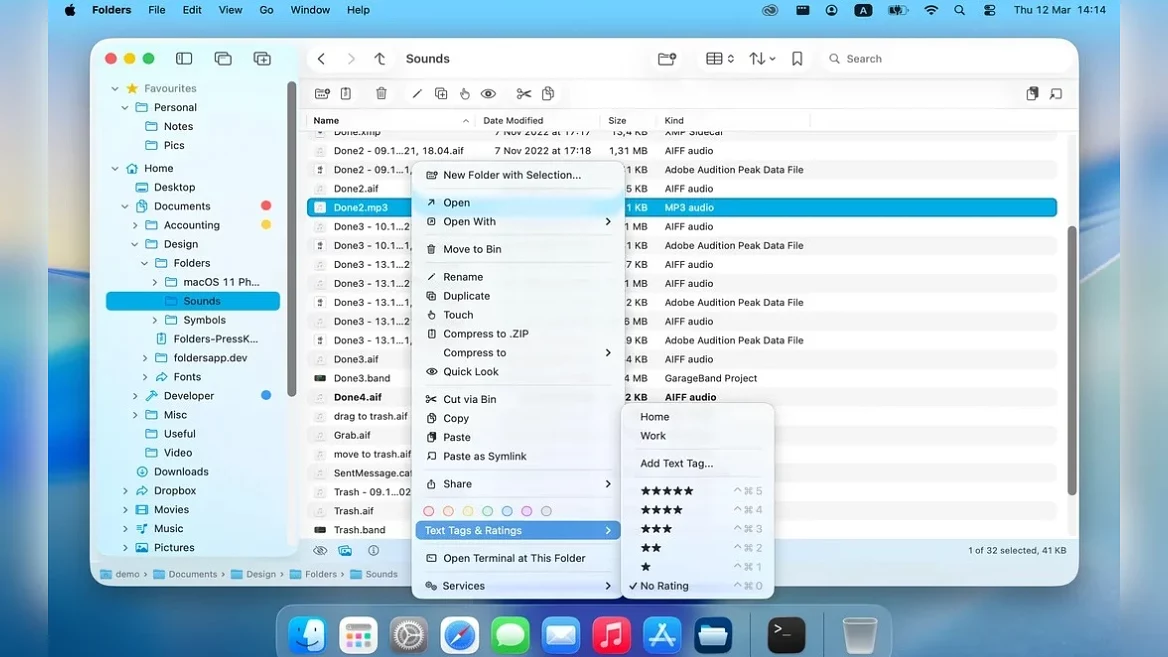
One of the most striking examples is DriveShelf. Serhiy conceived this application long before he started working with AI. Over 14 years in the film and video industry, he has accumulated dozens of hard drives with materials from old projects. He does not delete files after the work is completed: clients can return to them years later and ask to find or redo something. The problem is that as the archive grows, it becomes increasingly difficult to remember which drive the desired file is on. Serhiy says that at the time of creating DriveShelf, he had 23 drives with working materials.
He wanted a catalog of all his drives, where he could search for files, browse folders, and see where everything was stored. That’s how DriveShelf came about. Previously, finding the right material could take 30 to 60 minutes and be stressful. Now, according to Serhiy, it takes about 30 seconds. But cataloging is just one of the features. DriveShelf also finds duplicate files.
This is a particular problem for video production. Teams back up projects, complete work, but often forget to delete backups that are no longer needed. They sit on drives for years, taking up space, and in the meantime, they have to buy new drives.
When Serhiy created the duplicate finder, he was able to immediately free up four terabytes by deleting unnecessary backups. “It’s incredible,” he says of the result.
DriveShelf also has a mobile version. It allows you to check if a certain file is in the archive and see how much free space is left on the drives, even when Serhiy is away from home.
One day, he urgently needed to burn files to a blank drive and send it to a client. He was away from home, so he opened the app on his phone, found a drive with enough free space, and asked his wife to send it to him. Each drive had its own name, so he didn’t have to check each one randomly.
This is a small everyday episode, but it is precisely for such situations that Serhiy creates his products: they should remove unnecessary actions from his daily work.
From a personal tool to eight applications
DriveShelf is not Serhiy’s only product. His other apps include CacheCut, EasyStills, EasyShrink, and EasyGear. He continues to develop new tools, including EasyQuote, which he had been working on for about three months at the time of this interview and which he did not yet consider ready for release.
He estimates that it takes about two to four weeks to create an app of medium complexity. The fastest he built was in a day — maybe even half a day. After submitting it to the App Store, it was reviewed and made available in about five to seven days. The longest work is not necessarily on the code, but on bringing the product to a state where it meets user expectations.
Serhiy says he gets a lot of feedback from filmmakers who buy his software, which helps him identify issues he might not have thought of during his own testing.
For example, one user reported an error due to video files in which the camera recorded a date of a non-existent year — something like 99999. This caused the application to get confused and the search to not work.
Serhiy received the logs, figured out the problem with Claude Code, and fixed it. He believes that this happens in about 0,1% of situations, but he still makes fixes as soon as he learns about them.
This way, customer feedback is transformed into continuous product improvement. And Serhiy himself, although he doesn’t read the code, remains responsible for whether the application works as intended.
Over 150 users and no monthly subscriptions
Serhiy started selling apps around August-September 2026. According to him, after publishing a piece about one of the products on a major website for filmmakers, sales increased dramatically: in two or three days there were over 100 purchases from different countries. At the time of the conversation, over 150 people were already using the apps.
For monetization, Serhiy chose a one-time payment model — without monthly subscriptions. He explains this not only by business logic, but also by his personal attitude towards this way of selling software.
“I hate the subscription system, like most people do now. […] I want to be treated like that, and I consider it a normal system,” he says.
Serhiy admits that a subscription could provide a more stable, ongoing income. But he doesn’t want to build a business on a model he doesn’t like. His most expensive app, DriveShelf, costs $15.
At the same time, with the appearance of the first buyers, it became clear that creating a product is only half the battle. Now Serhiy needs to spread the word about his programs to more people who can benefit from them. “The only problem now is how to bring these applications to a wider audience, because they are simply cool. And I have already, roughly speaking, opened a small company for creating applications that work,” he says.
How Claude helps publish apps on the App Store
Developing an app is one thing. Preparing it for publication in the App Store, writing a description, passing Apple’s review, and releasing updates is another. Serhiy admits that publishing seemed like one of the most difficult stages at first. However, after the first few attempts, he taught Claude exactly what to do: how to write information about the app, what to write in the update description, and how to go through the publishing procedure.
In the early stages, there were App Store rejections for various reasons. According to Serhiy, Claude took into account previous experience, and over time the process became much simpler. Now he can simply ask the AI to prepare and publish the update.
This is another example of how the division of tasks is changing in his work. Serhiy does not learn all the technical stages himself, but gradually adjusts the process to delegate them to AI.
However, he does not believe that any product can be safely created using vibecoding.
Where do the possibilities of vibecoding end?
Serhiy is cautious about applications that could pose serious security risks. If he were creating a product that stored users' personal data and could be targeted by attackers, he would bring in a cybersecurity expert to review it.
His own applications, according to the artist, do not store personal data or transmit information about users to him. That is why he feels more confident developing them with the help of AI. This is an important limitation in his approach: the absence of the need to write code yourself does not mean that the need to understand the risks of the product disappears. If the application works with sensitive data or has serious cybersecurity requirements, Serhiy is not ready to rely solely on Claude Code.
He also doesn’t believe that a programmer’s job is to write lines of code. On the contrary, he says that a developer should anticipate potential problems and come up with solutions. AI can help with this task, but the result still needs to be verified.
"Ten years ago, they asked for up to a million dollars for such an application"
Perhaps the best way Serhiy realized the changes brought about by AI was when he remembered one of his old ideas. About a decade ago, he wanted to create a large application and contacted IT companies to find out how much the development would cost. According to him, different companies quoted amounts ranging from $500,000 to $1 million.
At the time, the idea seemed unattainable due to a lack of technical knowledge and the need to hire a team. Now, Serhiy believes that he could create such a product himself using AI in about three to four months. However, this is his own estimate, not a verified development budget. However, it explains well why the director, who never studied programming, took up creating applications in the first place.
According to him, programming has become accessible to a much wider range of people. Now the advantage is not only for those who know how to write code, but also for those who understand a specific problem, can describe the desired solution and check whether it works in practice.
Serhiy believes that competition is gradually shifting from development to marketing and sales. His competitors could spend years creating their products, while he uses much less resources to develop his own tools.
At the same time, he does not think that experienced programmers will lose their advantages. In his opinion, they will be able to use AI to expand their own capabilities. However, he is much more categorical about juniors: he suggests that the need for them may decrease.
The biggest mistake is not starting sooner.
When Serhiy is asked what advice he would give to a filmmaker, photographer, or other professional without a technical background who wants to create their own app, the answer depends on the goal.
If the product is for personal use, it’s worth a try. But if a person wants to sell it, they need to think in advance about how to find buyers and communicate the value of the product to them.
Serhiy calls marketing and sales his biggest challenge right now. Creating applications using AI has already become a familiar process for him, but finding a wider audience is still something he has to learn.
And when asked about his own mistake, he answers briefly: "My mistake is that I didn’t start doing it earlier."
For a filmmaker who has worked with video for years, this isn’t about him suddenly becoming a programmer. He continues to do his job, but now he can independently create the digital tools he lacked in his work.
And the main change, according to Serhiy, is that there no longer has to be a whole team of developers standing between an idea and a working product. At least when it comes to a tool with a clearly defined task, and not a system where a mistake can cost users the security of their data. Now Serhiy has a different problem: not how to create the next application, but how to tell those who really need it about it.
«Чи є у мене талант, якщо комп’ютер може імітувати мене?». Штучний інтелект пише книги авторам Amazon Kindle. The Verge поспілкувався з авторами та виявив багато цікавого
Письменники-романісти використовують штучний інтелект для створення своїх творів. Видання про технології The Verge поспілкувалося з письменницею Дженніфер Лепп, яка випускає нову книгу кожні дев’ять тижнів, й дізналося про те, як працює штучний інтелект для написання романів. Наводимо адаптований переклад статті.
Have important news to share? Message our Telegram bot
Key events and useful links in our Telegram channel