Хочете будувати кар’єру в Data Science та AI? Vodafone Big Data Lab відкриває новий набір —>
Ігор Вишневський Історії
11 June 2026, 09:00
2026-06-11
Will the "Ukrainian BlaBlaCar" "go"? How the authors of the Ridy application want to compete with the global giant and bite off a piece of the local market
Three Ukrainian developers — Artem Ivanenko, Maksym Shymon, and Serhiy Krasilnyk — have set themselves an extremely ambitious task: not only to create a «Ukrainian analogue of BlaBlaCar» as a product, but also to bite off a certain number of users from an international competitor. To begin with, at least directly in Ukraine.
Three Ukrainian developers — Artem Ivanenko, Maksym Shymon, and Serhiy Krasilnyk — have set themselves an extremely ambitious task: not only to create a «Ukrainian analogue of BlaBlaCar» as a product, but also to bite off a certain number of users from an international competitor. To begin with, at least directly in Ukraine.
This is how the Ridy application was born, which already has its first users and is available in the App Store and Play Market. It is currently being tested mainly in the Kyiv suburbs, in particular on the route from Kyiv to Pereyaslavl, and covers the segment of so-called «trips» — when people drive to work in a big city and pick up fellow travelers to recoup their money on gasoline. Unlike BlaBlaCar, Ridy is still free of commission and completely free for drivers and passengers, but has all the same functionality.
The main question is how the developers are going to monetize their product later? And in general, despite all the numerous and unsuccessful attempts by other players to squeeze BlaBlaCar at least a little, why do they believe that they will succeed? We talked about this, as well as all the other challenges that their team faces, with the developer, initiator and main ideological inspirer of Ridy, Artem Ivanenko. Below is his direct speech.
Ukrainians' hatred of BlaBlaCar as the driving force behind the idea
The idea came to me last winter. Oddly enough, the impetus was the mass hatred of people for BlaBlaCar. Friends and acquaintances who are forced to use this service as drivers complain about the commission. Drivers also complain that they cannot find normal passengers, and passengers — drivers. All of them also note that the very idea of the service was leveled by various carriers and buses that simply place their regular flights on BlaBlaCar. The fact that even our Antimonopoly Committee stated that BlaBlaCar is unreasonably using its monopoly position by overcharging the service fee added fuel to the fire. So, against the backdrop of all these conversations and news, we decided: why not try it?
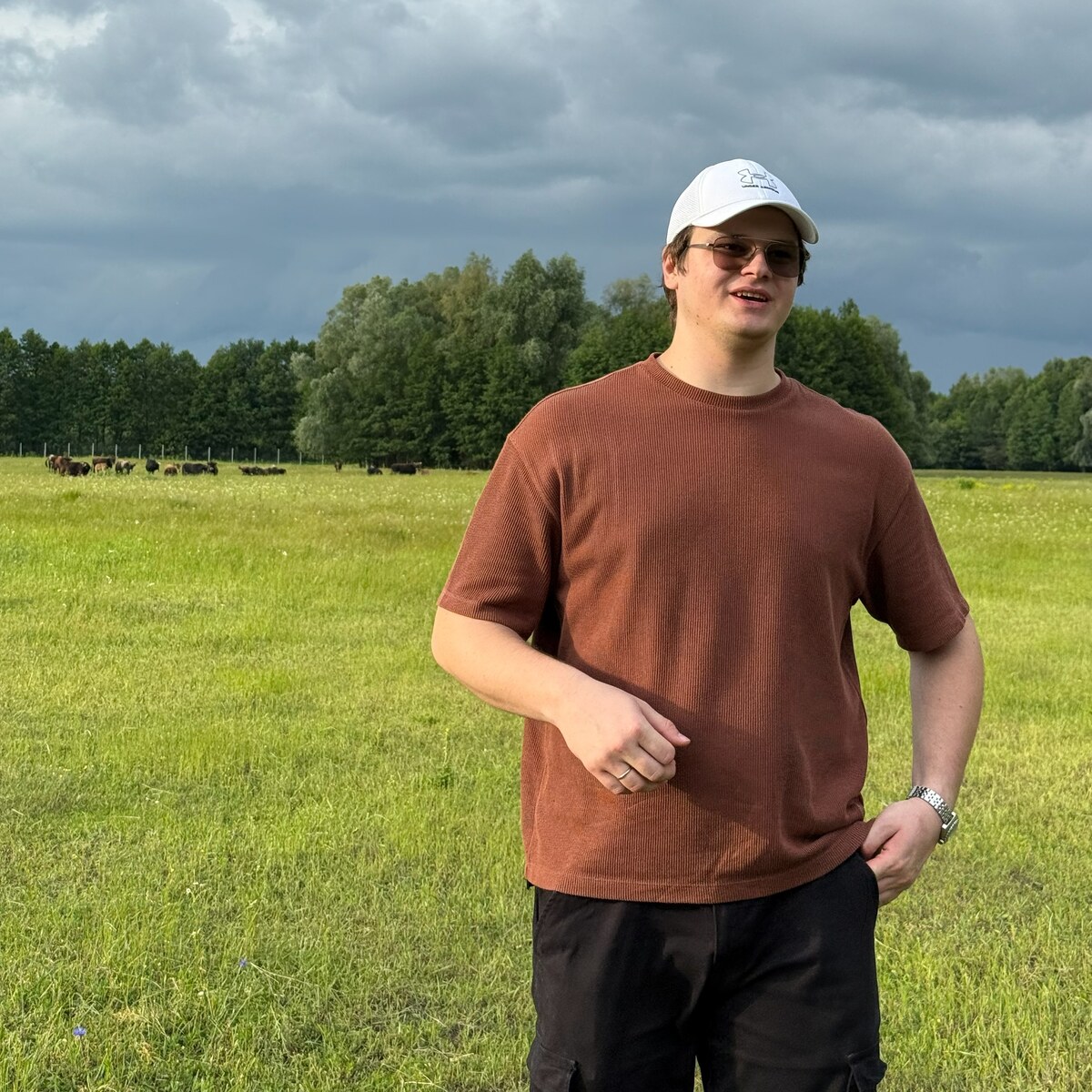
Developer and ideological inspirer of the Ridy application Artem Ivanenko
I think that for Ukrainians, it should also be a fundamental question that BlaBlaCar has a significant flaw: it still operates in Russia and is actively developing there.
Not long ago, they carried out a global update, and the application in Russia was updated in the same way as in other countries of the world. Therefore, this is even a somewhat ideological issue — both for us as developers and for Ukrainians as users of this service.
I invited my friend from school, Max, to join the project. He had been laid off from work at the time and had a lot of free time. We «hacked» for a week and «polished» the first prototype.
Later, I took this prototype to a third person — it was Sergey. Sergey was my colleague from a previous job, and I always really liked his approach to solving problems. We hadn’t talked for a long time, so my offer looked a little strange. It looked like I was the guy who wanted to sell him some unnecessary thing, insurance or something like that. Then he admitted that he thought about how to refuse me, but in the end he said: «Damn, I’m all for it, let’s go!» That’s how the three of us have been moving ever since.
Ridy co-founders Maksym Shymon (right) and Serhiy Krasilnyk (left)
We are all developers, but on our project we divided the workload according to the following areas of responsibility: I took on team management, partly responsible for the frontend, design, and marketing, Serhiy «delves» deeply into the frontend and design, and partly into marketing, and Maksym took on the backend.
At what stage is the project and what are the plans?
The app is fully functional, we already have users, and I would say we are at the «well-polished» MVP stage.
Not all the functions we see in theory have already been implemented, but currently we have everything we need for comfortable use of the service and for us to be able to test our own hypotheses about user behavior.
We are not working for a salary yet, but for an idea — the three of us are co-founders. We already have about 500 downloads and 250 registrations. And although this is not much, we have only taken a specific direction, specifically Kyiv-Pereyaslav. Why this one? We found a number of groups on social networks like «poputki Pereyaslav-Kyiv», bought them and tried to transfer the audience from them to our application. After that, several of our hypotheses were confirmed, and several were destroyed, but one way or another it was a relevant experience.
So for now, we’re just hitting the bullseye, trying to work out an audience engagement strategy. This experiment with the Kyiv-Pereyaslav route showed our weak spots in marketing, but at the same time confirmed that «word of mouth» works great in Ukraine. This is probably one of the most effective and profitable channels for engaging users.
What’s «under the hood» of Ridy
For now, we have followed the «path of least resistance» with maps. We are using a ready-made solution from OpenStreetMap in terms of saving money. We understand that we are in for a «long game,» so it would be better for us to spend any available funds not on a service like the Google Maps API, but on marketing and advertising. We are using a ready-made API and based on this API, we build all routes and do searches.
As for the basic functionality, if we compare it with our well-known competitor, I would say that it is practically identical, but we have expanded it a little. For example, the fact that we can add photos of the car, as well as communicate in popular messengers, and not in our own internal chat.
It’s easier for us to not have our chat in the app, and it’s much more convenient for users to correspond in the messengers they’re used to, Viber, Telegram, and WhatsApp.
If we compare functionality, I would say that we are looking more not at BlaBlaCar, but at the Canadian Poparide, which is not very well known in our country, but is somewhat more advanced in terms of functionality.
Among the interesting technical challenges for us was finding the optimal infrastructure for the service. We tested AWS, Google Cloud, and Heroku, but due to the high cost of use, excessive latency, and periodic stability issues, we decided to try our own VPS in Ukraine. This allowed us to not only significantly reduce infrastructure costs, but also gain more control over the service settings.
Among the specific features that are in the queue is the implementation of route subscription functionality. This will allow passengers to receive notifications about new trips on the desired route, in particular on those routes that are not popular. It will also help to find trips that drivers create immediately before departure, without planning them in advance.
Driver, passenger and their mutual safety
Who is harder to attract to the app — drivers or passengers? It is very difficult to gain a critical mass of users in any case. I would say that the difficulty of attracting drivers or passengers depends a lot on the direction. But if you still have to choose one answer, then it is harder to attract drivers. After all, in this story they are the first priority.
Developer and ideological inspirer of the Ridy application Artem Ivanenko
In the context of interaction between drivers and passengers, the issue of mutual comfort and safety also plays an important role. We check the driver’s documents, but can this solve all possible conflicts or problems during the trip? Of course not. I think this also rests on the community that uses the application. Of course, here, users can also leave mutual feedback about each other, forming a certain rating.
Currently, this is implemented in the form of stars and the ability to leave comments, but here we have not complicated the system yet, we have made everything as simple as possible. Sometimes it is difficult for people to even put these stars. I must say that comments or other reviews are usually left either by people who are very dissatisfied with the service, or vice versa — very excited. If everything just went smoothly and smoothly, no one leaves any reviews.
By the way, BlaBlaCar is now showing automatic reviews. I’m not sure how good this is. We’ll think about it and test different options.
A possible option for identifying participants in a joint trip is confirmation through state services such as «Actions». We are not doing this yet, it is simply a possible option. For the safety of trips, you can also do some filtering by gender, for example, so that it is a trip with a female driver for women. Like women’s compartments in «Ukrzaliznytsia».
Other people’s unsuccessful attempts don’t count.
When BlaBlaCar entered the Ukrainian market, at that time we had services like PoputkaUA or Pidvezu. BlaBlaCar bought one of them and transferred their audience to itself. We had the same strategy, only on a mini-scale — buy a group on Telegram and transfer the audience from it. It’s a little harder for us to do it, but it’s a «test of the pen.»
Anyway, BlaBlaCar is a big service. And competing with one big service, in my opinion, is still easier than if we had dozens of different competitors. Moreover, there are a large number of people who are dissatisfied with this service and simply have nowhere to go.
Under such conditions, offering better conditions and better service, why can’t we compete at least in our Ukrainian market, which we know well?
We understand that this will not be a quick process and that instant success should not be expected. However, we are betting on a high-quality in-house product and a significant number of users who are currently dissatisfied with the competitor’s solutions.
This year, we are not making any fanciful, unrealistic plans. We want to launch three routes within the Kyiv agglomeration, where ridesharing is a constant and active way to get home from work.
Of course, at some point we will have to attract an investor, but we need to come to this with interim results, figures, and a clear understanding of how exactly his funds will be used. All of this is ahead!