Хочете будувати кар’єру в Data Science та AI? Vodafone Big Data Lab відкриває новий набір —>
Олег ОнопрієнкоHot News
22 September 2026, 14:53
2026-09-22
"Risks of abuse and censorship": 80% of Ukrainians support European content moderation rules, but demand transparency
The absolute majority of Ukrainians support the introduction of clear rules for removing illegal and terrorist content on the Internet, similar to European norms. At the same time, users seriously fear potential abuses, censorship, and interference with privacy.
The absolute majority of Ukrainians support the introduction of clear rules for removing illegal and terrorist content on the Internet, similar to European norms. At the same time, users seriously fear potential abuses, censorship, and interference with privacy.
This is evidenced by the results of a recent study "Safety on the Internet", conducted by the research company Active Group in September 2026. According to the survey, 80.4% of respondents believe it is necessary to have clear rules for moderating illegal content. At the same time, more than 55% of citizens are in favor of these rules being adapted to EU standards.
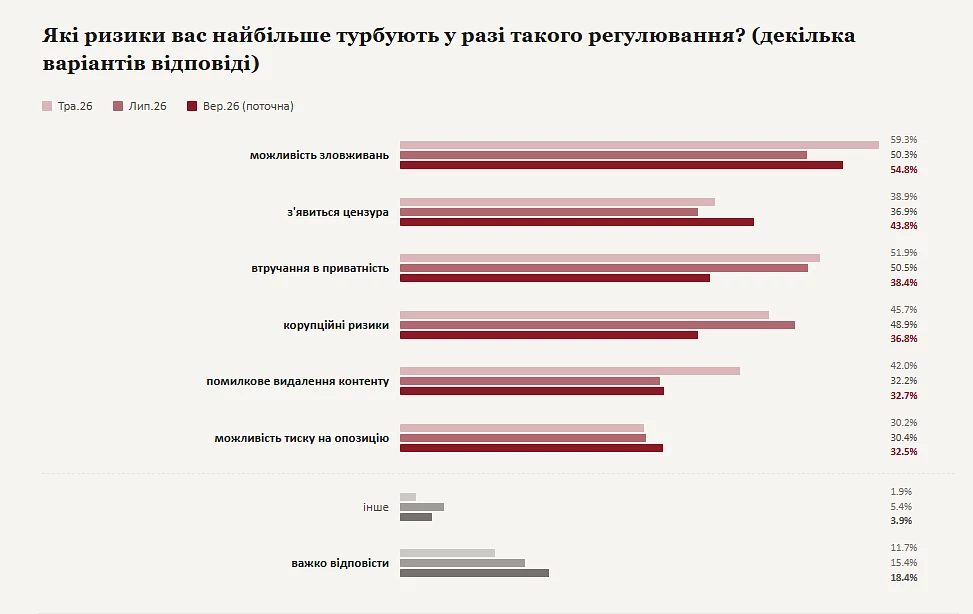
Despite the high demand for regulation, Ukrainians see significant risks in it. The most concerned respondents (54.8%) are the possibility of abuse of the new rules. Another 43.8% fear the emergence of censorship, and almost a third (32.7%) called the erroneous removal of content a risk. The feeling of personal security on the Internet among citizens remains low: only 33% feel safe, while over 55% say they are vulnerable to digital threats.
longitudinal · 3 waves (May 26–September 26) · measurement date of the current wave September 19, 2026 · n=1,000 · error ±3.1%
“These results show that the public demand is not limited to simply strengthening control over content. People simultaneously want greater security on the network and clear boundaries for regulation itself,” comments Oleksandr Pozniy, director of the research company Active Group. “When more than half of the respondents talk about the risk of abuse, and among the key requirements are clear grounds and justification of decisions, this means that trust in such rules will largely depend on the transparency of procedures and the possibility of appealing decisions.”
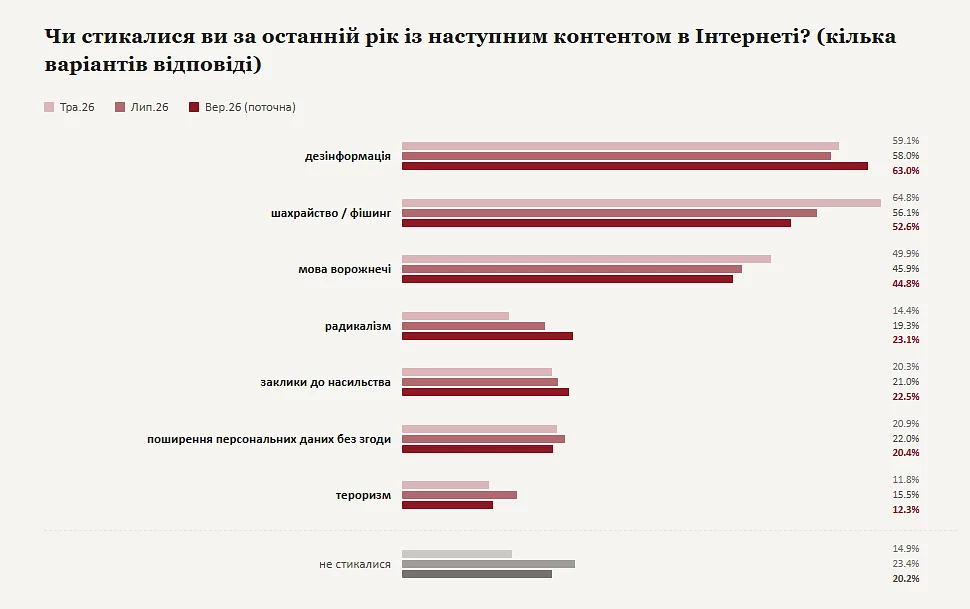
According to sociologists, over the past year, Ukrainians most often encountered disinformation online (63%), fraud or phishing (52.6%), and hate speech (44.8%). Interestingly, citizens mainly place responsibility for online safety on content authors (40.9%) and website owners (39.9%), and only then on law enforcement agencies or the platforms themselves.
longitudinal · 3 waves (May 26–September 26) · measurement date of the current wave September 19, 2026 · n=1,000 · error ±3.1%
When choosing between freedom and security on the Internet, Ukrainians still prefer the former: over 53% of respondents lean towards maximum or partial freedom, while 33.7% prioritize security. This balance emphasizes the need for a very cautious approach by the state to legislative initiatives in the field of regulating the digital space, which are regularly discussed at the level of specialized committees and ministries.
The full presentation with the research results can be downloaded at the link .