Хочете будувати кар’єру в Data Science та AI? Vodafone Big Data Lab відкриває новий набір —>
Олег ОнопрієнкоWar
23 October 2026, 09:00
2026-10-23
"Robots Don't Bleed." How the Third Assault Brigade's Innovations Wreaked Chaos in the Russian Army During Operation Vivaldi
The fourth and final season of the offensive Operation Vivaldi has ended, as a result of which the Defense Forces returned 16 settlements to full control of Ukraine and liberated 277 km². What began as a targeted liquidation of Russian infiltration quickly developed into a rapid and large-scale offensive. The disoriented occupiers began to lose control of their own units, in whose ranks real chaos began. The use of advanced technological solutions introduced by the Third Army Corps played a significant role in this collapse.
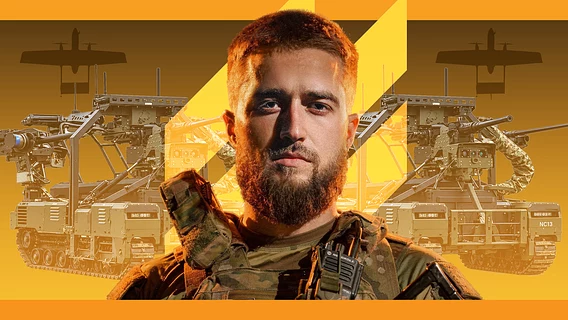
We talked about how iron replaces people on the battlefield and disrupts the enemy's plans with our friend Makar, the commander of the NC13 ground attack complex unit within the Third Separate Assault Brigade of the Third Army Corps.
Innovation despite skepticism
For a long time, the military community believed that these bulky vehicles were capable of effectively performing only basic logistical tasks: quietly delivering ammunition under fire or evacuating a wounded man from a red zone. The very idea of using them with heavy fire modules for direct assaults on enemy positions seemed unjustified, expensive and too risky to many commanders. However, the reality on the battlefield, in particular during the large-scale Operation Vivaldi, radically overturned these ideas, proving the exact opposite.
As our friend Makar, commander of the NC13 ground attack complex unit within the Third Separate Assault Brigade of the Third Army Corps, told dev.ua, when they were just starting to develop this direction, there was a lot of distrust from their counterparts. However, the engineering approach allowed them to successfully implement the NRC in real, dirty combat work.
"When, by order of the commander of the Third Army Corps, Andriy Biletsky, a separate company of shock NRCs was created, not everyone believed that the robots would be able to effectively perform combat missions on the battlefield. However, over nine months of combat work, we have proven that shock NRCs are no longer an experiment. Today, they conduct full-fledged assault and sabotage operations deep behind enemy lines, provide fire support to infantry, help hold positions and lines, and also take the enemy prisoner," said Makar.
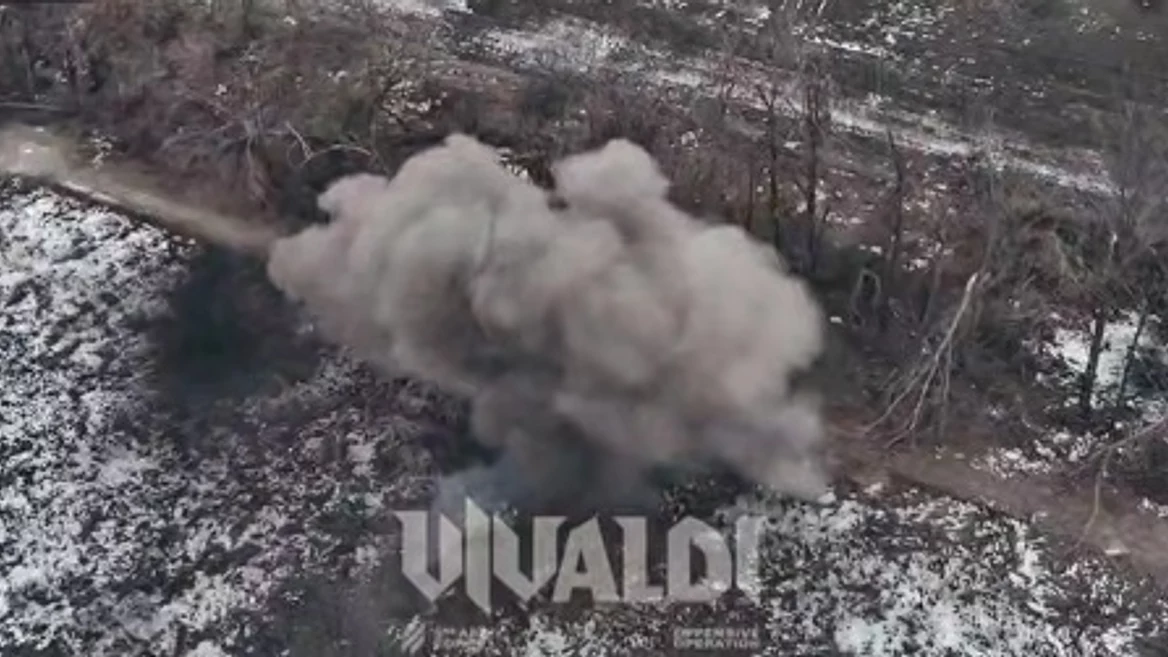
Robots with grenade launchers dismantle enemy positions: new tactics during "Vivaldi"! During the offensive operation of the Third Army Corps, the fighters of the world's first NRC strike unit "NC13" modernized ground-based kamikaze drones and applied the latest defeat tactics. NRCs, equipped with two Bullspike grenade launchers, attacked the Russians in positions, after which they detonated directly in their shelters. The occupiers believed that they were being attacked by an entire assault group. But in fact, they were defeated by the robots of the Third Assault. Yes, NRCs perform three tasks at once: they strike, exert psychological pressure and clear the position. And most importantly, this happens without risk to our infantry. No one in the history of war has ever used such tactics. The robots were controlled by operators from a safe shelter tens of kilometers from the contact line. How the occupiers taste "Ryazansky Sakhar", "Chytanka", "Chipok" and "Obloga Veiko" - in a video from the unit's operators!
For the NC13 unit, combat effectiveness is measured not only by the number of enemy armored vehicles burned or kilometers of Ukrainian land recaptured. As our friend Makar, who himself was a former infantryman, says, for him personally and for his comrades, the most important indicator is the preservation of our own personnel.
Priority number one is to save the life of the Ukrainian attack aircraft, who bears the greatest and bloodiest burden of this war.
That is why today a new concept of combat is being implemented in the ranks of the brigade - the use of robots directly on the battlefield to hold positions, carry out assaults and sabotage, capture and destroy enemy shelters in their rear - thus, removing from the infantry the burden and risks that robots are capable of taking. The machines are the first to take bullets, the first to detect hidden ambushes and the first to begin to push through enemy fortifications. Meanwhile, qualified NRC operators carry out precise remote control of these iron monsters, being in reliable concrete shelters dozens of kilometers from the epicenter of the battle.
"During the nine months of combat work of our unit , thanks to the use of NRC, we saved the lives of about 6,000 infantrymen - this is exactly the number of servicemen who would have had to be involved in the tasks that robots would have performed instead. And for us, this is the main argument, because human life is priceless, and robots do not bleed," said the head of NC13.
The Griffon Tactics and the Retreat of the Elite Rubicon
One of the most significant and successful episodes of Operation Vivaldi, which the commander shared with dev.ua, was the defeat of the elite Russian drone unit Rubicon. During these intense events, the forces of the Third Army Corps were able to methodically destroy the take-off points of enemy drones, which forced the occupiers to withdraw their elite from this direction.
Engineers and fighters of NC13 have developed a unique tactic codenamed “Griffon”. It consists in the fact that ground-based kamikaze robots are delivered to the affected area not by their own power through minefields, but by air using heavy aviation drones-bombers. This solution allows you to drop IRCs 15-20 kilometers behind the front line, right on the heads of the Russians, who considered their rear completely protected. It was possible to achieve this success at the tactical level precisely thanks to the symbiosis of air and ground systems.
ATTENTION! Historical moment — The Third Army Corps began a new stage of the war with the landing of ground robots! During Operation Vivaldi, the occupiers were attacked for the first time in history by the Griffons — heavy bombers of the Third Assault Corps landed NRC kamikazes more than 10 kilometers deep behind enemy lines. The technological breakthrough was recorded by the robot cameras — where the enemy was not expecting it, two hundred and three hundred Russian soldiers appeared. The unique tactics of deep defeat were created from scratch by the fighters of the NRC strike unit "NC13" and implemented with the support of the brigade's BBS drones. How — watch the full video on YouTube: https://t.co/oxJHGNvPyN "Griffon" is the call sign of the machine gunner "NC13" Grigory Bach, who went missing during the battles for Andriyivka in 2023. Today is revenge for him and all the brothers who were lost on the path of struggle. Now even more lives of our infantry saved - and the enemy's manpower and resources destroyed. And this is just the beginning of a new page of history that the Troika is starting!
As the military rightly notes, over the years of full-scale war, the enemy has really learned to counter classic threats from the sky quite well, deploying powerful electronic warfare systems and echeloned air defense. However, thanks to the Gryphon, Ukrainian forces are creating a completely new, asymmetric threat for the Russians directly on the ground. The robots appear out of nowhere exactly where the occupiers do not expect them at all. The purpose of such daring raids is not only the physical elimination of priority targets. Much more strategic, as Makar explains in a conversation with dev.ua, is the systematic destruction of the enemy's sense of security. The occupiers are forced to constantly look around, rewrite logistical routes, stop supplies and spend critical resources on protecting their deep rear.
"This is an example of how non-standard use of technology allows you to outsmart the enemy, even when it comes to units that are considered elite," the military officer added.
During the first deep missions, two drones were sent behind enemy lines at the same time. My friend Makar explained that usually kamikaze drones on the ground operate in groups of two or three vehicles, depending on the complexity of the mission.
“When planning operations deep behind enemy lines, we decided to land two IRCs at once. At that time, we did not always have clearly defined goals and an understanding of which targets we would be able to “hunt,” so we needed to have more opportunities to work. In addition, there is always a risk that one of the robots could be detected and destroyed or that something would go wrong,” Makar shared the nuances of the operation.
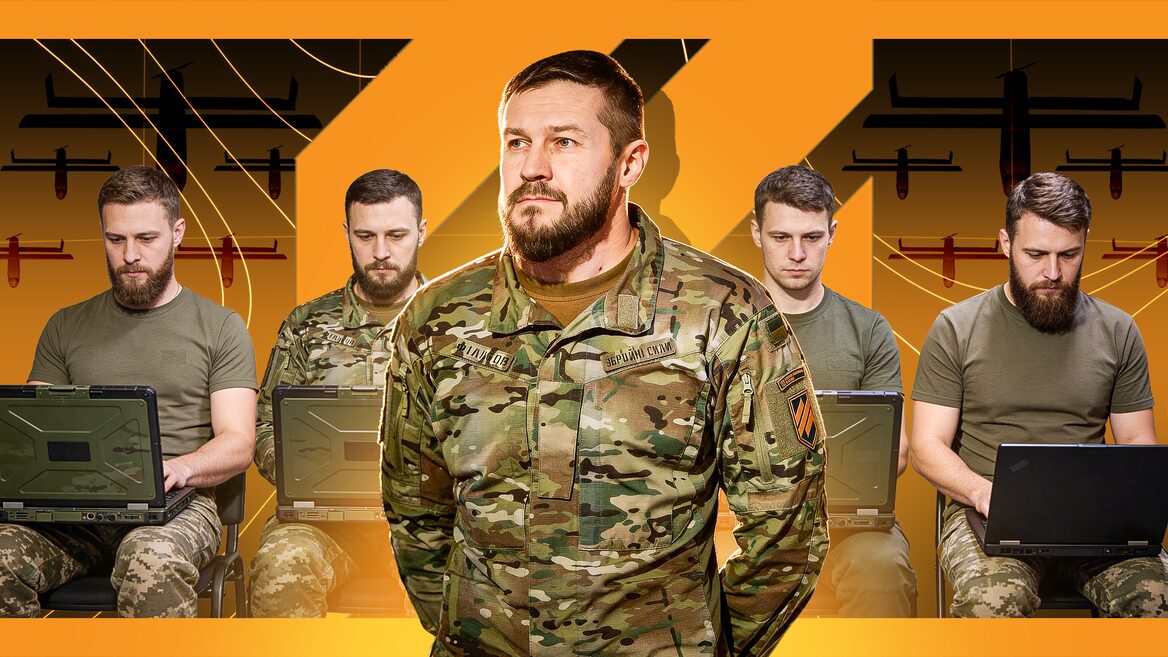
The presence of several machines at the same time gave the scouts much more options for maneuver and guaranteed the result. In the conditions of tough Russian electronic warfare and patrols, there is always a high risk of losing one of the robots. During operations, the control of the machines is usually entrusted exclusively to a separate reconnaissance platoon - in practice it looks like the work of a well-coordinated orchestra: the robot operators sit side by side in front of the monitors, working as a single crew, while an experienced navigator continuously analyzes the map, coordinates their movement, draws safe routes and helps to navigate in the forests and landings of the enemy rear.
"Operators always work side by side, and the navigator coordinates their movement, suggests routes, and helps them navigate. That is, the principle of crew interaction remains the same as in other operations — the conditions in which they have to work change," the military man noted.
Soviet scrap metal as a "Trojan Horse"
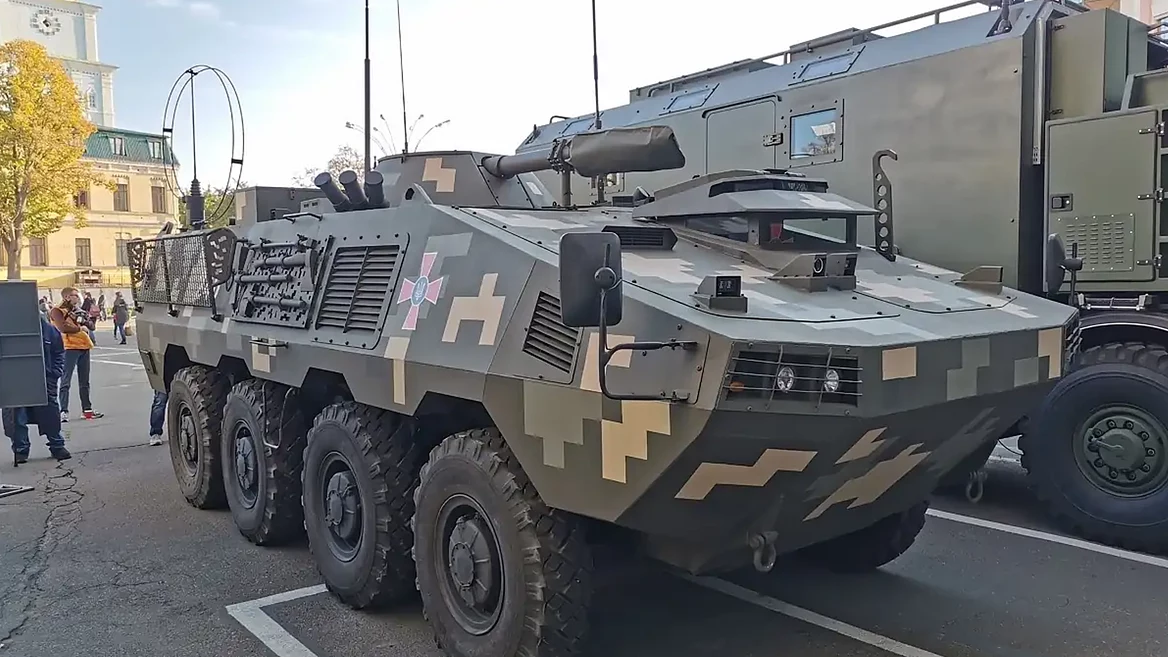
During Operation Vivaldi, the Third Army Corps turned old Soviet BTR-60 armored personnel carriers into giant ground-based kamikaze drones . My friend Makar said that this crazy but brilliant sabotage idea belonged to Commander Andrei Biletsky. It was necessary to ensure the destruction of the enemy's heavily fortified communications and control center, and instead of wasting expensive missiles, engineers turned the outdated Soviet armor into a ground-based guided torpedo.
“Trojan APCs” — The Troika turned old equipment into unmanned kamikaze robots and blew up the occupiers! During Operation “Vivaldi”, the fighters of the Third Assault Brigade implemented a unique sabotage maneuver by Commander Andriy Biletsky in the villages of Novye and Katerynivka in the Lyman region. Two Soviet APCs were converted into IEDs, filled with explosives and sent to the enemy rear. While the enemy thought he was meeting reinforcements, the unmanned equipment blew up his strongest fortifications. The force of the explosion = KABu. The Troika blew up the enemy’s communications and control center. This is the military art of “Vivaldi!”
The main advantage of this decision was the simply incredible power of the explosion, which is equal to the arrival of a heavy KAB-type aircraft bomb.
"To achieve such an effect with small NRC kamikazes, it would have been necessary to attract significantly more means, which, moreover, could be detected and destroyed on the way to the target. Instead, two old armored personnel carriers became a kind of Trojan horse - the enemy mistook them for reinforcements, and they reached the rear and destroyed an important communications and control node. This operation showed how unconventional thinking allows you to turn outdated equipment into an effective means of destruction. And the unexpectedness of such a maneuver became an additional factor in demoralizing the enemy," said Makar.
A broken enemy psyche and an ever-evolving workshop
The systematic use of such technologies breaks the psyche of the occupiers. In radio intercepts, Ukrainian operators constantly hear how the enemy panics, faced with threats that he does not understand. And such destabilization of the front is exactly what the Armed Forces of Ukraine need.
“Even if the enemy knows that we can use IRC deep in the rear, he does not know where exactly we will appear next time, what target we will choose and how far we will be able to go. This uncertainty in itself creates constant tension. We already know of cases when enemy infantry refused to move forward, because they did not understand what was happening and where the threat could come from. If such operations are scaled up, this effect can become even more noticeable,” said Makar.
To maintain this innovative advantage, Troika relies on its own unique workshop, which has become the heart of the unit. Here, engineers, welders and IT specialists quickly turn ideas from the trenches into weapons. For example, standard platforms are improved here - they reduce weight, improve fastening and re-solder communications. Moreover, the team has developed its own unified communication modules and proprietary software in order not to depend on contractors and instantly adapt to changes on the battlefield.
We are advancing, even when Starlink is broken — Troika created an uninterrupted communication network for Vivaldi! During an offensive, communication is the opportunity to move forward. Therefore, the Third Army Corps system in Vivaldi worked with 100% readiness, and after damage it was restored five times faster than the average for the Armed Forces of Ukraine. By order of Commander Andriy Biletsky, alternative channels were created in advance. This way, our intelligence maintained contact with command posts, and the UAVs continued to hit the Russians, even when the main tool — Starlink — was disconnected. How? Watch this video while the finale of Vivaldi is loading!
“It is important for us that this process does not stop. We exchange experience with manufacturers, help them improve their developments, and transfer knowledge to other units. If there is no ready-made solution for a specific task, we can develop a new one together with the manufacturer or with our own forces. The tool must be qualitatively assembled, tested, and work reliably in combat conditions. A malfunction a few meters from the target can nullify the entire operation. Therefore, our advantage is not only in the speed of development, but also in the ability to quickly adapt, prepare and bring the solution to real application,” noted the commander of NC13.
Although Russian troops are already trying to experiment with parachuting robots from airplanes, friend Makar assures that Ukrainian forces remain far ahead.
"Currently, we do not see the enemy actively using strike IRCs on the battlefield. At the same time, we monitor its social networks, study new developments, and see that the Russians are experimenting with robotic means and mastering the methods of their use. In particular, we recently came across material about a robotic complex with explosives, which the Russians parachuted from an airplane. That is, they are already looking for ways to deliver such means to the target from the air. Do they use such solutions in combat conditions - more likely no than yes. But, given how quickly these technologies are developing, we should not rule out that in the near future we will see such attempts on the battlefield," the military officer added.
With an eye on 2027, the NC13 unit plans to scale its successes, but emphasizes: for robots to become a standard for the Armed Forces of Ukraine, this area needs to be developed at the state level.
“In order for NRCs to become a universal standard for the Ukrainian army, they need to be systematically introduced into the work of combat units: develop operator training, provide high-quality technical maintenance, and learn to effectively use robotic complexes for specific combat missions,” Makar concluded.
"Without technical specialists, the army begins to crumble." The head of unmanned systems of the Third Army Corps - why 3AK IT workers are needed and how to get there