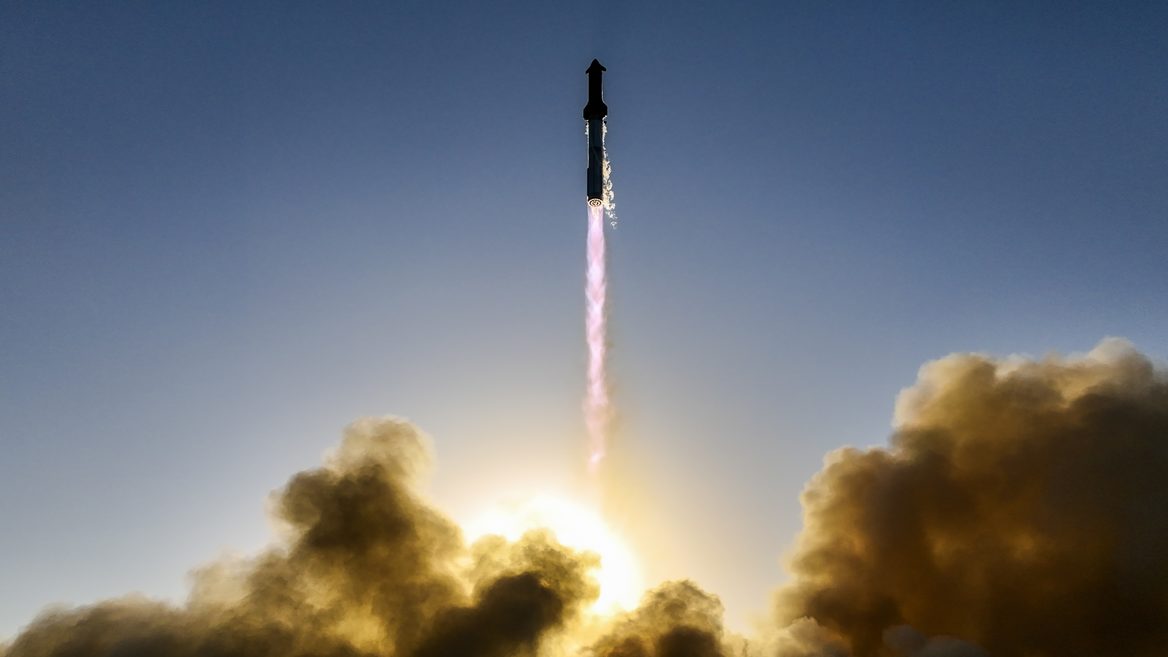
Musk confirmed that he is going to send the Optimus robot to Mars next year
SpaceX owner Elon Musk confirmed his commitment last year to send Tesla Optimus robots to Mars and said when people could land on the «red planet.»


SpaceX owner Elon Musk confirmed his commitment last year to send Tesla Optimus robots to Mars and said when people could land on the «red planet.»

SpaceX owner Elon Musk confirmed his commitment last year to send Tesla Optimus robots to Mars and said when people could land on the «red planet.»
Musk says 2025 will be a pivotal year for the company’s plans for humanoid robots. But next year could be a truly stellar year for Optimus.
In his recent post on X (Twitter), Musk mentioned that SpaceX will send the Optimus robot to Mars on the powerful Starship rocket by the end of 2026.
«Starship is heading to Mars late next year with Optimus. If the landing is successful, human landing could begin as early as 2029, although 2031 is more likely,» the billionaire added.
This isn’t the first time Musk has made such a claim. Back in November last year, Musk mentioned that SpaceX was capable of sending «multiple uncrewed ships» to Mars within a few years, and that the payload would include Optimus robots.
Tesla unveiled an improved version of the Optimus robot at an event in late 2024. At the time, Musk told the crowd that Optimus was «the greatest product ever created.» It was later reported that the robots at the event were remotely controlled by humans.
Later, during the company’s Q4 2024 earnings call, Musk shed more light on the production plans, adding that the product has the potential to generate more than $10 trillion in revenue. He also mentioned plans to produce thousands of the humanoid robots by 2025. The Tesla and SpaceX CEO had previously estimated the cost of Optimus at $20,000-30,000.
NASA has high hopes for Starship as part of the Artemis mission, which is expected to return humans to the Moon by 2027. Longer-term plans also include manned missions to Mars, but these will depend on the technical success of the Moon missions.
Last week, SpaceX suffered another setback with its Starship rocket. Less than ten minutes after liftoff, the spacecraft lost contact with control teams and exploded in the sky.
This isn’t the first failed Statship launch this year — in January, it broke up minutes after launch, forcing airline planes over the Gulf of Mexico to change course to avoid falling debris.