Хочете будувати кар’єру в Data Science та AI? Vodafone Big Data Lab відкриває новий набір —>
Наталя ХандусенкоGameDev Eng
16 October 2026, 14:18
2026-10-16
The developer created the EarthNG mod for BeamNG.drive: it generates real roads and buildings across Ukraine right while you drive
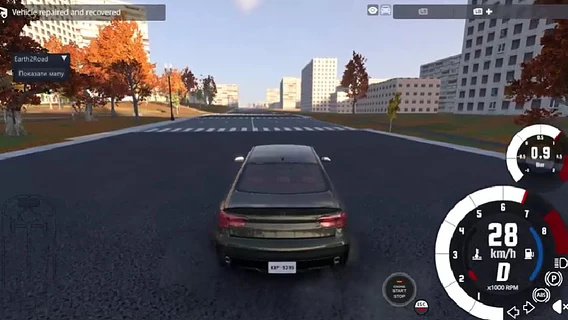
Oleksandr Sokolov presented the EarthNG project on Reddit — a large-scale modification for the BeamNG.drive car simulator, which allows you to virtually drive through the streets of all of Ukraine, reproducing real terrain, road network, and infrastructure based on geodata.
Oleksandr Sokolov presented the EarthNG project on Reddit — a large-scale modification for the BeamNG.drive car simulator, which allows you to virtually drive through the streets of all of Ukraine, reproducing real terrain, road network, and infrastructure based on geodata.
The author of the development noted that this is the third reincarnation of his idea of creating game levels based on real locations.
The main problem with BeamNG.drive is the strict limitations on the size of game maps: stable play with high detail is usually only possible on maps up to about 10*10 km2. To get around this obstacle and recreate an entire country, the developer created its own dynamic streaming and environment generation system.
"I would be happy to tell and show everything in more detail, but the power outages made their own adjustments, so all I have are two videos as proofs. The first is in accelerated form from above, the second is an example of driving through yards and then through the city with traffic. At any moment, you can teleport to any point in Ukraine, and there will be an approximate relief, roads, buildings, etc.," adds Oleksandr.
How it works: generating the world "on the fly"
Instead of loading a giant static map, EarthNG works through a special background companion script and a map overlay.
The world is created right while driving — procedural tiles (segments) are generated around the car in the direction of its movement.
Generated areas are stored in the game profile cache, so a return visit to an already visited point is instant.
The player can teleport to any coordinate in Ukraine and get realistic terrain, a network of roads, houses, fences, trees, and even traffic.
The technology is based on the Earth2Road exporter and the EarthNG toolkit. The system extracts detailed terrain data from the OpenStreetMap (OSM) mapping service and also uses digital elevation models (DEMs).
EarthNG main features and ready-made test pack
Despite the fact that the developer encountered power outages while working on the project, he has already prepared a ready-made package for testers.
Large archive (~4.5 GB): contains everything you need for a quick launch — from scripts and mods to almost 35 thousand prepared OSM tiles across Ukraine.
Fast Generator: An optimized module that instantly builds roads, buildings, soil, paths, fences, and landscaping elements.
Flexible appearance settings: support for changing weather conditions, time of day, as well as various texture packs (including winter, autumn, night, and even stylized as "cyberpunk"). Real OSM tags and photo texture packs (in particular, Ukrainian panelok) are used to select building facades.
Game traffic: a built-in mini-window allows you to run artificial intelligence (AI) for other machines - the graph for autopilot movement is built automatically from map tiles.
Expansion to other countries
Although the main focus of the project is Ukraine, the developer has already adapted the generator to create similar maps for other parts of the world. Analogues have been prepared for testing in English-speaking regions: the states of California and New York (USA), the United Kingdom, Romania, and even the island of Zanzibar.
The author is currently working on improving the generator for high speeds (up to 300 km/h) and expanding the details in urban areas.
How to test
The source code of the project without OSM data is published in the repository on GitHub . The finished test pack with Ukraine is available for download via Google Drive .
Oleksandr is waiting for community feedback on the scale, stability of the connection, and wishes for detailed infrastructure.