Sam Altman explained why ChatGPT started to "fawn" over users, and what OpenAI plans to do about this problem
OpenAI was forced to cancel an update to its GPT-4o model released last week because the AI had become a «sycophant.»


OpenAI was forced to cancel an update to its GPT-4o model released last week because the AI had become a «sycophant.»
OpenAI was forced to cancel an update to its GPT-4o model released last week because the AI had become a «sycophant.»
«We rolled back last week’s GPT-4o update to ChatGPT because it was too flattering and nice. You now have access to a previous version with more balanced behavior,» OpenAI said in a post on X, adding that the company is fighting flattery.
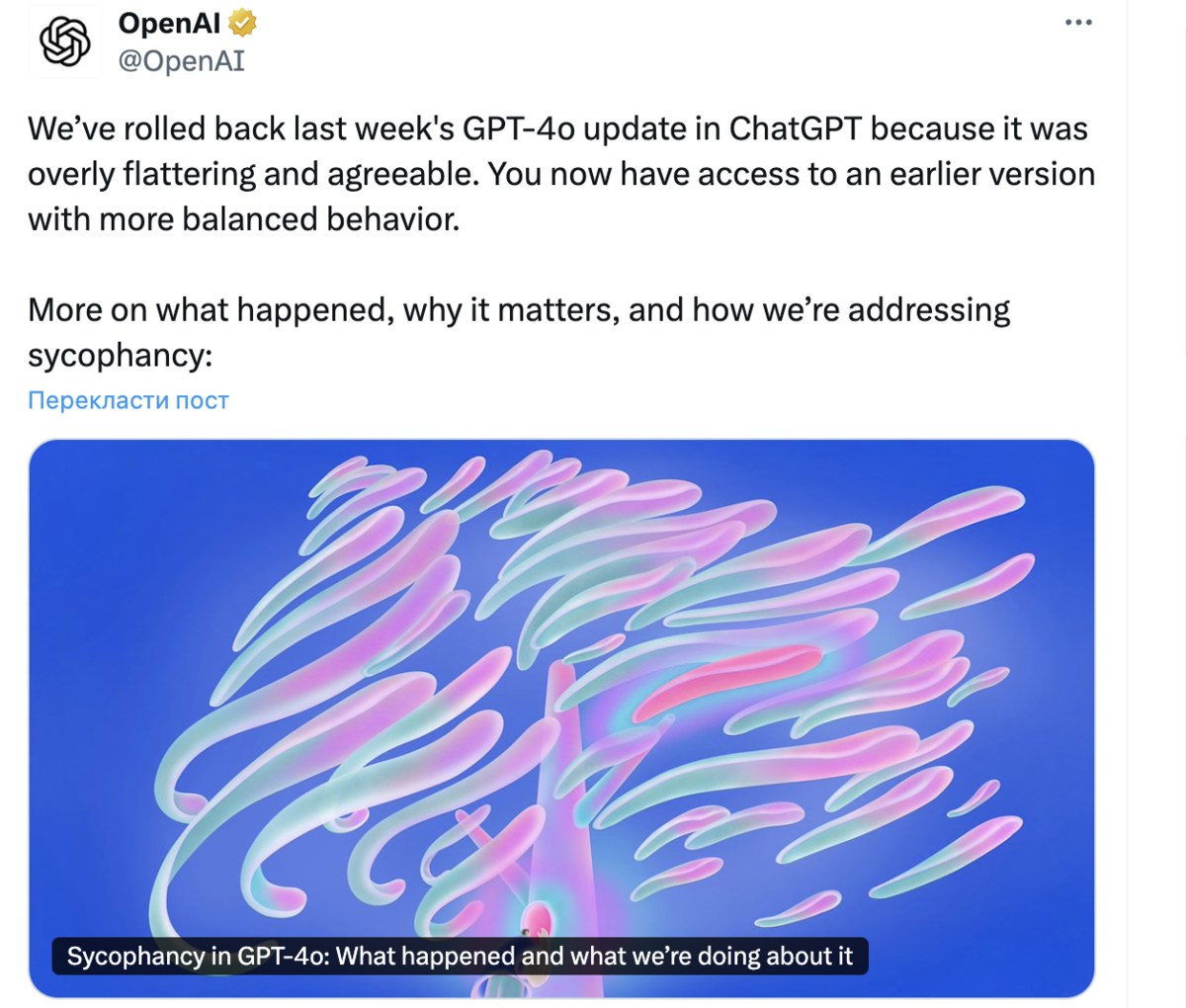
CEO Sam Altman, for his part, also confirmed that the problem exists, the company has started rolling back the latest update to GPT-4o, and OpenAI will work on fixes «as quickly as possible.»
«It’s now completely deprecated for free users, and we’ll update it again when it’s finalized for paid users, hopefully later today. We’re working on additional fixes for personality modeling and will share more information in the coming days,» he added.
Among the fixes OpenAI is rolling out are improvements to its core model training methods and system cues to explicitly deter GPT-4o from flattery, TechCrunch reported, citing a company statement. OpenAI also added that the company is building more safeguards to «enhance the integrity and transparency of [the model],» and is continuing to expand its assessments to «help identify issues beyond flattery.»
OpenAI also says it is experimenting with ways that will allow users to provide «real-time feedback» to «directly influence their interactions» with ChatGPT and choose from several ChatGPT settings.
«We’re exploring new ways to incorporate broader, democratic feedback into ChatGPT’s default behavior,» the company wrote on its blog. «We hope that feedback will help us better reflect diverse cultural values around the world and understand how you would like ChatGPT to evolve […] We also believe that users should have more control over how ChatGPT behaves, and, as safe and feasible, make adjustments if they disagree with the default behavior.»