Хочете будувати кар’єру в Data Science та AI? Vodafone Big Data Lab відкриває новий набір —>
Наталя ХандусенкоAI Eng
2 October 2026, 16:48
2026-10-02
Google's AI chip has reached space, but the company faces a purely earthly problem
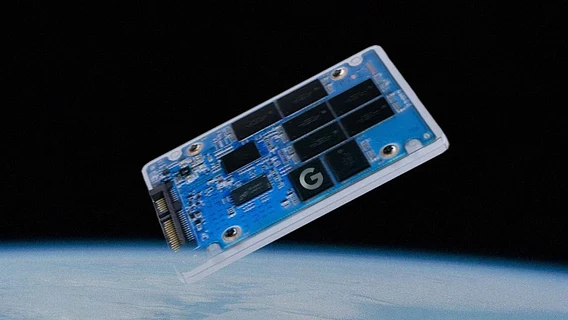
Google has begun testing its artificial intelligence processors in low Earth orbit, which could pave the way for space-based data centers. However, the main obstacle to the project remains not only the difficulty of delivering iron to space, but also its high cost. Google itself calls this a “long-term research breakthrough.”
Google has begun testing its artificial intelligence processors in low Earth orbit, which could pave the way for space-based data centers. However, the main obstacle to the project remains not only the difficulty of delivering iron to space, but also its high cost. Google itself calls this a “long-term research breakthrough.”
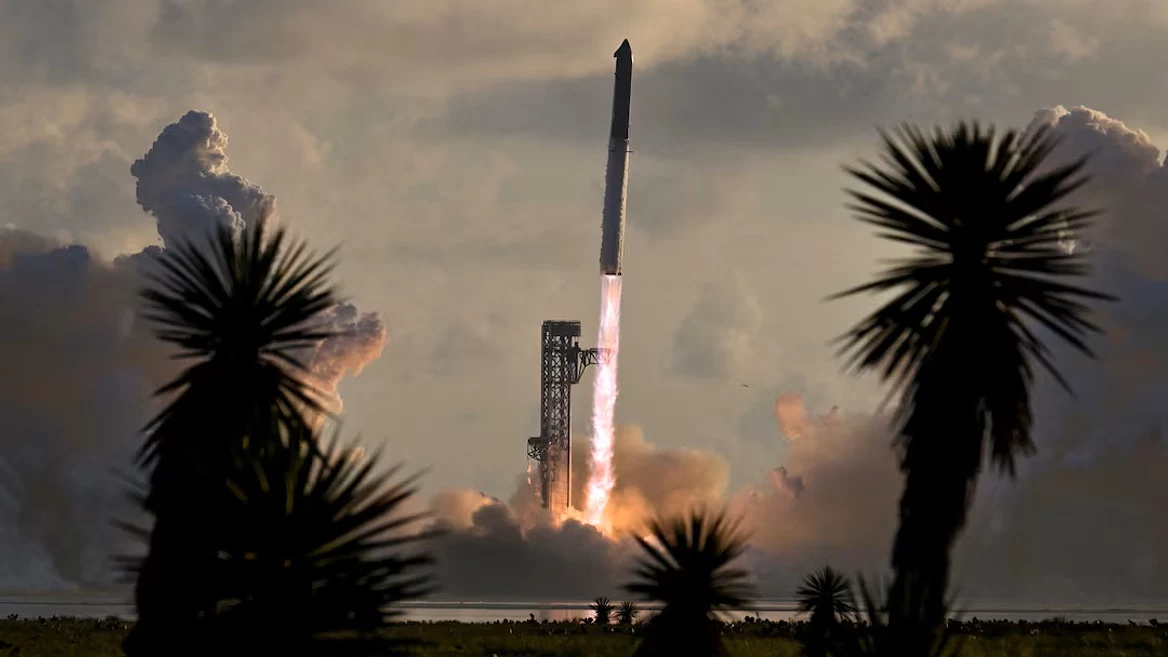
On October 1, 2026, Google's experimental satellite Project Suncatcher was launched into orbit by a SpaceX Falcon 9 rocket. It was equipped with four Google Trillium TPU processors. The main goal of the mission is to test whether the AI chips can withstand extreme conditions: vibrations during launch, high levels of radiation, and sharp temperature changes.
In addition, in 2027, Google, together with the company Planet, plans to launch two more specialized satellites to test high-speed optical communication between devices in space.
Space as a solution to the energy crisis AI
The development of artificial intelligence requires enormous amounts of electricity and cooling systems for terrestrial data centers. Google scientists estimate that solar panels in orbit can generate up to 8 times more energy than on Earth, and the lack of an atmosphere will allow for the abandonment of traditional air or liquid cooling.
Google's idea is to create clusters of dozens of TPU satellites. One project involves a grouping of 81 satellites within a radius of 1 kilometer.
However, scaling up the initiative comes with a huge logistical hurdle. To reach the required capacity, 370,000 tons of payload would need to be launched into orbit. Even if the Starship rocket could launch 200 tons in a single flight, it would require 1,850 launches over 10 years (or 185 launches per year). For comparison, Starship currently makes no more than 5 flights per year.
Earthly prices of space technologies
Another critical factor is economics. It currently costs about $3,600 to deliver one kilogram of cargo to low-Earth orbit. For space data centers to be cost-competitive with those on Earth, the price would need to fall to $200 per kilogram. Google estimates that this price level won’t be reached until the mid-2030s.
Fierce competition in the orbital computing market may accelerate the decline in prices:
Blue Origin has applied to deploy up to 51,600 satellites as part of Project Sunrise.
Starcloud is working on a satellite constellation of up to 88,000 devices and has already demonstrated the operation of the Nvidia H100 chip in orbit.
Axiom Space is also developing its own orbital data centers, scaling capacities from kilowatts to megawatts.
Despite significant technical and financial challenges, the first successful tests demonstrate the rapid development of the technology. The industry now awaits confirmation of whether the concept will be economically viable.
Як нейромережі бачать вільну та незалежну Україну? Тест dev.ua
Нейронні мережі для генерації зображень бачать світ по-своєму, їхню логіку зрозуміти часом зовсім неможливо. Але таки хочеться. На честь Дня Незалежності України редакція dev.ua вирішила провести невеликий експеримент.
Ми задали чотирьом різним нейронним мережам п’ять однакових запитів: «прапор України», «День Незалежності України», «український Крим», «перемога України» та «українці». Отриманими результатами ми ділимося з вами нижче.