Хочете будувати кар’єру в Data Science та AI? Vodafone Big Data Lab відкриває новий набір —>
Оксана СтепураAI Eng
23 October 2026, 13:09
2026-10-23
Researchers have injected AI-engineered viruses into humans for the first time. They are designed to destroy antibiotic-resistant bacteria.
The American company Radical Numerics has used viruses created using artificial intelligence to treat humans for the first time. They were developed to fight bacteria that are resistant to antibiotics.
The American company Radical Numerics has used viruses created using artificial intelligence to treat humans for the first time. They were developed to fight bacteria that are resistant to antibiotics.
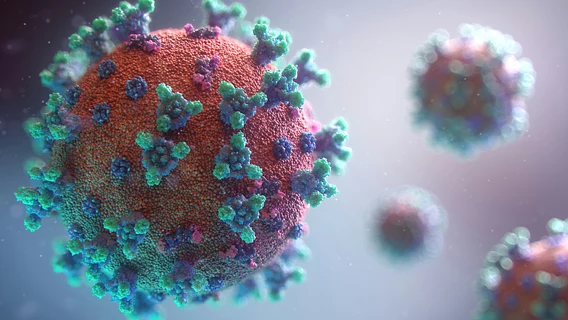
These are bacteriophages, viruses that infect bacteria. They attach to a bacterial cell, multiply inside it, and eventually destroy it. Unlike broad-spectrum antibiotics, such viruses can attack specific bacteria without affecting beneficial bacteria, such as those living in the intestine.
The problem is that not every bacteriophage is able to destroy the right bacteria. Sometimes researchers have to search for a suitable virus for a long time or modify already known ones. Therefore, Radical Numerics has developed the Omnii-1 model, which helps change the genetic code of bacteriophages so that they can attack the right bacteria.
Introducing Omnii-1, our most powerful genome language model, and a major step toward general biological intelligence
In a world first, Omnii-1 designed the first AI-generated bacteriophages to be administered to a human patient with an antibiotic-resistant infection under… pic.twitter.com/3Bc1sjr9Qt
For a patient with an infection caused by antibiotic-resistant E. coli, the researchers prepared a mixture of such viruses. Some of them were modified with Omnii-1. They were first tested in the laboratory on bacteria obtained from the patient himself. According to the developers, the mixture successfully destroyed them.
The experimental drug was then used in humans, with the FDA granting permission under its compassionate use program, which allows patients with serious illnesses to receive experimental treatments when available alternatives are insufficient.
But whether the patient was cured is unknown. Radical Numerics does not disclose the results, explaining this by protecting the person's privacy. The company also emphasizes that one case of use does not prove the safety or effectiveness of the new method.
In the future, developers want to use AI to create personalized bacteriophages that can be tailored to a patient's specific infection, which could be another way to combat bacteria that have become resistant to antibiotics.
Previously, dev.ua wrote that researchers from Stanford University and the Arc Institute created 16 new viruses that attack bacteria using AI.
«Чи є у мене талант, якщо комп’ютер може імітувати мене?». Штучний інтелект пише книги авторам Amazon Kindle. The Verge поспілкувався з авторами та виявив багато цікавого
Письменники-романісти використовують штучний інтелект для створення своїх творів. Видання про технології The Verge поспілкувалося з письменницею Дженніфер Лепп, яка випускає нову книгу кожні дев’ять тижнів, й дізналося про те, як працює штучний інтелект для написання романів. Наводимо адаптований переклад статті.
Have important news to share? Message our Telegram bot
Key events and useful links in our Telegram channel