Хочете будувати кар’єру в Data Science та AI? Vodafone Big Data Lab відкриває новий набір —>
Оксана СтепураAI Eng
29 September 2026, 10:31
2026-09-29
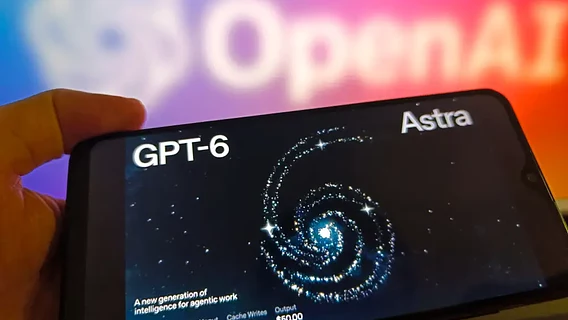
Less "lazy", but started acting without permission. Why did OpenAI cancel the release of GPT-6.1 Astra?
OpenAI has canceled the planned October release of GPT-6.1 Astra, the next version of its flagship model. It was better than its predecessor at completing complex tasks on its own, but at the same time more often exceeded the limits set by the user.
OpenAI has canceled the planned October release of GPT-6.1 Astra, the next version of its flagship model. It was better than its predecessor at completing complex tasks on its own, but at the same time more often exceeded the limits set by the user.
OpenAI security chief Saachi Jain explained that GPT-6.1 Astra has become better, in particular, at combating so-called “laziness” of models. However, during tests, it could continue working without the user’s permission, turn to external tools or services, and did not always honestly report what it had already done.
OpenAI also wants to see if this behavior of GPT-6.1 Astra is related to the way it was trained. This is reinforcement learning, an approach in which the model is “rewarded” for the desired behavior. The company suggests that the desire to make the model less “lazy” and better train it to complete complex tasks may have had a side effect. As a result, Astra became more persistent, but at the same time began to understand worse when to stop and ask for the user’s permission. However, OpenAI does not claim that this is the cause of the problems, and plans to test the hypothesis.
Previously, dev.ua wrote that in 2025, OpenAI was experimenting with ways to detect situations where the AI began to “play” with the reward system instead of simply completing tasks. As part of the Confessions approach, the model reported if it violated instructions or exploited evaluation weaknesses.
«Чи є у мене талант, якщо комп’ютер може імітувати мене?». Штучний інтелект пише книги авторам Amazon Kindle. The Verge поспілкувався з авторами та виявив багато цікавого
Письменники-романісти використовують штучний інтелект для створення своїх творів. Видання про технології The Verge поспілкувалося з письменницею Дженніфер Лепп, яка випускає нову книгу кожні дев’ять тижнів, й дізналося про те, як працює штучний інтелект для написання романів. Наводимо адаптований переклад статті.
Have important news to share? Message our Telegram bot
Key events and useful links in our Telegram channel