Олександр КузьменкоSpaceTech
22 May 2026, 13:52
2026-05-22
SpaceX plans to provide gigabit Starlink internet anywhere on the Moon for astronauts and rovers
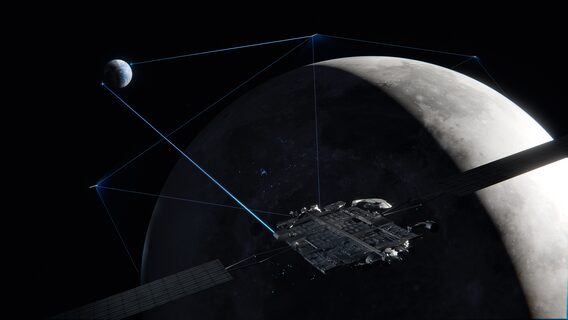
SpaceX’s Starlink team is developing interplanetary gigabit communications technology that will work anywhere on the Moon. A new network of optical lasers is being designed specifically to connect lunar rovers, habitat modules, and astronauts across the entire surface of the Earth’s moon.
SpaceX’s Starlink team is developing interplanetary gigabit communications technology that will work anywhere on the Moon. A new network of optical lasers is being designed specifically to connect lunar rovers, habitat modules, and astronauts across the entire surface of the Earth’s moon.
The company’s plans were revealed in SpaceX’s recent IPO prospectus, published in May 2026, as well as Starlink’s social media posts, which outline a strategy to build lunar IT infrastructure, extract resources, and deploy orbital AI data centers.
Starlink satellites are already using optical inter-satellite communication channels («space lasers»), capable of providing speeds of 100 to 200 Gbps per channel. There are more than 10,000 active Starlink satellites in low Earth orbit, transmitting huge amounts of information every day with an uptime rate of more than 99%. The system uses the near-infrared wavelength range of about 1550 nm, which is well-studied and reliable for telecommunications.
However, scaling this technology to the distance of the Moon (about 384,000 km from Earth) is a serious engineering challenge. SpaceX specialists will have to solve complex tasks related to orbital mechanics, the accuracy of beam guidance at such a distance, and compensation for atmospheric interference during signal reception by ground stations. There is no exact timeline for the project’s implementation yet — the idea is still at the research and design stage.
These initiatives are part of SpaceX’s larger lunar program. The company already has a contract with NASA to use a modified Starship as an astronaut landing system for the Artemis mission. Reliable, high-bandwidth communications are essential for long-term operations on the surface of the moon. The Starlink laser network could be a much more powerful alternative to NASA’s current Deep Space Network.
In addition to communications, SpaceX sees the Moon as a future industrial hub. The company plans to create facilities on its surface for assembling satellites and solar panels that will power artificial intelligence supercomputers. The material for the solar panels — silicon dioxide — as well as minerals such as aluminum, iron, and titanium are planned to be mined directly on the Moon, which will significantly reduce logistics costs from Earth.
«Our mission is to create the systems and technologies necessary to make life multiplanetary, understand the true nature of the universe, and spread the light of consciousness to the stars,» SpaceX’s prospectus states.
SpaceX and NASA have previously conducted tests of optical communications in deep space. In particular, as part of the Psyche mission, a laser device successfully transmitted data to Earth from a distance of tens of millions of kilometers. And in early April 2026, NASA, together with MIT Lincoln Laboratory, launched the MAScOT laser communication terminal aboard the Orion spacecraft as part of the Artemis II mission, which laid the foundation for future manned lunar networks.
Божество, зореліт, уламок планети: що людство знає про Місяць і як збирається туди повертатися
16 листопада 2022 року NASA успішно запустила місію Artemis 1 до Місяця. Ракета Space Launch System (SLS) і корабель Orion стартували о 8:47 за Києвом із космічного центру Кеннеді на мисі Канаверал. Задача корабля Orion — покрутитися навколо супутника Землі шість днів і повернутися на Землю, після чого можна запускати людей. Якщо все пройде успішно, уже за кілька років ми побачимо грандіозний камбек і реюньон людства на супутник Землі. Що ми знаємо про Місяць, чому так довго його ігнорували та як будемо повертатися — в оновленому завдяки успішному старту (нарешті!) суперексплейнері від dev.ua від 29 серпня 2022 року.
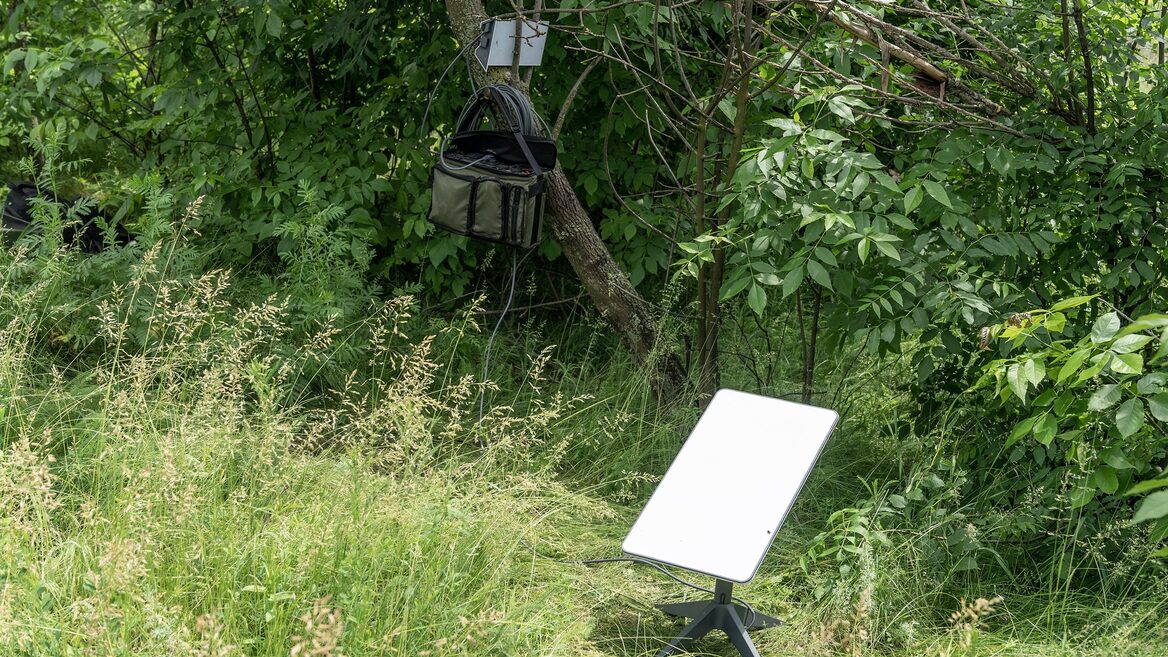
Product Designer задонатив ЗСУ особистий Starlink. Як він це зробив
Арсеній Фещенко працює на позиції Product Designer платформи по оренді квартир у Києві та Лондоні bird. Нещодавно хлопець задонатив на потреби ЗСУ особистий Starlink. Розповідаємо, як це вдалося зробити.
«Життя — це більше, ніж просто вирішення однієї проблеми за іншою». Ілон Маск написав колонку в китайському медіа. Які плани техногенія на найближче майбутнє?
Бізнесмен Ілон Маск написав колонку про сталу енергетику, мозкові імпланти та дослідження космосу в китайському виданні, що належить національній агенції з контролю за інтернетом та цензурою. Англійською текст переклав журналіст китайського держвидання «Сіньхуа» Янь Лю. Ми адаптували допис українською.