US urges companies around the world not to use Huawei chips
The US Department of Commerce has warned that companies using artificial intelligence based on Huawei Ascend chips risk violating export restrictions.


The US Department of Commerce has warned that companies using artificial intelligence based on Huawei Ascend chips risk violating export restrictions.
The US Department of Commerce has warned that companies using artificial intelligence based on Huawei Ascend chips risk violating export restrictions.
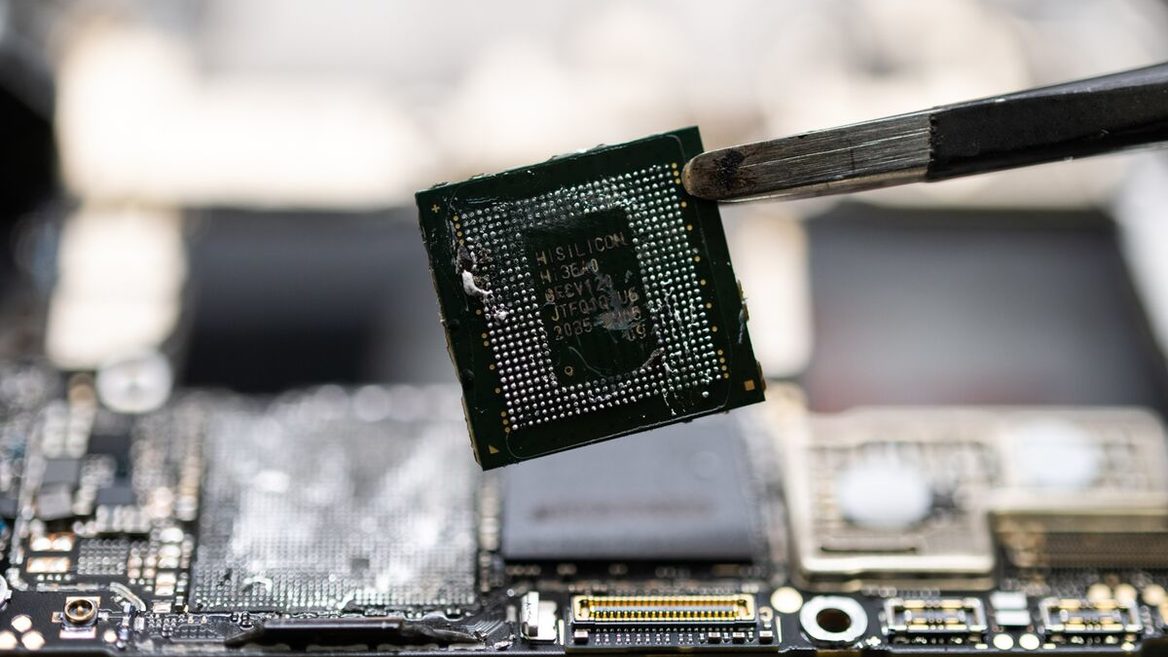
The US government is tightening controls on the distribution of American technology that could help China build advanced AI processors, Arstechnica reports, citing the US Department of Commerce. Even the use of Huawei Ascend 910B, 910 °C or 910D chips — not just their export or sale — could be considered a violation, as these chips were likely developed or manufactured using American technology.
«This is not a new rule, but a public confirmation of an existing interpretation,» said Kevin Wolf, an export control lawyer.
This concerns the application of the so-called Foreign Direct Product Rule, according to which even foreign products created using American software or equipment may be subject to restrictions.
Huawei is already shipping its 910°C-based AI clusters to the domestic Chinese market, claiming that they outperform Nvidia in key metrics. While individual chips are inferior, the entire system as a whole is capable of outperforming its American competitor.
The United States is concerned that Huawei could expand beyond domestic demand, threatening the position of companies like Nvidia. Its CEO, Jensen Huang, has called Huawei «one of the most powerful technology companies in the world» and suggested that U.S. policy should take global competition into account.
At the same time, the US Department of Commerce has canceled the AI Diffusion Rule, a planned restriction on the export of certain AI systems that was scheduled to take effect on May 15.
These moves are part of a larger strategy by Washington to curb China’s technological growth, especially in the areas of artificial intelligence and chip manufacturing.
Meanwhile, in Ukraine, the National Electricity Commission (NKEC) has granted Huawei permission to use the company’s cellular and mobile communication base stations on the territory of Ukraine.
A little later, the National Commission for State Regulation in the Fields of Electronic Communications, Radio Frequency Spectrum, and Postal Services allowed this company (as well as Nokia) to test 5G in Ukraine.