Хочете будувати кар’єру в Data Science та AI? Vodafone Big Data Lab відкриває новий набір —>
Марія БровінськаThat's Life
14 January 2026, 08:38
2026-01-14
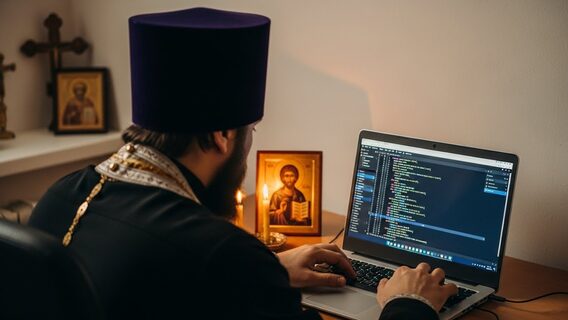
A programmer-priest of the UOC is on trial in Kharkiv, accused of transmitting data about the Armed Forces of Ukraine
The Kharkiv District Court of the Kharkiv region is considering a case regarding the illegal dissemination of information about the deployment and movement of the Armed Forces of Ukraine during martial law against a programmer-priest. We tell you the details of the case.
The Kharkiv District Court of the Kharkiv region is considering a case regarding the illegal dissemination of information about the deployment and movement of the Armed Forces of Ukraine during martial law against a programmer-priest. We tell you the details of the case.
According to the case materials, the defendant is not only a clergyman — the rector of the Holy Spirit Church of the UOC in the Kharkiv region, but also a programmer of the Kharkiv Diocesan Administration of the UOC.
According to the prosecution, the programmer for a long time transmitted information about the location and movement of personnel of the Armed Forces of Ukraine, military equipment, and facilities used by the Defense Forces of Ukraine in Kharkiv and the region. These actions, according to the prosecutor’s office, create a risk of continuing criminal activity and pose a threat to the national security of Ukraine.
The defense emphasized that the accused: has a permanent place of residence; has no criminal record; was actively involved in volunteering and assisting the civilian population after the start of the full-scale invasion; in particular, he used mobile applications to monitor air threats and warned residents of the city of Pivdenne about the danger using church bells. The lawyer also emphasized his long service in the church, spiritual awards, and active charitable activities.
The lawyer requested that the preventive measure be changed from detention to 24-hour house arrest, citing the practice of the European Court of Human Rights and the lack of real evidence of a risk of flight.
However, the court found the prosecutor’s arguments convincing. The decision states that the accused faces a sentence of 5 to 8 years in prison, which in itself creates a risk of flight, and taking into account the martial law and the nature of the crime, the risk of reoffending remains relevant. In the court’s opinion, personal characteristics, merits and social connections cannot offset these risks.
Separately, the court referred to Part 6 of Article 176 of the Criminal Procedure Code of Ukraine, which, during martial law, obliges to apply detention exclusively to persons accused of crimes against the foundations of national security, in particular under Article 114-2 of the Criminal Code of Ukraine.
The court decided to keep the accused in custody for another 60 days — until March 8, 2026, without the right to post bail.