Хочете будувати кар’єру в Data Science та AI? Vodafone Big Data Lab відкриває новий набір —>
Марія БровінськаThat's Life
3 November 2026, 09:00
2026-11-03
Light on your own schedule: how IT people build energy-independent houses and how much it costs
The calendar winter has not yet begun, and Ukrainians are already living in conditions of long power outages. In Kyiv, there may be no light for eight hours in a row, and in some cities and towns, after Russian attacks, the restoration of power supply is delayed for several days. And the forecasts for the coming months are not very optimistic: energy specialists and experts warn that in the event of new strikes and a cold snap, periods without electricity may become even longer. For Kyiv, in particular, scenarios are being voiced with outages for 6-12 hours a day, and after massive attacks, restoration may take up to 20-24 hours.
For those working from home, it’s no longer just an inconvenience, but a question of being able to stay connected, hold meetings, and complete work tasks. That’s why some Ukrainians aren’t waiting for the situation to get worse, but are setting up their own autonomous power systems — from portable charging stations and generators to solar panels and homemade batteries.
dev.ua spoke with four IT professionals who have turned their homes into more or less autonomous power systems. They told us what equipment they use, how much their solutions cost, how long they can go without the grid, and what they would do differently if they were starting over.
Three moves, two Bluettis and a generator: how to build autonomy that you can take with you
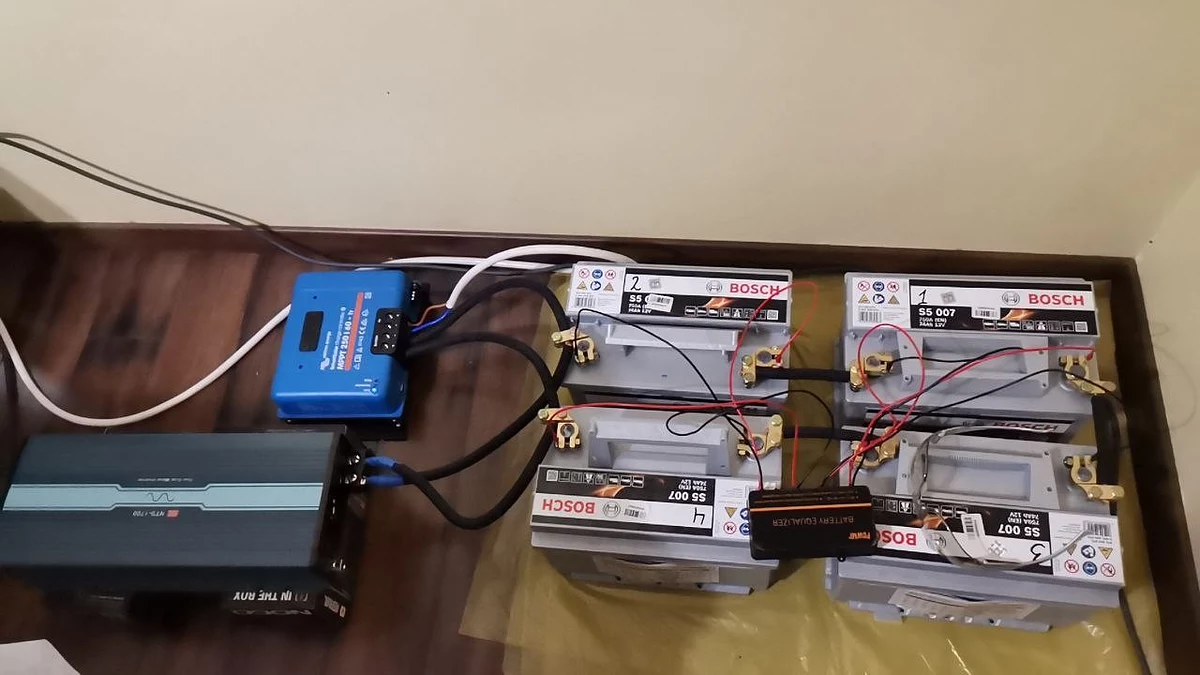
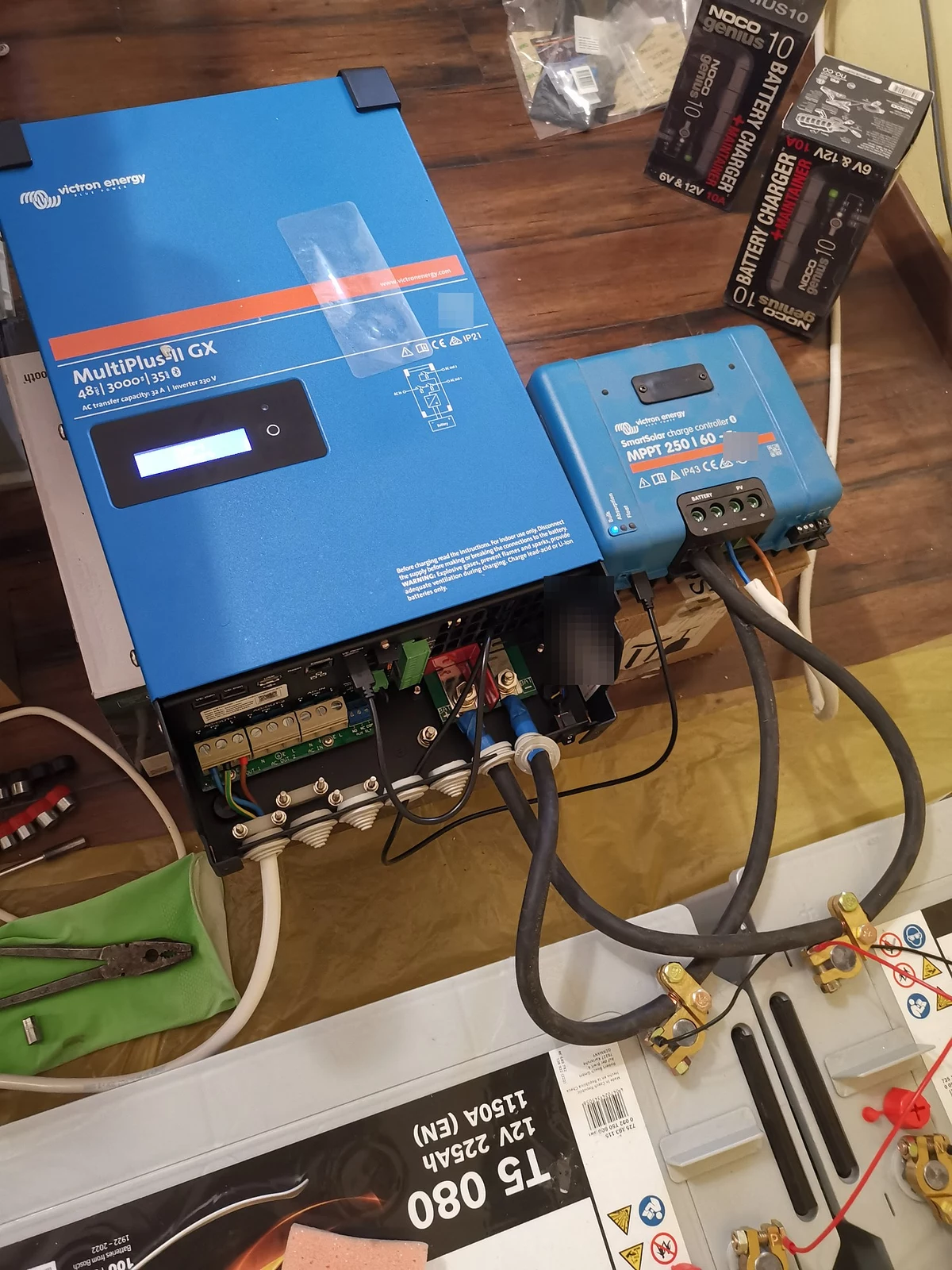
Serhiy Kryvokhatko, Engineering Team Lead at Ciklum, rents a private house outside the city. During the full-scale war, he moved three times and each time assembled the autonomous power supply system anew. Serhiy has experience with various backup power options: solar panels, car lead-acid batteries and lithium batteries. In the first house, he installed three 250-watt solar panels, a Victron controller and batteries. During the move, the panels had to be sold.
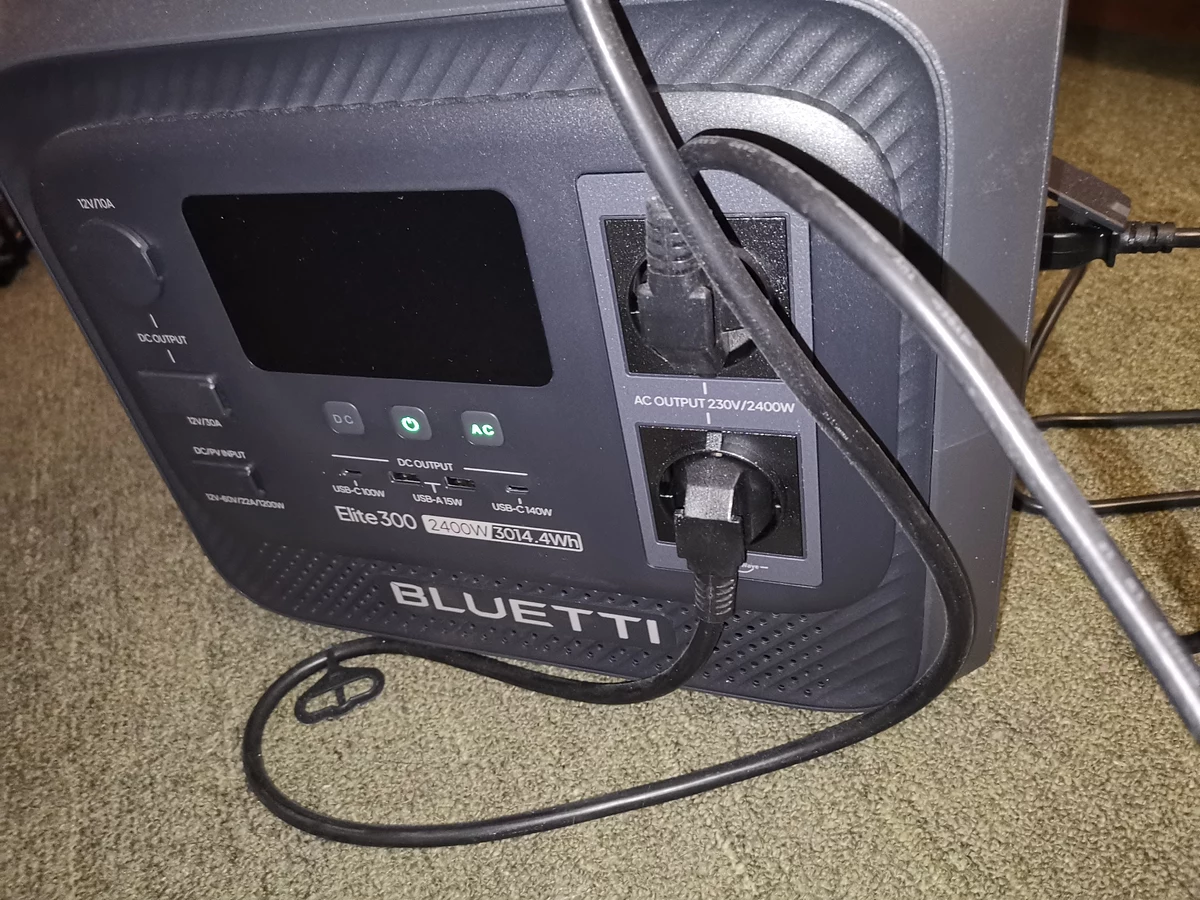
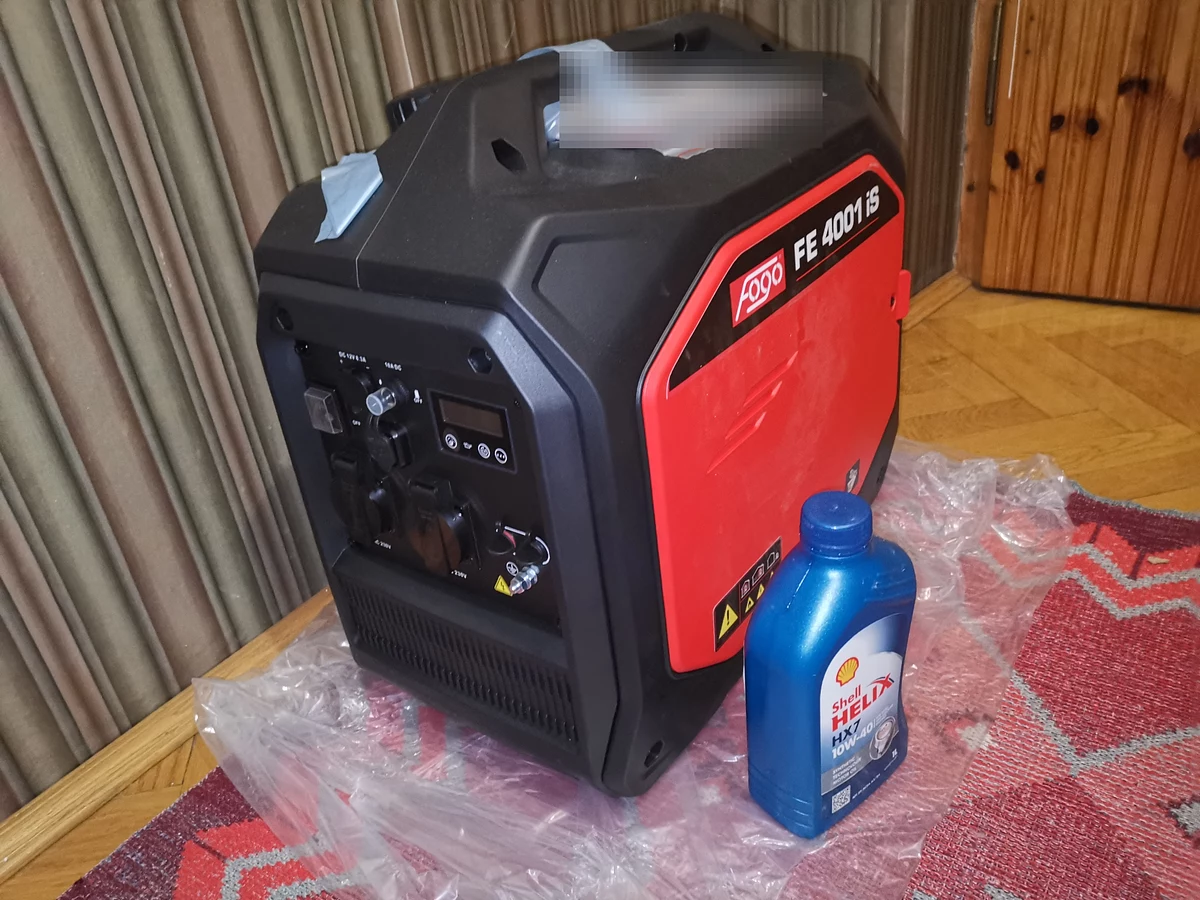
There is no possibility to install solar panels in the current house, so the system is based on two Bluetti charging stations: AC240 with a capacity of 1.5 kWh and Elite 300 with a capacity of 3 kWh. In August, Serhiy also purchased an inverter gasoline generator from the Polish manufacturer Fogo with a capacity of 3.2 kW. It has a protective cover and an eco mode.
For backup internet, Serhiy uses a second-generation Starlink, which he purchased in the first year of the full-scale war. The main communication channel is now fiber optic, satellite internet remains a backup option.
There are fewer problems with heating in the current house: the gas boiler is single-circuit and works without electricity. Water circulates thanks to thermal convection. In previous houses there were double-circuit boilers with pumps that consumed 80–100 W. Serhiy powered them from charging stations or batteries.
At the same time, he draws attention to a nuance with some old double-circuit boilers: they may be sensitive to the correct phase connection and therefore not start from a charging station or generator. Therefore, it is better to check the compatibility of the equipment in advance, while there is electricity.
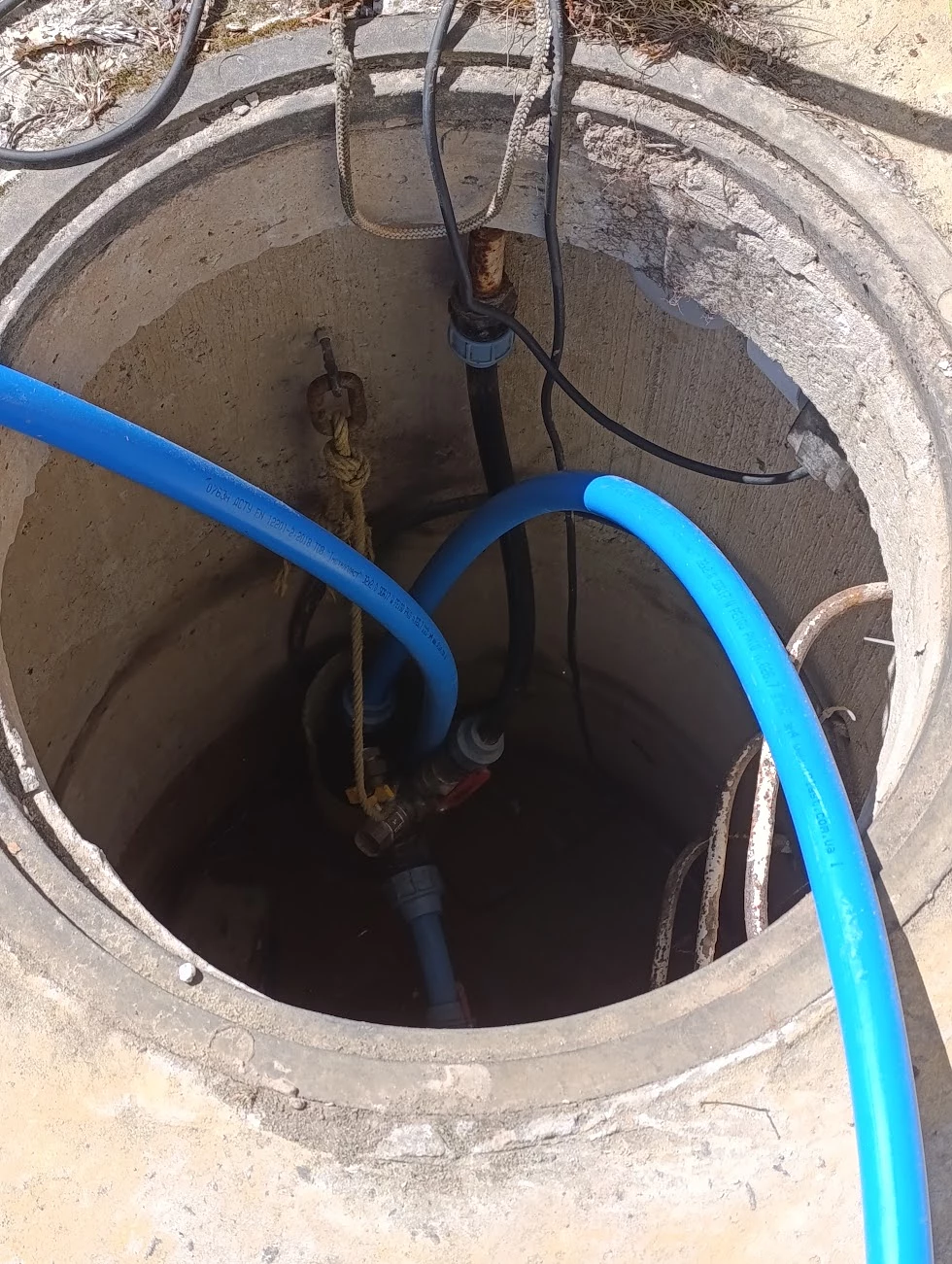
It’s more complicated with water supply. In the previous house, the well pump consumed about 1 kW. The current well is shared by three houses, and the pump already requires several kilowatts. Serhiy considers it impractical to provide it with backup power, so he keeps a supply of water — several dozen six-liter bottles. He heats hot water on a gas stove during power outages.
How the system works during outages
When the charge of the two stations drops to 10–15%, Serhiy starts the generator and connects both stations to it — about 1 kW each. They charge in two to three hours, after which the generator turns off, and work continues from the stored energy.
This mode allows you to avoid having to keep the generator on all the time. According to Serhiy, the charging stations have become the most important part of the system: they store energy and allow you to work without constant noise and fuel consumption.
The scheme is similar with the Internet: fiber optic is the main channel, Starlink is the backup. During long blackouts, optics can also disappear if the provider’s equipment backup power runs out. Serhiy does not count on mobile 4G in such situations: the backup power of base stations may only last for a limited time.
After the first period of continuous use of Starlink, he switched to the $30 per month plan and kept it as a backup. The download speed is 80–200 Mbps, the upload speed is 15–35 Mbps. This is enough for a backup channel, and if necessary, you can switch to a faster plan.
How much does such autonomy cost?
Serhiy assembled the system gradually, according to the conditions of each new house. In the first year of the full-scale war, he purchased Starlink for about $500. At that time, the tariff cost about €80 per month.
In the second and third years of the war, he had three 250-watt solar panels, a charging station, lead-acid batteries, and a Victron controller. In the summer, when the heat and damage to the power grid left him without electricity for days, this configuration was more than enough.
There was no place to install the panels in the next house. Therefore, the system was reduced to a charging station and a lead-acid battery. In winter, such a set was barely enough — sometimes you had to sit in the cold. That is why this year Serhiy bought a generator.
The two current charging stations cost about €1,300 each, and with delivery, about €1,500 per unit. They were ordered directly from the official Bluetti online store via Germany and delivered by Nova Poshta. The generator cost about €600, with another €100–200 spent on extension cords, a canister, and other things.
In total, the current kit cost about €4,500, not including Starlink. During blackouts, Serhiy spends about two liters of gasoline per day if the generator runs for two hours, and about $1 per day on satellite internet.
How long is the charge enough?
Serhiy separately calculated the consumption of the main devices during the working day. The computer uses about 150 W — for eight hours it is 1.2 kWh. Starlink consumes about 80 W, or another 0.64 kWh for the same time. The refrigerator — about 1 kWh per day.
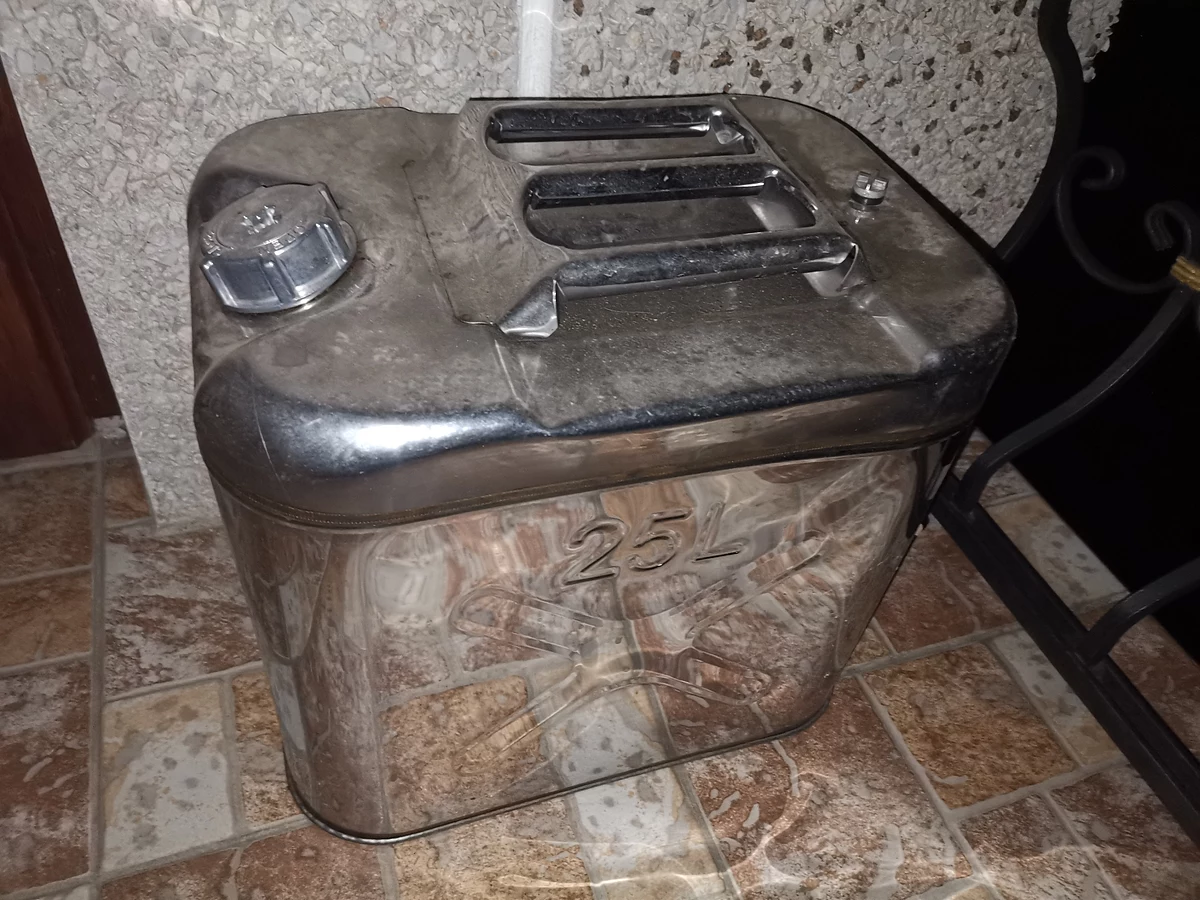
This amounts to about 3 kWh per working day. This corresponds to the operating charge range of his two stations — from 15% to 85%. After that, Serhiy runs the generator for two to three hours. According to his estimate, the generator uses about a liter of gasoline per hour. So, a 25-liter canister will last for 25 hours of operation, or more than 12 days if you run it for two hours every day.
Serhiy does not advise counting on long-term 24-hour operation of a household generator. Such models have a limited resource before serious maintenance — adjustment, replacement of filters and spark plugs. In addition, at a low load of 200–300 W, gasoline is consumed inefficiently: one kilowatt-hour requires many times more fuel than at a load of about 2 kW.
Therefore, its principle is simple: charging stations are energy storage, the generator is a source that periodically replenishes the supply. Autonomy depends on the load, season, daily routine and amount of fuel.
What to consider
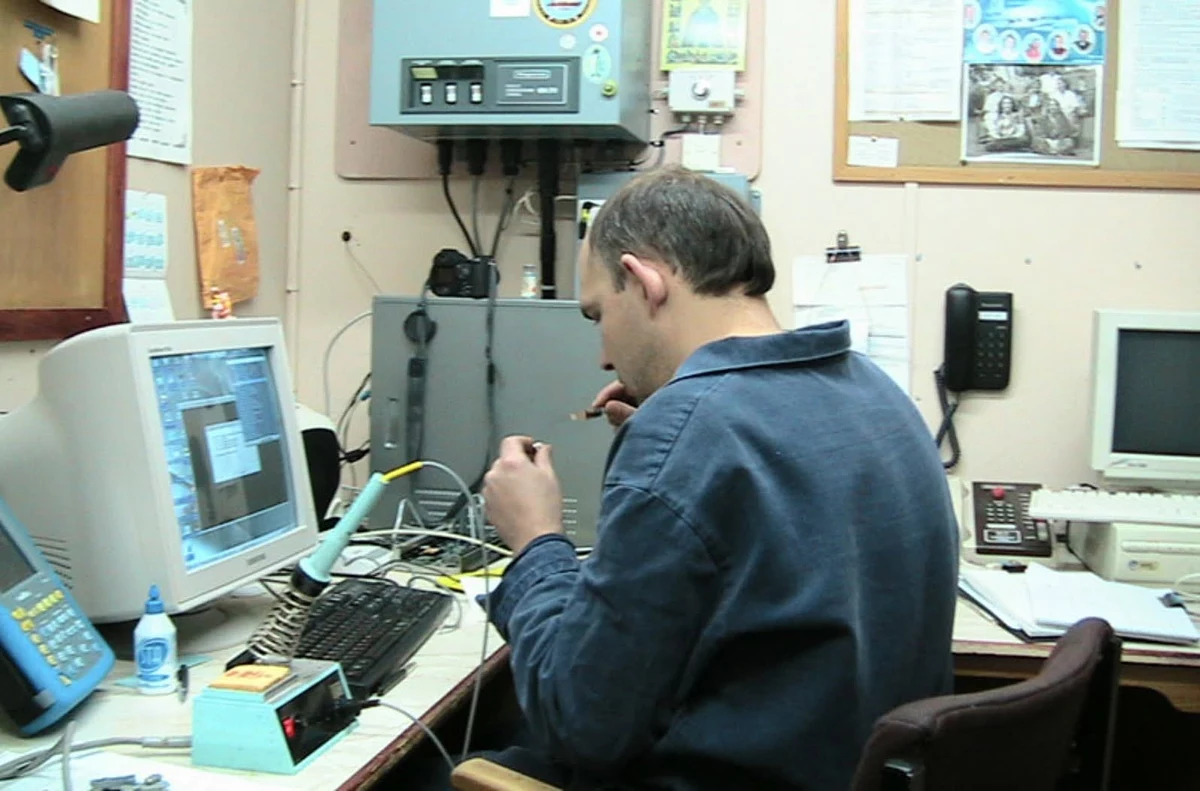
Serhiy installed all the equipment himself. He has been interested in circuit engineering since childhood and knows how to work with a soldering iron. However, for complex integration, he advises to involve a professional electrician.
He does not want to connect the charging stations to the electrical network of the rented house: there is a risk of incorrect connection and damage to the equipment. Without the correct switch, it is not worth connecting the house or apartment network to the charging station. If installing solar panels, a specialist will be needed at least for reliable fastening, taking into account wind load and work with direct current.
Among the characteristics of charging stations, Serhiy advises checking the possibility of charging at low voltage and the presence of an uninterruptible power supply or through-power supply. After blackouts, the voltage in the network dropped to 180 V and below, which is why the Bluetti AC240 could not start charging. The Elite 300 supports this mode: in the settings you can set voltage limits.
For a generator, he advises choosing an inverter model: it provides a higher-quality output voltage, and at low load it reduces the speed, so it works quieter and more economically. Also important are sufficient power, a high-quality sine wave, and if possible, an electric starter. If the generator is used within the city, it is worth paying attention to models with a casing: according to Serhiy, the sound pressure level in them is about ten decibels lower.
He doesn’t advise saving on extension cords either. If you need to transmit kilowatts over tens of meters, Serhiy recommends a cross-section of 2.5 mm². For a canister, he recommends a metal model with a convenient handle and a second hole for air intake during pouring.
Serhiy does not recommend lead-acid batteries. If there is no other option, he advises taking them with a large margin — 210 A·h. Lithium batteries, in his experience, are ultimately cheaper: they charge faster and degrade less if used correctly. He himself does not recommend discharging them below 10% and charging above 85%, and he considers 15% to be the lower limit, taking into account the error of the indicators. In the last 15–20%, charging, according to him, slows down sharply, and heating increases.
For solar panels, Serhiy advises considering double-sided models and not skimping on the controller. You need an MPPT with a wide input voltage range. He considers equipment that combines a panel controller, inverter, and battery charging to be convenient. He also pays attention to the compatibility of the battery with other equipment and BMS with active cell balancing.
Serhiy also emphasizes safety. If the house has a stove or fireplace heating or a gas convector, he advises installing two carbon monoxide detectors from different manufacturers — one in the room with the heating device at breathing height, the second in the bedroom. The detectors should be checked regularly and the expiration date of the sensors should be monitored.
Despite all the solutions, the main problem for Serhiy remains water. A powerful pump for a shared well requires several kilowatts, and a station and generator capable of providing such power would be expensive. That is why he chose to stock up on bottled water. Another household compromise is noise for neighbors: Serhiy runs the generator in the shed only during the day.
From generator to solar power plant: how the system grew by $10,000 — $12,000 in a few years
Yevhen Krasshtan, Team Lead at Ciklum
Yevhen lives in a private house in Lviv. His autonomous power supply system was formed gradually — from a generator and his own well to a solar station with a large battery reserve.
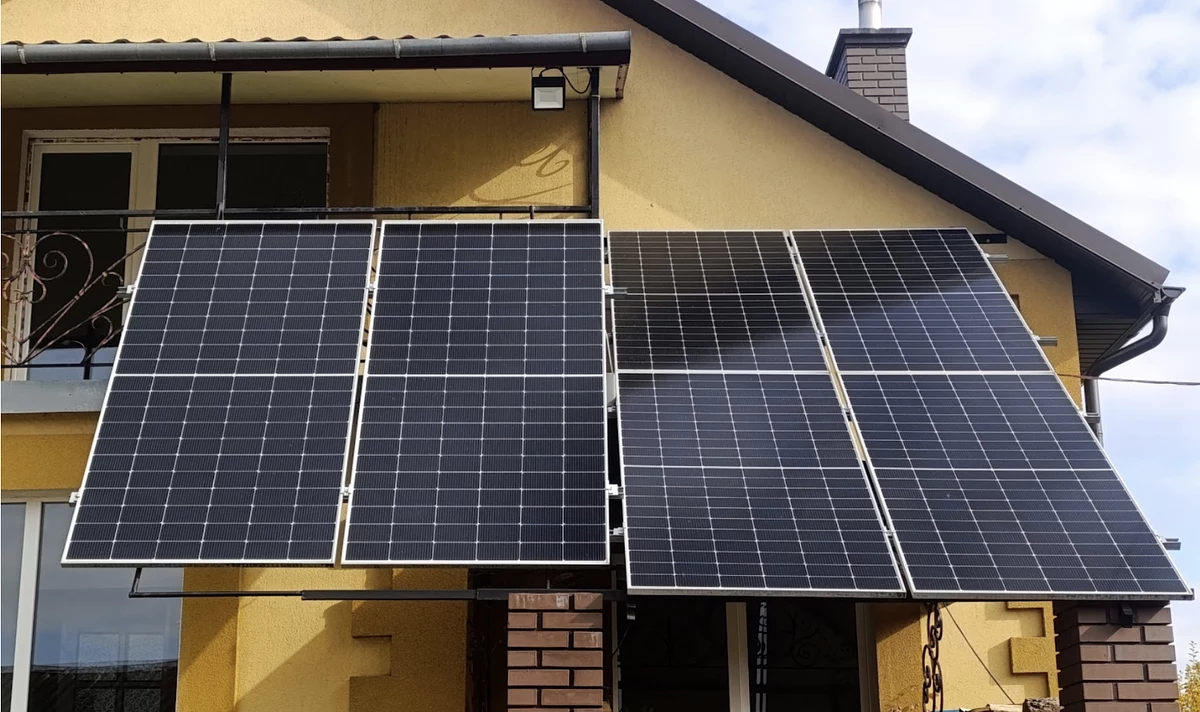
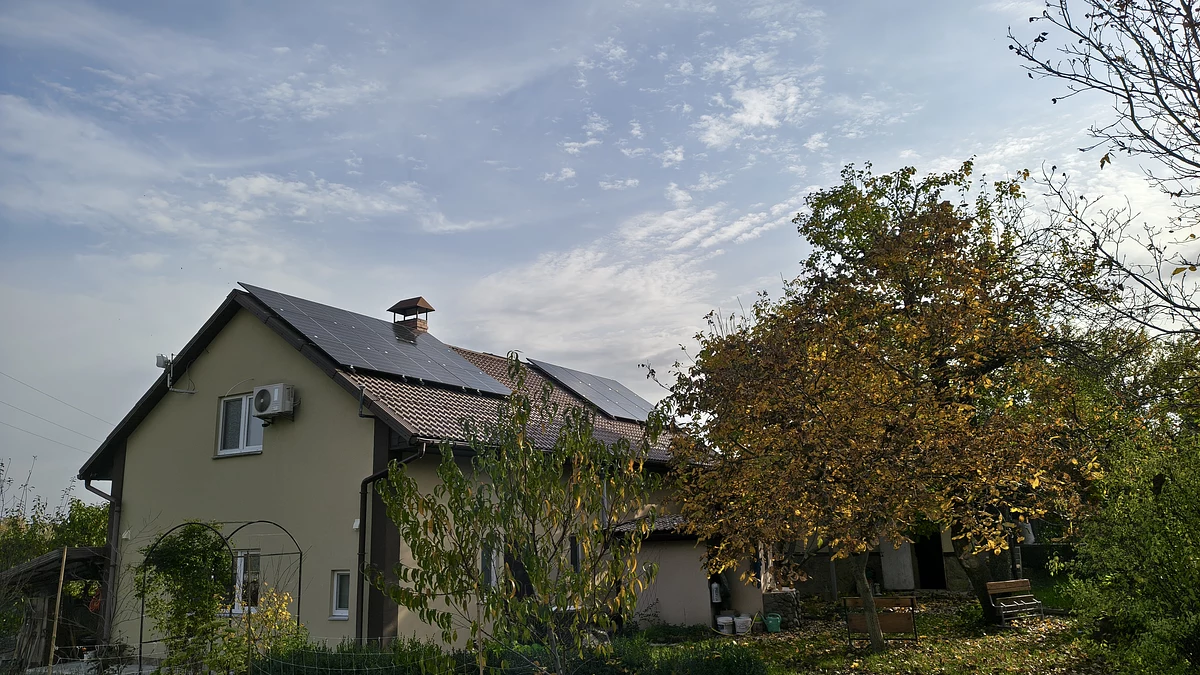
Yevhen started with the basics: a generator and his own well. Later, he equipped a septic tank, installed a Victron MultiPlus inverter, solar panels with a total capacity of 6 kW, and batteries with a capacity of 35 kWh. The system also has a 3 kW backup generator.
He uses wood for heating. In the long run, he regrets not having installed a heat pump in the system earlier: this decision should have been foreseen at the planning stage.
In total, the house renovation took several years. Yevhen did some of the work himself, and hired specialists for the heating systems. According to his estimate, the total budget was approximately $10,000–12,000.
How the system provides electricity to the house
The main source of energy is solar panels. In good weather, they produce about twice as much electricity as the house consumes. The excess can be stored in batteries. If the batteries run out of charge, they can be powered by a backup generator.
Separately, Yevhen took care of the Internet: he changed the provider to one that guarantees the service during long outages.
The experience of gradually setting up the system showed him that temporary cheap solutions do not always save money. Some of the equipment had to be replaced with more powerful ones over time. Therefore, he now advises buying quality equipment right away, rather than cheap knockoffs.
Another conclusion is that it is important to think not only about current needs, but also about how the system will develop in the future. Yevhen regrets not having foreseen the heat pump at the beginning, when it could still be taken into account in the overall configuration of the house.
He also has a small household habit related to autonomy: when his neighbors have no more light in the evening, he turns off the outdoor lighting so as not to annoy them with bright light against the background of dark houses.
Homemade batteries, Deye and two generators
Oleksiy, a DevOps Engineer at Ciklum, almost completely moved from Kyiv to a private house in the Cherkasy region after the start of a full-scale war.
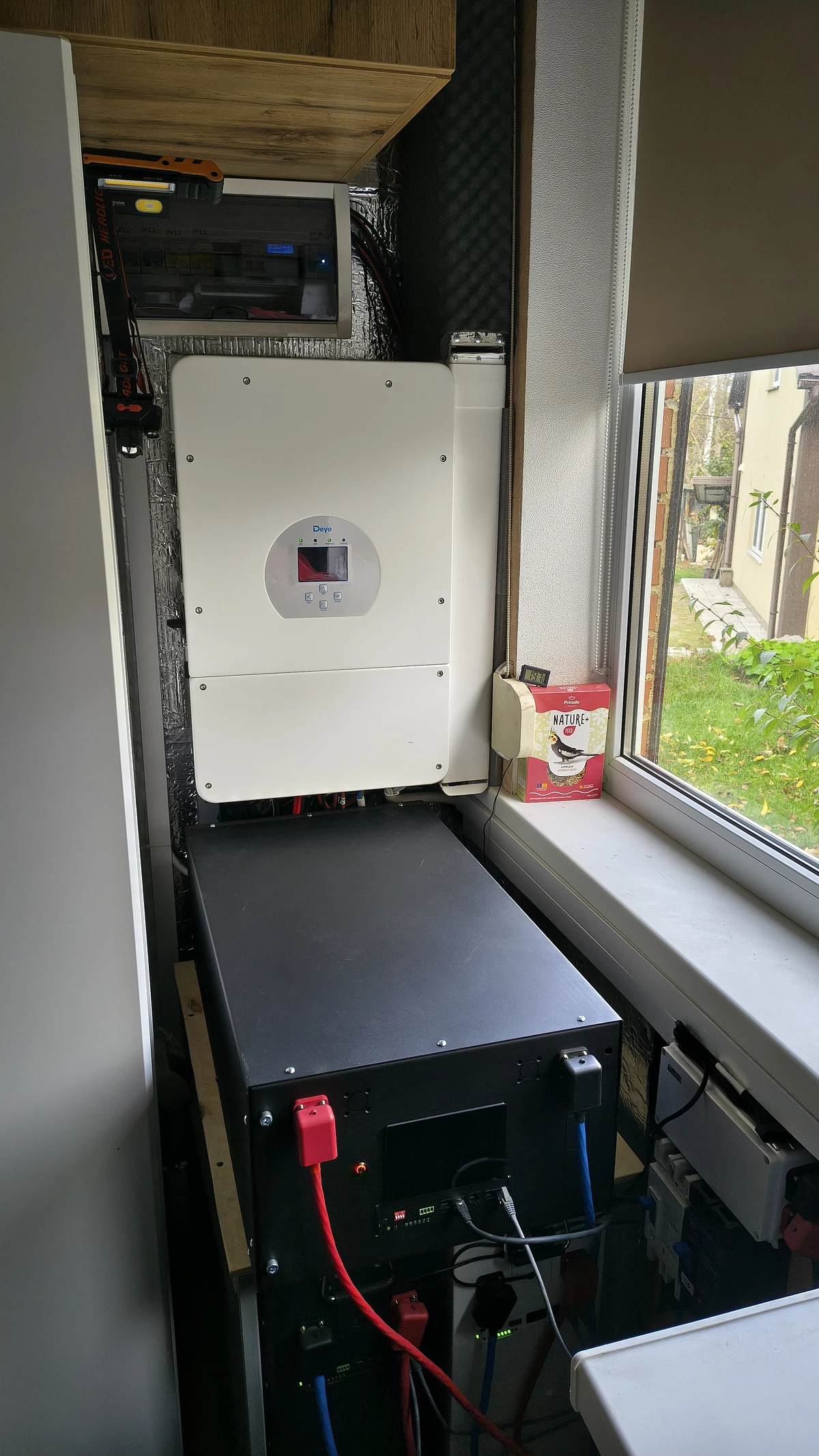
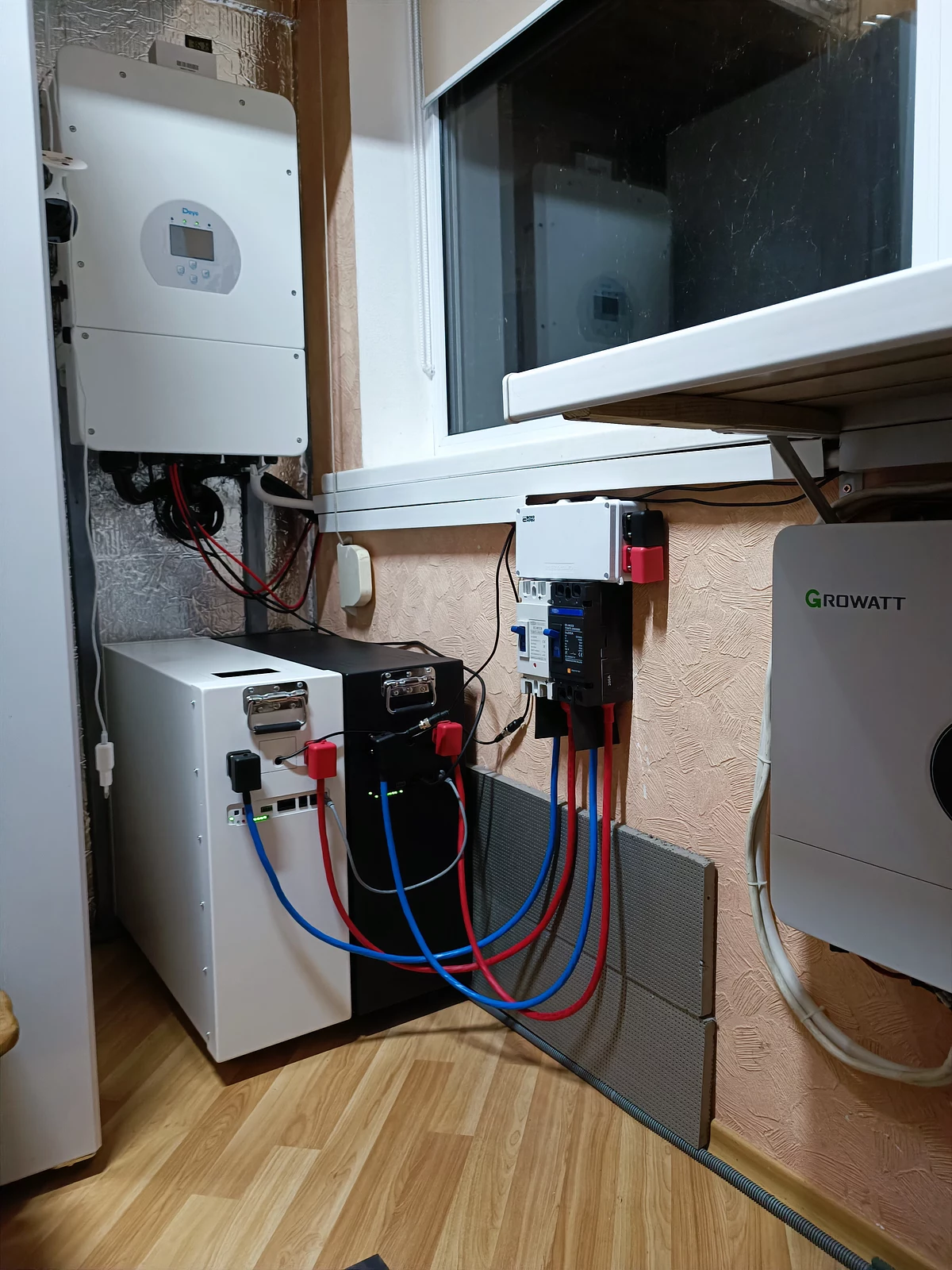
The large plot of land allowed us to gradually build an autonomous power supply system. The house currently has a hybrid solar station based on a Deye inverter, large-capacity batteries, and the maximum possible number of solar panels supported by the inverter.
Oleksiy did not come to this configuration right away. First, he installed a powerful UPS for the Internet and refrigerators. Then he purchased a hybrid inverter, but without solar panels. Later, he added a small field of panels and a homemade battery. Eventually, the system grew into a complex that provides electricity to the entire household.
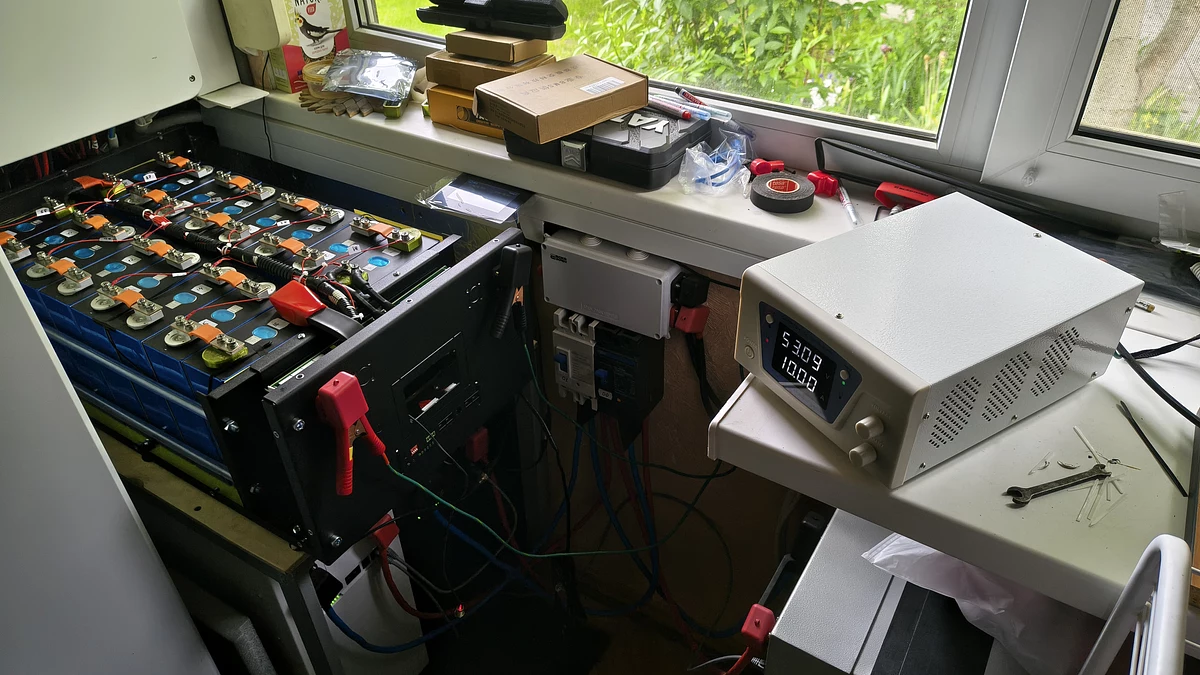
Alexey assembles batteries himself based on LiFePO4 cells. In addition to the solar station, he has two generators — a stationary one and a small mobile one.
It uses a wood-burning stove for heating. Additional heat sources are inverter air conditioners, designed to operate at temperatures down to −20 °C, and ceramic heaters.
Water and Internet are separate elements of autonomy
The house’s main water supply depends on a shared village well. Oleksiy also has his own technical well and a supply of drinking water.
The situation with the Internet changed along with the power system. Previously, he used three providers, but later the wired options stopped working as they should. Now he uses Starlink and a powerful 4G antenna aimed at Vodafone and Kyivstar base stations for communication.
The electrical system allows you to selectively connect and disconnect loads. When you need to save power, Oleksiy can leave power only for critical devices. According to his assessment, without solar generation and a generator, the reserve is enough for several days without significant consumption restrictions, and in economy mode — longer.
When a house does without centralized electricity
According to Oleksiy, from the end of March to mid-October, the house does not use electricity from the grid. Even from October to April, sunny days can provide a surplus of electricity. If the charge is insufficient, the batteries can be powered by a generator.
The system developed in stages, and it was this experience that determined Alexey’s main advice: before starting work, it is worth planning the entire configuration, even if the equipment has to be installed in parts. Otherwise, temporary solutions may later require replacement or alteration, which is additional costs.
Oleksiy does not name the exact total budget. He did some of the work himself, which helped save money. He hired specialists to install the solar panels.
He also draws attention to the difference between a private house and an apartment. A house has more space and technical capabilities for solar panels, batteries, and generators. In apartment buildings, in his opinion, it is worth considering joint backup power systems at the condominium level, while the capabilities of an individual apartment are much more limited.
46 kWh of your own batteries and whole-house automation: how an engineer designed his power plant
Yevhenii Klimenko, Lead Software Engineer at Levi9, has installed a comprehensive backup power supply system in a private home. Its feature is not only the large capacity of the batteries, but also the automation that he developed himself.
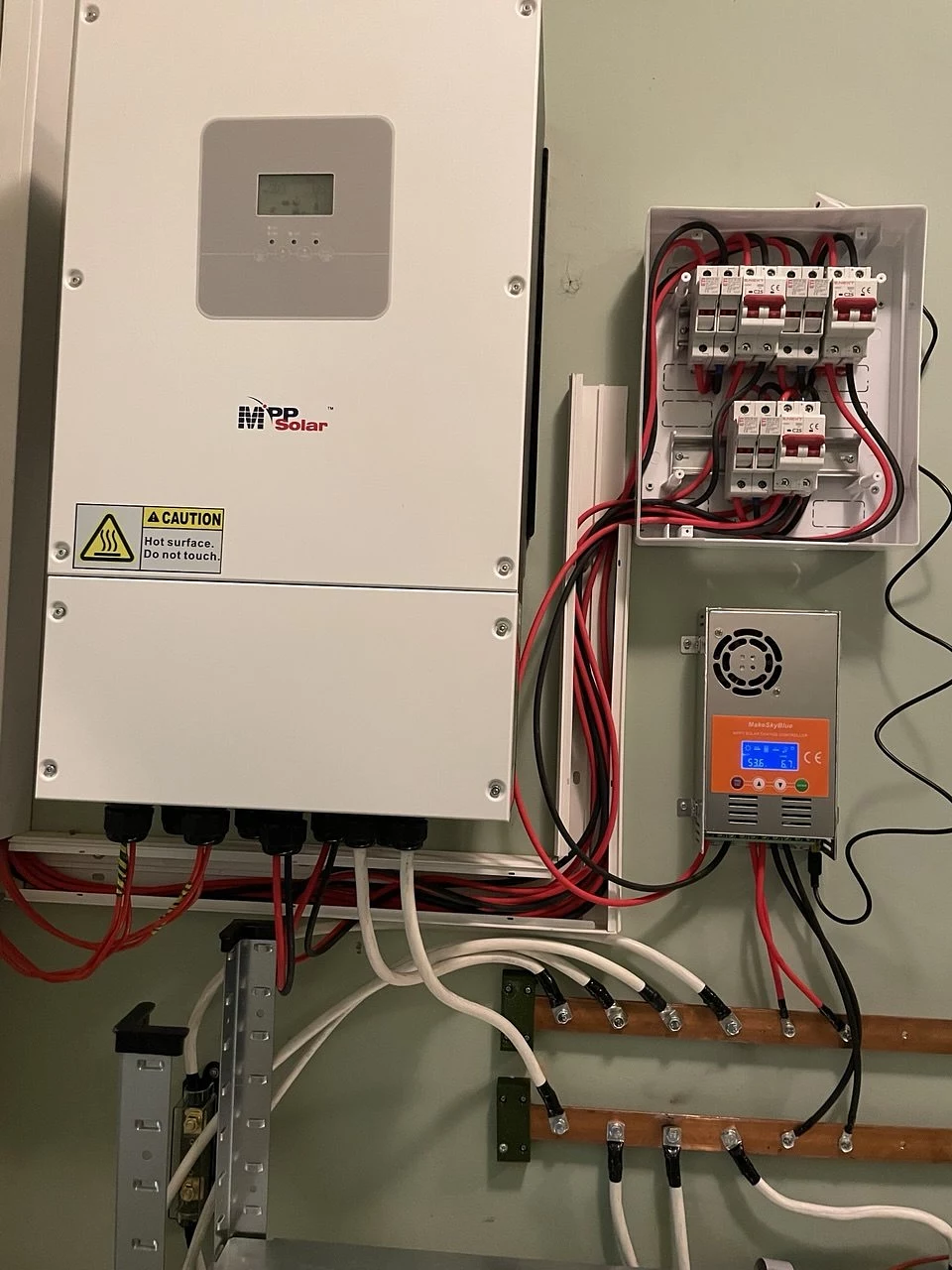
The basis of the system is solar panels and a 6500 W inverter, which supports a load of up to 6000 W. For additional panels with a total power of 1700 W, Yevgeny installed a separate MPPT controller.
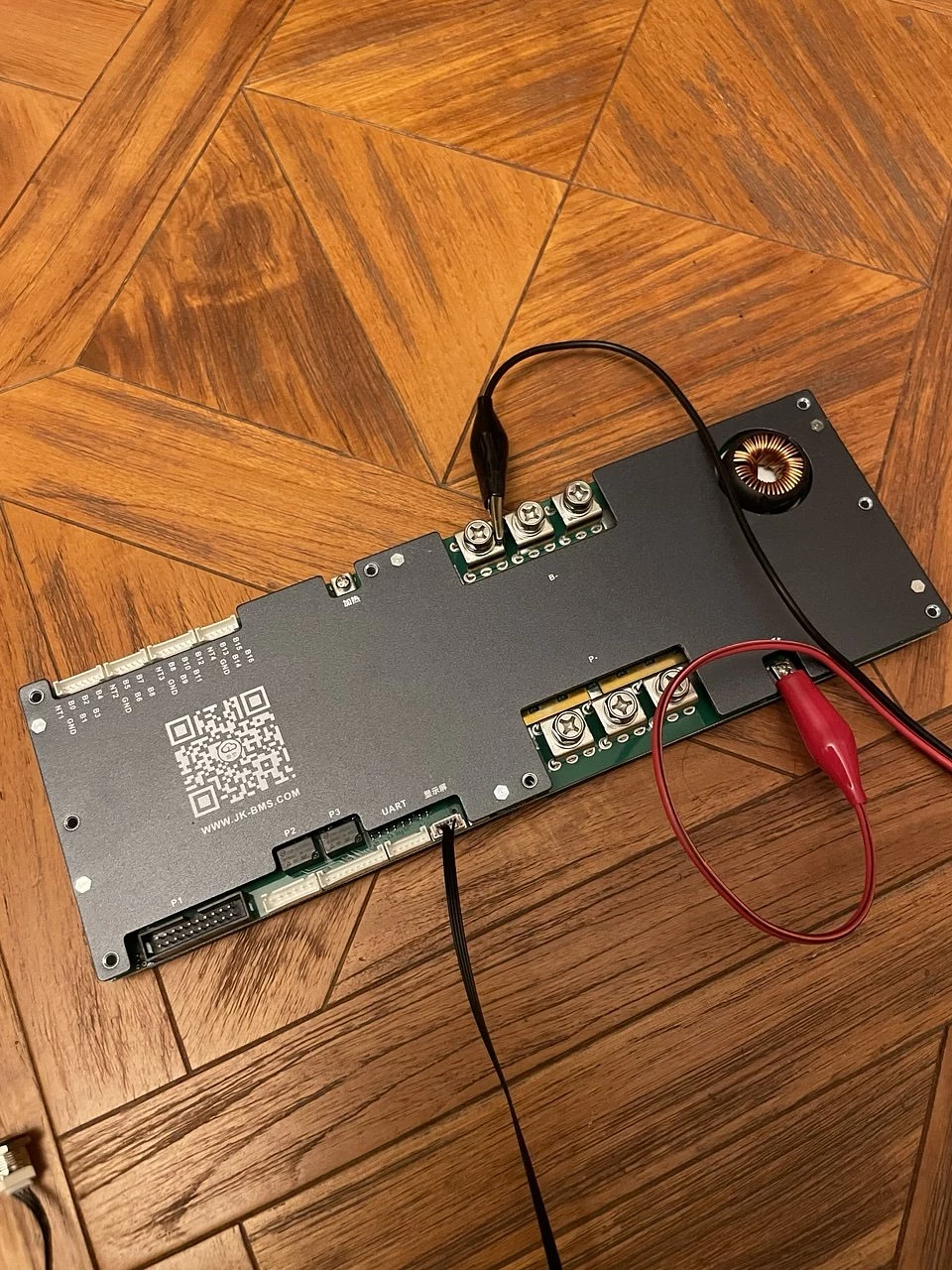
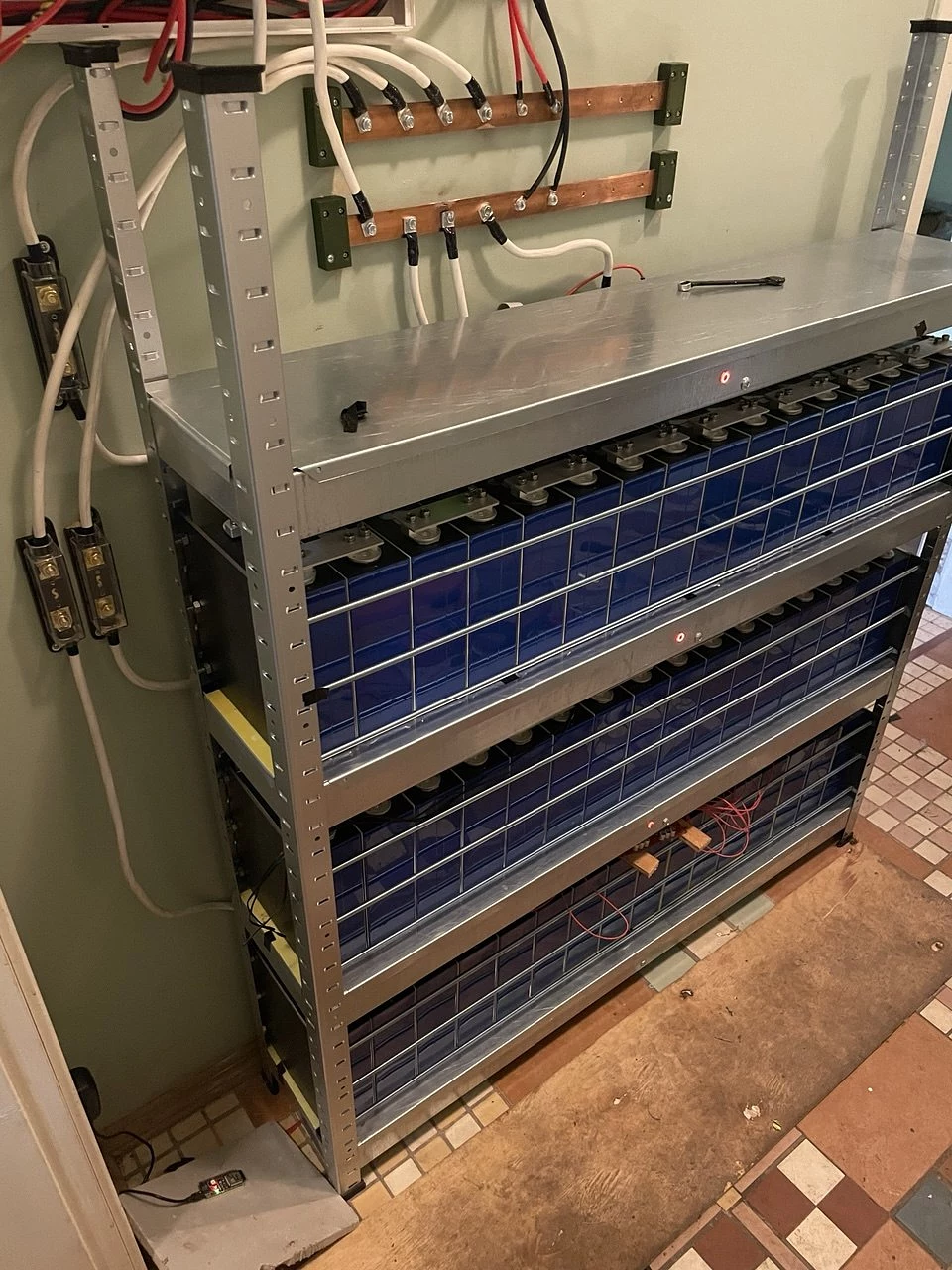
The energy is stored in several battery packs that he assembled himself from industrial cells: two with a capacity of 16 kWh, one with a capacity of 14 kWh, and several smaller ones. The main battery bank, in his calculations, has a capacity of 46 kWh.
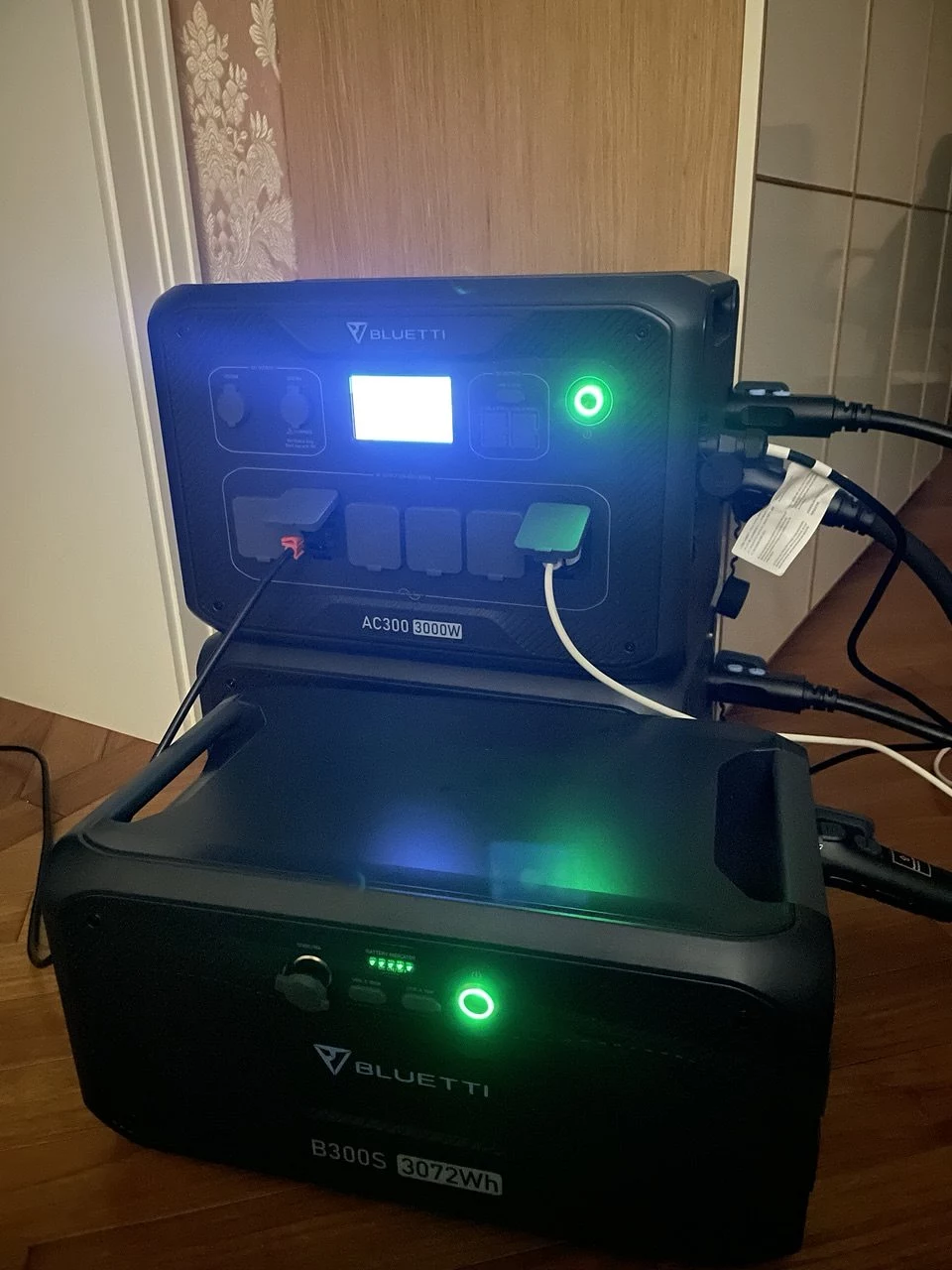
Additionally, there is a Bluetti AC300 charging station with two 3 kWh batteries — a total of 6 kWh. It now acts as a backup source in case of problems with the main inverter or batteries.
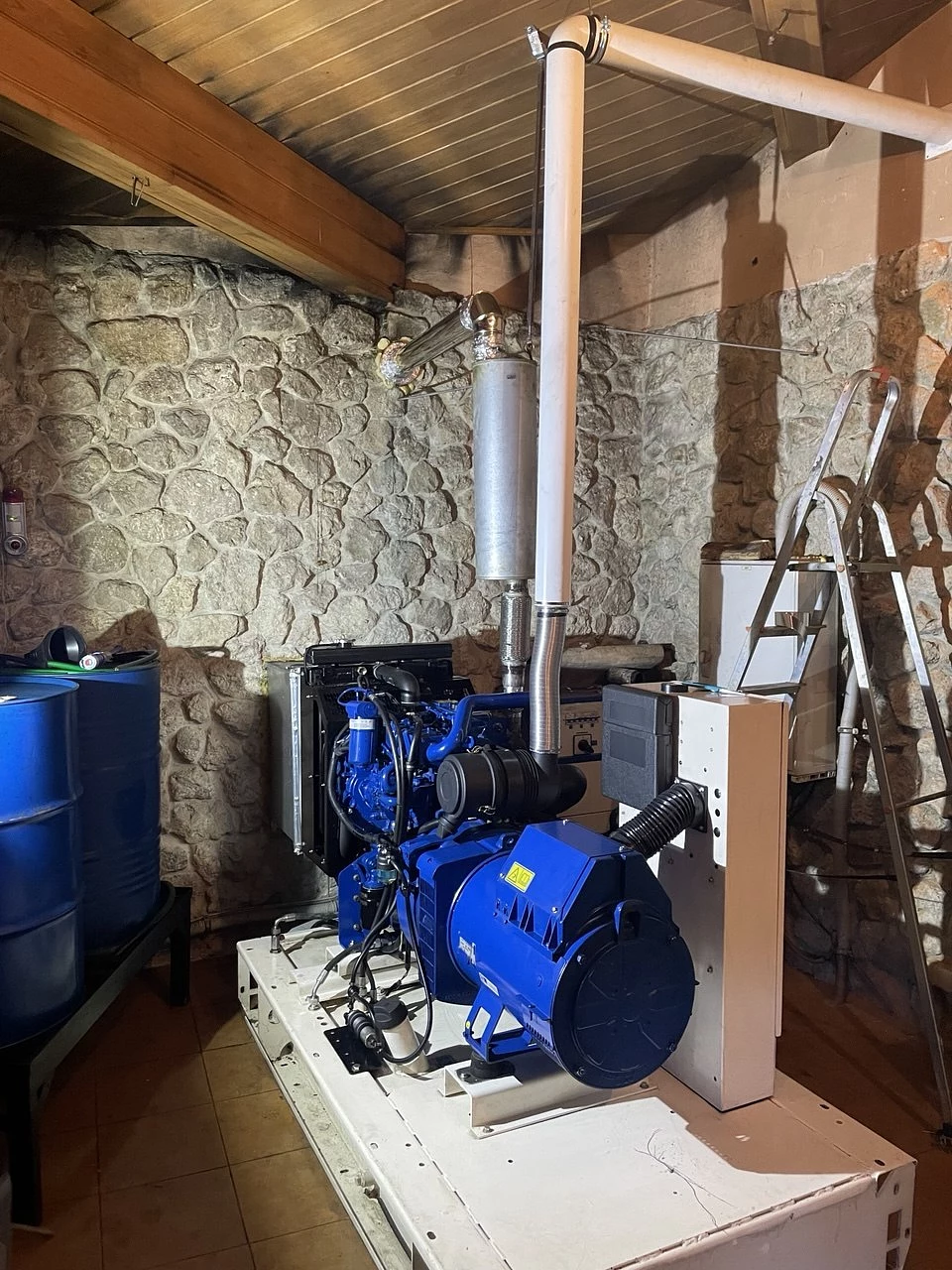
To generate electricity, Yevgeny uses a powerful three-phase diesel generator and a smaller 3 kW gas-petrol generator. He also has a supply of liquefied gas: ten 27-liter cylinders and one 50-liter cylinder.
The house has its own well and individual heating. A wood stove, gas boiler and circulation pumps are used for heat.
How the system works
Electrical loads in the house are distributed according to their criticality. Some appliances can be automatically turned off depending on the total load or the battery charge level. This is necessary to avoid exceeding the inverter’s capabilities and prematurely discharging the batteries.
If necessary, the house can be powered by a three-phase diesel generator. It is also capable of charging batteries. A smaller gas-petrol generator is used in another configuration — in particular, through Bluetti, to smooth the load and ensure the operation of a powerful well pump.
Yevhenii also thought about the fuel supply. According to his assessment, the liquefied gas supply should provide at least a week of operation in the minimum consumption mode around the clock.
He paid special attention to the Internet. Starlink does not use: the main channel is fiber optic, the backup is LTE. To automatically switch between them, Yevgeny replaced the old Cisco equipment with a MikroTik RB5009UPr+S+IN router.
The optics in his area work quite stably, and he managed to get a second SIM card for the modem from Kyivstar without any additional fees. The router is configured to automatically switch between channels, as well as to send notifications in Telegram when the system switches to LTE. This allows him to warn his family that the backup channel has started using mobile traffic.
There are additional levels of redundancy. If the main backup power fails, the rack with the equipment will continue to operate for some time from its own UPS. The MikroTik router itself and the devices connected via PoE have separate additional power and can operate for about four hours after the rack’s UPS runs out.
Another solution is directly related to work. Yevgeny locally deployed mirrors of repositories and artifacts, as well as a full copy of the test environment. This allowed him to work even without the Internet or with a very unstable connection. To do this, he spent a lot of time, including setting up a local k0s cluster and bypassing dependencies on Azure. Due to a change in the project, the full copy of the test environment will now have to be removed.
How much did the system cost?
Yevhenii cannot name one total amount: he purchased equipment at different times, at different prices, sometimes in conditions of shortage. In addition, he assembled a significant part of the system himself, and did not include his own time for installation, integration, programming, and automation in the budget.
Among the specific expenses he mentions:
Bluetti AC300 with B300 battery — about €4,500;
additional compatible battery — approximately $1800;
MPP Solar inverter — about $1100;
the first LF280K battery cells — about $95 each, 16 in total;
small gas-petrol generator — about €400;
MB31 cells — 32 main and four additional, on average $86 each;
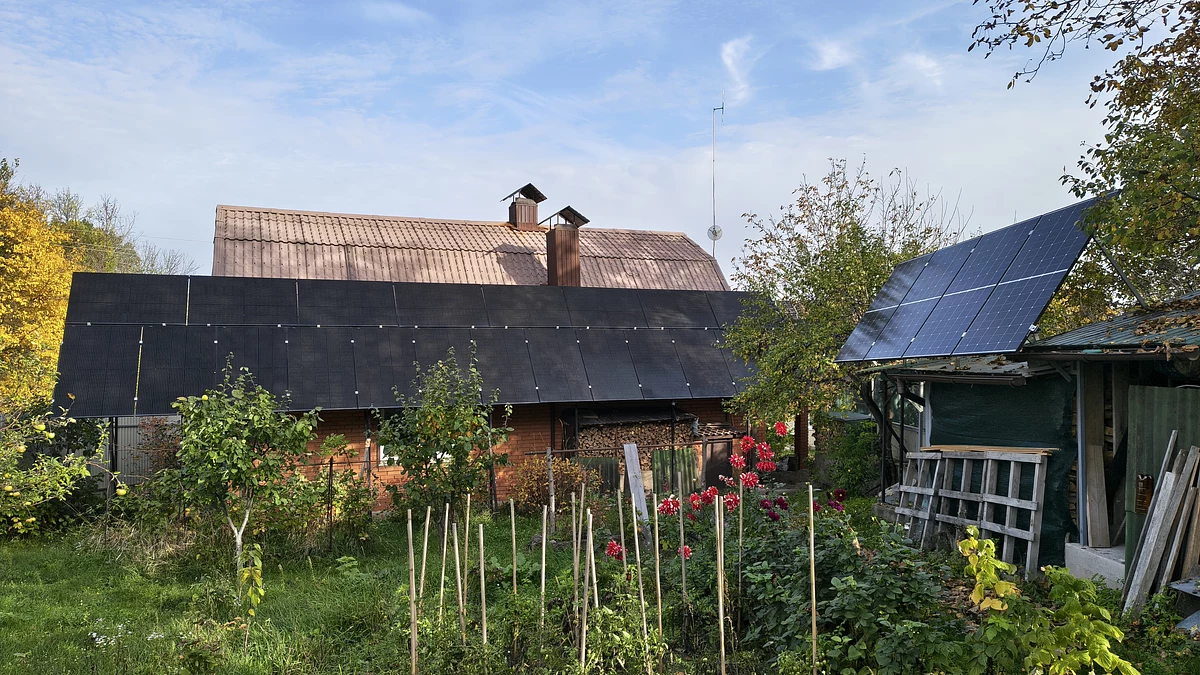
22 solar panels — last year, about UAH 4,000 each.
The installation of the solar panels cost a little more than the panels themselves. This was the only part of the work for which Yevgeny hired specialists: it was practically impossible to install them on a natural tile roof by himself, and it was also difficult to find suitable fasteners for such a roof.
The list of costs did not include smaller battery cells, tools, automation, racks, shields, cables, switches, circuit breakers, fuses, controllers, BMS boards, balancers, and other materials. For example, thick battery cable cost 380 UAH per meter.
There was also time spent assembling the system, integrating it into the existing power grid, writing software, and automating it. Some solutions had to be reworked due to new limitations or problems that were discovered during operation.
Why Bluetti remained a reserve
Yevgeny calls his system the result of several stages of development. At the beginning, the Bluetti charging station helped him out: after the generator, it became a great relief, as it allowed him to survive short outages without constantly running the engine.
In particular, he used to have to wake up every four hours at night to run the generator and keep the aquarium oxygenated. With the advent of batteries, this need has disappeared.
However, he later became disappointed with the closed architecture of the charging station and its price. Among the shortcomings, he mentions a cheap battery balancer and firmware errors that, under certain conditions, can cause the inverter to shut down. In his opinion, for this money you can get a better price-performance ratio if you choose a separate inverter and batteries.
However, he did not sell Bluetti: the station remained an additional backup source in case of problems with the main inverter, battery discharge, or the need to temporarily insure critical equipment during system modernization.
How much energy is enough?
Autonomy depends on the season, weather, automation operating mode, and the level of comfort you want to maintain.
In the summer, the system works quite comfortably. Even in cloudy weather without rain, the solar panels can cover an average load of about 700 W without discharging the batteries.
The main limitation is the inverter power: the load should not exceed 6000 W. For a private house, this is not as much as it might seem. For example, a well pump consumes 2400 W, a washing machine heating element — 2300 W, a dishwasher or electric kettle — another 2100-2500 W. A rack with equipment uses from 180 to 800 W, depending on whether the servers are running at full capacity or only the energy-efficient minimum remains. There are also aquariums and 3D printers.
It’s more difficult in winter: there is less solar generation, and the gas boiler and circulation pumps are constantly running.
Evgeny separately calculated how long the system could last on batteries alone — without solar panels and generators. To do this, he took an average load of 700 W and took into account the inverter efficiency of 80%.
The main 46 kWh battery bank provides approximately 52 hours of operation under these conditions. An additional Bluetti with 6 kWh batteries can provide almost seven more hours under the same load.
This is a calculation for a thrifty regime: in winter, you need to leave the heating on, but give up some of the non-essential consumers. For example, you can temporarily turn off the heaters in aquariums, postpone washing, and heat water for tea on gas.
When the batteries need recharging, you can start the diesel generator, use electricity and recharge the batteries at the same time, and then switch back to batteries. The duration of autonomous operation in this mode depends on the fuel supply.
Currently, Yevgeny has about 80 liters of diesel, the generator tank is designed for 219 liters, and there are also several barrels. The supply of liquefied gas is ten 27-liter cylinders and one 50-liter cylinder. He keeps about 20 liters of gasoline, mainly for gardening needs.
What remains a problem?
Even after a large-scale modernization, there are things that are beyond his reach. For example, Yevheniy still hasn’t repaired the second heating system: he doesn’t have enough time, and the necessary part is difficult to find. Given that the system is electric, its relevance is not very high now — instead, he is thinking about installing a solid fuel boiler.
Another limitation is the simultaneous consumption of electricity. It was because of this that we had to set up automation that prevents accidental overloading of the inverter or complete discharge of the batteries.
Tips for those planning an autonomous system
Yevgeny advises not to overpay for branded charging stations EcoFlow or Bluetti, but to choose a solar inverter and battery for specific needs. In his opinion, even ready-made branded batteries do not always have high-quality elements inside. An alternative could be to assemble your own from good cells and a high-quality BMS board — this way you can get a better ratio of capacity and price. At the same time, this requires technical knowledge and attention to safety.
He also draws attention to the dangers of gas infrared heaters without proper ventilation and exhaust of combustion products. You cannot install a generator in an apartment or on a balcony, even if you vent the exhaust outside through a corrugation: this does not guarantee protection against carbon monoxide. The generator should only operate in a suitable technical location with proper ventilation, exhaust exhaust and compliance with fire safety requirements.
For a private home, Yevgeny advises considering low-power gas-fueled generators. Liquefied gas can be stored for a long time, but there is a caveat in winter: at sub-zero temperatures, a cylinder outdoors may have problems evaporating the propane-butane mixture. Therefore, the use of gas in cold weather and the safe placement of cylinders must be thought out in advance.
A map of energy independence of buildings has been launched in Ukraine. It will be able to show whether a building will have water, heat, and internet without electricity