Хочете будувати кар’єру в Data Science та AI? Vodafone Big Data Lab відкриває новий набір —>
Олександр КузьменкоScience Pop
3 December 2024, 15:41
2024-12-03
Cyberpunk intensifies - scientists have developed a new technology that allows you to measure brain waves using electronic tattoos
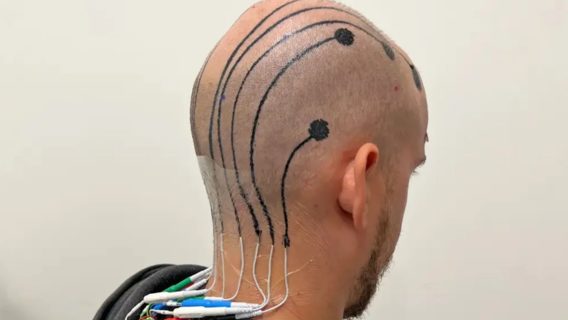
Researchers believe that temporary electronic tattoos on the head could become a faster and more convenient way to monitor brain activity and diagnose neurological diseases such as seizures, epilepsy and brain tumors, as opposed to traditional electroencephalograms. A specially programmed robot creates such a tattoo.
Researchers believe that temporary electronic tattoos on the head could become a faster and more convenient way to monitor brain activity and diagnose neurological diseases such as seizures, epilepsy and brain tumors, as opposed to traditional electroencephalograms. A specially programmed robot creates such a tattoo.
During an EEG test, technicians usually use rulers and pencils to mark out a person’s head before attaching electrodes to the scalp. Long wires then connect these electrodes to a device that records brain activity. In addition, a cap with electrodes can be worn directly on the head. However, this process takes a lot of time and is inconvenient, according to the inventors of the new Livescience technology.
According to co-developer Nanshu Lu, an engineering professor at the University of Texas at Austin, it usually takes about one to two hours to set up an EEG test. The electrodes then need to be checked about every two hours as the glue that attaches them to the scalp dries.
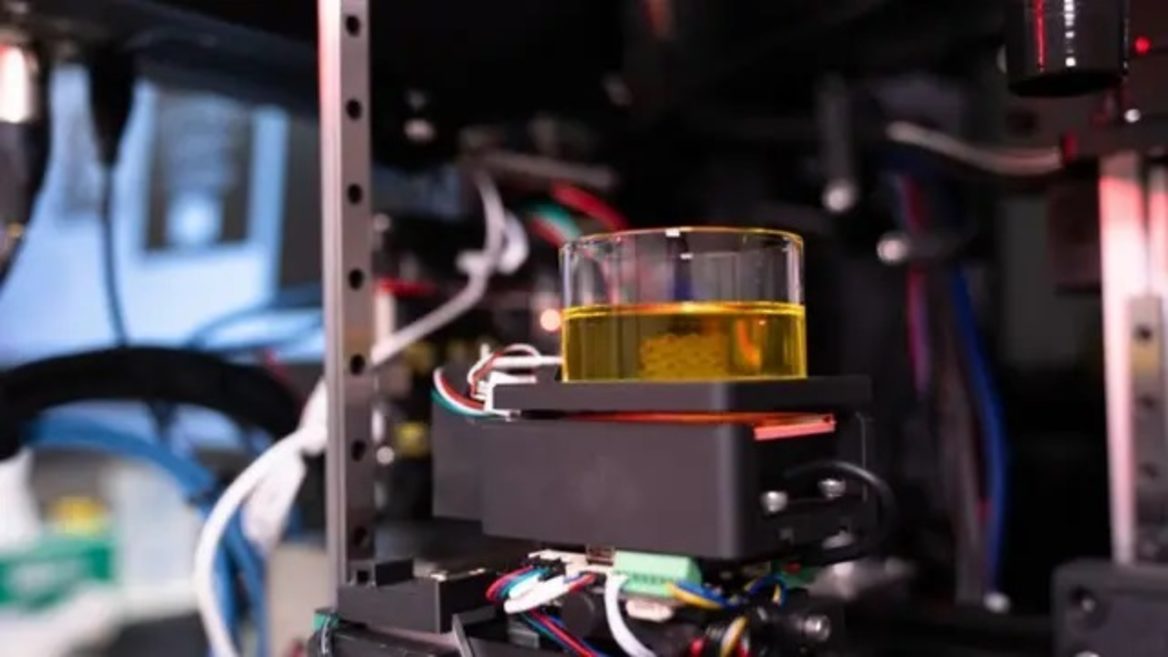
The new technology, on the other hand, uses a robot that’s programmed to apply ink made from a conductive material to specific spots on a person’s scalp — saving both time and labor, the researchers say. According to Lu, this printing process currently still takes an hour because the team has to manually adjust the movements of the person’s head. However, if responsive printing can be fully automated in the future, the entire printing process could be completed in 20 minutes, she added.
The ink dries into a thin film, known as an electronic tattoo, 30 micrometers thick—about half the width of a human hair. Like conventional EEG electrodes, these electronic tattoos can be used to detect changes in the brain’s electrical activity.
The researchers tested the technology on five people with short hair to compare it to conventional EEG technology. They found that the e-tattoos were just as good at detecting brain waves as the regular EEG electrodes that were placed next to them.
What’s more, the e-tattoos remained on the participants' heads and could record brain activity for at least a day, while the EEG electrodes began to fall off after six hours. According to Lu, after taking measurements, the e-tattoo can simply be washed off with an alcohol wipe or shampooed. Glue for EEG electrodes, on the other hand, is more difficult to remove from hair.
The ink formula can also be modified to create tattoo lines on the scalp, meaning the wires that connect the e-tattoo to the monitor are much shorter than with conventional EEG testing.
Now researchers need to determine whether these e-tattoos work in patients with certain neurological conditions, as well as in people with different hair lengths and types or skin allergies. According to Lu, they also plan to invent a printer that can create ink that won’t rub off on a pillow while you sleep. In theory, this could allow scientists to measure brain activity throughout the night, which could be useful for diagnosing things like sleep disorders.
In the future, the researchers also hope to incorporate wireless data transmitters into the e-tat to make the system completely portable.
Previously, biomedical engineers at the University of Melbourne developed a high-speed 3D bioprinter that could change the field of regenerative medicine. The team says this technology allows them to create incredibly accurate copies of human tissue down to the cellular level.
«Kids at school sometimes don’t understand and think he’s a bit of a cyborg.» The story of a 5-year-old boy who received brain implants, not Neuralink, but can now hear and speak