Хочете будувати кар’єру в Data Science та AI? Vodafone Big Data Lab відкриває новий набір —>
Ігор Вишневський Startup
29 June 2026, 09:00
2026-06-29
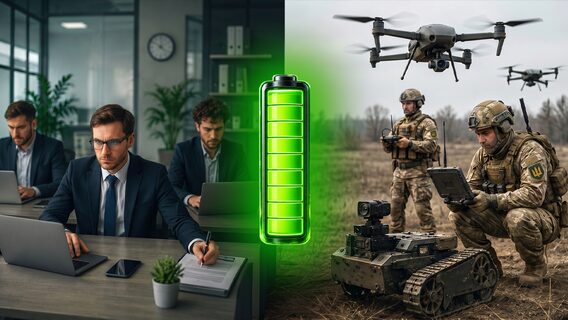
Wireless charging of devices at a distance — from smartphones to drones and NRCs — has become a reality. When the technology will be mass and what hinders scaling — in an interview with the CEO of the startup TechNovator
Ukrainian startup TechNovator offers a radically new way to charge any gadget — from a regular smartphone to military equipment like a nuclear warhead — based on quantum mechanical principles. Over the past 11 years, the startup has gone through a number of stages and is finally close to bringing its technology to mass consumption.
Ukrainian startup TechNovator offers a radically new way to charge any gadget — from a regular smartphone to military equipment like a nuclear warhead — based on quantum mechanical principles. Over the past 11 years, the startup has gone through a number of stages and is finally close to bringing its technology to mass consumption.
The CEO of the deeptech startup TechNovator told dev.ua in detail how the technology works, why it is so difficult to put it on «commercial rails», which team in Ukraine and abroad is implementing this know-how, and why their solution can not only increase the comfort of «white-collar» workers in cozy offices, but also slightly change the course of the war. About this and not only — in a long interview with Ruslana Dovzhyk.
Charged with positivity. «There is nothing like it in the world today.»
— Let’s start from the very beginning. Tell us a little about the idea behind the technology and how you personally came to TechNovator as CEO? Did you immediately believe in this technology and its scalability?
— The idea of creating this technology arose many years ago. After all, probably each of us at least once found ourselves in a situation where our phone or other device ran out of power at the most inopportune moment. Despite the rapid development of technology, we still depend on wires, chargers, batteries and power banks. We have to constantly monitor the charge level and think about where and when we can recharge our devices.
Existing wireless charging solutions have significantly improved the user experience, but still have limitations: they require precise positioning, work over short distances, and do not always provide the necessary level of convenience and efficiency.
That is why the idea arose to create a technology that would give people more freedom from wires and allow them to use devices without being constantly tied to charging.
I joined TechNovator at the very beginning of the project’s development. My previous experience in HR management helped me build a strong team and effective internal processes. Of course, I didn’t hold the position of CEO at the start. As in most startups, each of us performs a wide range of tasks, regardless of our formal role. When resources are limited and the team is small, you have to learn quickly, take responsibility, and work where it is most needed.
Developing deeptech technologies is always a job with a high level of uncertainty. You can invest years of time, knowledge, and resources into an idea without having a guarantee of the final result. This is a risk not only for investors, but also for the entire team.
However, it is faith in technology and the desire to create something truly meaningful that helps move forward.
For us, the desire to implement this technology has always been stronger than the difficulties. Startups and deeptech are a constant step out of the comfort zone.
— TechNovator has been around for over 11 years. What stages has it gone through as a startup and how much has it changed during this time — both in terms of business and technology?
— The development of the technology took place in stages, and each stage became a separate challenge for the team.
The first phase began with an analysis of existing wireless power transfer technologies. We studied their advantages and limitations, tested different approaches, and tried to understand whether existing solutions could be significantly improved.
The second stage led us to realize that existing technologies would not be able to fully meet the needs of the future economy, where the number of electronic devices and energy demand will continue to grow, and companies' demands for high efficiency, power transmission distance, safety, and the ability to transfer power in motion are becoming increasingly critical. That’s when we began to experiment without limits, going beyond traditional approaches and commonly accepted solutions.
The third stage was the moment of the emergence of an invention that was initially difficult even for us to believe.
The invention came about after a lot of testing and by chance. And the first thought that came to our mind was, «Maybe something happened to our equipment during the tests.»
After the initial testing results, we engaged independent laboratories to verify the technology, its safety, uniqueness, and potential for commercial use. The results of the independent laboratories confirmed the uniqueness of the technology, its commercialization potential, and patentability.
The fourth stage was dedicated to the transition from invention to product. Many promising technologies remain laboratory developments. Our task was to understand how to integrate the technology into real products, to explore its functionality, capabilities and limitations.
The fifth stage was related to scaling. We asked ourselves the question: is the technology capable of working with more powerful devices? To do this, we started cooperation with an electric bicycle manufacturer, which allowed us to assess the prospects for further development and confirm the scalability of the solution.
The sixth phase focused on intellectual property protection and the formation of a long-term patent strategy. We analyzed the competitive landscape, determined the place of our technology among existing solutions and created a basis for its further development in the global market.
The seventh stage is commercialization. Today we are working on implementing the technology and creating products based on it. What once seemed almost impossible is gradually turning into real solutions for users and businesses.
Over the years, the project has undergone significant transformation from both a technological and business perspective. We operate in an international environment and compete with major global players, so we are constantly adapting, learning, and preparing for new challenges. It is this ability to develop that has become one of the key factors in our progress.
— What challenges do you still face — both in business and in technological terms — in order to bring your technology to the market on a large scale — both in the civilian and military sectors?
— Although we are a developer and provider of technology, we also have to consider certification issues, which usually do not concern the technology itself, but the final product. In our opinion, in many cases, independent pre-compliance tests are sufficient for licensing the technology. However, full market entry requires additional testing, certification and significant financial investments.
That is why, in parallel with the development of technology, we are preparing to launch our own product — a wireless charging mat with support for different power levels and rechargeable batteries without the use of lithium.
Our goal is to create a battery with a lifespan of 20–50 years, which can be a more durable alternative to traditional AA/AAA batteries, which typically last only 2–3 years. This solution also fits well with the EU Regulation (EU) 2023/1542.
From a business perspective, our primary and most desirable model remains technology licensing. This requires several key components: patent protection, the right strategic partners, and successfully implemented pilot projects.
Our patent application has now been published, and the first patents are expected to be issued in late 2026 or early 2027.
This gives us some time to implement pilot projects, and with the receipt of patents, the opportunity to sell licenses.
Over the past few years, we have successfully implemented several proof-of-concept projects with international companies and continue to actively work on new pilots. This allows us not only to improve the technology, receive confirmation of its capabilities, but also to build relationships with potential strategic partners in various industries.
Today, the project is developing more rapidly in the civilian sector, where there is an understandable demand for new ways of transmitting energy and long-lasting power sources.
At the same time, the technology also has significant potential for defense applications. In particular, it can provide simultaneous charging of a large number of drones, increasing their level of autonomy and reducing the need for constant operator participation. A similar approach can be used for ground robotic complexes, allowing them to increase the duration of their operational missions thanks to our hybrid battery.
— When exactly did TechNovator realize that the technology developed by the startup could be relevant not only for civilian everyday gadgets like smartphones, but also for military equipment and equipment? How exactly did you start interacting with government agencies and the military?
— The war brought immense grief to the lives of millions of Ukrainians, and our team, unfortunately, was no exception. These events forced us to take a fresh look at our own technology and ask ourselves an important question: how can we be useful to the country right now?
We have engaged in an active dialogue with manufacturers, defense industry representatives, military personnel, and experts who directly work with modern technologies on the battlefield. It was important for us not only to offer innovation, but also to understand the real needs and challenges that users face every day.
As a result of these consultations, we identified areas where our technology could bring the greatest benefit and formed a further development strategy. In particular, we saw potential in increasing the autonomy of unmanned systems, robotic platforms, and other devices for which access to energy is one of the key constraints.
This experience has shown us that technology is only valuable when it helps solve real people’s problems.
— We want to understand — how exactlydoes TechNovator separate those gadgets that need to be charged within the technology’s range? Conditionally, if these are people in the office, then, of course, there are no problems with the technology helping to charge all gadgets within a certain range. But if we are talking about application on the battlefield, then this is of fundamental importance, because it is possible to randomly recharge enemy military equipment? Please explain this technological aspect.
— This is a new method of energy transmission, there is nothing like it in the world today.
Our technology is based on the use of a localized near-field electric field to transfer energy between a transmitter and a receiver. Unlike conventional wireless charging systems that use magnetic coils, the system creates a controlled energy transfer channel between specially designed planar structures.
The geometry of these structures is designed to concentrate energy within a target transmission area, minimizing unwanted dissipation while ensuring efficient wireless power transfer. This architecture supports compact form factors, scalable power delivery, and seamless integration into a wide range of consumer, industrial, and embedded electronic devices. By focusing energy where it is needed rather than distributing it widely into the environment, the technology offers a fundamentally different approach to wireless power transfer and has the potential to overcome several limitations of traditional coil-based solutions.
Key advantages of the technology include operation in a variety of environmental conditions, including rain, snow, dust, dirt, high and low temperatures; the ability to transfer energy while moving; no need for precise coil-to-coil positioning; and integration into a wide range of electronic devices.
At the same time, the system is not a source of uncontrolled or random energy transfer. For its operation, it requires the presence of an appropriate transmitter, receiver and electronic control module.
Random charging will not occur without our receiver, transmitter, and electronic module.
— Please explain to ordinary users and readers of our site how exactly wireless energy transmission occurs for charging either civilian or military gadgets? Conventionally, this energy must come from somewhere — from a special device?
— Energy transfer can be done from any available power source — the electrical grid, solar panels, battery energy storage systems, or other sources.
One example of practical application is the use of technology in conditions where a large number of electronic devices are operated simultaneously. For example, military personnel often use many gadgets at the same time: means of communication, navigation, surveillance and other equipment, while remaining limited by available energy sources.
Imagine a charging mat that plugs into any power source. Devices equipped with our receivers won’t need separate cables or individual chargers. Simply place them on the mat to start charging.
This approach greatly simplifies the process of charging a large number of devices at once. A single charging mat can power multiple gadgets without the need to connect each one with a separate cable. This not only increases usability, but also reduces the number of accessories that need to be transported, maintained, and replaced.
Such an approach could be useful not only for defense applications, but also for offices, manufacturing plants, medical facilities, logistics centers, and any environment where a large number of electronic devices are used simultaneously.
«Until the patent applications were filed, we were limited in our ability to demonstrate the development outside the laboratory»
— How difficult is it to «sell» something as technologically complex as TechNovator’s development to investors? What are the general characteristics of so-called deeptech as an industry compared to more «pop» and understandable technologies?
Deeptech is always associated with a high level of complexity.
The history of technological progress has repeatedly shown that breakthrough inventions initially seemed impossible or incomprehensible.
Computers have changed the way we process information in the same way that electric lighting once changed people’s daily lives. New technologies almost always take time to be understood and accepted.
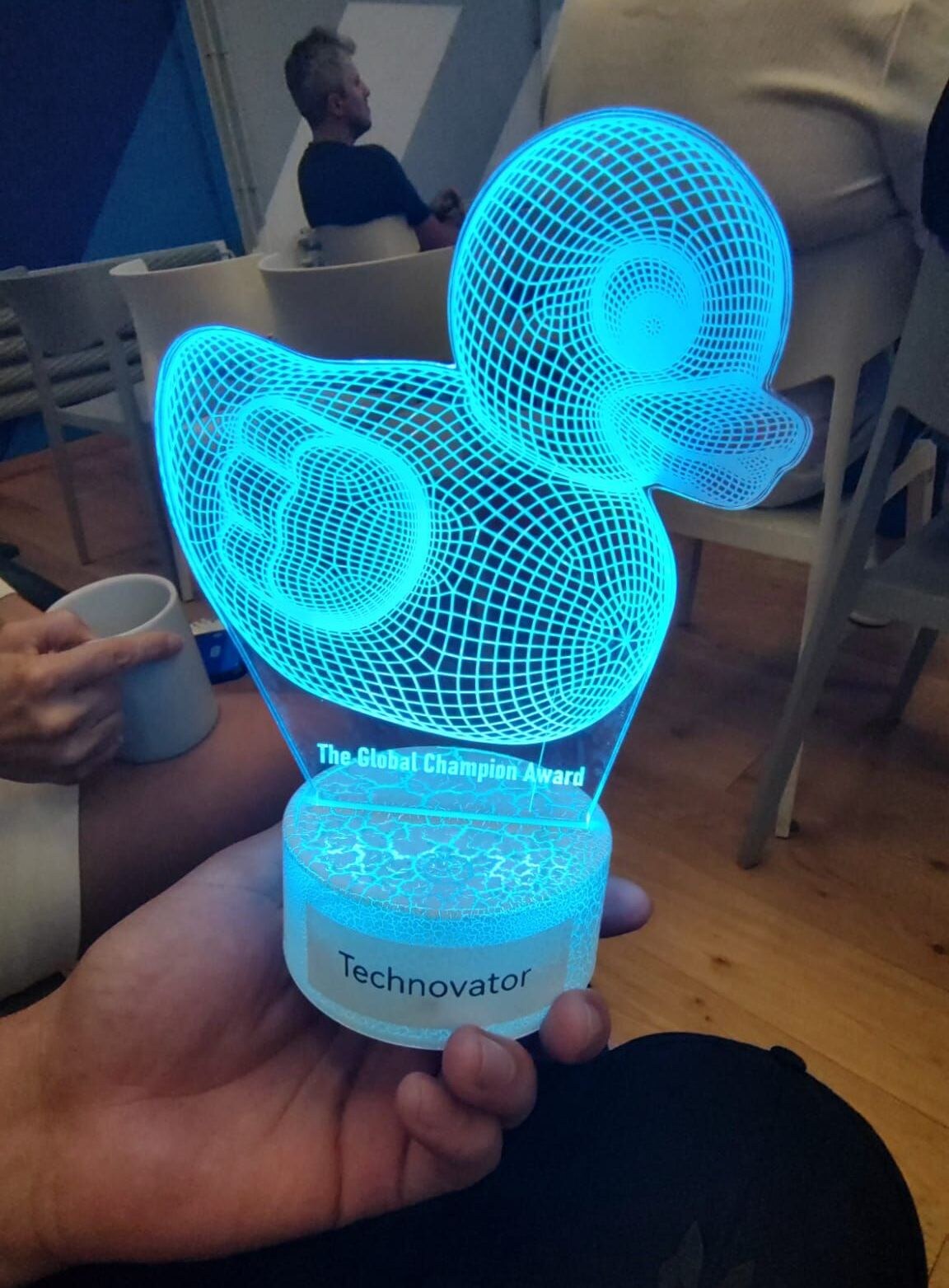
Award for TechNovator at one of the competitions
Success depends largely on people who are willing to understand a new solution, ask the right questions, and assess its potential. This is especially true for investors and partners working with disruptive technologies.
Our journey was not easy at the beginning. Until we filed our patent applications, we were limited in our ability to demonstrate our development outside the lab. In effect, we had to talk about what we couldn’t show to a wider audience yet.
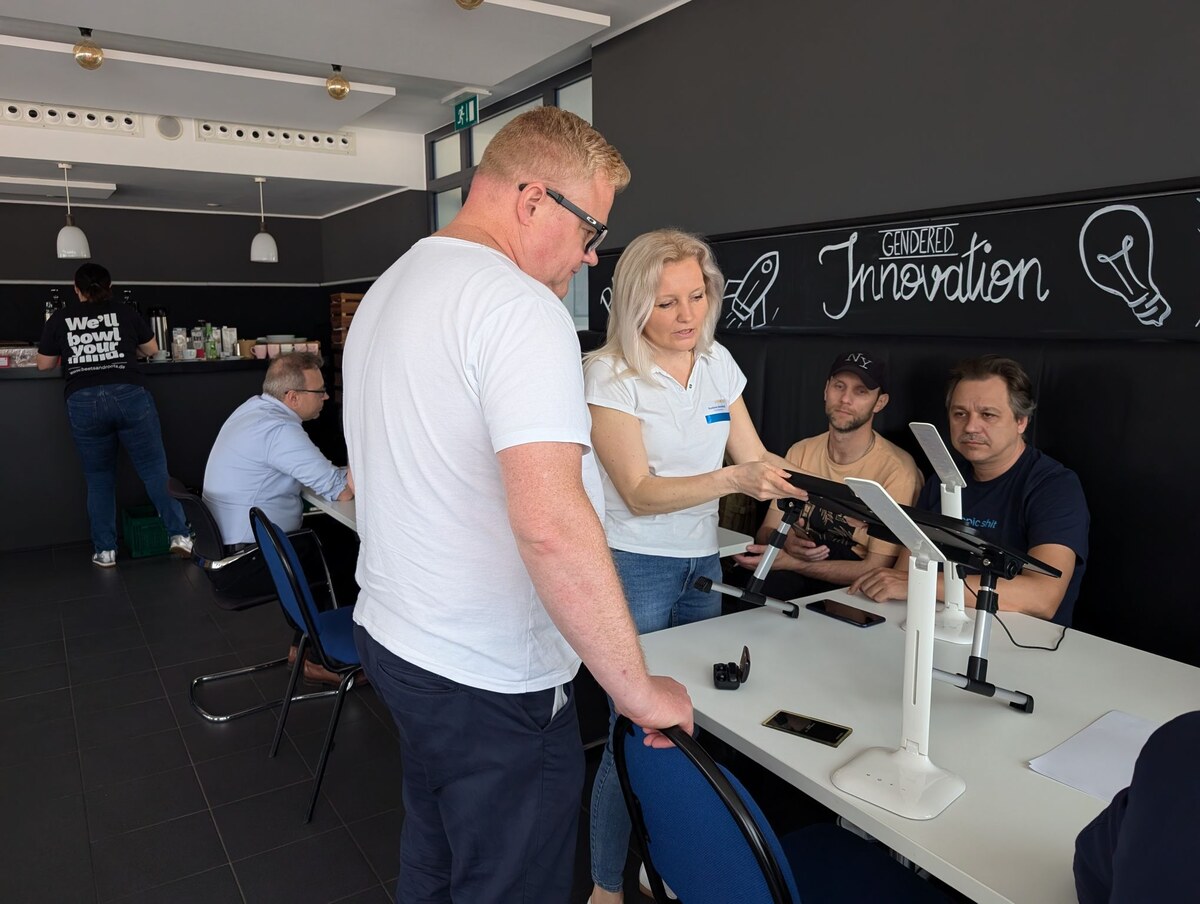
Today, the situation has changed. We can demonstrate the technology during pitches and meetings, which greatly simplifies communication with potential partners and investors.
Over the years, we have also met many skeptics. Often people have seen the results of technology, but they cannot explain them based on their own experience or knowledge. At the same time, a true professional is distinguished by the fact that he does not reject something new just because he has not encountered it before. On the contrary, he seeks to understand the principle of work, asks questions, analyzes and investigates.
We are lucky to meet many of these people — engineers, scientists and specialists from large international companies. They understand that true innovation often requires a new level of knowledge and a different perspective on familiar things. It is thanks to such open-minded professionals that collaborations are born that allow technologies to move from laboratories to the real world.
— What kind of team do you have now — in Ukraine and abroad? How difficult is it to find engineers in Ukraine who understand such specific and deep physical processes?
— Today, our team remains compact and highly efficient.
The project employs fewer than ten people: most of the team members are abroad, only 2 people continue to work in Ukraine.
At the current stage of development, we are deliberately not increasing our staff. Like many deeptech companies, we are working within the available funding and focusing resources on technology development, patenting and preparation for commercialization. It is important for us to ensure the effectiveness of each investment and maintain the flexibility of the team until stable sales are achieved.
Regarding the search for engineers in Ukraine, it is difficult for me to give an objective assessment of the current situation. For the past six years, we have been working with practically the same staff and have not actively recruited technical specialists. Our team was formed around the project many years ago, and the key participants have gone through the entire path of technology development together — from the first ideas to the creation of working prototypes and international patenting.
At the same time, Ukraine traditionally has a strong engineering school and great human resource potential in the fields of electronics, software, telecommunications, and high-tech developments. We are considering the possibility of expanding the team in the future, when the project moves to the stage of active scaling and commercialization.
— Something so new and technological, especially if the word «radiation» is used, immediately raises the user’s alertness. Explain why TechNovator technology is safe and do you often get asked questions about health safety?
— Health safety issues are one of the most important areas of our work.
It may sound unusual, but our technology is fundamentally different from most existing wireless energy transfer systems. It does not create electromagnetic fields in the surrounding space and does not require the formation of powerful radiation zones for energy transfer. During operation, only a weak electromagnetic signal is recorded between the transmitter and receiver, capable of transferring information, but not energy.
The technology has already been tested for safety by independent laboratories, which have confirmed that it meets the requirements of the tests. However, we understand that further evidence is needed for widespread adoption, especially in the medical field.
That is why we plan to implement a joint project with the Professor Zbigniew Religa Foundation for the Development of Cardiac Surgery, aimed at studying the interaction of technology with biological tissues and medical devices.
Preliminary studies and preparatory work for future tests have also been carried out.
In the future, such studies should help to obtain independent confirmation of the possibility of safe use of the technology in applications related to high-risk medical devices, in particular implanted systems.
— Regarding the military aspect of the application. Does the operation of your technology conflict with the operation of electronic warfare — both our own and enemy ones? Or does it not «intersect» at all?
— Electronic warfare does not affect the operation of our system at all. It cannot be silenced or recorded. For example, if we installed charging ports for drones, it would be impossible to identify where the charging is taking place.
— Can your solution really be useful not only for conventional drones, but for the same NRCs, which will potentially need much more energy?
Yes, our technology can potentially be used to simultaneously charge many unmanned systems, which opens up new opportunities for increasing their autonomy and readiness to perform tasks.
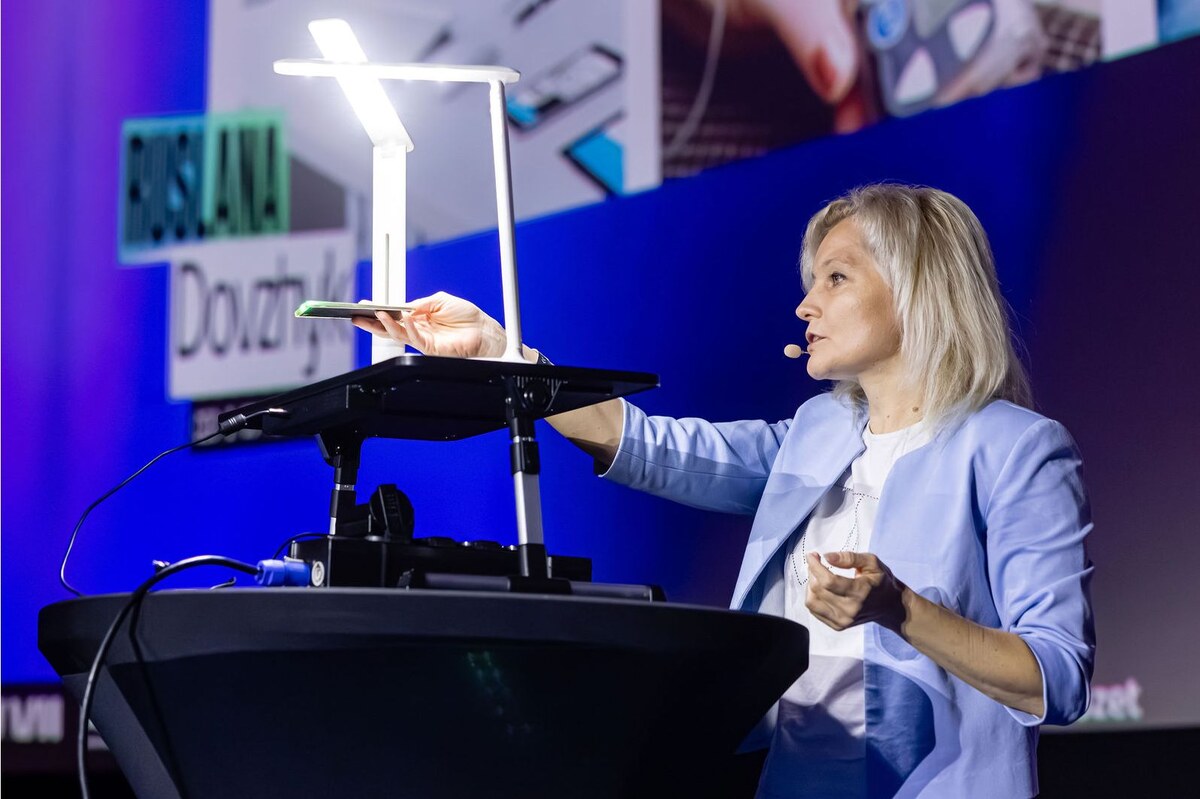
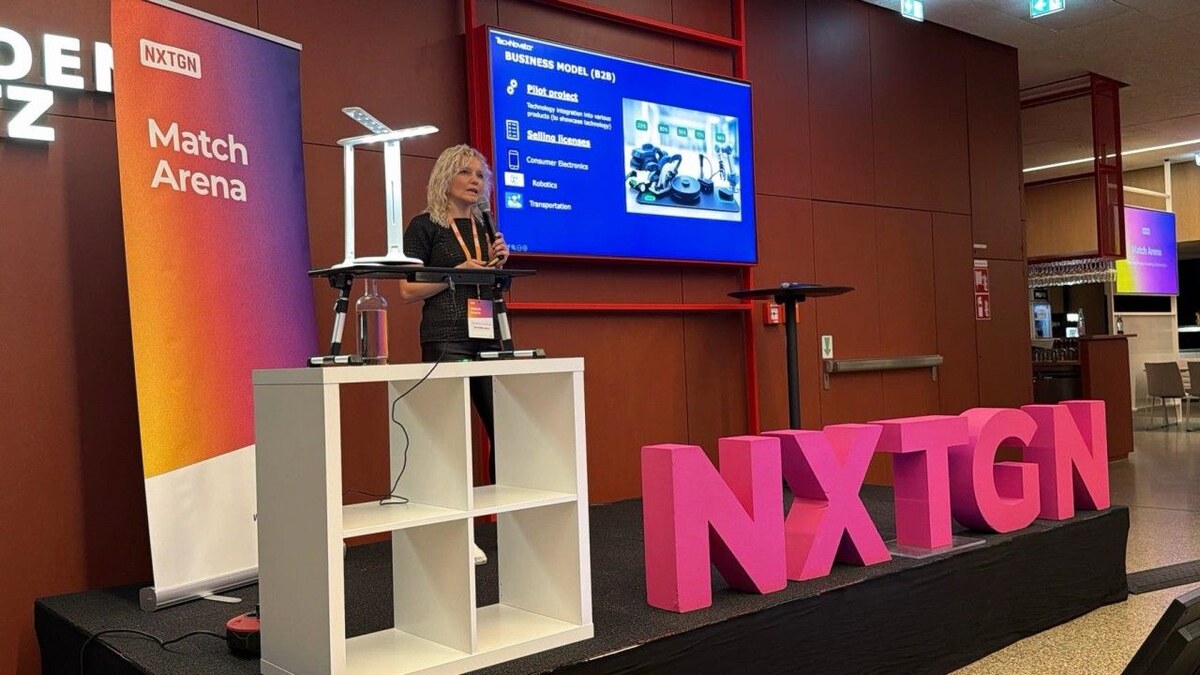
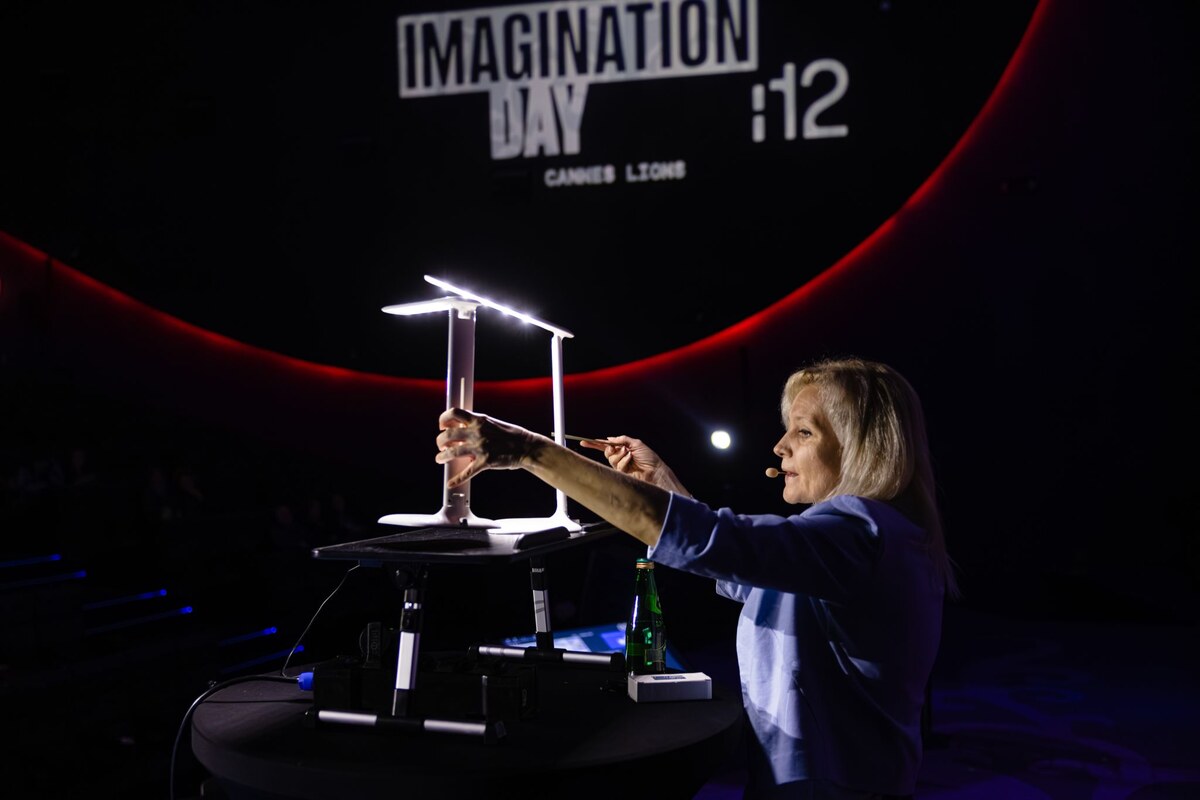
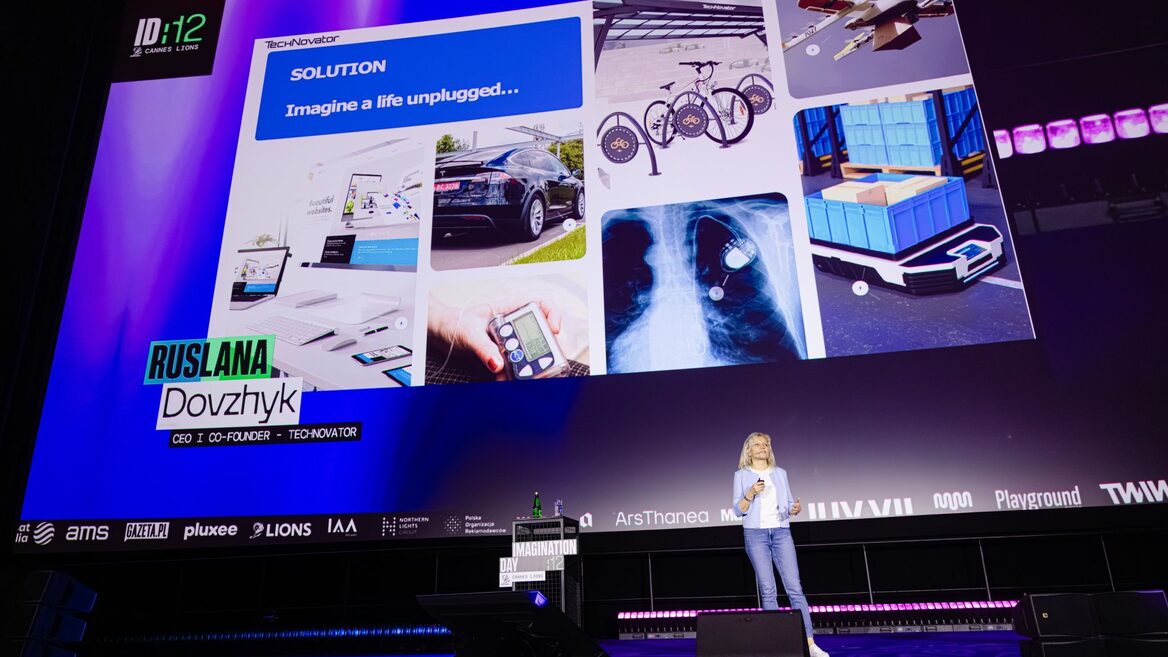
TechNovator CEO during one of the international technology events
We see the most promising applications for drones that perform long-term surveillance missions, infrastructure monitoring, border protection, search and rescue operations, or other tasks where continuity of operation and rapid energy recovery are important.
A separate area is ground robotic complexes. Combined with our solutions in the field of wireless power transmission and promising energy storage systems, this can increase the duration of autonomous operation of robotic platforms and reduce the need for manual maintenance during missions.
We see the defense sector as one of the potential areas of application of the technology, but at the same time we see significant demand in civilian areas as well — from logistics and industrial automation to infrastructure monitoring and autonomous robotic systems.
«We hope to see the first commercial implementations of the technology within the next few years.»
— Please tell us about the work of your foreign offices. What functions do they perform?
Overseas offices are responsible for R&D development, market analysis, and search for strategic partners. Our main markets are Europe, America, and Asia (Japan, South Korea).
— About money. To what extent does the financial issue hinder your development and scaling, or do you have no problems with it? Tell us about investments and grants that were important or crucial for TechNovator.
During its existence, the company has attracted various funding: prizes, grants, investments from LPs. To date, we have won a grant funding of 500,000 euros from the EIC pre-accelerator for a new lithium-free rechargeable battery with a service life of 20-50 years. Today, we have a clear financial and business strategy that covers both further research and development and the commercialization of the technology through licensing, partnerships and our own products.
We are interested in working with strategic investors and industrial partners who can not only provide financial support, but also help accelerate technology to market, scale production and implement products on a global level. Partners who share a long-term vision and are ready to build a new generation of energy solutions together are important to us.
— When will we finally see your product in mass use — in large offices or airports? What is lacking for this at the moment — are technological or legal and organizational aspects holding us back?
— We hope to see the first commercial implementations of the technology within the next few years.
In fact, the main factor today is not so much the technology itself, but the speed of building the right partnerships to scale it.
We filed a patent application over two years ago, which has already been published, and key international markets are under patent protection through our patent strategy.
Obtaining the first issued patents, expected in late 2026 — early 2027, will significantly simplify licensing negotiations and large commercial deals.
In parallel, we are actively working on pilot projects and cooperation with corporations in various industries.
Therefore, today the main task is to find strategic partners for commercialization, production and integration of solutions in various industries. We are convinced that the combination of strong technology, patent protection and the right partnerships will be the key to its mass implementation.