Хочете будувати кар’єру в Data Science та AI? Vodafone Big Data Lab відкриває новий набір —>
Марія Бровінська
1 April 2026, 13:17
2026-04-01
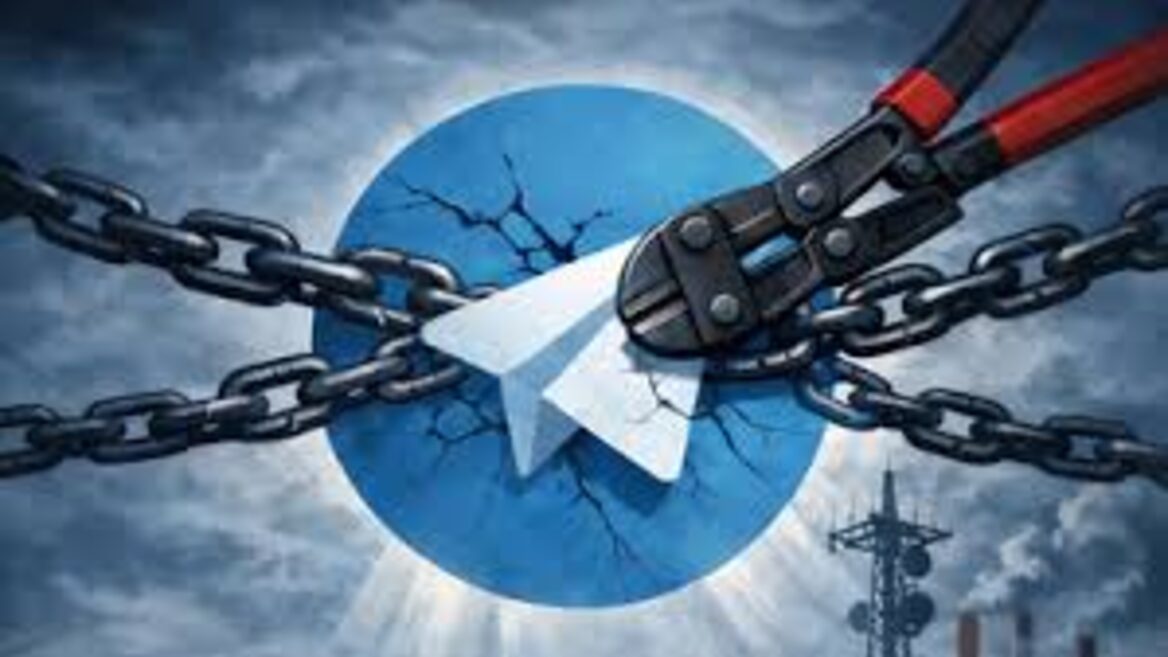
Telegram is unlikely to be blocked in Ukraine — and here's why it's harder than it seems
After the terrorist attack in Lviv on February 22, when Ukrainians recruited via Telegram detonated two explosive devices in the city center, the issue of blocking the messenger was again on the agenda. Budanov, Vereshchuk, and Interior Minister Klymenko spoke about the restrictions. But there will be no blocking — at least not in the near future. Why — further.
After the terrorist attack in Lviv on February 22, when Ukrainians recruited via Telegram detonated two explosive devices in the city center, the issue of blocking the messenger was again on the agenda. Budanov, Vereshchuk, and Interior Minister Klymenko spoke about the restrictions. But there will be no blocking — at least not in the near future. Why — further.
Why Telegram is dangerous — briefly
81% of Ukrainians use Telegram for communication, 72% read news there. However, according to the Kremlingram intelligence group, messages in the messenger — except for secret chats — are not encrypted. Name, phone number, contacts, geolocation, content of private messages — all this is stored on servers and is available to platform managers.
Telegram’s ownership is opaque. Some of its servers were located in Russia at least until 2020. In 2021, the company floated bonds on the St. Petersburg stock exchange, with the Russian Government Direct Investment Fund, VTB Capital, and entities associated with oligarch Mikhail Fridman as the main investors. The five-year investment program runs until September 2026.
Why technical blocking doesn’t work
Telegram has built-in proxies to bypass blocks, writes Ukrainska Pravda. Any ordinary user can enable them — without technical knowledge. That is, even if Ukraine restricts traffic, the effect will be minimal, and the costs will be significant.
To really block Telegram, you need to install so-called «black boxes» — equipment for deep data analysis that has access to the content of packets transmitted by users. It is thanks to such devices that Russia was able to block Meta and YouTube. «Such actions do not correspond to democratic practices — and Ukraine does not plan to do this,» says People’s Deputy Mykyta Poturayev.
Why is this also a political issue?
There are three separate reasons why the Office of the President is avoiding a quick decision, the authors of the UP note .
The first is that Zelensky’s team has invested significant resources in promoting its own Telegram channels since the election campaign.
The second is that the president is convinced that the blocking of VKontakte and Odnoklassniki by the decision of the National Security and Defense Council at one time hit Poroshenko’s rating.
The third is legal: Telegram’s investors include Arab and American funds. Even if they are backed by people connected to the Kremlin, imposing sanctions on a company that is partly owned by allied countries due to its opaque ownership structure is a risky diplomatic game.
According to Yaroslav Yurchyshyn, the head of the committee on freedom of speech, «Telegram is still not restricted because political comfort has become more important than security.»
«Today, there is no real political readiness in Ukraine to sanction Telegram. The popularity of the messenger has become its protection. The authorities have invested resources in the development of their networks for years and do not want to destroy their own communication channels. Politicians are afraid of losing a convenient tool and neglect the issue of national security. A very strange and dangerous decision during the war. Are there technical possibilities to impose sanctions on the social network? The experience of VKontakte with Odnoklassniki shows that there are. Then they were restricted through the sanctions mechanism of the National Security and Defense Council (after all, it is a completely Russian product), with TG it will be clearly more difficult,» Yurchyshyn notes.
The main problem, in his opinion, is opaque ownership. «Despite the beautiful signs of offices in Europe and Dubai, the facts say otherwise: some of Telegram’s servers were physically located in Russia at least until 2020. A significant part of the IP addresses is managed from the USA by a certain Vladimir Vedeneev. He is the former owner of GlobalNet LLC, a company closely linked to the FSB of the Russian Federation. That is, we have a structure that is de facto integrated into the Russian intelligence environment, although de jure it tries to look global. It is not easy to prove this in court, especially when no one wants to do it,» the politician said on Facebook.
What in return?
The Verkhovna Rada is working on draft laws on regulating digital platforms, by Knyazhytsky and Poturayev. Both require all platforms to have a legal entity or representative office in Ukraine and communicate with the government. Failure to comply is grounds for blocking.
Telegram is probably the only major social network that still does not have a single representative in Ukraine and does not communicate with official Kyiv. Most other platforms already have such a representative.
That is, the logic is this: if the law is passed, Telegram will sooner or later violate its requirements — and then formal grounds for sanctions will appear. According to the most optimistic scenario, the vote could take place by the end of 2026.
What does this mean now?
While there is no law, Telegram operates without any regulation in Ukraine. All your data, the data of your contacts — even those who do not have an account — could potentially be accessible to structures associated with the aggressor country, cyber experts say.
«The biggest mistake is to think that if I’m not touched, I’m not being followed. The position of 'I’m not interested' is playing along with the enemy,» says a Ukrainian cybersecurity expert who wished to remain anonymous.
Соціальні мережі та штучний інтелект формують глобальні наративи про війну в Україні. Як їх використовують українці та росіяни — аналітика від Foreign Policy
Напередодні вторгнення росії в Україну соціальні медіа слугували полем битви для держав і недержавних діячів, щоби поширювати конкуруючі наративи про війну та зображати поточний конфлікт у своїх власних інтересах. Видання Foreign Policy опублікувало великий аналітичний матеріал, як українці та росіяни використовують соціальні мережі, щоб давати інформацію про війну. Наводимо його адаптований переклад.
Telegram 19 червня запустив Premium-підписку. Скільки вона коштуватиме, які нові функції отримає підписник
Telegram 19 червня запустив Premium-підписку. Вона відкриває доступ до додаткових функцій месенджера. Користувачі платної версії зможуть завантажувати файли об'ємом до 4 ГБ та скачувати їх на максимальній швидкості, використовувати додаткові інструменти для керування чатами та автоматично трансформувати голосові повідомлення у текст.