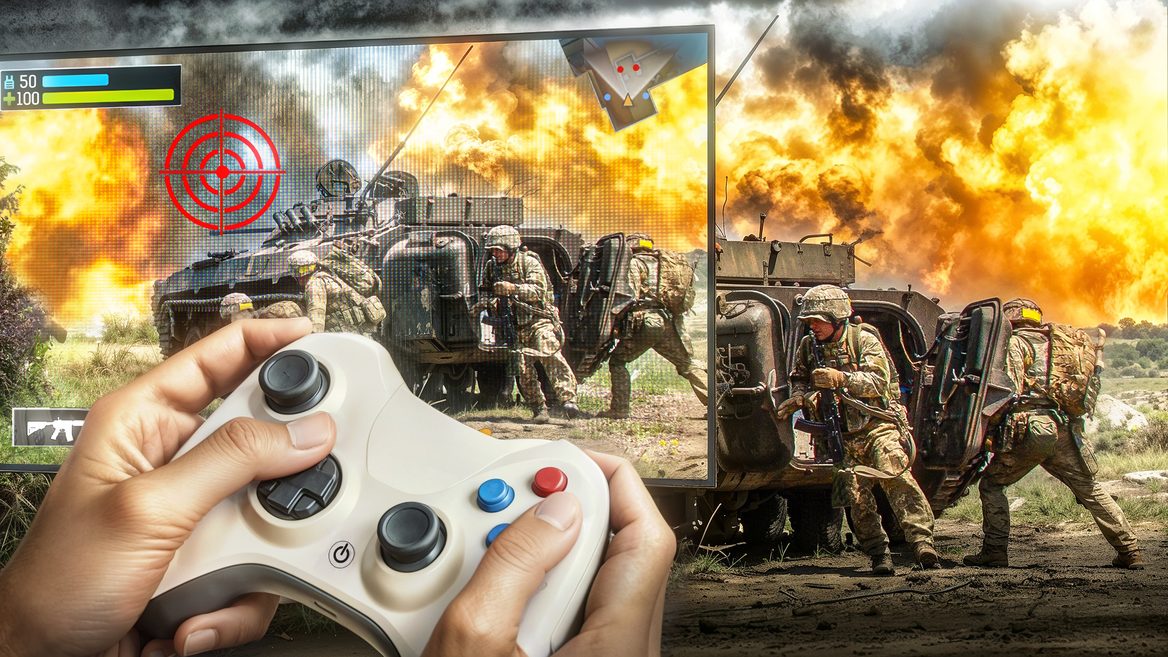
The Laws of War Through Gamification. A Review of the Innovative Simulator Decisions Under Fire, Which Forms Combat Reflexes and Morale of Fighters
The Decisions Under Fire training simulator is not just another attempt to gamify training, but a tough and extremely relevant mirror test for anyone who holds a gun in their hands. Created by the Geneva Call team in the midst of the armed conflict in Ukraine, this simulator helps military personnel experience the same unbearable tension when there are only a few seconds to make a decision. It is an attempt to bring international humanitarian law (IHL) from dry theoretical exercises directly into an interactive component, where the law becomes part of tactics, and not just a paragraph in a textbook.
The Decisions Under Fire training simulator is not just another attempt to gamify training, but a tough and extremely relevant mirror test for anyone who holds a gun in their hands. Created by the Geneva Call team in the midst of the armed conflict in Ukraine, this simulator helps military personnel experience the same unbearable tension when there are only a few seconds to make a decision. It is an attempt to bring international humanitarian law (IHL) from dry theoretical exercises directly into an interactive component, where the law becomes part of tactics, and not just a paragraph in a textbook.
Decisions Under Fire Review
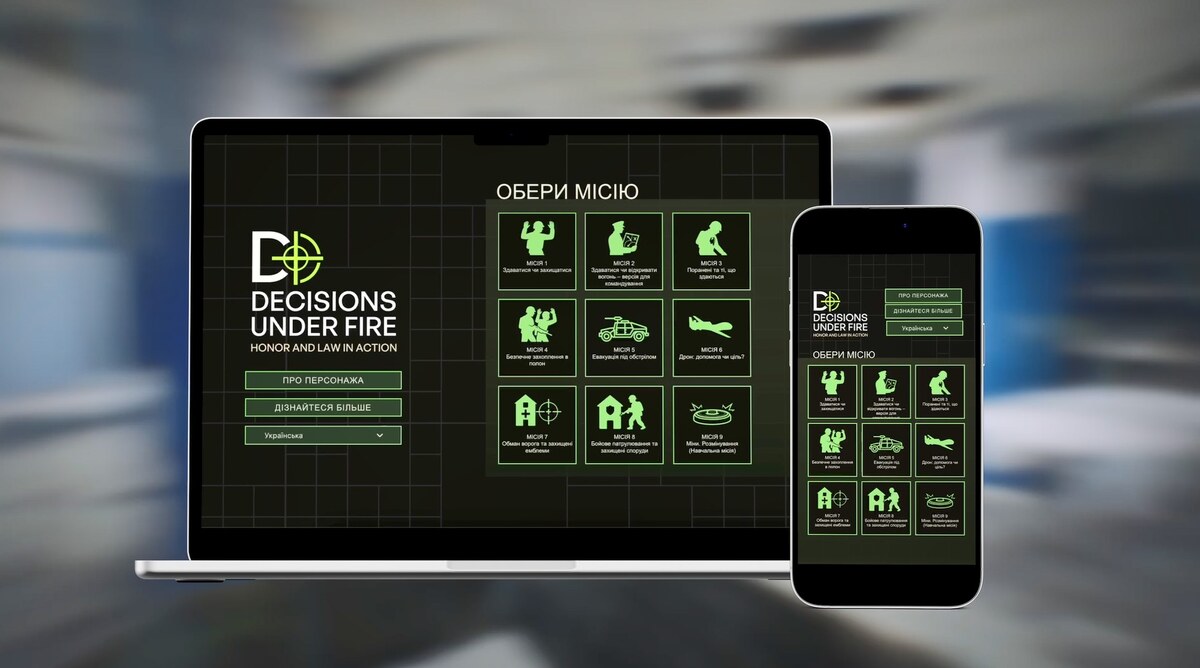
The structure of the simulator's nine missions is a masterclass in escalating moral and operational complexity. It all starts with the chaos of an ambush, where you have to choose between firing to kill and attempting to capture the enemy, which immediately teaches you the balance between survival and ethics.
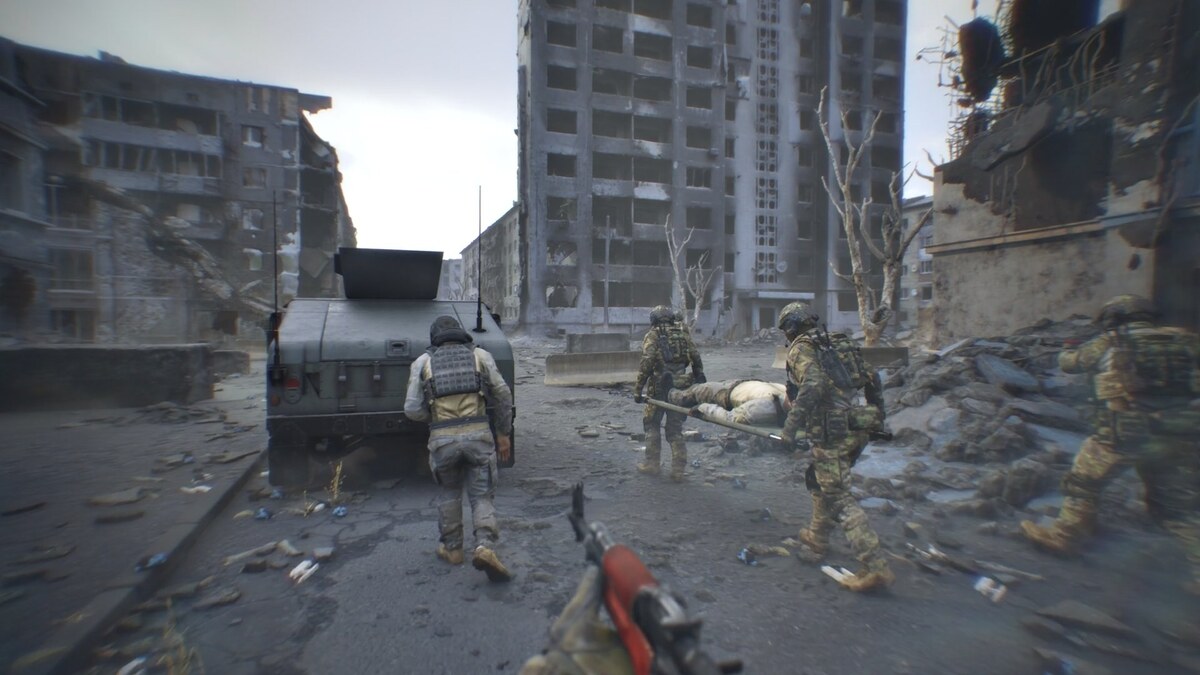
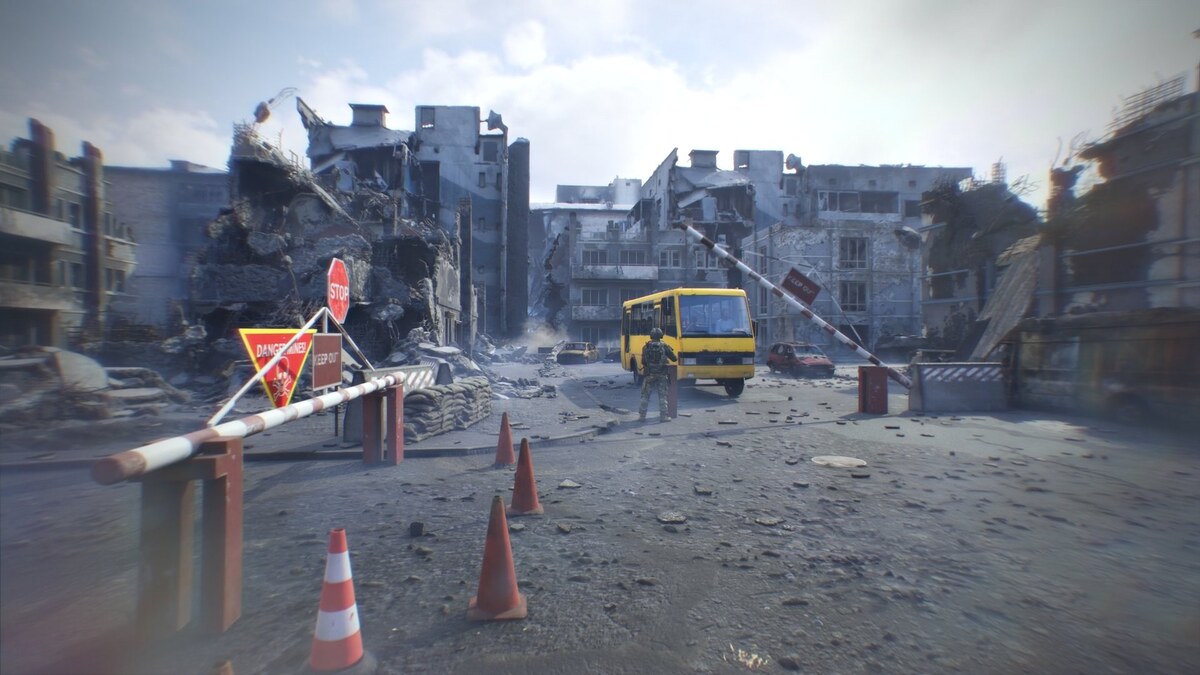
Decisions Under Fire immerses you in even more complex dilemmas, such as an evacuation mission, where in the limited space of a transport you have to decide who to save first under enemy fire - your own or your wounded opponents.
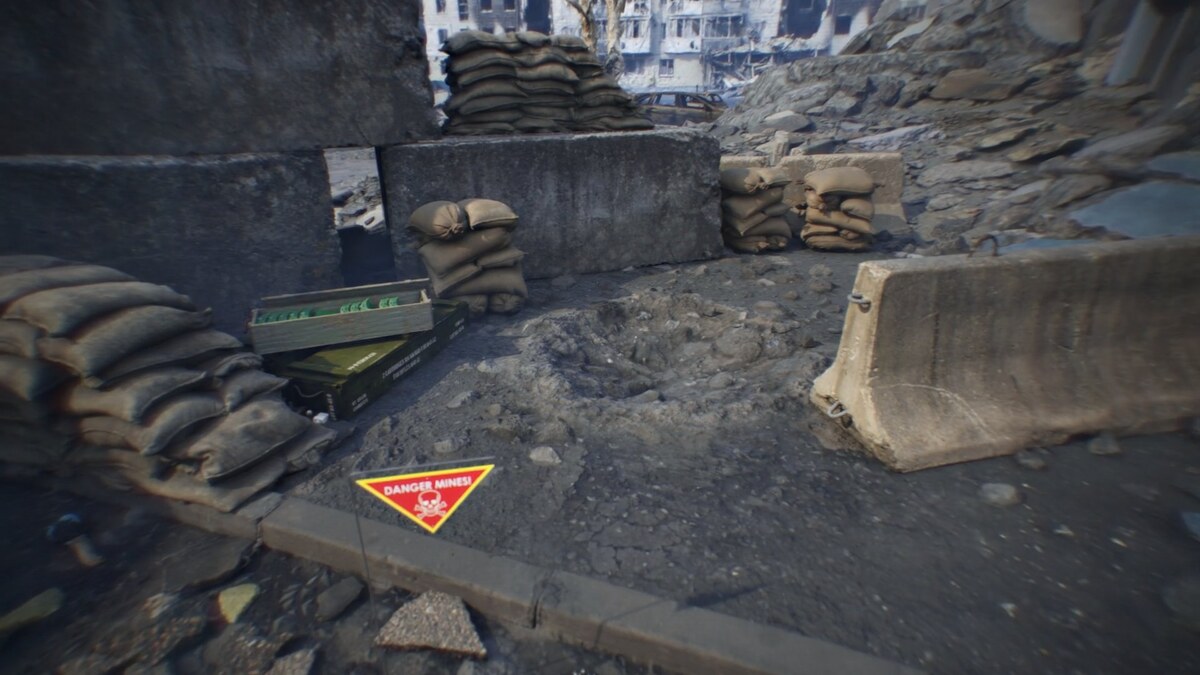
Particularly innovative is the drone scenario, where the drone is used not as a means of destruction, but as a tool for calling for surrender, which radically changes the usual "game" approaches in favor of professional balance. And during a mission to demine a liberated city, the simulator provides a sobering lesson that the honor of a commander is inextricably linked to the safety of civilians returning to mine-free neighborhoods.
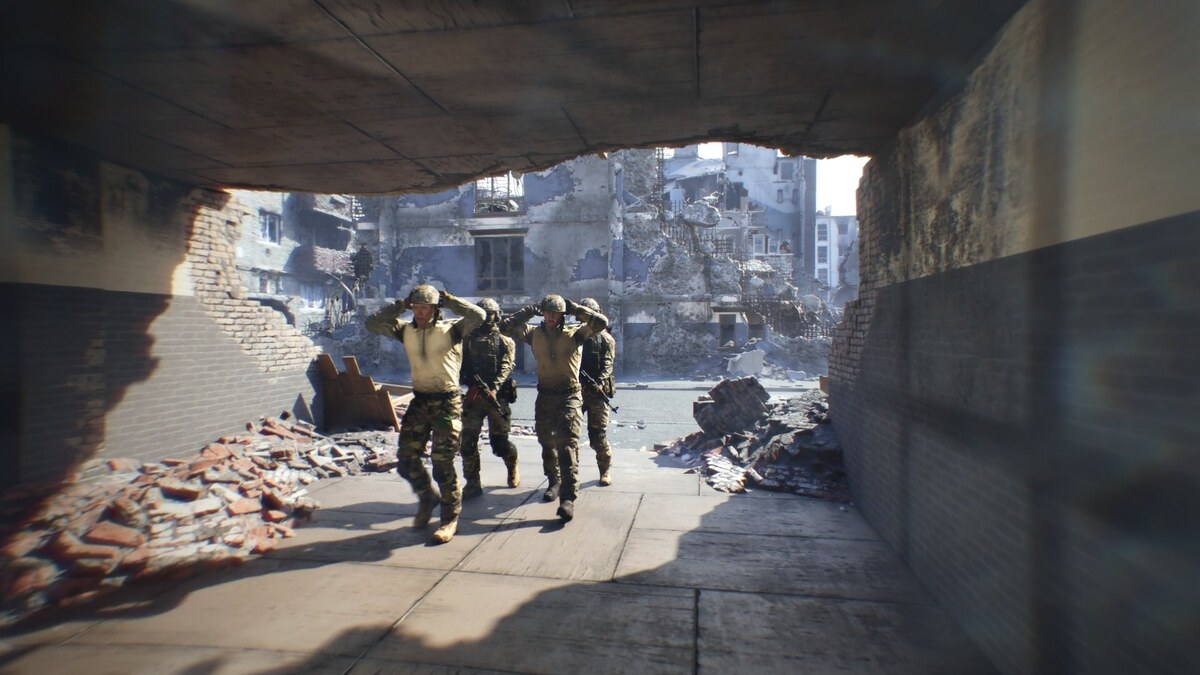
Mission 2: Surrender or Open Fire
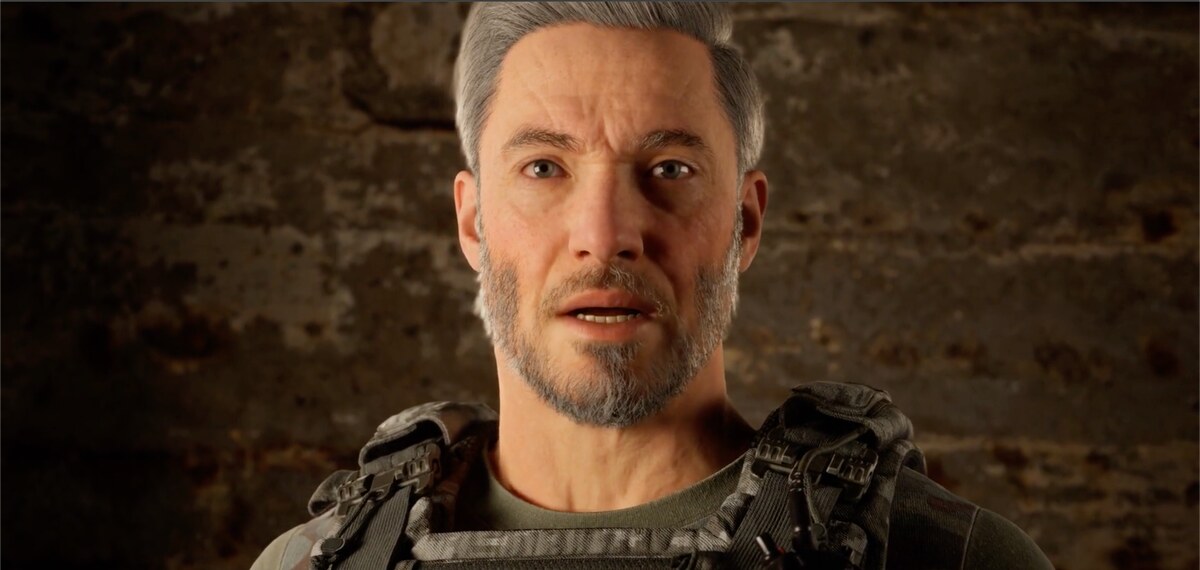
Central to this experience is Major Ihor Korolenko, a digital mentor with 15 years of experience in the Armed Forces of Ukraine. His presence in the simulator is critical, as he does not lecture as a lawyer, but advises as an experienced combat comrade. This creates an atmosphere of trust that is so necessary for training soldiers. His role is most clearly manifested during the “Analysis of Actions Taken” (APA), where he helps to understand how target discrimination and proportionality of fire directly affect the legitimacy of the entire unit.
Mission 5: Evacuation under fire
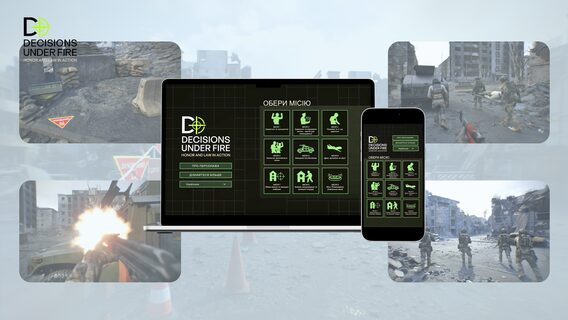
On the technical side, the first-person perspective and modern graphics on the Unreal Engine 5 game engine, currently used by leading game development projects, create a decent level of immersion. The Simulator provides access to short missions, each of which clearly outlines a certain combat situation. This format is ideal for quick testing and effective development of solutions, revealing the deep potential of the platform. The events of the missions unfold in urban areas, but the development team plans to further expand the geography and conditions.
Decisions Under Fire is a product that allows you to build "muscle memory" for making sound decisions under fire. The ability to freely choose missions and availability in two languages (English and Ukrainian) make it a flexible tool for any stage of training.
The simulator successfully proves the rule that in a modern conflict, the winner is not the one who shoots faster, but the one who is able to maintain a balance between military necessity and humanity, preserving the honor of the uniform even in the darkest times.
Interview with an IHL instructor
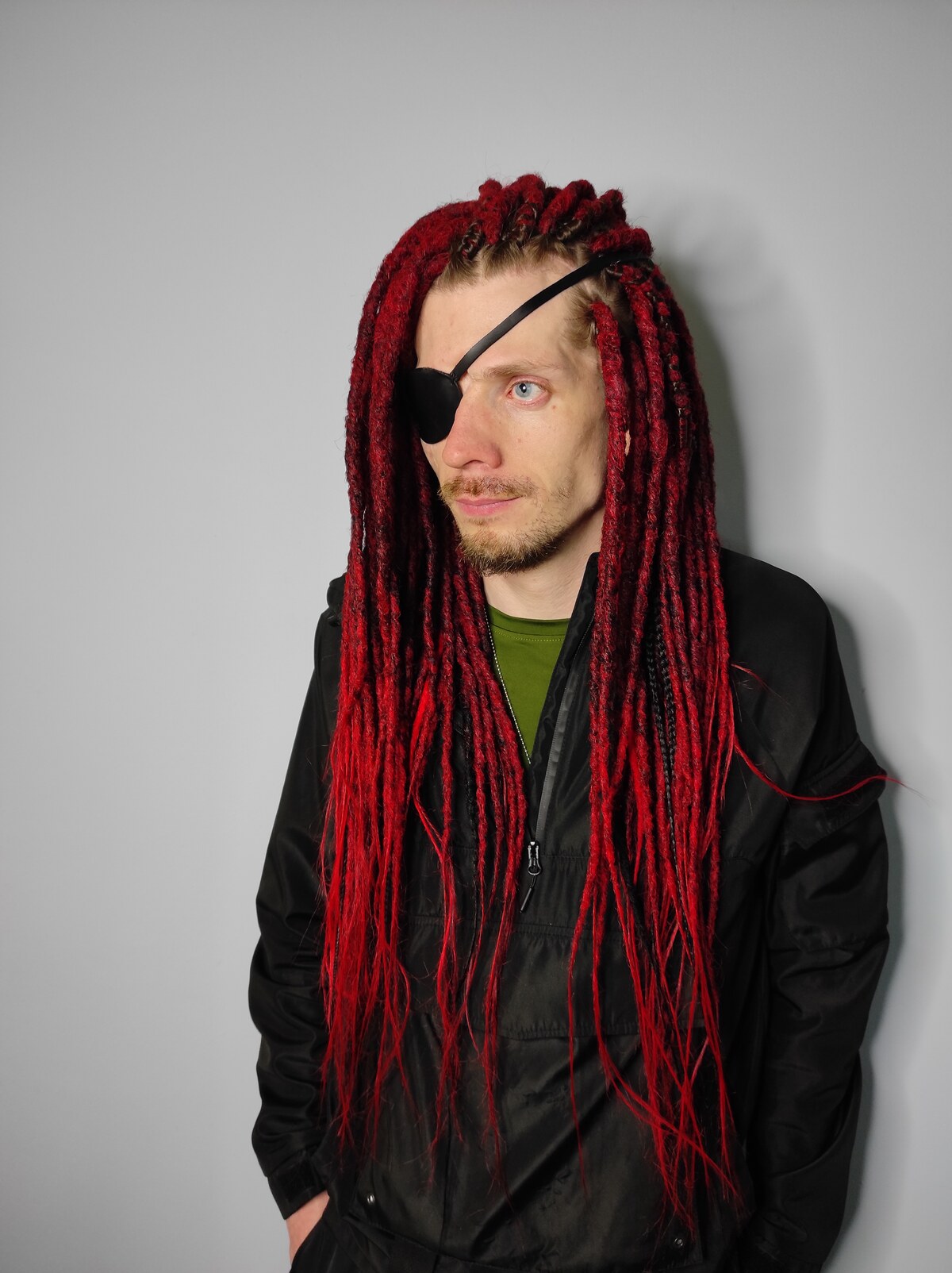
dev.ua also spoke with international humanitarian law instructor and combat veteran Rodion Tristan about the importance of immersive engagement of fighters.
— What is the main essence of International Humanitarian Law (IHL) during intense hostilities?
Rodion Tristan
The key is to minimize cumulative harm and protect civilians or persons with protected status (doctors, wounded, prisoners). The main thing here is to understand that IHL does not tie the hands of the military or reduce combat effectiveness; it allows them to remain human even in the most difficult conditions.
— Why do traditional lectures on IHL for the military today work worse than interactive simulators?
We don't have a year to train a combatant. And it's very difficult to connect bare theory with reality. For example, at a lecture, the rule "do not strike civilian buildings" sounds as simple and clear as possible. A soldier can perfectly memorize the statute and pass a paper test without fail. But when he finds himself in a real location, and in front of him is a building where both the enemy and civilians are located - dry theory fails. There is no correct visual chain of actions in his head, because the imaginary picture from the textbook does not coincide with the chaos of battle. The simulator allows the soldier to make a decision and realize the consequences using the example of a simulated situation, fixing it in his memory.
Mission 9: Mines. Demining
A soldier doesn't just listen to the rules, he directly interacts with the situation, makes a decision and instantly sees its consequences on the screen. Decisions Under Fire allows you to "attach" theory to the realities of today, identify gaps in understanding and form the right pattern of behavior before the cost of a mistake becomes fatal on the real battlefield.
— Why was Unreal Engine 5 chosen for Decisions Under Fire?
For the sake of realism of the picture and immersion. It does not look like an illustration in a textbook, but like a live situation. Sound stimulation is added - gunshots, surroundings. This immerses the fighter in a scenario that he may encounter on the battlefield.
— How do the Geneva Conventions adapt to modern drone warfare (FPV, kamikaze, bombers)?
The drone itself is not prohibited, just as the Kalashnikov assault rifle is not prohibited. It is a weapon of selective attack. The question is not in the tool, but in how it is used. For example, it is impossible to finish off a wounded person out of mercy, he must be provided with assistance. We have collected the practice of use, attracted consultants and developed separate methodological recommendations for the use of UAVs taking into account the norms of IHL.
— How do you argue to fighters the need to follow the rules if the enemy completely ignores them?
In theory, this may seem like a difficult moral challenge, but in training we explain it through the absolutely cold logic and mathematics of war. When the argument arises about the desire to act symmetrically, on the principle of "an eye for an eye", we break the situation down into molecules.
For example, the enemy is hitting civilian targets in Kyiv with expensive weapons. If we start shelling their civilian buildings in response, what will we get in return? Will this give us an advantage on the battlefield here and now? No. Will this affect the shift of the front line? No. We will only waste scarce high-precision ammunition simply for the sake of revenge.
Mission 9: Mines. Demining
War is not a computer strategy game where you can enter a cheat code and get endless resources and missiles. Everything costs time and money, and spending it on symmetrical brutality without a tactical purpose is simply inefficient.
Brutality for the sake of brutality is not about combat. It’s about things that destroy not only the victim but also the perpetrator. We always remind soldiers of the future: “How are you going to reintegrate into civilian life?” PTSD is a common diagnosis, but combat trauma is strikingly different from trauma resulting from participation in torture or uncontrolled violence.
Observing the laws of war is a safeguard that does not prevent you from destroying the enemy on the battlefield, but helps you preserve your own psyche and avoid turning into war criminals.
— The simulator has a virtual character — Major Igor Korolenko. Why didn't they use real actors for greater immersion?
The creation of this character had two main goals: to ensure psychological realism and to optimize the development process. Major Korolenko is a collective, neutral image of a commander created specifically for our realities. Even if in a real battle a soldier does not see the commander next to him, he always feels his presence through the setting of tasks and the subsequent analysis of errors. The digital major provides this necessary feeling of constant support and responsibility for the decisions made.
Major Igor Korolenko
We rejected the idea of involving live actors primarily for security and psychological reasons. Simulating military briefings with real people carries the risk of revealing personal data and raises issues of confidentiality, which a training simulator should avoid. In addition, someone may simply not like a live actor visually or emotionally, which will immediately create a subconscious barrier to learning. A digital character is devoid of this drawback - it remains neutral for everyone.
In addition, it is worth remembering about resources. We are developing an effective educational tool, not a Hollywood blockbuster. Using a virtual avatar allows the system to remain flexible and scale much faster for new missions.
— Are military educational institutions interested in scaling gamified solutions like Decisions Under Fire?
Yes, they are interested. This allows you to convey knowledge individually and in an emotional setting.
For the army, such solutions are important, because they allow you to train not only knowledge of the provisions of international humanitarian law, but also to "flash" these laws at the level of muscle memory and reflexes even before a person finds himself under real fire.
"The game gave an understanding of what you will have to work with in reality." Interview with an artilleryman of the Armed Forces of Ukraine about gamification in the Defense Forces