Хочете будувати кар’єру в Data Science та AI? Vodafone Big Data Lab відкриває новий набір —>
Валентин ШнайдерAround IT
10 November 2025, 12:17
2025-11-10
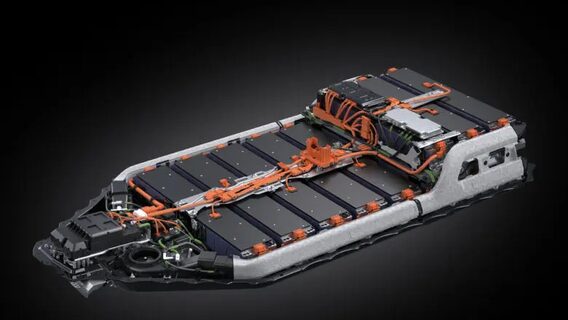
Toyota plans to release solid-state batteries in 2027-2028: battery life up to 40 years and a range of 1,000 km
The Japanese automaker is moving toward mass-producing solid-state batteries, promising to retain about 90% of their capacity for about 40 years and provide more than 1,000 km of range on a single charge. The technology will be more expensive at launch, but should become cheaper as it scales up.
The Japanese automaker is moving toward mass-producing solid-state batteries, promising to retain about 90% of their capacity for about 40 years and provide more than 1,000 km of range on a single charge. The technology will be more expensive at launch, but should become cheaper as it scales up.
According to Interesting Engineering, the first cars with such batteries are planned to appear in 2027-2028. It’s not just about durability: thanks to the solid electrolyte, higher energy capacity, safer fast charging and more compact dimensions are promised compared to current lithium-ion packs. The company also assumes the possibility of reusing the battery in two to three cars during its life cycle, which reduces the total carbon footprint.
Industrial preparation includes partnerships for key materials. Together with Sumitomo Metal Mining, stable cathode compositions have been developed since 2021; mass production of such materials is planned for fiscal year 2028 in Japan. In parallel, Idemitsu Kosan is building a capacity to produce lithium sulfide as a base for solid electrolyte with a target of 1,000 tons per year and the start of mass production by 2027. This configuration should reduce the risk of bottlenecks in the supply chain.
Commercial implementation, according to Toyota, will begin with premium lines (in particular, Lexus and Century) with further diffusion into the mass segment after increasing volumes and optimizing costs. The price tag of the first batches is likely to be higher, but the long resource and the option of reinstallation can equalize the total cost of ownership over the long term.
The practical consequences for the owner of an electric car boil down to two effects: less frequent replacement of the traction pack over the life of the car and access to a longer driving range without compromising on reliability. If the claimed parameters are confirmed, there is room for new business models: from «transferring» the battery to the next car to further use in stationary energy storage systems.
Solid-state architecture eliminates the flammable liquid electrolyte and increases energy density, but the requirements for material purity and production control make it difficult to scale. That’s why Toyota is synchronizing R&D with the development of a local raw material base and partnerships, trying to reduce dependence on imports and stabilize costs. If the 2027-2028 schedule is met, the market will have a strong argument in favor of durable and economically predictable electric vehicles.
Previously, dev.ua wrote about how Gennady Butkevych’s company BGV successfully tested a research sample of anode material for a lithium-ion battery made from Ukrainian graphite.