Varto
Хочете будувати кар’єру в Data Science та AI? Vodafone Big Data Lab відкриває новий набір —>

"Not all of it was useful": OpenClaw developer spent $10 million on AI tokens in a month

Peter Steinberger, an OpenAI employee and creator of OpenClaw, said that last month he spent about $10 million on tokens to run AI tasks.

Leave a comment
"Not all of it was useful": OpenClaw developer spent $10 million on AI tokens in a month

Peter Steinberger, an OpenAI employee and creator of OpenClaw, said that last month he spent about $10 million on tokens to run AI tasks.
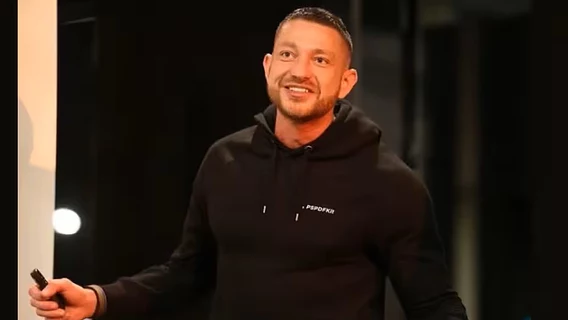
This frank statement was made during the Cloudflare Connect 2026 conference in San Francisco in a conversation with Cloudflare CTO Dane Knecht, The Register writes .

When the audience responded with a surprised roar, Steinberger added, “People don’t always understand that not all of this was actually useful.” However, the financial costs do not fall into the developer’s pocket — all expenses are covered by OpenAI’s investor funds.

Clouds instead of local machines and the open source crisis

During the discussion, Steinberger expressed surprise that most computing is still tied to personal computers, believing that all AI processes should move entirely to the cloud. However, Dane Knecht reminded us of the financial and privacy constraints for ordinary developers who do not have unlimited venture budgets.

The speakers also touched on the problem of the decline of open source due to the influx of AI-generated code. Steinberger noted that the approach to reviewing pull requests needs to change: “If I can see the flow of your words — how exactly you got from point A to point B — my confidence in the result is much higher than if you just throw ready-made code over the fence.”

Instead of hundreds of personal AI agents for each user, the creator of OpenClaw predicts the emergence of a single background intelligence that will anticipate a person's needs and provide answers before they even ask a question.

Control and security: an agent who checks the agent

The biggest challenge for deploying autonomous systems remains trust and granting access rights. According to Steinberger, the behavior of AI depends primarily on the underlying model itself, not on the external code wrapper.

To minimize risks (e.g., prompt injection), the developer suggests not granting all permissions to one agent, but using a two-agent architecture.

“You need another agent to evaluate and grant permissions to the first one. They have to negotiate with each other. In many cases, the agents themselves come to the conclusion: ‘I probably shouldn’t do this’ or ‘There’s an easier way within the established rules.’ Combining the two of these systems significantly increases the level of trust in autonomous AI.”

Anthropic temporarily bans OpenClaw creator from accessing Claude
On the topic
Anthropic temporarily bans OpenClaw creator from accessing Claude
The developer of OpenClaw — autonomous AI assistants for PCs — has joined OpenAI. What is the fate of his project?
On the topic
The developer of OpenClaw — autonomous AI assistants for PCs — has joined OpenAI. What is the fate of his project?
Read the country's main IT news in our Telegram
On the topic
Read the country's main IT news in our Telegram
Also Read
Roosh запускає нову освітню платформу AI HOUSE CLUB для ML/AI-спеціалістів та дата сайнтистів. Розповідаємо, як подати заявку та чому навчатимуть
Як нейромережі бачать вільну та незалежну Україну? Тест dev.ua
Нейронні мережі для генерації зображень бачать світ по-своєму, їхню логіку зрозуміти часом зовсім неможливо. Але таки хочеться. На честь Дня Незалежності України редакція dev.ua вирішила провести невеликий експеримент. Ми задали чотирьом різним нейронним мережам п’ять однакових запитів: «прапор України», «День Незалежності України», «український Крим», «перемога України» та «українці». Отриманими результатами ми ділимося з вами нижче.
У TikTok тепер можна генерувати фон за допомогою нейромережі. Ми протестували її та ділимося результатами
У TikTok з’явилася нова функція «Розумний фон». З її допомогою як фон для тіктоків можна підставляти згенеровані нейромережею зображення. Редакція dev.ua протестувала цю технологію і ділиться своїми враженнями.
1 comment
Які IT-спеціальності будуть потрібні в найближчі п'ять років? Ми з'ясували у голови американського стартапу ADAM Дениса Гурака

Have important news to share? Message our Telegram bot

Key events and useful links in our Telegram channel

Discussion
No comments yet.