Олександр КузьменкоScience Pop
25 April 2025, 15:46
2025-04-25
Scientists tattoo microscopic tardigrades using microchip technology
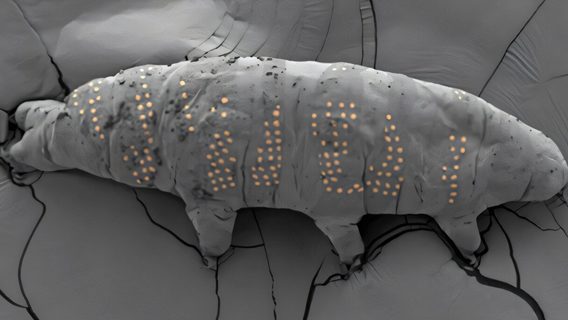
Chinese scientists have discovered a way to tattoo tardigrades, microscopic animals (0.05-1.4 mm) that can withstand the extreme vacuum of space. The scientists tattooed them not to emphasize style, but to test a procedure that will help create tiny biorobots.
Chinese scientists have discovered a way to tattoo tardigrades, microscopic animals (0.05-1.4 mm) that can withstand the extreme vacuum of space. The scientists tattooed them not to emphasize style, but to test a procedure that will help create tiny biorobots.
According to Discovery Magazine, the tiny tattoos on tardigrades were intended to test a procedure that could create micro- and nanoscale biodevices. The scientists chose tardigrades because of their extraordinary resilience to see how a living creature would respond to a microscopic-scale manufacturing process called microfabrication.
Microfabrication is used to create miniature structures such as microchips, solar cells, and even biosensors that can detect cancer cells. It can also play a crucial role in medical technology, aiding in drug delivery and tissue engineering.
To test microfabrication on tardigrades, the researchers turned to ice lithography, a process that uses an electron beam to cut a pattern into a thin layer of ice that covers living tissue. After the ice turns into a gas, the tissue is left with the etched pattern.
«With this technology, we’re not just creating microtraumas on tardigrades—we’re extending this capability to a variety of living organisms, including bacteria,» study co-author Ding Zhao, a researcher at Westlake University in China, said in a press release.
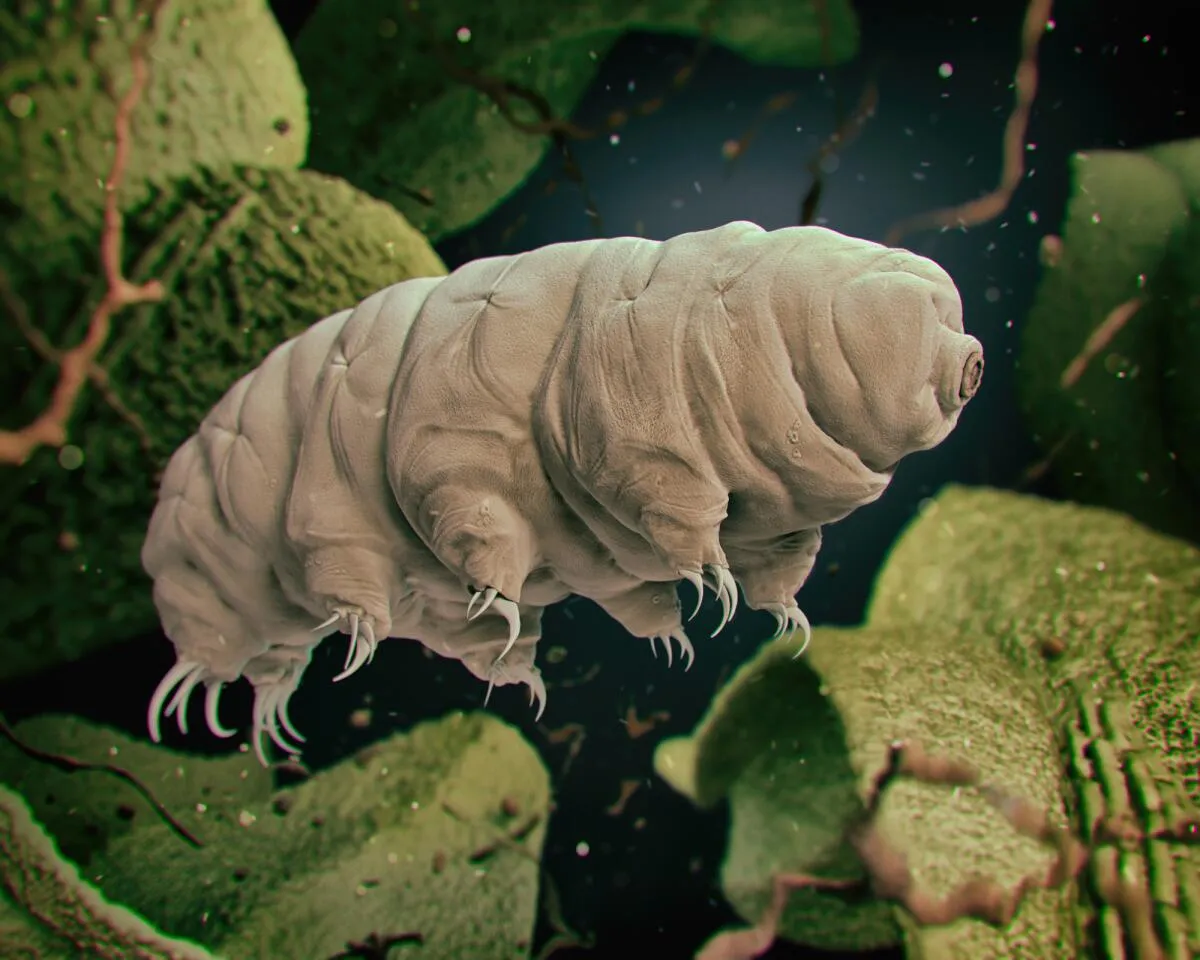
Tardigrades (Latin: Tardigrada), also known as «water bears». Photo: Business Insider
The researchers began the tattooing process by first dehydrating the tardigrades so they entered cryptobiosis, a state in which all metabolic processes stop and the body becomes completely inactive. They then placed the individual animal on a sheet of carbon composite paper that had been cooled to below minus 226 degrees Fahrenheit, and then coated the sleeping «water bear» with a layer of anisole.
When the electron beam hit the anisole and drew a pattern, it created another chemical compound that stuck to the tardigrade at higher temperatures. Eventually, the microscopic animal warmed to room temperature and rehydrated, coming back to life with a brand new tattoo.
The tiny tattoos came in a variety of shapes, such as squares, dots and lines. The ice lithography procedure left about 40% of the tardigrades alive, leading researchers to say it could improve with further testing.
The tattoos probably didn’t bother the surviving water bears at all, as they didn’t show any behavioral changes. The success of this method offers encouraging results for microfabrication on living tissue.
«Living matter is difficult to model, and this progress heralds a new generation of biomaterial devices and biophysical sensors that were previously only in science fiction,» Gavin King, a physicist at the University of Missouri who is credited with inventing the ice lithography method but who was not involved in this research, said in a press release.
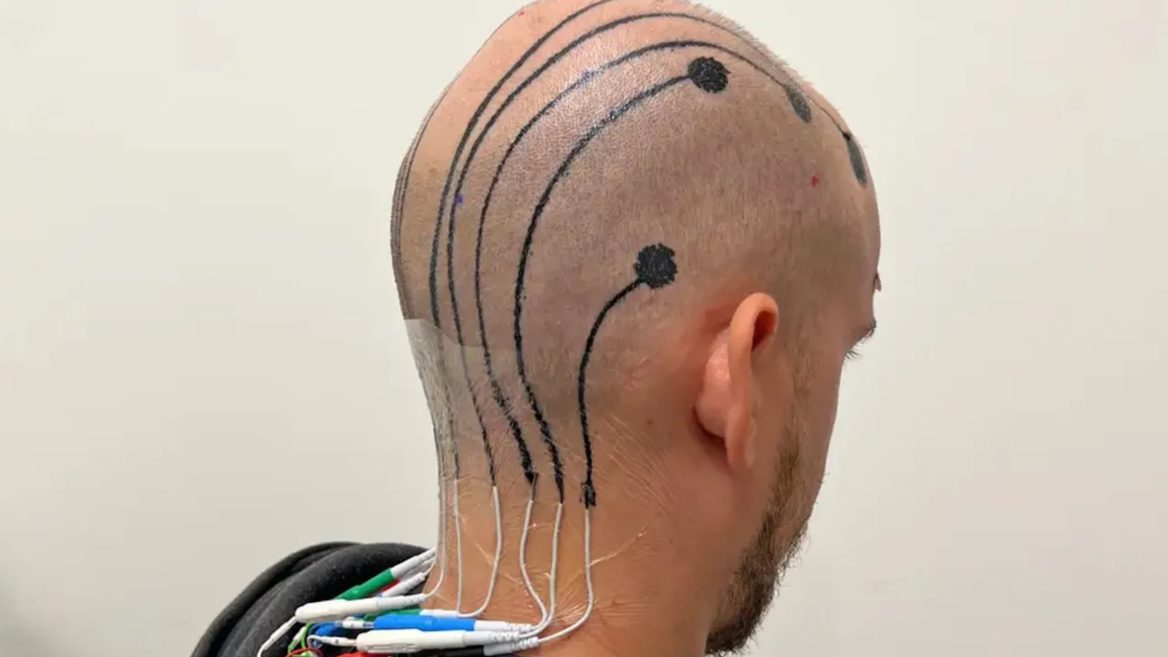
Scientists have previously invented temporary electronic tattoos on the head, which could be a faster and more convenient way to monitor brain activity and diagnose neurological diseases such as seizures, epilepsy and brain tumors, as opposed to traditional electroencephalograms. Such tattoos are created by a specially programmed robot.