Валентин ШнайдерScience Pop
24 September 2025, 15:53
2025-09-24
For the first time in 50 years, NASA will send people to the Moon: Artemis II launch in February 2026
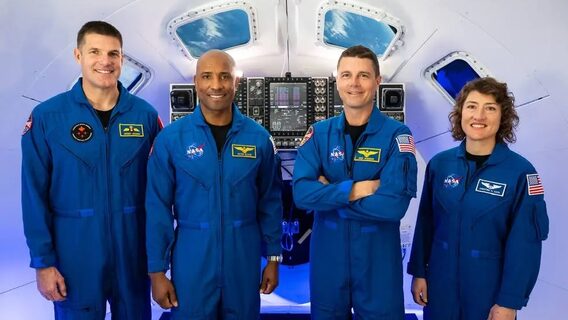
NASA plans to launch the Artemis II mission in February 2026: four astronauts will make an approximately 10-day flight around the Moon without landing, and this will be the first such flight since Apollo 17.
NASA plans to launch the Artemis II mission in February 2026: four astronauts will make an approximately 10-day flight around the Moon without landing, and this will be the first such flight since Apollo 17.
The BBC writes about the agency’s new plans. The agency says that the «window» could open as early as February 5, but «safety is the priority.» This will be the first manned flight beyond low Earth orbit in more than half a century — since Apollo 17 (1972). The team consists of Reed Wiseman, Victor Glover and Christina Cook (NASA) and Jeremy Hansen (CSA).
Artemis II will be the second launch of the Artemis program, which aims to return humans to the Moon and lay the foundation for a long-term presence on the surface. At launch, two solid-fuel SLS boosters will launch Orion into orbit, followed by separation of the core module, deployment of the solar arrays, and an ICPS booster stage to lift the spacecraft into a higher orbit. The crew will spend ~25 hours checking systems, after which Orion will separate and perform rendezvous maneuvers with ICPS — a rehearsal for future dockings with the lunar lander.
The Orion service module will then perform a TLI pulse and send the spacecraft on a four-day journey to the Moon. The trajectory involves flying at least 5,000 nautical miles (≈9,200 km) further past the Moon than previous missions, before «slinging» back to Earth. Biomedical experiments will be conducted on board: researchers will compare «organoids» from astronaut cells before and after the flight to assess the effects of microgravity and radiation.
Artemis I, in 2022, lasted 25 days without a crew and was generally successful; in particular, NASA refined the capsule’s thermal protection after re-entry tests. Artemis II has no landing planned: the crew will splash down in the Pacific Ocean off the coast of California.
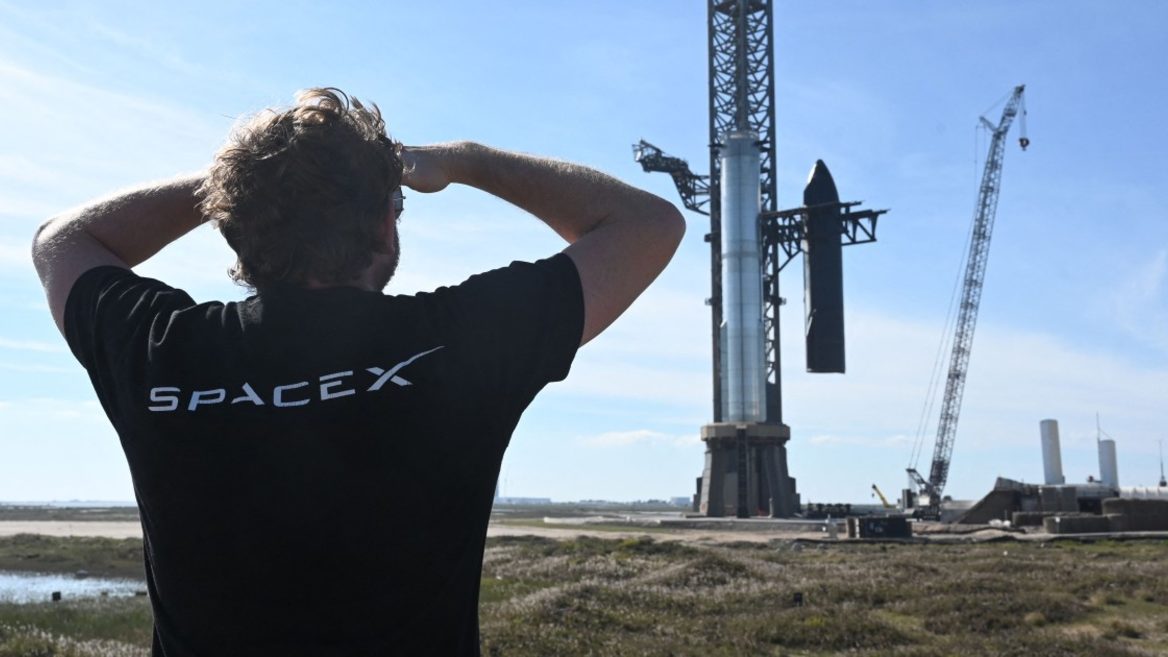
The pace of further missions depends on the results. Formally, NASA says Artemis III will be launched «no earlier than mid-2027,» but experts consider this optimistic: the landing will require SpaceX’s Starship, which has yet to undergo key in-orbit tests and integration with Artemis program systems.
SLS and Orion are the «link» for long-range U.S. missions after the Apollo era. The program’s goal is to establish stable Moon-Earth logistics, and to demonstrate docking, life support, and thermal reentry at supersonic speeds—basic elements for the Gateway lunar station and future missions to Mars.
dev.ua previously reported how astronomers at the University of Cambridge, using NASA’s James Webb Space Telescope (JWST) , have detected signs of life in the atmosphere of a planet 124 light-years from Earth. They could indicate that K2-18b is teeming with life and that life is widespread in the galaxy.
Божество, зореліт, уламок планети: що людство знає про Місяць і як збирається туди повертатися
16 листопада 2022 року NASA успішно запустила місію Artemis 1 до Місяця. Ракета Space Launch System (SLS) і корабель Orion стартували о 8:47 за Києвом із космічного центру Кеннеді на мисі Канаверал. Задача корабля Orion — покрутитися навколо супутника Землі шість днів і повернутися на Землю, після чого можна запускати людей. Якщо все пройде успішно, уже за кілька років ми побачимо грандіозний камбек і реюньон людства на супутник Землі. Що ми знаємо про Місяць, чому так довго його ігнорували та як будемо повертатися — в оновленому завдяки успішному старту (нарешті!) суперексплейнері від dev.ua від 29 серпня 2022 року.