Ігор Вишневський Robots
28 March 2026, 11:36
2026-03-28
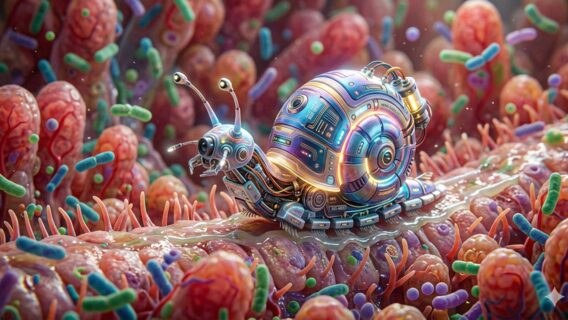
Scientists are developing snail robots that will crawl inside the human body and deliver cancer drugs directly to the tumor
Researchers at the University of Manchester are developing miniature soft robots designed to deliver anti-cancer drugs directly to tumors in the human gut.
Researchers at the University of Manchester are developing miniature soft robots designed to deliver anti-cancer drugs directly to tumors in the human gut.
According to Interesting Engineering, this project received funding of £1 million from UK Research and Innovation.
The project focuses on increasing the effectiveness of colorectal cancer treatment, as current methods of using drugs often do not allow for precise targeting of tumors, leading to side effects in healthy tissues.
The new approach aims to release the drug only where it is needed, increasing effectiveness and reducing harm to the rest of the body.
The robots in question are being developed with the aim of anchoring in malignant tissue and controlled release of therapeutically beneficial substances there.
The project also aims to solve a long-standing problem in medicine: navigation in complex environments such as the gastrointestinal tract.
The project team draws inspiration from the movements of snails and slugs, which move using slow, controlled waves and sticky mucus. This natural mechanism allows them to move over uneven and slippery surfaces.
By replicating this movement, the researchers aim to create robots that can accurately move inside the human body. Similar to snails, the robot design will focus on mucus-based locomotion, powered by rhythmic movements.
«This research combines biology, materials science and robotics in a way that could truly transform future cancer treatments,» commented Dr. Mostafa Nabawi, who is involved in the project.
The robots will be made from peptide-based bionanomaterials that can be tuned at the molecular level. These materials are designed to respond to external triggers, such as magnetic fields, allowing doctors to control the robots remotely.
The project will also generate detailed datasets on how snails move, including their interactions with mucus and surface mechanics. This data will help researchers develop simulation models and machine learning systems to improve robot behavior.
In addition to cancer treatment, this technology can be used in other areas, not just medicine.
«Data-driven solutions work not only in IT, but also in health.» How IT companies care about the health of specialists: annual checkups, massages, telemedicine and a day off in the first days of menstruation