Наталя ХандусенкоWeapon
17 August 2026, 18:18
2026-08-17
Sound instead of a motor: flying and floating microdrones created in Switzerland
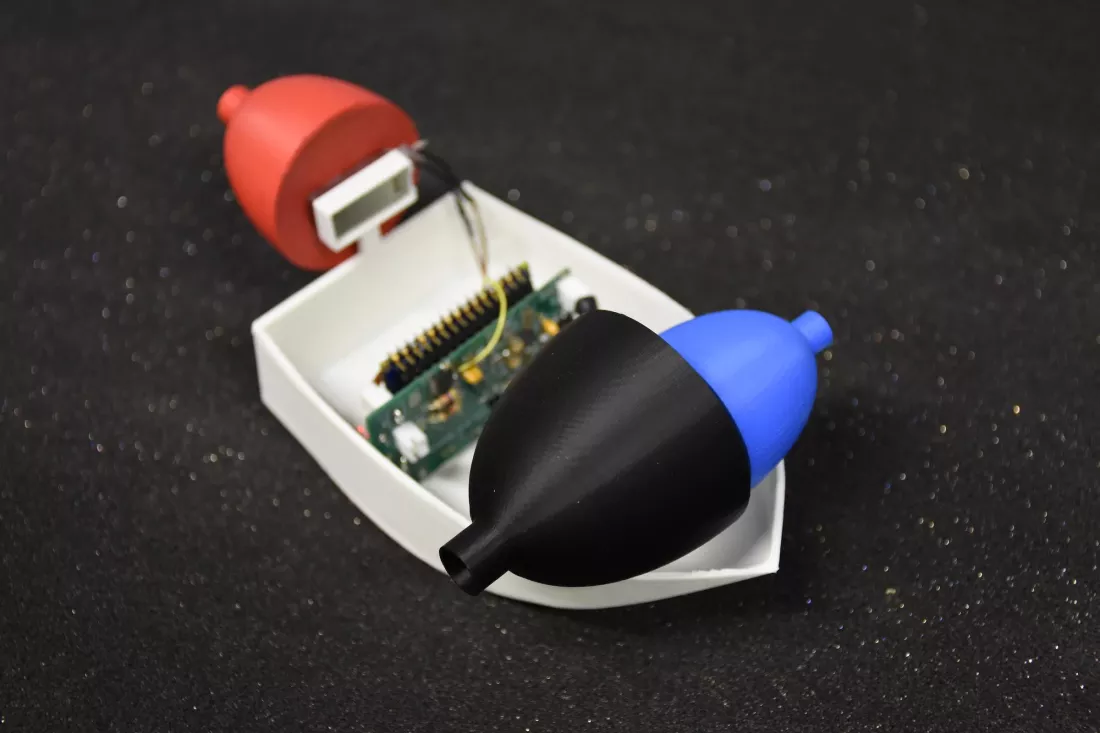
Swiss scientists from the MicroBioRobotic Systems Laboratory (EPFL) have created miniature boats and flying microdrones that are propelled solely by acoustic waves. They do not require motors, gears, or magnets.
Swiss scientists from the MicroBioRobotic Systems Laboratory (EPFL) have created miniature boats and flying microdrones that are propelled solely by acoustic waves. They do not require motors, gears, or magnets.
How it works
The technology is based on acoustic resonance, writes TechSpot. The principle is similar to what happens when you blow into the neck of an empty bottle: the air inside begins to vibrate strongly at a certain frequency.
Scientists have printed special hollow resonators on a 3D printer. When a speaker emits sound of the desired frequency, the air inside such a chamber vibrates and escapes at high speed through a small hole. A jet is formed, which pushes the device forward.
Boat management
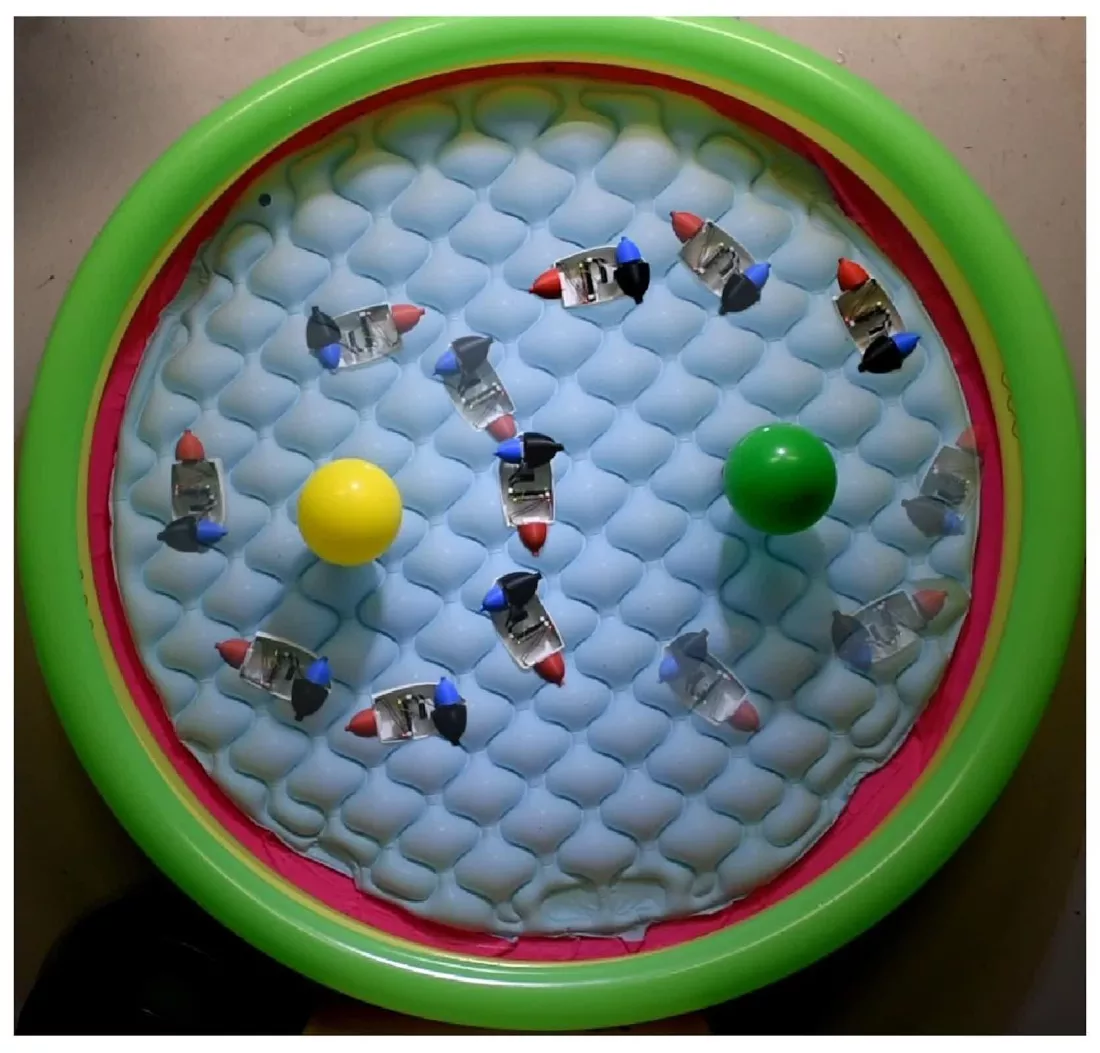
The tiny swimming machines were fitted with three resonators. Each chamber responded to its own frequency and was responsible for its own direction of movement. By changing the pitch of the sound on the speakers, the researchers were able to avoid obstacles and even set up an autopilot.
A microhelicopter weighing 150 micrograms
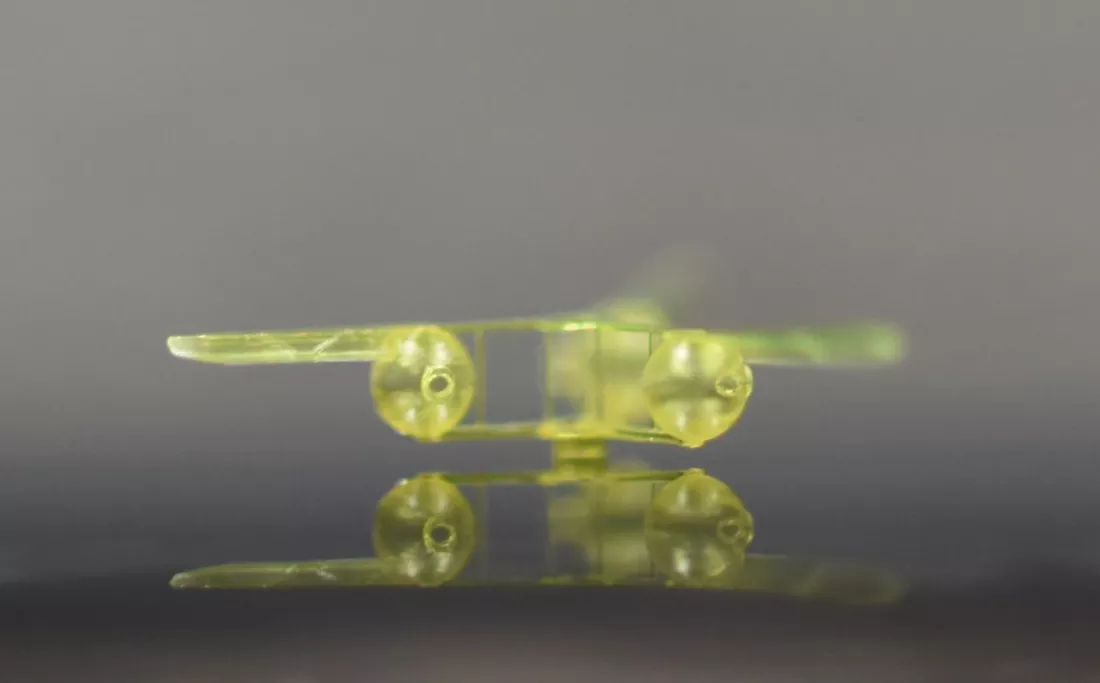
Using 3D nanoprinting, scientists have created aircraft that operate on ultrasound (inaudible to humans). One of the developed aircraft has propellers with resonators that, under the influence of sound, accelerate to 13,000 revolutions per minute and allow it to hover in the air.
Why is this important?
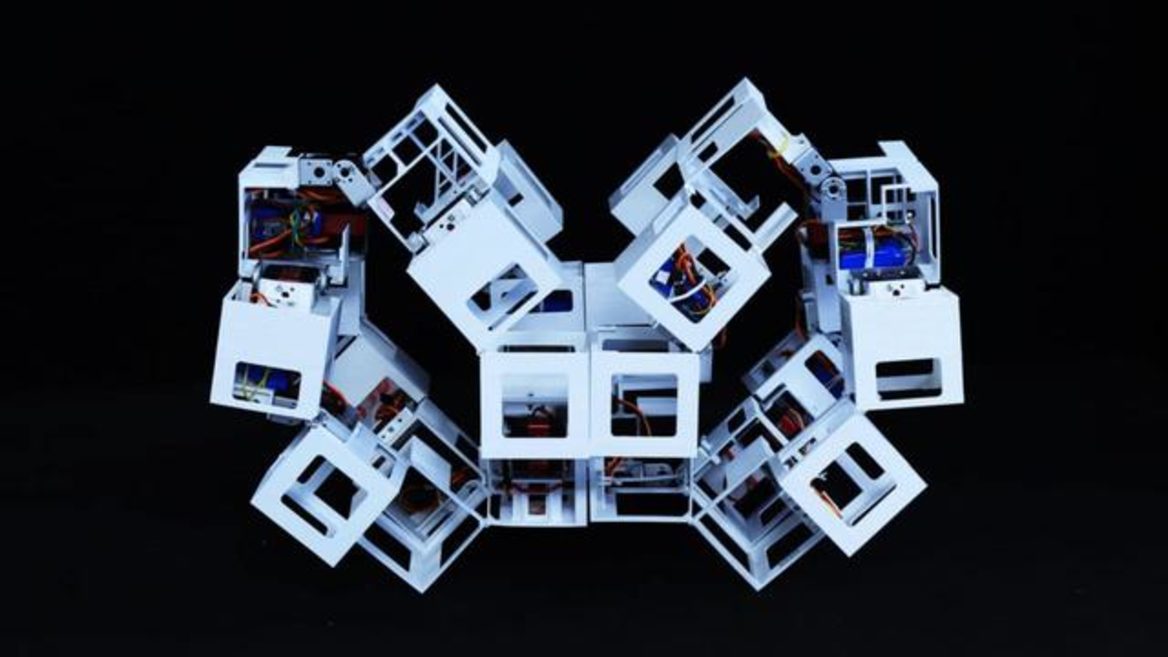
So far, the development has limitations: the boats are very light, and the microdrones only rise a few millimeters into the air. However, the absence of heavy mechanical parts and motors opens the way to creating even smaller microrobots. In the future, this will allow the construction of devices that can change shape and maneuver in the air under the influence of various sound frequencies.
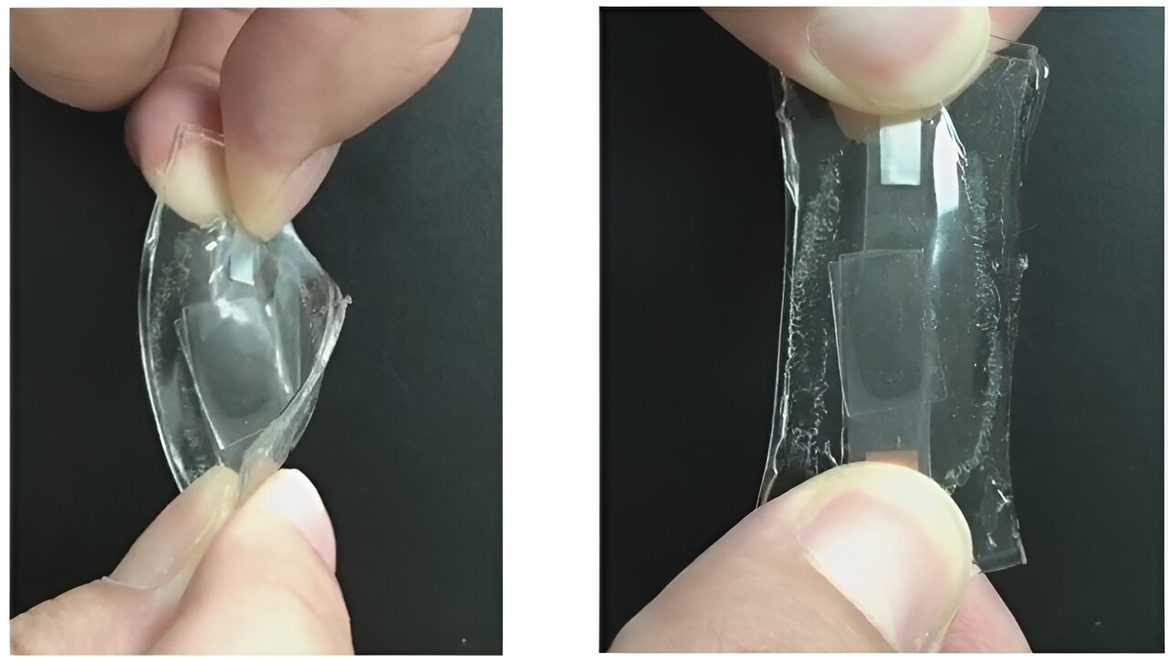
Researchers have developed a fully stretchable lithium-ion battery for flexible electronics: it contains an electrolyte layer that can expand by 5,000%.