Хочете будувати кар’єру в Data Science та AI? Vodafone Big Data Lab відкриває новий набір —>
Наталя ХандусенкоHot News
25 May 2026, 17:09
2026-05-25
Forget facial recognition: Researchers say Wi-Fi can accurately identify you. Here's how it works
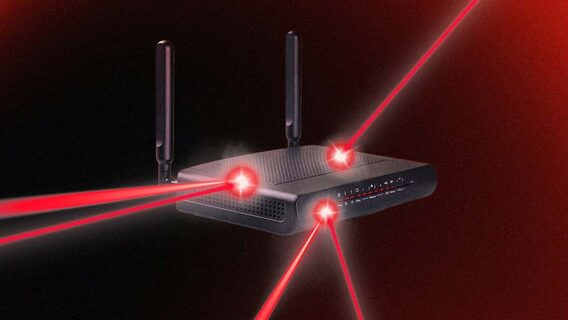
A regular router can be turned into a surveillance system using wireless signals and AI, according to researchers at the Karlsruhe Institute of Technology (KIT).
The study also showed that a person's identity can be identified even when their smartphone is turned off or not at all, simply by being around other people whose devices are communicating with each other.
A regular router can be turned into a surveillance system using wireless signals and AI, according to researchers at the Karlsruhe Institute of Technology (KIT).
The study also showed that a person's identity can be identified even when their smartphone is turned off or not at all, simply by being around other people whose devices are communicating with each other.
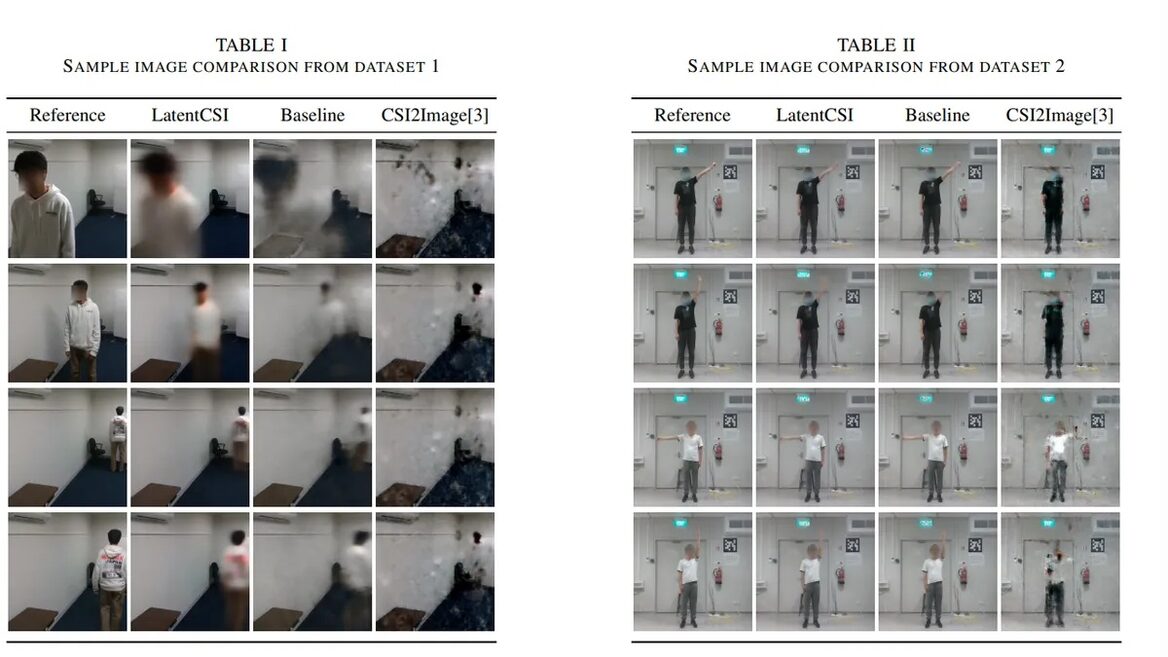
"By observing the propagation of radio waves, we can create images of the environment and the people present," explained Professor Torsten Strufe from the KIT Institute for Information Security and Reliability.
The expert compared this method to the operation of a camera, but with the difference that “radio waves are used for recognition instead of light waves.” The study suggests that any router can be turned into a surveillance device, which raises serious privacy concerns, Cybernews writes .
“If you regularly pass by a cafe with a Wi-Fi network, your identity can be imperceptibly identified and later recognized again, for example by government agencies or private companies,” shared Julian Todt, a graduate student researcher at KIT.
How exactly does Wi-Fi tracking work?
While there are many different technologies available today for rapid identification of individuals, wireless surveillance is unique in that it is virtually ubiquitous. In addition, this method does not arouse any suspicion, since its operation cannot be visually observed.
This method of surveillance also does not require any additional equipment. In this case, a regular Wi-Fi router is sufficient, since the newly discovered method uses the features of data exchange between the router and connected devices.
The thing is that devices connected to a wireless network send unencrypted feedback signals, known as beamforming feedback information (BFI).
These signals help create various silhouettes of a person. Once these images are fed to artificial intelligence, the process of identifying a person takes a matter of seconds.
To test the real-world effectiveness of this method, 197 volunteers participated in the study, and the system recognized each of them with almost 100% accuracy.
The researchers are seeking to highlight the potential risks of the technology, saying it could pose a “critical threat” in authoritarian countries, where it could be used to monitor the opposition and political opponents of the government.
Russians hacked Ukrainians' home and office Wi-Fi routers and used them to intercept passwords and emails. SBU, FBI, and EU counterintelligence hacked GRU network