Стас Юрасовздолай шахрая
2 September 2026, 12:22
2026-09-02
"Loan in 5 minutes without documents." How fraudsters create fake financial organizations and sell other people's identities: the anatomy of a scam
“Loan at 0% in 5 minutes. Without references, checks and with any credit history” — such an ad in the social media feed easily attracts attention. For a person who finds himself in a difficult situation or urgently needs money, this seems like a lifeline. However, experts from the Ukrainian Interbank Association of Payment Systems Members (EMA) warn: behind the beautiful banner hides one of the most dangerous digital fraud schemes.
In this game, scammers aren't interested in the few hundred hryvnias that are on your card right now. Much more valuable is your digital dossier. Once they have it, they can build up real loans in your name with dozens of other companies.
“Loan at 0% in 5 minutes. Without references, checks and with any credit history” — such an ad in the social media feed easily attracts attention. For a person who finds himself in a difficult situation or urgently needs money, this seems like a lifeline. However, experts from the Ukrainian Interbank Association of Payment Systems Members (EMA) warn: behind the beautiful banner hides one of the most dangerous digital fraud schemes.
In this game, scammers aren't interested in the few hundred hryvnias that are on your card right now. Much more valuable is your digital dossier. Once they have it, they can build up real loans in your name with dozens of other companies.
Step 1. Social media hook and psychological pressure
It all starts with targeted advertising on Facebook and Instagram. Scammers deliberately choose platforms with a high level of trust and flexible audience search tools. The ads hit the most vulnerable spots: offering loans to those who are usually rejected by banks, and promising instant results.
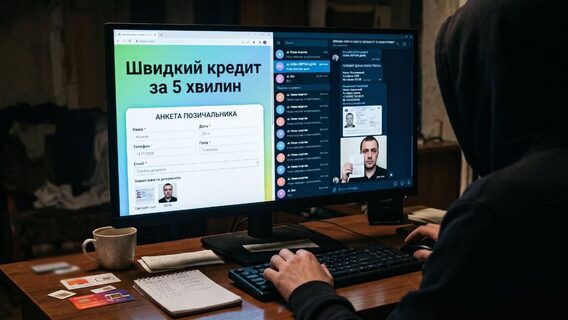
A person clicks on the link and ends up on a site that looks no different from the official website of a well-known microfinance organization (MFO).
Step 2. "Consultant" in the messenger and fake licenses
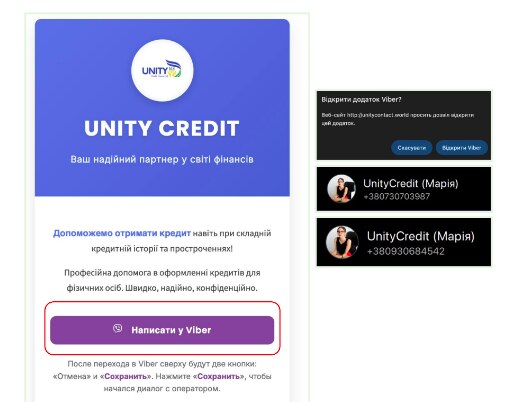
Immediately after the transition, the user is not greeted by a standard electronic form, but by an invitation to a support chat. To facilitate manipulations, communication is quickly transferred to Telegram or Viber.
In the chat, an “operator” comes into contact. His task is to build absolute trust, dispel any doubts and make the person lose his guard. When the victim asks about guarantees or security, the scammer without hesitation sends an “official certificate of registration of a financial institution.”
In fact, this document is an ordinary picture edited in a photo editor. It shows someone else's or a long-liquidated EDRPOU, but the seals and signatures have a magical effect on a person: critical thinking is turned off. At the same stage, the site automatically generates a beautiful "electronic contract" with a repayment schedule, creating the complete illusion that a real banking scoring system is working with you.
Step 3. Collecting the “golden package” of data
Once the victim is convinced that everything is legal, the main stage of the scam begins - verification. Under the pretext of "applying for a loan", the person is required to provide an extensive dossier:
Full personal details, residential address and place of work.
Financial phone number to which the bank account is linked.
Scans or photos of your passport, TIN, and most importantly, a selfie with the document in your hands.
In addition, the operator asks to pass a "solvency check" - they require a small "insurance payment" to be debited from the card or to confirm a test transaction via a 3D-Secure SMS code.
Step 4. Behind the scenes: Telegram as a criminal Backend
While a person is waiting for the coveted loan, completely different processes are taking place on the back of the site. These fake services have neither secure databases nor encryption.
The site is designed so that through the Telegram API all uploaded documents, card numbers and photos are instantly broadcast to the scammers' closed Telegram group. Criminals receive a ready-made package of documents in real time. Having your original scans and selfies in their hands, they personally apply for real microloans in dozens of real, legal MFIs on the same day. The money is credited to the scammers' accounts, and the debts remain with you.
How to avoid becoming a victim: advice from EMA experts
To protect your personal data and funds from such schemes, follow basic rules of digital hygiene:
Check the lender in official registers. Legal MFIs must have a license from the NBU and the status of a financial company. Compare the EDRPOU and company name on the website with the data in the NBU Register or via Opendatabot .
Assess the age of the site. If the service was created a few days ago but promises large amounts at 0%, check it out using the CheckMyLink tool.
Avoid dubious promises. Phrases like “Loan in 5 minutes without documents,” “100% approval,” and “Loan with any credit history” are classic traps.
Don't go to messengers. No official financial institution issues loans through Telegram or Viber chats.
Don't send anyone a selfie with your passport. This is critically sensitive data that gives scammers access to apply for loans in your name.
Do not pay any “fees” or “verifications.” Requirements to wire money to verify a card or pay an “insurance premium” are 100% scams.
Monitor your credit history. If you accidentally left your details on a suspicious website, immediately check the status with the Ukrainian Credit Histories Bureau (UBKI).
Where to check your own credit history:
On the website:ubki.ua (in the "For individuals" section - "Credit history").
In mobile applications: "Credit History" (for iOS and Android) or in the "Privat24" application (section "More services" - "Loans" - "Credit rating").
In chat bots: "Credit History UBKI" and "Monitorno" in Telegram and Viber.
If you still doubt that you can handle a scammer, then play the gameFedor Mikhailovich on the project Defeat the Scammer.