Хочете будувати кар’єру в Data Science та AI? Vodafone Big Data Lab відкриває новий набір —>
Оксана СтепураAI Eng
1 October 2026, 15:28
2026-10-01
Researchers have come up with three ways to warn about AI agents hallucinating in VR environments. Which one works best?
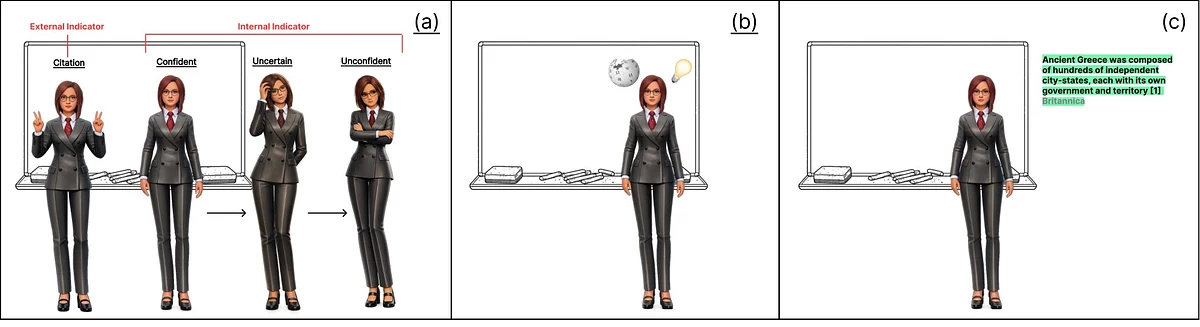
How should an AI character in VR behave if it is not sure of its answer? Researchers from North Carolina State University tested three options: it can show this with a gesture, display a special icon, or highlight a questionable piece of text. All three methods helped users better notice the AI's "hallucinations." But each had its drawbacks.
How should an AI character in VR behave if it is not sure of its answer? Researchers from North Carolina State University tested three options: it can show this with a gesture, display a special icon, or highlight a questionable piece of text. All three methods helped users better notice the AI's "hallucinations." But each had its drawbacks.
This is stated in the study Signals of AI Hallucination: Designing Hallucination-Aware Cues for Embodied Conversational Agents in VR.
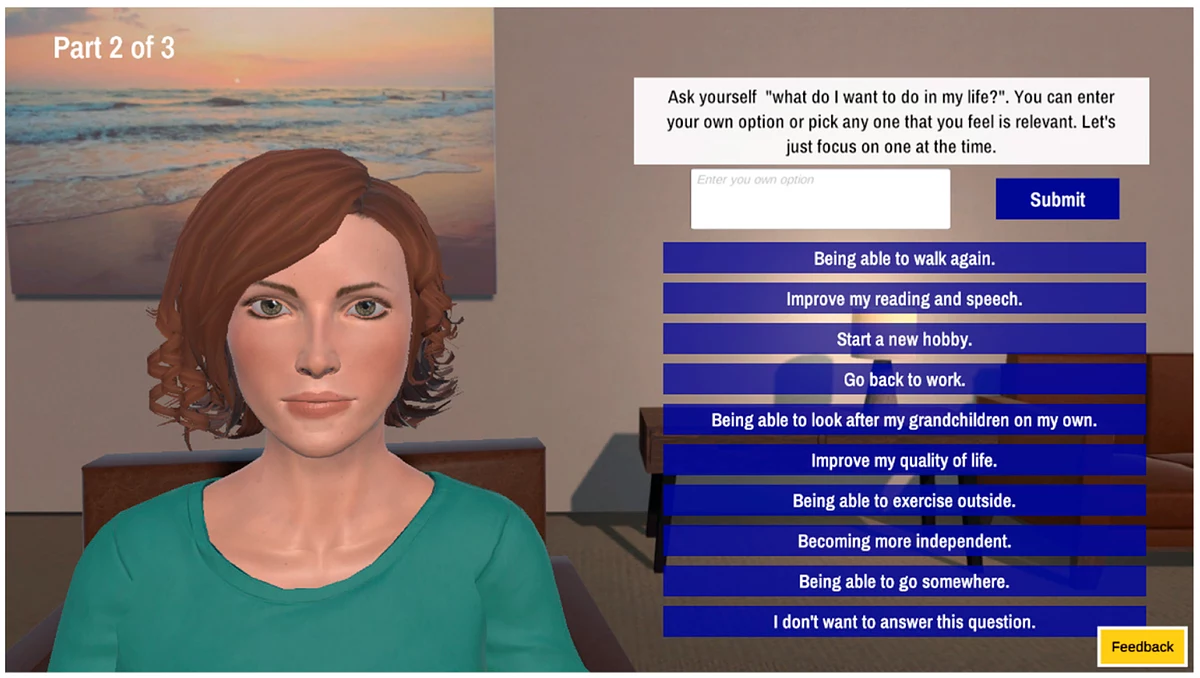
The study focuses on so-called embodied conversational agents, AI agents that have a virtual “body” and can speak, gesture, and use facial expressions. Such characters could be used, for example, in virtual reality training programs.
What might such an agent look like?
In a regular chatbot, it’s relatively easy to warn a user about a questionable answer: you can highlight text or add a link to the source. In VR, everything is more complicated, because the character speaks live, his line ends quickly, and the user simultaneously monitors what is happening around him.
To test different warning options, the researchers invited 24 students to interact in VR with a virtual AI character that occasionally made false statements.
In one case, the character showed uncertainty with body language. For example, she crossed her arms. In another, an icon appeared next to her, suggesting that the information should be checked. In the third version, the lines were dubbed with subtitles, where questionable places were highlighted in color. There was also a control version without any warnings.
Text was the best way to spot hallucinations. But it was the one that distracted people the most from the VR environment. Gestures were the opposite: they were the least disruptive to the sense of presence in the virtual world. Users also trusted such an AI character more. However, understanding what exactly its behavior meant was more difficult. Icons fell somewhere in between: they were clearer than gestures, but did not distract from VR as much as text prompts.
Another problem with gestures is that researchers note that the same body language can mean different things across cultures. For example, avoiding eye contact may signal insecurity in one environment but respect in another.
Researchers believe that in the future, developers will be able to combine different types of warnings depending on the situation: in some cases it is more important to show the questionableness of the answer as clearly as possible, and in others it is more important not to destroy the user's immersion in VR.
Previously, dev.ua wrote that tourists in the US began to get into dangerous situations due to excessive trust in AI responses.
У 18 років «захантив» SoftServe, у 21 — відкрив власну компанію. Історія львівського IT-вундеркінда
Гліб Щур — випускник кафедри систем штучного інтелекту НУ «Львівська політехніка». На молодших курсах його запросила на роботу IT-компанія SoftServe, де він працював майже 3 роки розробником у R&D-відділі. А вже у 2021 році Гліб заснував власну компанію та став CSO у 21 рік. Розповідаємо історію львівського «самородка».