Хочете будувати кар’єру в Data Science та AI? Vodafone Big Data Lab відкриває новий набір —>
Вікторія ГорбікAI Eng
6 December 2024, 08:56
2024-12-06
"The fight continues." How to distinguish AI images, videos or text from human-generated content
The web was flooded with texts, images and videos generated by artificial intelligence. Even Coca-Cola does not shy away from the tools of generative artificial intelligence — this year’s commercial was created by the company with the help of Generative AI. However, users were clearly dissatisfied with such content. And copywriter Oleksiy Shepeliuk recalled how in one copywriting agency where he got a job, there was a loud scandal when one of the authors of the texts sent the customer material generated with the help of ChatGPT. And in general, as team leader Artem Reva emphasized: «The era is coming when it is difficult to distinguish a fake from reality.»
So, while the circulation of AI products is not yet regulated at the legislative level, many are wondering how to distinguish AI content from that created by a real living person. dev.ua interviewed and collected the opinions of several experts who will help in this matter. They shared tools and tricks on how to recognize the creations of artificial intelligence.
The web was flooded with texts, images and videos generated by artificial intelligence. Even Coca-Cola does not shy away from the tools of generative artificial intelligence — this year’s commercial was created by the company with the help of Generative AI. However, users were clearly dissatisfied with such content. And copywriter Oleksiy Shepeliuk recalled how in one copywriting agency where he got a job, there was a loud scandal when one of the authors of the texts sent the customer material generated with the help of ChatGPT. And in general, as team leader Artem Reva emphasized: «The era is coming when it is difficult to distinguish a fake from reality.»
So, while the circulation of AI products is not yet regulated at the legislative level, many are wondering how to distinguish AI content from that created by a real living person. dev.ua interviewed and collected the opinions of several experts who will help in this matter. They shared tools and tricks on how to recognize the creations of artificial intelligence.
About the text
The problem of identifying texts generated by artificial intelligence is urgent, believes Oleksandr Krakovetskyi, CEO of IT companies DevRain and DonorUA, author of the book «ChatGPT, DALL·E, Midjourney. How generative artificial intelligence is changing the world». He shared with dev.ua his observations regarding content generated by artificial intelligence.
He recalled that the first to try to make a classifier was, in fact, the OpenAI company. But after some attempts, the project was frozen due to a low level of accuracy:
As of July 20, 2023, the AI classifier is no longer available due to its low rate of accuracy. We are working to incorporate feedback and are currently researching more effective provenance techniques for text, and have made a commitment to develop and deploy mechanisms that enable users to understand if audio or visual content is AI-generated.
Attempts to make a classifier have not stopped since then, recently a company with Ukrainian roots, Grammarly, released its own classifier. They find certain patterns and statistical dependencies that may indicate that the text was generated. However, the authenticity of the work is still in question.
In addition, one classifier includes several services that make texts more «human».
«That’s why the struggle continues,» Oleksandr Krakovetsky noted.
For now, to determine if the text was generated, the CEO of IT companies DevRain advised a few tips that you can use:
The text is too perfect and/or error-free. Of course, there are people who can write brilliant and grammatically/stylistically correct texts, but most of us still write quite mediocre texts and often make mistakes of one kind or another. Therefore, the task of conditional «humanizers» is to add imperfection.
The style of the texts is neutral and balanced. Each person has his own opinion, so «human texts» have a certain style and clarity in argumentation. Artificial intelligence tries to be neutral, and this neutrality is often very noticeable.
Use of «anchor» words (applies primarily to ChatGPT). This is more noticeable in English texts, where you can often find such words as delve, cutting-edge, leveraging and others, the frequency of use of which increased by orders of magnitude after ChatGPT began to be used for writing texts.
The structure of text construction. At first glance, it is not noticeable, but with long-term use, you begin to see structural patterns that are used by certain models. Therefore, sometimes you need to additionally include a response format in the request to hide these patterns.
Despite the fact that these tips can help determine the fact of the use of artificial intelligence, it is quite difficult to prove it, because the use of certain words and structural patterns is not prohibited. And sooner or later the generated texts will be used in all spheres of life. Therefore, it is necessary to work on the ability to generate high-quality texts and focus on the essence of the texts, not their volume.
In addition, Alexander confirmed that the text of his comment was 100% written by a human. «Grammarly agrees with me,» he adds.
Product Copywriter Ksenia Kutsaalways knows when authors send text written by GPT. What distinguishes GPT-generated texts from normal human text is the same thing that distinguishes good text from mediocre text, she believes:
GPT does not have access to real time, check the following data. UPD: corrected in the comments, thanks: it can already be done. But he likes to fantasize.
4. Stamps. Moreover, if the text is voluminous, these stamps are duplicated. In particular:
«In today’s world, every second counts.»
«Marketing is a powerful tool for increasing profits.
«The secret of your success is…»
«Build trust and gain long-term customer loyalty.
«It’s a game changer.»
«This solution is perfect for everyone.»
«Technology is changing the rules of the game.»
«Digital transformation of your business.»
5. The copied text from the GPT chat has quite characteristic and recognizable emojis.
Gold set:
A few hints about prompts from Ksenia:
Ask the machine to remove abstractions and add specifics. Replace common phrases with facts, examples, or numbers.
Ask to use a natural tone of voice. For example, «write a text on behalf of a friend who shares his experience.»
Include local context: GPT works better with details when asked to use a specific example from your industry or country.
Ask to add clear analogies from the world of your audience.
On the network, other specialists shared their life hacks for AI text recognition, as well as their impressions of cooperation with GPT regarding texts, in particular:
SEO specialist / Project Manager Volodymyr Zador detects GPT in sentences that were conceived in English but written in Ukrainian. «It seems that an English-speaking person wrote who really, really wants to learn Ukrainian, but for now he thinks in English,» the expert writes.
Social Media Marketing Manager Nazarii Vakula works a lot with AI in terms of writing texts and has not yet seen that it can replace a person. «Even with successful prompts, the texts must be significantly edited, rewritten, supplemented. And this can also be done only by someone who knows how to write,» he said .
«GPT works well when you give it information to process. In other cases, it’s a disaster,» writes marketer Alina Chuh.
About the video
The video can be generated either from a text description or from a static image (that is, «bring it to life»), said Oleksiy Minakov, an expert in PR, communications and the application of AI technologies .
He explained that a video can be generated either from a text description or from a static image (that is, «bring it to life»). Now, more realistic videos come out of a static image. They are the most difficult to distinguish from those captured on camera. But there are several limitations that such generated videos have. For example, the length of the video. While technologies will allow to generate more or less qualitatively such videos lasting 5 seconds. If you slow it down, it will take a little longer. But all the same, it will not be a very long video with one frame, precisely in the format of realism.
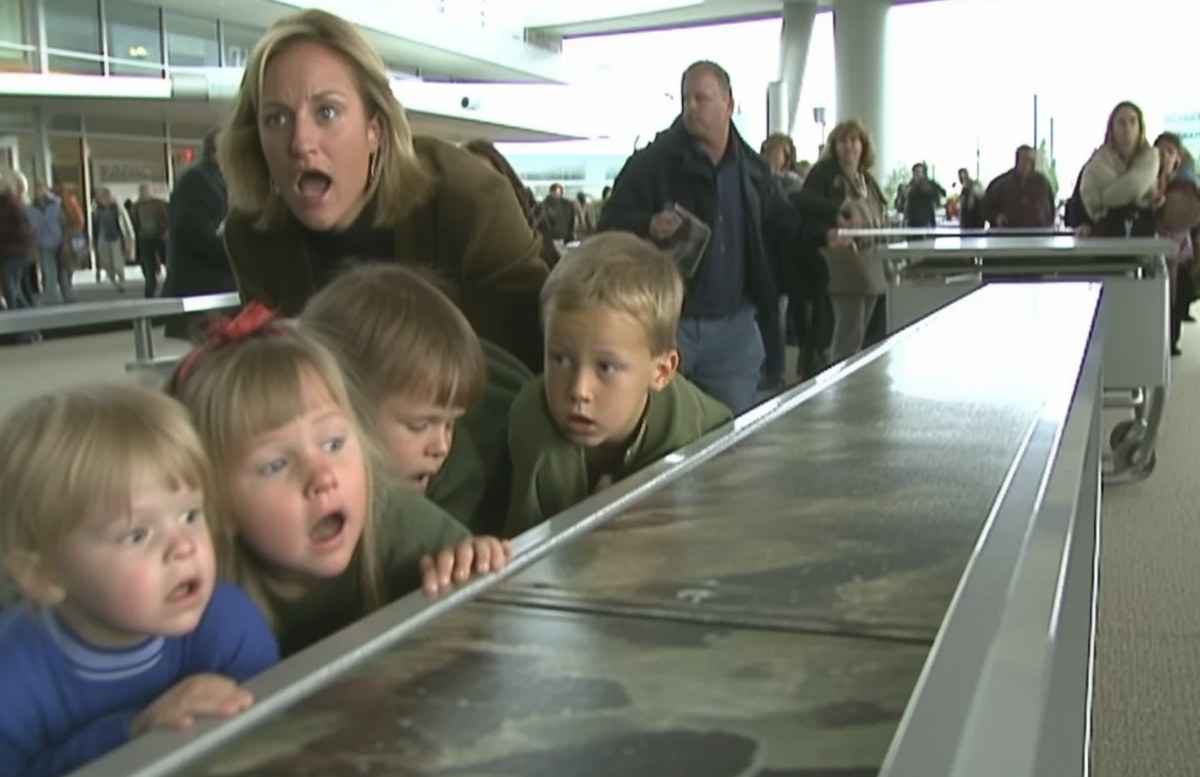
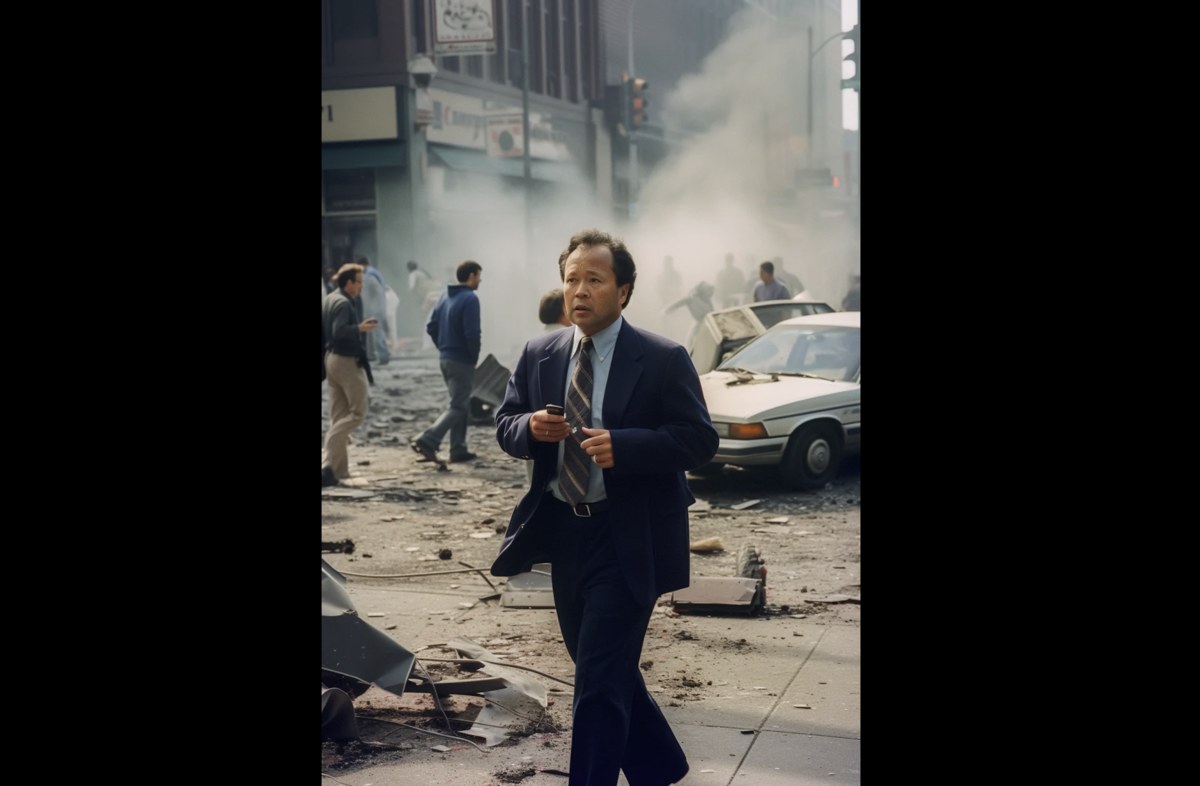
In addition, so-called «artifacts», defects and distortions are possible in video generation: blurring of details, strange or incorrect locations of objects. Video generation of group interactions (such as a crowd or multiple people interacting) is also still difficult, especially when it comes to motion physics. In general, compliance with the laws of physics is probably the weakest point so far, because these models have no common sense. Even the powerful Sora model from OpenAI, which has been tested by individual creators for almost a year, but which is not yet available to everyone, has these problems.
«I would single out videos with digital copies of people. It is more difficult to recognize there. Because the duration can be long, and the digital copy imitates the facial expressions, gestures and voice of the digital human original,» added Oleksiy Minakov.
In addition, it may not be a static video, but in dynamics, with camera movement. You can, of course, look closely and look for certain «mechanicalness» or patterns of movements, but every month technologies are developing in such a way that it is simply visually almost indistinguishable from a video shot on a camera. Especially if technology is used, when another person is superimposed on the facial expressions and lips of a real person.
There are several services that show the probability that video content is generated by AI, but they are all focused on detecting deepfakes, not AI-generated videos in general:
Sensity AI — deep fake detection based on artificial intelligence for video, images, audio.
AI or NOT — Detects AI-generated images and audio for business and for yourself with AI or not (they have a VIDEO AI CHECKER coming soon).
About the image
Art director of GrandMa Studios and artist Beata Kurkul talked about the main differences to pay attention to when analyzing images. In particular, AI pictures usually:
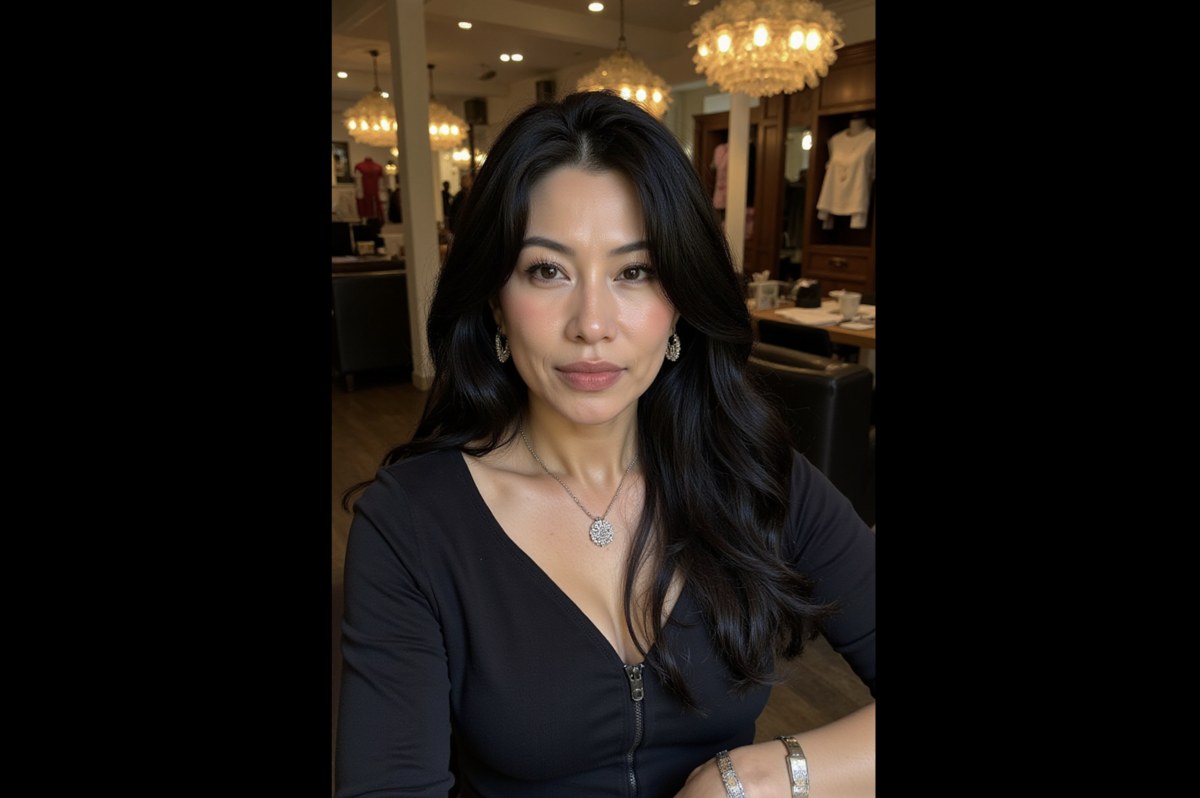
A lot of perfection. The pictures are «polished», too beautiful, as a rule, they contain fairly standard spectacular lighting.
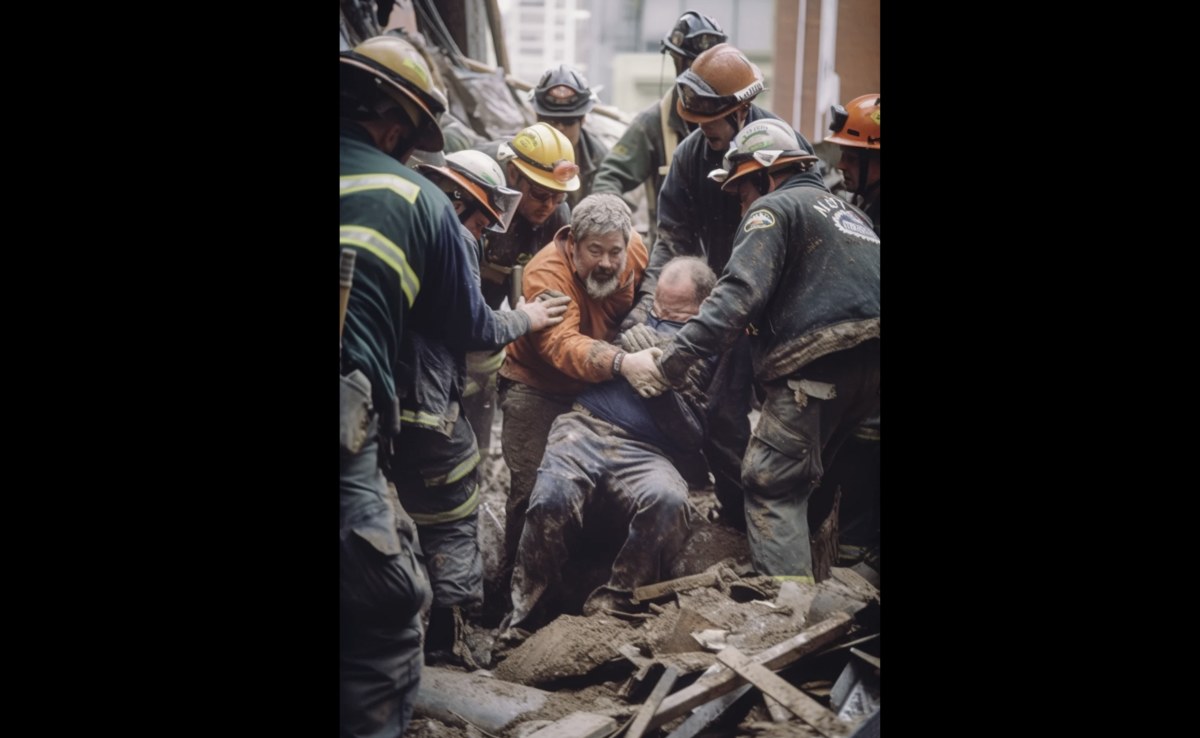
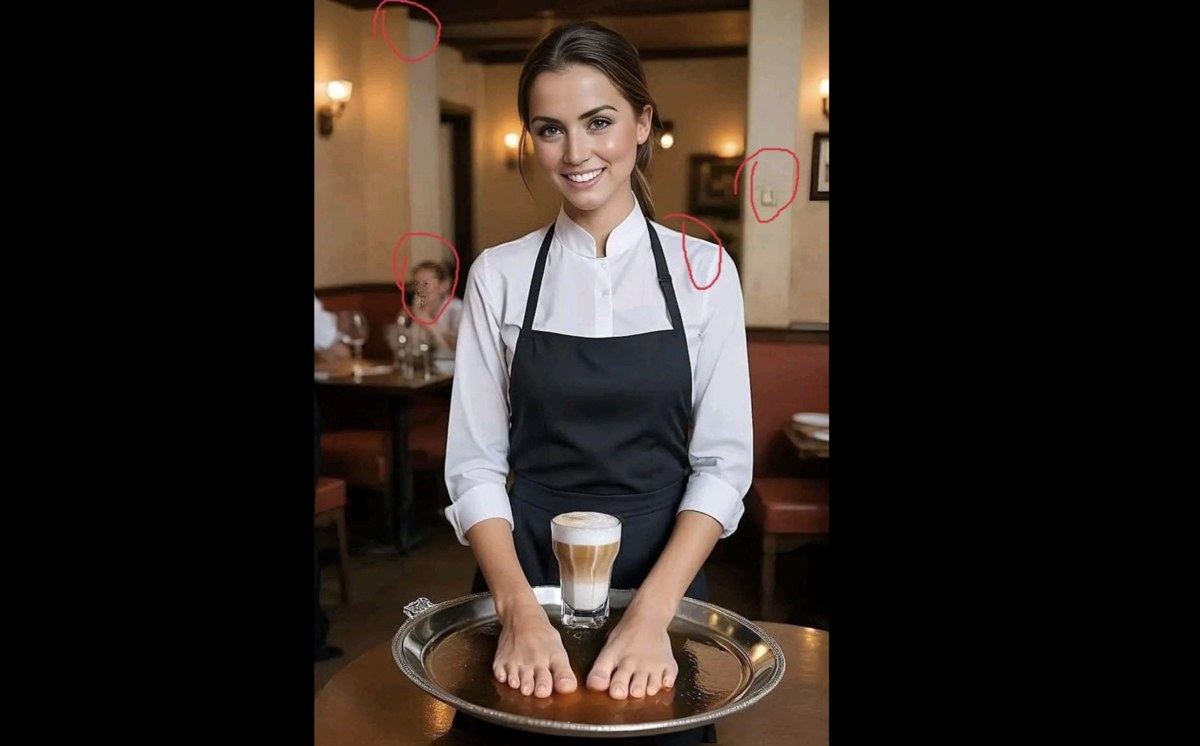
Errors in anatomy — the problem of hands remained, as well as the problem of legs — their neural networks, in particular Midjourney, do not always generate correctly.
People by default (unless other characteristics are specified in the prompt) are stereotypically beautiful, with a defocused look. Girls usually have sensual, nauseatingly open lips. And in general, these AI beauties are quite standard.
If architecture is generated, then there will always be some artifacts in the construction of houses — uneven window frames, architectural elements, incomplete symmetry, wires disappearing into the wall, etc.
The presence of various background artifacts (which can be perceived as an artistic design) — such as a branch, some lines, some spots, etc.
Incorrect display of text, inscriptions, etc. d.
AI is generally good at all types of images, as long as there are no specific specific elements needed, such as Ukrainian pixel camouflage, that is, something that is not very well represented in Internet visuals. So, at best, the AI will generate something similar to a Ukrainian pixel, at worst — a true Katsap pixel.
Also, AI is still not very good at generating complex light in images — even if a kilometer prompt is prescribed, indicating what and how it should be lit.
It is not very good to generate poses of people — unless they are some standard stereotypes. They often turn out to be «plasticine», unnatural.
Even in the presence of a reference, the technique and mechanisms are not always correctly generated — with the exception of well-known ones (for example, the Ferrari car in F1 or the Star Destroyer from «Star Wars»).
«There are still no tools that would help determine that this is an AI visual. Maybe somewhere they are working on such programs. For now, we rely on our own eyes, supervision, attentiveness,» notes Beata Kurkul.
Endertech advises to search the image to try to determine its source. Even photos that are published in many social media posts can be generated. So experts recommend looking for an image that interests you on reputable news sites. If the photo is not there, it is most likely made artificially.
Tech lead / Technical product owner Vitaly Bogachuk gave an example of an AI-generated photo, in which he highlighted key areas that give off an artificial origin.
Linkedin
In addition, the illustrator Iryna Sychova added that the people in the AI photos have very similar, plastic «broad» smiles. «The face is like in the Madame Tussauds museum,» Iryna emphasized. And the photographer and SMM manager Maria Chorman drew attention to the fact that photos of people generated by artificial intelligence are immediately visible by the structure of the skin.
Як нейромережі бачать вільну та незалежну Україну? Тест dev.ua
Нейронні мережі для генерації зображень бачать світ по-своєму, їхню логіку зрозуміти часом зовсім неможливо. Але таки хочеться. На честь Дня Незалежності України редакція dev.ua вирішила провести невеликий експеримент.
Ми задали чотирьом різним нейронним мережам п’ять однакових запитів: «прапор України», «День Незалежності України», «український Крим», «перемога України» та «українці». Отриманими результатами ми ділимося з вами нижче.
У TikTok тепер можна генерувати фон за допомогою нейромережі. Ми протестували її та ділимося результатами
У TikTok з’явилася нова функція «Розумний фон». З її допомогою як фон для тіктоків можна підставляти згенеровані нейромережею зображення. Редакція dev.ua протестувала цю технологію і ділиться своїми враженнями.