Хочете будувати кар’єру в Data Science та AI? Vodafone Big Data Lab відкриває новий набір —>
Ігор Вишневський Weapon
19 August 2025, 09:00
2025-08-19
“Technological independence is not a theoretical issue, but a condition for survival.” What components does the miltech industry lack to 100% localize production in Ukraine, and why should we strive for this?
Less than a week remains until the main national holiday — Independence Day. For some reason, I remembered how for decades Russians ironically and mockingly called Ukraine «independent», trying to neutralize this very concept and once again remind us that without an inadequate and extremely abusive «big brother» behind our backs, we have no chance.
Perhaps somewhere our Independence was indeed purely formal — for example, in the technological and defense sectors. The latter had been stagnant for a long time in a dark transition, one side of which rested against a dense, but already dilapidated «scoop», and the other led to a bright European progressive technological future. Oddly enough, it was the full-scale war that forced a rapid leap towards the light, putting the very existential survival of the Ukrainian nation at stake.
Less than a week remains until the main national holiday — Independence Day. For some reason, I remembered how for decades Russians ironically and mockingly called Ukraine «independent», trying to neutralize this very concept and once again remind us that without an inadequate and extremely abusive «big brother» behind our backs, we have no chance.
Perhaps somewhere our Independence was indeed purely formal — for example, in the technological and defense sectors. The latter had been stagnant for a long time in a dark transition, one side of which rested against a dense, but already dilapidated «scoop», and the other led to a bright European progressive technological future. Oddly enough, it was the full-scale war that forced a rapid leap towards the light, putting the very existential survival of the Ukrainian nation at stake.
Does anyone now have reason to question our «technological independence»? If they really want to, they will, of course, find arguments for this. And there are enough technologies for which we are still dependent on partners. For example, air defense systems or the same Starlink, manipulations regarding the possible «disabling» of which were once a «horror story» in the infospace. But not to see Ukraine’s crazy progress in the defense tech and miltech sectors is to deny the obvious. Just like the fact that Ukraine clearly holds leading positions in the production of drones, electronic warfare and other related equipment, quickly adapting to changes on the front and offering new and new effective solutions.
So, in the context of «technological independence,» we addressed our manufacturers of weapons and other equipment used for military purposes with questions about the localization of their products. Is 100% localization possible in principle at this stage, when it comes to large batches of weapons, and is this something we should strive for at all costs? What percentage of localization of production from Ukrainian components do their enterprises demonstrate, and which foreign components are the most difficult to replace? And does the level of localization equal «technological independence,» or is the problem actually more complicated and multi-layered. More on all this later.
100% localization — a realistic prospect or a myth?
In March, Ukrainian FPV drone manufacturer Vyriy Drone presented the first serial batch of 1,000 drones, which contain only 100% domestic parts. According to the company, the frames, initiation boards, flight controllers and radio control systems were produced independently, while the video transmitters were purchased from DEC-1, the engines from Realgold LLC, and the cameras from Odd Systems.
We asked Vyriy Drone whether the company intends to «hold this line» and strive to fully localize all of its products, or whether this was nothing more than an experiment to prove that we can if we want to. We are currently awaiting a response.
In general, most of the weapons and equipment manufacturers we surveyed demonstrate a high level of localization, but there is room for growth towards 100% Ukrainian production, and this often seems to be a prospect for a more distant future.
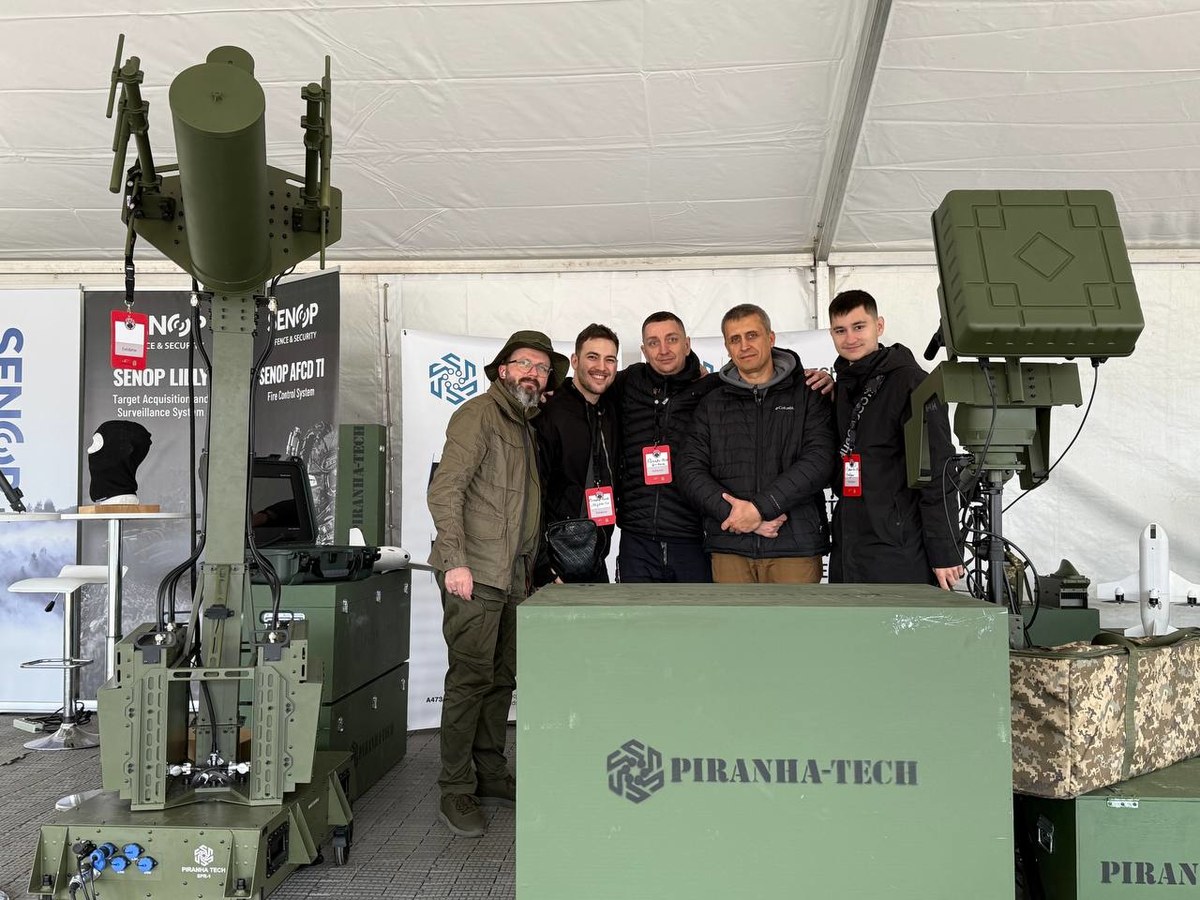
According to Anatoly Khrapchynsky, deputy director of Piranha Tech, which produces electronic warfare and jamming systems, today the average level of localization of their production reaches about 70%.
Photo from Facebook Piranha Tech
«This means that we manufacture most of the components and parts ourselves or purchase them from Ukrainian manufacturers, supporting the domestic economy and maintaining quality control. This indicator is the result of a conscious strategy, because it is important for us to minimize dependence on external suppliers and reduce the risks associated with logistics in wartime,» he says in a comment for dev.ua.
According to the deputy director of Piranha Tech, they are gradually expanding the range of parts produced in Ukraine, producing the components they need themselves, and considering 100% localization as a strategic goal, although they understand that in the current conditions it has objective limitations.
At the same time, for his part, CEO and Co-founder of HIMERA Misha Rudominsky emphasizes that the obstacle to full localization of production in Ukraine is not only and not so much the lack of certain components, but a wider range of issues — security, organizational and economic. According to the CEO of HIMERA, which produces universal secure communication systems, 90% of the components for their products cannot be manufactured in Ukraine.
«We are localizing our production services as much as possible, but Ukraine lacks not only components, but also protection of manufacturers from Russian shelling. There is also a lack of closed registers and the fight against information leaks. This requires a clear tax policy for such production. For full localization, it is very important to have the opportunity to attract direct investment to Ukraine — this is currently a very complicated process,» Misha Rudominsky commented on this issue for dev.ua.
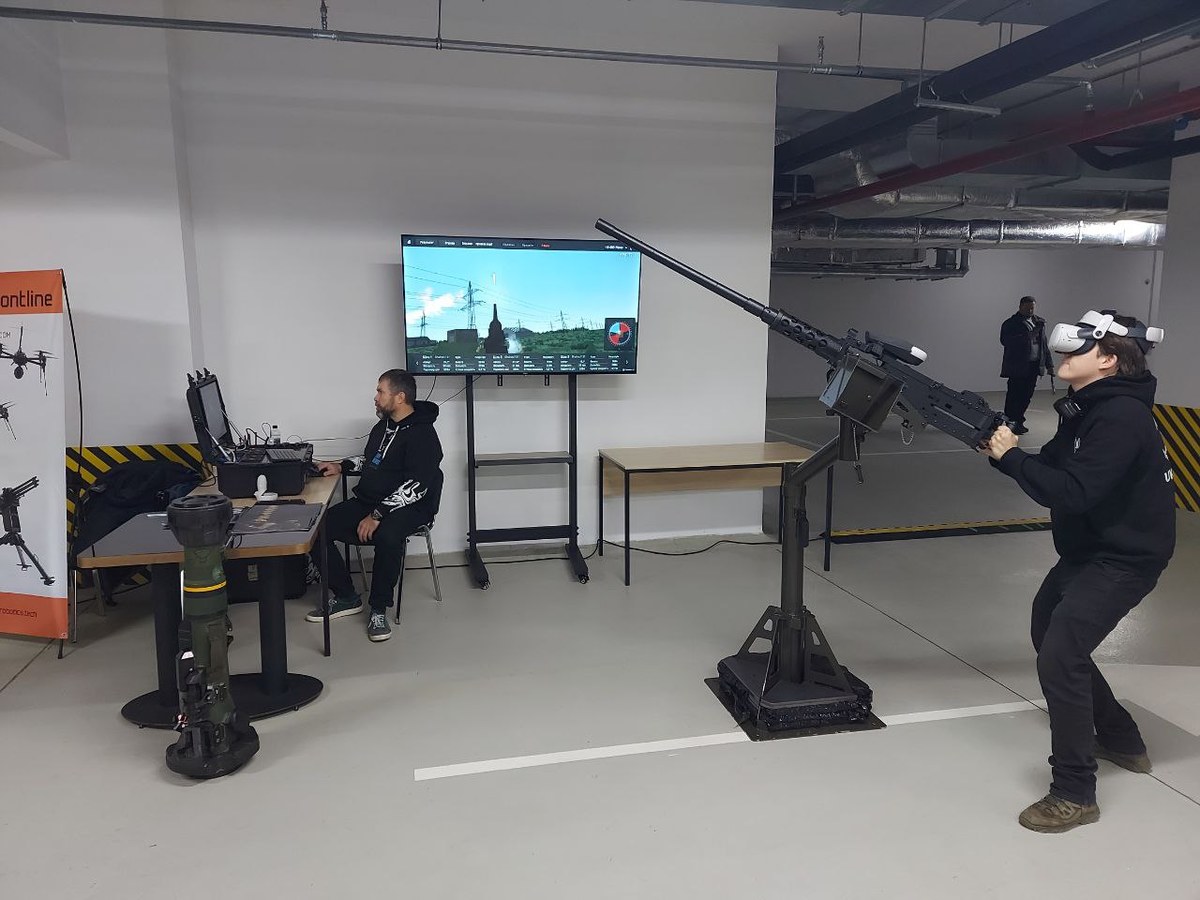
In turn, Olena Dushyna, head of the L7 miltech group, which includes developers of firefighting simulators, claims that today the level of localization of their production is about 85%, and this figure is gradually increasing.
Photo from the website l7simulators.com
«We have our own production in Ukraine, which includes modern metalworking shops, industrial 3D printing capabilities, and assembly areas. This allows us to produce mass-dimensional weapon models, body elements, fasteners, and a number of functional components without the need to involve external contractors,» shared the head of the L7 miltech group.
As Olena Dushyna assured, their strategic goal is to localize production as much as possible, but it is necessary to realize that it is currently difficult to fully achieve 100% localization due to the global integration of markets and technological limitations. «But for us, this is not just a business task — it is a matter of reducing Ukraine’s dependence on imports and forming its own industrial base,» she voiced the ambitious goal.
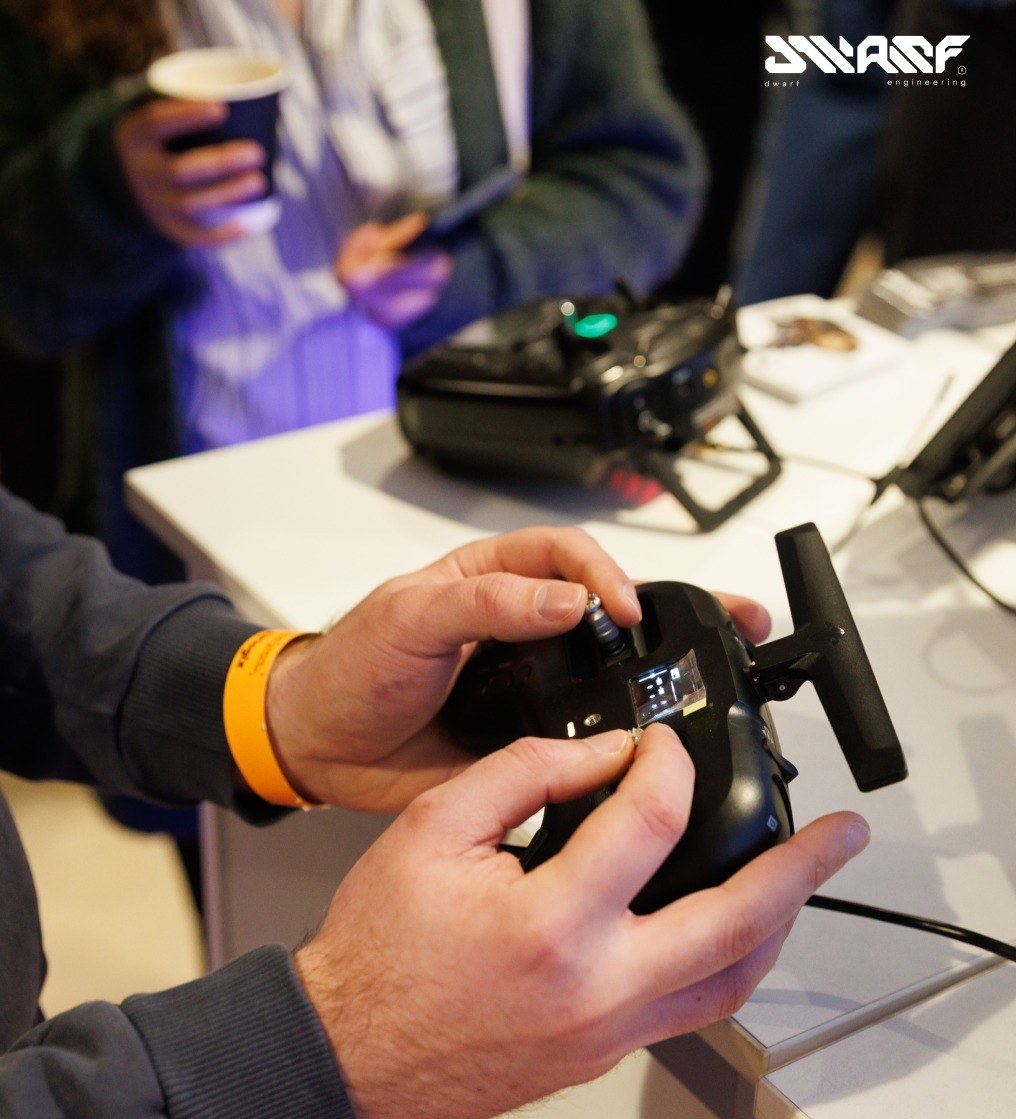
Meanwhile, Oleksandr Bakhmach, the head of the technical support department of Dwarf Engineering, a Ukrainian engineering and product company that develops a combat UAV control assistant, states that their production is localized by approximately 75%, because at least half of their product is software. «The board is not currently made of Ukrainian components, but it can be. We want to buy boards — IP — or produce them ourselves, in Ukraine, depending on what the market can afford. Many factors influence this,» he commented on this issue for dev.ua.
The CEO of the Ukrainian manufacturer of UAVs and ammunition AEROCENTER, in turn, estimated that for drones and repeaters, the level of localization of their production is about 40%. «The last thing that was localized was digital video communication and control. The ammunition is all localized, except for the explosives, which we are currently taking from other countries (of course, those that are not part of the axis of evil),» said a company representative, who wished to remain anonymous.
To each his own. What manufacturers lack for full localization
As Anatoliy Khrapchinsky says in a comment to dev.ua, the main obstacle to 100% localization of their products is the electronic component base.
«Despite our efforts, we are forced to import diodes, microprocessors, transistors, or transformers. The reason lies in the legacy of the 1990s, when mass production of electronics in Ukraine virtually ceased: legendary factories like Gamma, Kvazar, or Elektronprilad were closed, repurposed, or lost key technologies,» notes the deputy director of Piranha Tech.
The consequence of this, according to Khrapchinsky, is the impossibility of quickly restoring the full production cycle, especially in the segment of high-tech components. In this context, it would be appropriate to mention the government’s plans for domestic chip production, which, despite their relevance and urgency, still look somewhat utopian.
«Therefore, today we are working in two directions: we are making the most of the existing potential of Ukrainian enterprises and, at the same time, we are building a network of proven international partners in order to remain technologically independent and competitive,» states a representative of a Ukrainian manufacturer of electronic warfare systems.
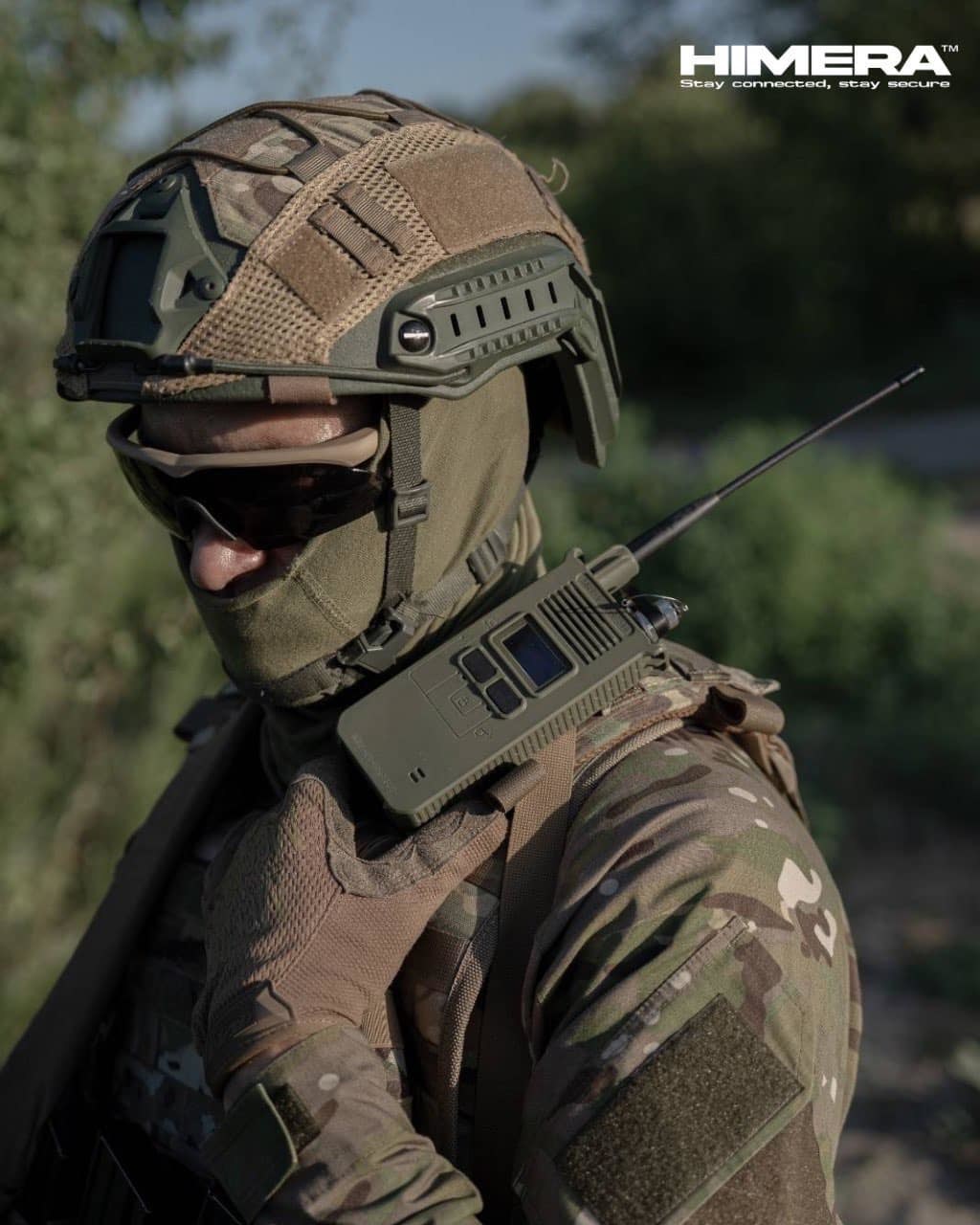
It is the microelectronics, electronic components (e.g., processors), and other components that are installed on the board that are the main «stumbling block» in the localization process for Himera Radios as well.
Himera Radios Photos
«This is a question of access to a number of technologies that are not available in Ukraine. Because, for example, in Ukraine there are almost no technologies for manufacturing lithium batteries. We do not have technologies and means for manufacturing microelectronics — we only talk about it. We have a very large shortage of high-precision equipment for such production,» states Misha Rudominsky.
According to the AEROCENTER service center, for large FPV drones (from 15 inches), the greatest difficulties arise with such components as ISC, engines and propellers. As he claims, Ukrainian manufacturers are currently unable to provide the appropriate quality. At the same time, AEROCENTER can already localize smaller copters 100%, but full localization is stopped by the price and quality of Ukrainian components. At the same time, full localization is one way or another a strategic goal of this manufacturer.
In turn, the L7 miltech group sees the biggest challenges on the path to localization in several areas, where imports remain the only solution for now, because these components are technologically impossible to manufacture in Ukraine. According to Olena Dushyna, these are:
projection lasers and projectors;
virtual reality glasses and accessories;
computer components (including video cards, risers, LCD screens, video cameras).
At the same time, everything else, according to the head of the L7 miltech group — metal cases, assembly, machining, engineering development, modeling, 3D printing of parts — they localized as much as possible, which allows them to be independent in critically important production processes.
Oleksandr Bakhmach of the Dwarf Engineering service center, analyzing weak areas for localization, singles out, first of all, chips, and secondly, cameras, namely lenses and matrices.
Photos from Dwarf Engineering social media
«A couple of countries in the world manufacture chips — we are moving towards becoming dependent on EU countries. Our partners who make hardware have difficulties in localizing multilayer boards, radio electronics — transmitters, receivers, etc.,» he estimates.
Localization and independence. Synonyms or not quite?
Executive Director of Technological Forces of Ukraine Kateryna Mykhalko, commenting on this issue for dev.ua, notes that each product manufactured by member companies of the association has a different level of localization, in particular the origin of components and their percentage. «The more localized the product, the better, and this is an important factor for Technological Forces of Ukraine. We advocate for the maximum number of components to be localized in Ukraine,» she states.
But Kateryna Mykhalko suggests looking at the problem from a slightly different perspective, starting from the current state of affairs and the world situation, rather than from ambitious but far-reaching plans.
Photo from the FB page of the Technological Forces of Ukraine
«Today, the dilemma sounds somewhat different — whether to purchase some of the components in China and make the Ukrainian product cheaper for our state in procurement, or switch to American and European components, and then the final cost of the weapons becomes higher. And this is a problem, because Ukraine has a limited state budget and this means that the state is able to purchase fewer drones for the same money, if we are talking about Ukrainian procurement,» the head of the TSU noted.
According to her, it is important for us to work with American and European partners so that they transfer their components to Ukrainian manufacturers for the production of weapons independent of Chinese components, and also to strengthen the integration of industries in such a way that this is direct cooperation with the integration of Western components into Ukrainian products.
«This is also beneficial for foreign partners, who in this way could feed their manufacturers, whose components would be tested in real battlefield conditions in Ukraine. This is one of the mechanisms that we at TSU advocate at meetings with European partners,» Mykhalko is convinced.
She added that the first level on the path to technological independence of the state is the localization of the final product, but there are also higher levels. «The next level of development is that the state needs to learn how to invest in R&D and long-term developments, finance the scientific and technical base,» the executive director of the Technological Forces of Ukraine is confident.
Another interesting aspect in understanding the issue is highlighted by Anatoliy Khrapchinsky. According to him, the complete localization of weapons production is an element of technological independence, and for Ukraine it is critically important, but it is worth understanding that a significant part of modern weapons consists of elements that were recently considered «household».
«The democratization of high technologies has opened up access to high-precision and powerful solutions that can be adapted for military tasks. So I see not so much the need to confine all production exclusively within the country, but a chance for its strategic localization — creating key components in Ukraine and at the same time building stable partnerships with reliable suppliers who, receiving finished products from us, would strengthen mutual dependence and security. It is not necessary to do 100% within the country, but a reserve of reliability and autonomy must be built into the system from the very beginning,» emphasizes the deputy director of Piranha Tech.
According to Misha Rudominsky, increasing the level of localization is a very big advantage that will allow us to «squeeze the maximum» out of Ukraine’s engineering potential, gain independence from major market players, and export our technologies to other countries.
Oleksandr Bakhmach of the Dwarf Engineering service center is convinced that Ukraine is dependent until there is localization. «This is one of the only correct interpretations of Ukraine’s independence, it can be considered one of the interpretations of independence for any country. What is not localized is not under our control and creates dependence,» he believes.
Olena Dushyna also sees localization of production as one of the key elements of Ukraine’s technological independence, because in wartime, in her opinion, any critical dependence on foreign suppliers can become a weak point. «A delay in logistics or export restrictions by another country immediately affect the pace of providing the Armed Forces of Ukraine,» she says.
According to the head of the L7 miltech group, for them, full or maximum localization is the answer to a number of challenges:
national security issues: Ukraine must control production cycles itself;
flexibility and speed: the ability to quickly scale production or change the product to meet the needs of the front;
development of the internal market: creation of high-tech jobs, investment in science and engineering.
«Today, technological independence is no longer a theoretical issue, but a condition for the survival and stability of the state. As a business, we view this as our contribution to the future of Ukraine and its integration into the global security space,» she assured.
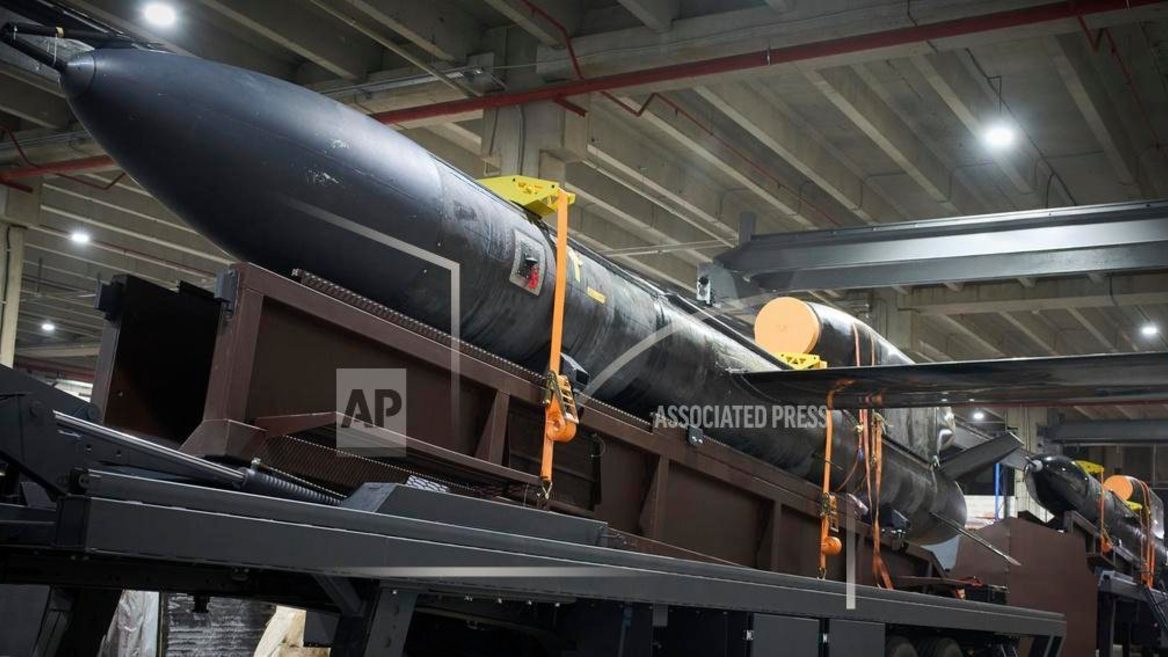
UPD. Photojournalist «illuminated» what the Ukrainian Flamingo missile with a range of 3,000 km looks like. Shmyhal confirmed its existence. What is known about the development
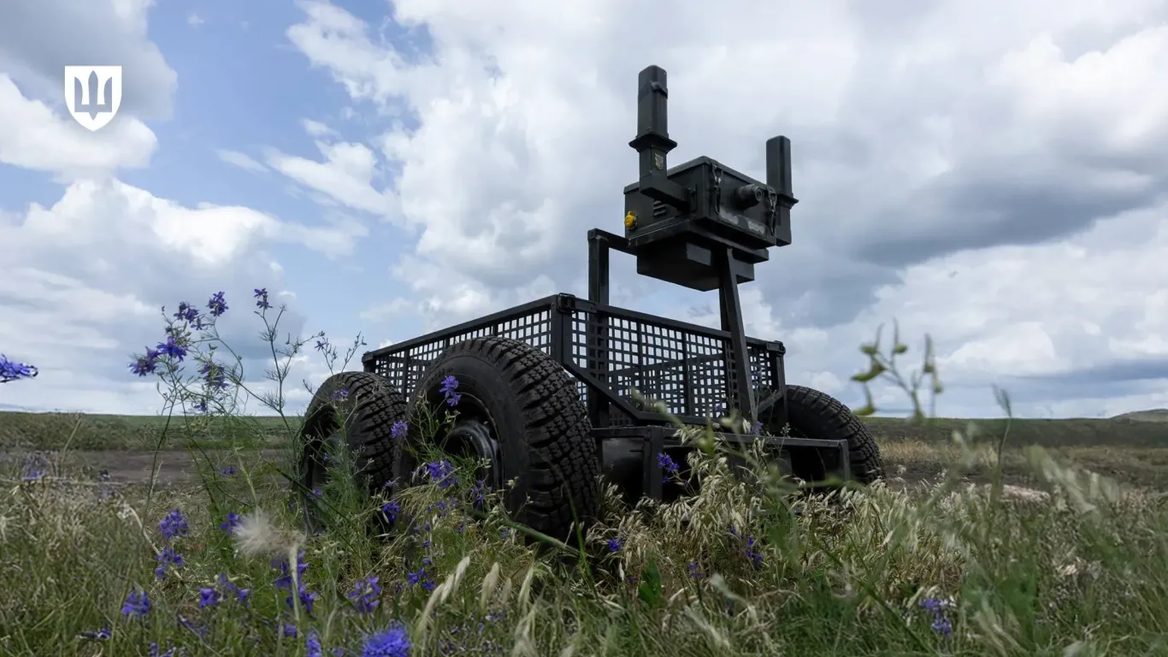
In the last month alone, the Ministry of Defense has «approved» 9 new electronic warfare systems for the Defense Forces. How many samples have been added since the beginning of the year?