Валентин ШнайдерHot News
6 June 2025, 11:25
2025-06-06
Japanese scientists have created plastic that dissolves in seawater in an hour
Researchers in Japan have unveiled a new type of plastic that leaves no microplastics and completely disappears in seawater in less than a few hours, a discovery that could be a game-changer in the fight against one of the planet’s most dangerous pollutants.
Researchers in Japan have unveiled a new type of plastic that leaves no microplastics and completely disappears in seawater in less than a few hours, a discovery that could be a game-changer in the fight against one of the planet’s most dangerous pollutants.
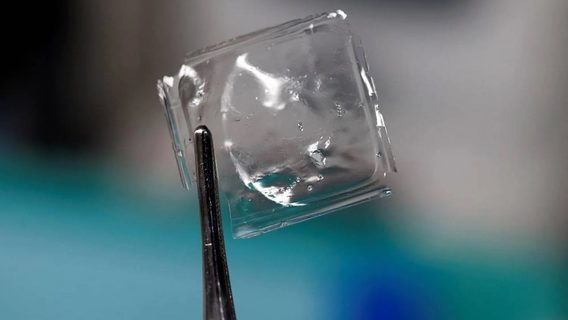
As TechSpot reports, a team of scientists from the RIKEN Center for Advanced Materials and the University of Tokyo have developed a new plastic that literally disappears when exposed to salt water — without a trace. The material retains the strength of traditional plastic, but completely dissolves within an hour, leaving no toxic substances or microplastics behind.
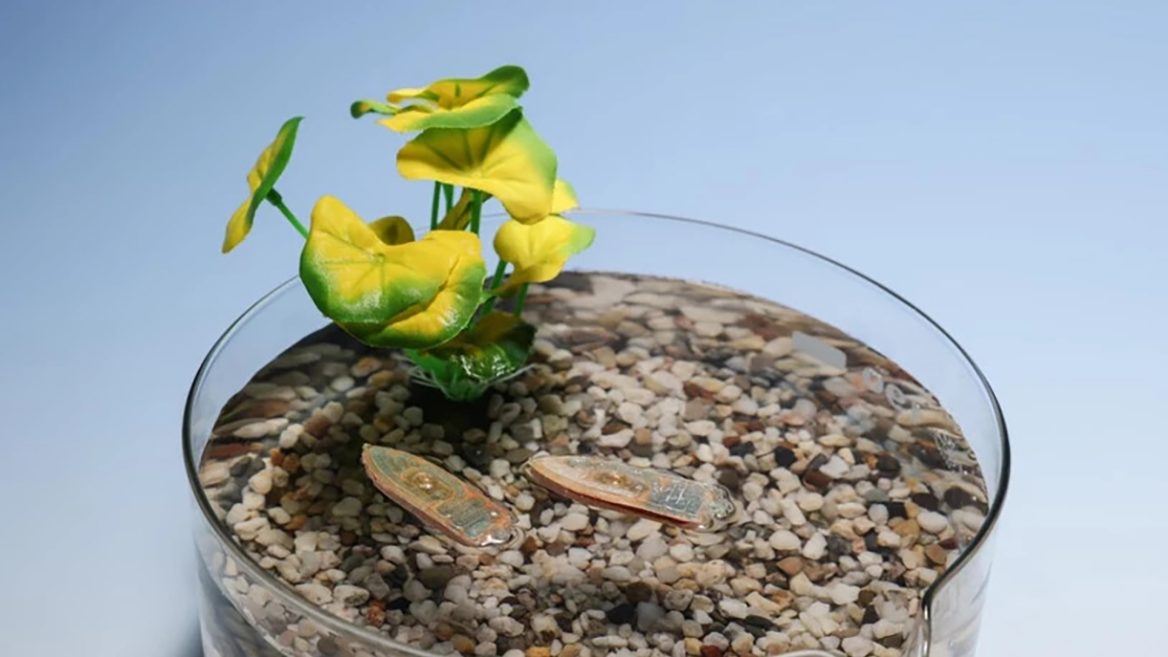
This plastic contains components that are easily broken down by bacteria in nature after contact with salt. At the same time, it is non-toxic to humans, fire-resistant and does not emit carbon dioxide. It has already been tested in a laboratory near Tokyo: a piece of transparent film completely dissolved in salt water in less than 60 minutes. Interestingly, in soil, where there is also salt, two inches of such material decomposes in 200 hours.
The development is not yet ready for commercialization. Researchers are currently refining a coating method that allows the plastic to remain functional during use. However, several major players in the packaging market have already shown interest in the invention.
Plastic waste remains a global environmental problem. The United Nations Environment Programme predicts that plastic pollution in the oceans could triple to 37 million tonnes per year in the next 15 years. Even more worrying is that many so-called «biodegradable» plastics actually do not break down completely, leaving behind harmful particles that have been found in the human brain and other organs.
That’s why a solution that doesn’t create micro- and nanoplastics could be a breakthrough in environmental conservation efforts. If the Japanese team successfully scales up their technology, it could change the future of packaging, medicine, the food industry, and the oceans.
We also recently wrote about a startup founded by Dmytro Kharitonenko and Yan Kormelitsyn called 3B Plitos. They make artificial crushed stone from recycled plastic that can be used in construction and even replace concrete.