Хочете будувати кар’єру в Data Science та AI? Vodafone Big Data Lab відкриває новий набір —>
Марія БровінськаStartup
14 October 2025, 09:00
2025-10-14
The service center of the regional provider BestLink has developed a battery management system that helps maintain communication during blackouts. How the development works, which is already of interest to telecom operators and competitors
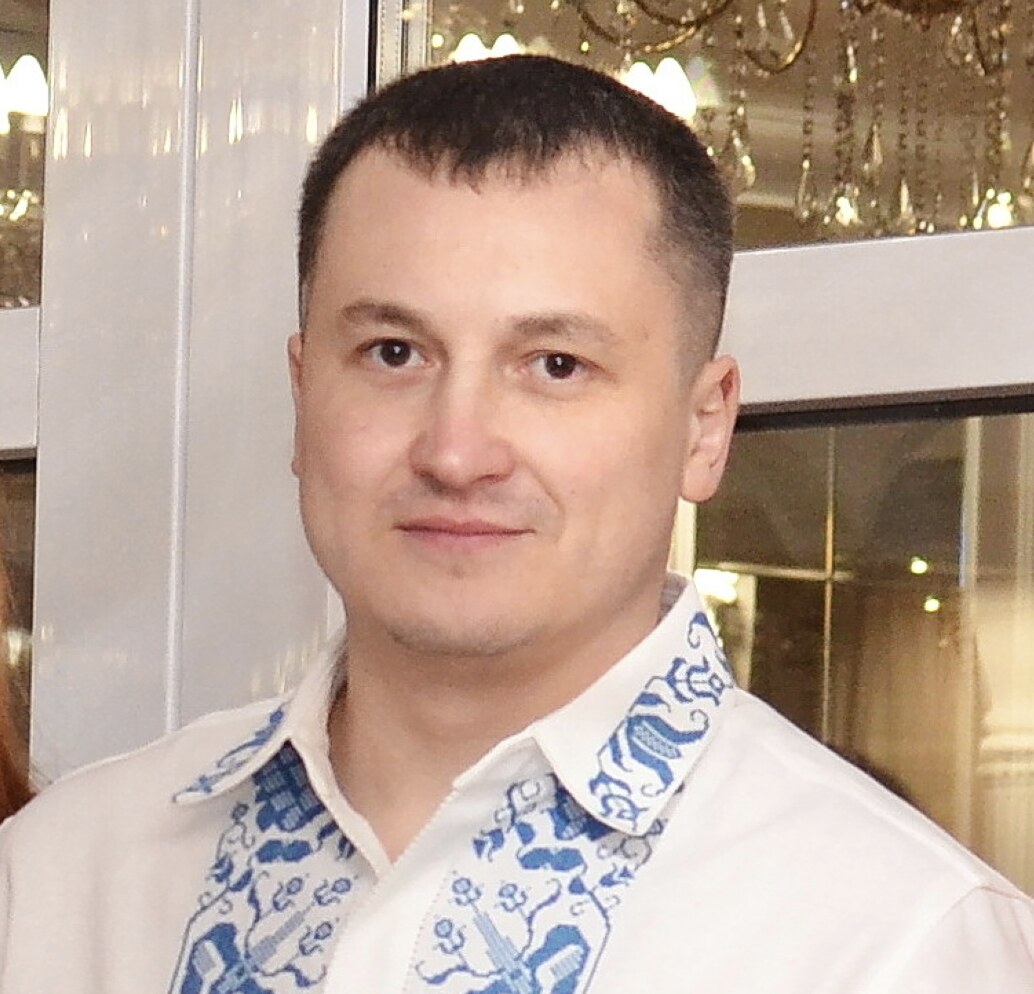
Yuriy Vykhnevych, co-owner and technical director of the Internet provider BestLink, developed a universal battery management system that protects equipment from voltage drops and helps maintain communication during blackouts. Today, his system helps maintain stable Internet for more than 120 communities in Ukraine, which is extremely important for Ukrainians, who have been suffering from Russian drones for the fourth year.
dev.ua talked to Yuri about his development, life path, and plans for the future.
Yuriy Vykhnevych, co-owner and technical director of the Internet provider BestLink, developed a universal battery management system that protects equipment from voltage drops and helps maintain communication during blackouts. Today, his system helps maintain stable Internet for more than 120 communities in Ukraine, which is extremely important for Ukrainians, who have been suffering from Russian drones for the fourth year.
dev.ua talked to Yuri about his development, life path, and plans for the future.
Who is Yuriy Vykhnevych?
Yuriy Vykhnevych was born in the small mining town of Sosnivka in the Lviv region. His love for engineering and technology was instilled in him by his father, who worked as a chief engineer. «I remember when we were still a little boy, we would disassemble and repair old mechanisms together,» says Yuriy. He is a graduate of Lviv Polytechnic with a degree in Computer Science, and has been working as an engineer in telecommunications and energy for over 15 years. Yuriy is now a co-owner and technical director of the provider BestLink and a startuper. His development is a battery management system that protects equipment from voltage drops and helps maintain communication during blackouts.
Blackouts as a driver
Yuriy was inspired to create his solution by the power outages caused by Russian strikes across the country. At that time, individual regions were literally in a vacuum — due to the lack of electricity, there was no communication, and tens of thousands of people did not know anything about their relatives. «As the technical director of BestLink, I saw how voltage drops affected the stability of communication, and restoration took hours — thousands of people remained cut off from the world,» the developer recalls. He spent a year developing algorithms and hardware, and another year on field tests. «The system proved its reliability in real blackouts, maintaining communication in the most difficult conditions of war. The goal was simple: for people to stay connected when it was critical,» Yuriy says. Today, his development ensures the stable operation of telecom nodes.
Interestingly, Yuriy worked on his own startup alone. He created the architecture, battery protection and stable operation algorithms, as well as the hardware without any outside help.
«For field tests at communication nodes across Ukraine, I recruited colleagues who helped with installation and telemetry collection. All key technical solutions are mine; the team supports installation and scaling,» explains Yuriy.
The inventor recently applied for and received a Ukrainian patent for this development.
Currently, Yuriy is the sole investor in the project. «So far, I have financed everything myself: from purchasing components and creating prototypes to months of field tests and patenting,» he says. The cost of using his development depends on the scale — it can be a small unit for a local station or a full-fledged cluster for a large enterprise. The inventor’s plans include commercializing the project.
«I plan to offer a ready-made solution based on the principle of „a large multifunctional combine in a small box“: the customer receives a compact solution that combines charging control, battery protection, resource forecasting, load prioritization, and remote monitoring. This is not just a „box with electronics,“ but a full-fledged service — installation, support, and algorithm updates,» Yuriy shares his plans.
Technical side of development
Yuriy Vykhnevych
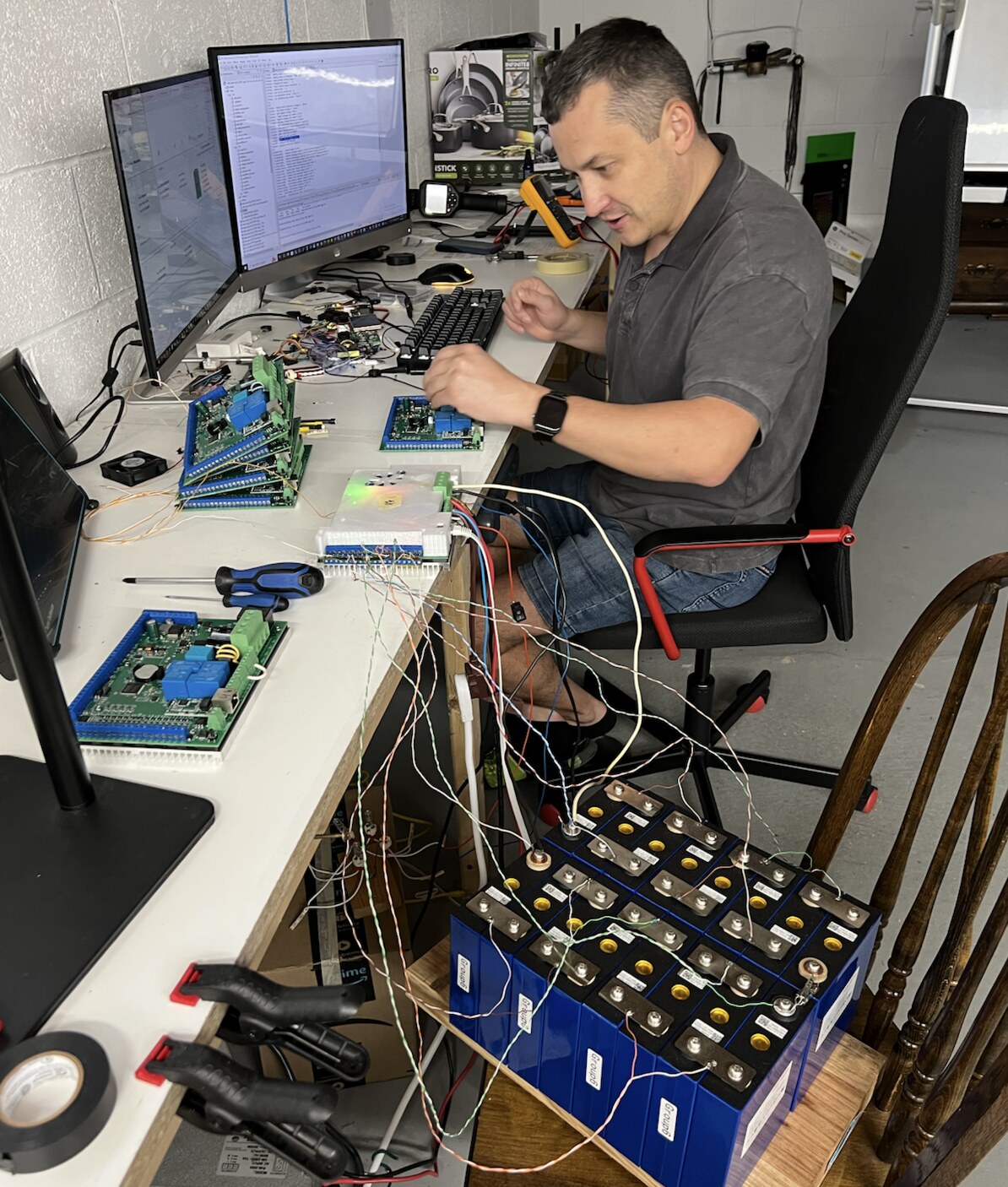
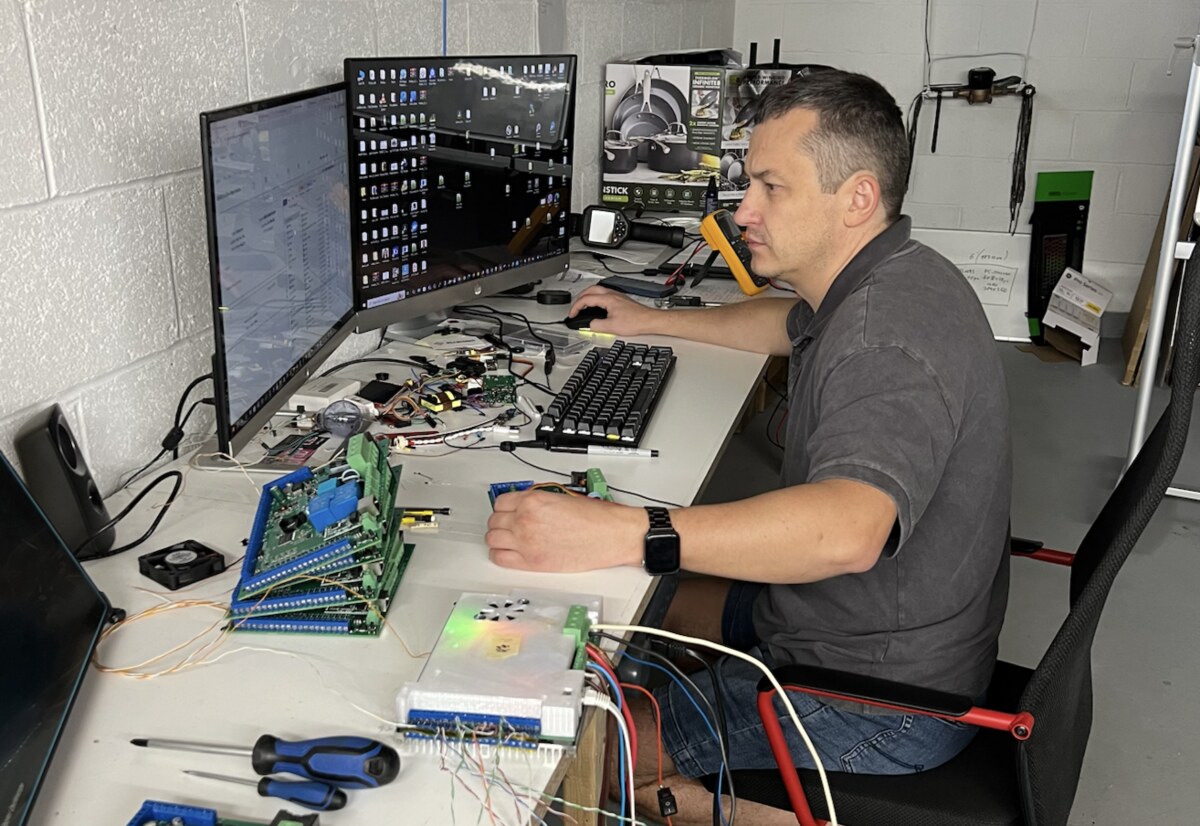
«A large multifunctional combine in a small box,» according to Yuri, combines a whole range of innovations and technical solutions. One compact module combines BMS, «smart» charging, energy management and NOC-level remote control.
The system consists of many components:
Adaptive fast charging with feedback and thermal management (heating/cooling) — safe modes without unnecessary wear.
Cell-by-cell monitoring and forecasting of battery «health» (voltage, temperature, internal resistance, balancing, etc.) — extending the life and scheduled service instead of accidents.
Load priority policies: the system automatically keeps critical nodes (core/transport/OLT) afloat and cuts off secondary ones, extending uptime.
Universal integration: support for different chemistries (Li-ion, LiFePO₄, lead-acid), operation from the grid/generator/solar, plug-in connection without total replacement of the fleet.
Fleet management: cloud monitoring, remote policy updates, and changelog — scaling from a single site to a city network.
Industrial-standard security: multi-level electrical protection and hardware interlocks separated from software.
Field test: the solution has been tested in real blackouts and is suitable for natural disaster scenarios.
«In short, I combined managed charging, diagnostics, and energy policies with remote NOC control in one device — this is an original architecture that provides practical resilience to critical facilities,» explains the inventor.
Yuriy is convinced that his development will help make Ukraine’s critical infrastructure more resistant to damage and failures.
«My system adds manageability at the edge of the network: it prioritizes critical loads, quickly switches sources (grid/battery/generator/solar), and reduces battery wear through adaptive charging and thermal control. The result is longer node autonomy, faster recovery from outages, and less downtime; the solution is equally useful during natural disasters,» he notes.
How the system works
The system ensures stable power supply during power outages, automatically switching between the grid, generators or solar panels without interruption and protecting batteries from voltage fluctuations. It prioritizes key devices, allowing thousands of people to stay connected without interruption. It automatically switches sources without interruption, prioritizing critical circuits and protecting batteries from wear and tear.
Yuriy assures that he has developed several key solutions that make the system unique and effective for working in blackout conditions.
First, it charges batteries quickly, adapting to their condition, and protects them from overheating, which extends their service life.
Second, the system automatically determines which devices (such as key network nodes) need to be powered first, turning off less important ones to conserve energy.
Thirdly, the development has the ability to remotely manage and update the system via a cloud center, which simplifies its maintenance at many facilities.
In addition, the system monitors the condition of each battery and predicts how much more it will last, helping to avoid failures.
«It can operate from various energy sources — the grid, generators, or solar panels,» the IT expert specifies.
To ensure the system works properly and is invulnerable, Yuriy also implemented several levels of protection: against overvoltage, deep discharge, or overheating, as well as a safe mode that is activated when communication is lost to preserve critical functions.
The system’s operating algorithm is as follows: the controller constantly reads the battery status and adjusts the charge accordingly — so the battery charges quickly, without overheating and unnecessary wear. Feedback is provided to the user in real time. The voltage, cell temperature and internal resistance (ESR) are measured, and the SoC/SoH indicator is estimated. The system also has Adaptive CC/CV with pulses. It supplies energy in short «portions», pauses, «listens» to the battery and adjusts the current/voltage to its actual state. And thermal management allows it to first heat up to a safe window when cold, and to limit the current and cool down when overheating. Cell-by-cell control and balancing align the cells at the end of the charge, which increases safety and resource. The system also withstands multi-source balance — smoothly combines the network/generator/sun without power failures.
In addition, the system has hardware interlocks and overvoltage/deep discharge protection; in case of communication failure, safe modes.
«Why is this better than „standard“ profiles? Fixed charging modes and timers ignore the real state of the battery. The adaptive approach reduces heat loss, prevents stress (especially in the cold), provides a faster and more stable charge and a longer battery life,» Yuriy explains the advantages of his startup.
He emphasizes that the system works reliably in unstable power conditions, ensuring uninterrupted communication. It instantly detects voltage drops or noise in the network and filters them, protecting batteries and equipment. «The system automatically switches between power sources — the network, batteries, generator or solar panels — without stopping work. If the voltage is unstable, it intelligently regulates charging so as not to overload the network and damage the batteries. Critical devices, such as network nodes, receive priority power, while less important ones are temporarily disconnected to save energy,» Vykhnevych notes.
Suitable for all types of batteries
Yuriy says he has developed a system that works with the main types of batteries used in telecommunications: lithium-ion, lithium iron phosphate, and lead-acid.
This is important for several reasons. First, the system is compatible with various batteries already installed on sites, which allows it to be used without expensive equipment replacement. Second, it automatically selects the optimal charging and protection mode for each type of battery, for example, adjusting the temperature for safe operation in cold or hot conditions, which extends their service life. Third, the system is easily integrated into both small stations and large network nodes thanks to its wide voltage range support.
Integrating the system into existing equipment is very easy: it connects between the power source and batteries and works immediately with existing equipment.
«It is compatible with different types of batteries (Li-ion, LiFePO₄, lead-acid) and energy sources (network, generator), so it does not require replacing existing solutions and is quickly installed at communication nodes and similar facilities,» the developer assures.
The development is already being used in a number of BestLink nodes, it has undergone a year of field testing in real blackouts. Pilot projects are also currently underway with several Ukrainian providers, Yuriy shared.
Currently, according to the specialist, Ukrainian businesses have shown interest in the development. «There is interest from Ukrainian telecommunications operators and international companies. We are already conducting pilot projects and are looking for partners to scale production, as well as integration, distribution, and service support,» the inventor said.
In the long term, Yuriy sees his development as an energy «operational platform» for the city. «It will connect microgrids of districts, integrate transportation as mobile storage, carefully manage the life cycle of batteries, and have built-in cyber resilience with digital twins. The goal is simple: to keep critical services online, and any community — city or village — to quickly recover from outages and natural disasters,» Yuriy summarizes.
Three tips from an expert to effectively prepare for blackouts
dev.ua asked Yuriy for advice for Ukrainians who will have to live with light restrictions this year as well. Here are his guidelines.
For households — identify critical devices (router, lighting, boiler) and choose a battery with a «smart» charge controller and surge protection — this will save equipment and extend battery life.
For communities — map critical facilities (communications, medical, water) and use systems with automatic grid/generator/solar switching and remote monitoring to quickly respond to outages.
For enterprises — build backup power with automatic switching and load prioritization for key nodes; add remote monitoring and regular short health tests.
«Working with IoT is like playing God, but with code.» The chemist from Kharkiv «didn’t leave science, he just changed the formula,» having trained himself to be a developer. He now optimizes the services of the American Mercury Intermedia and has his own app.
«I studied Data Science since I was 4 years old. Every math lesson was important.» The story of a math genius from a small village in Volyn, who is now creating LLMs for Lyft, Reface, and AppFlame
«Ми не можемо дозволити путіну захопити Україну. Це божевілля». 20 тез Ілона Маска з великого інтерв’ю Business Insider
Мільярдер Ілон Маск дав відверте інтерв’ю виданню businessinsider.com, де торкнувся теми вторгнення рф в Україну, космічних подорожей та речей, що роблять людей особливими.
Наводимо тезисно адаптований переклад тексту.