Ігор Вишневський Gadgets
21 February 2026, 13:01
2026-02-21
Scientists 3D-printed a fully functioning electric motor in three hours. The materials cost just 50 cents. How they did it
Researchers at the Massachusetts Institute of Technology printed a fully working electric motor on their multi-material 3D printing platform, and it took them just three hours to do it.
Researchers at the Massachusetts Institute of Technology printed a fully working electric motor on their multi-material 3D printing platform, and it took them just three hours to do it.
According to Interesting Engineering, researchers have created a 3D printing platform that can produce fully functional electric machines in a single process.
For example, it could potentially allow factories to produce spare engines on site within hours.
The system uses multi-material extrusion to print complex devices from different materials without the need for specialized manufacturing facilities.
So, during the demonstration, a team of scientists printed a working linear electric motor in about three hours.
The publication recalls that electric cars are usually manufactured in factories using multiple production stages and specialized equipment, and when a motor fails, replacing it often requires ordering parts from afar, which leads to downtime and additional costs.
The MIT team, however, aims to change that by making it possible to print such devices locally, using a single integrated platform that can handle different types of materials in a single assembly.
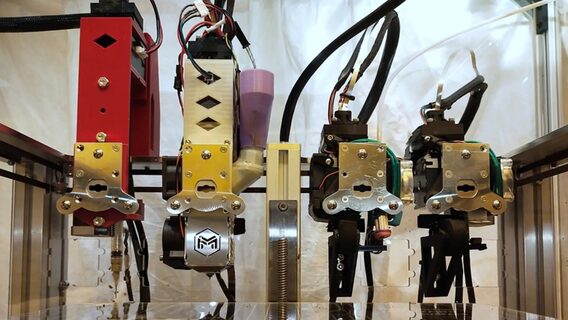
«To achieve this, the researchers modified an existing extrusion-based 3D printer. They added four separate extruders, each designed to process a different type of raw material. Some materials are applied in the form of molten filaments, while others require systems that operate under pressure,» the publication explains.
Senior author of the study, Luis Fernando Velázquez-Garcia, said they had overcome significant difficulties along the way.
«We had to figure out how to seamlessly combine many different manifestations of the same printing method—extrusion—into one platform,» he says.
The system includes strategically placed sensors and new controls that ensure precise positioning of each tool, as even small deviations between layers can degrade the performance of electric machines.
The team focused on printing a linear motor, which is widely used in robotics, optical systems, and conveyor belts.
The engine was printed using five different materials and required only one post-processing step. The researchers estimate the material cost for the printed engine to be about 50 cents.
Tests have shown that it generates several times more force than a conventional type of linear motor, which relies on complex hydraulic boosters.
«We have the opportunity to fundamentally change the way things are manufactured by manufacturing equipment locally in a single step, instead of relying on a global supply chain. With this demonstration, we have shown that it is possible,» says Velázquez-Garcia.
In the future, the team plans to integrate the magnetization step, which this time was performed in post-processing, directly into the printing process and demonstrate fully 3D-printed rotary motors.