Хочете будувати кар’єру в Data Science та AI? Vodafone Big Data Lab відкриває новий набір —>
Ігор Вишневський That's Life
21 April 2026, 09:00
2026-04-21
Banning social media for children and teenagers: should Ukraine take this step? What do experts and government representatives think?
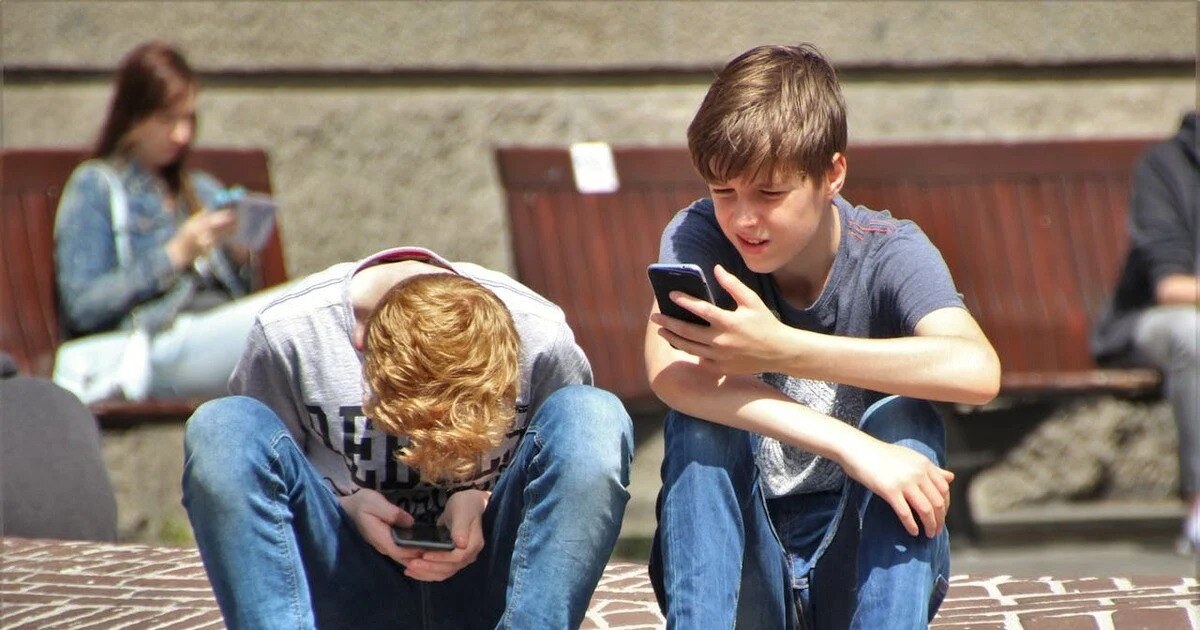
The trend towards a total ban or at least restrictions on the use of social networks for children and teenagers is rapidly spreading around the world. Australia has approached the issue most strictly, completely banning social networks for young people under 16 and imposing multi-million dollar fines on platforms if they refuse to comply with this decision. Is it effective? The question is, because, according to a recent study, more than half of Australian teenagers continue to use social networks after the ban. But that is a separate topic. More than 10 other countries have also introduced restrictions of varying degrees of severity, at least 10 of them are in the process of actively implementing this decision.
The trend towards a total ban or at least restrictions on the use of social networks for children and teenagers is rapidly spreading around the world. Australia has approached the issue most strictly, completely banning social networks for young people under 16 and imposing multi-million dollar fines on platforms if they refuse to comply with this decision. Is it effective? The question is, because, according to a recent study, more than half of Australian teenagers continue to use social networks after the ban. But that is a separate topic. More than 10 other countries have also introduced restrictions of varying degrees of severity, at least 10 of them are in the process of actively implementing this decision.
At the same time, when countries one after another are spreading this practice to children, the Ukrainian authorities do not particularly comment on whether they have at least a vision on this issue. The leadership of the state and relevant ministries have not come out with any statements or legislative initiatives, and the voices of individual experts who support such steps have not yet been heard loudly enough in society. Perhaps the factor of a full-scale war and those problems that Ukrainian children and adolescents already have too many is being imposed here — it would be normal to arrange shelters in schools, because the threat from Russian missiles is still much greater and more real than from social networks. However, in the Ukrainian government environment, thoughts are also gradually beginning to be heard about the need to restrict social networks for the younger generation, and the Verkhovna Rada is even preparing a corresponding bill.
dev.ua tried to figure out with experts, psychologists, and government representatives what risks social networks pose for Ukrainian children, whether their total ban in Ukraine is realistic, and whether Ukrainian teenagers addicted to social networks should prepare for this.
A total ban could lead children into the «digital underground»: a psychologist’s position
Family and child psychologist and expert at Osvitoria Kateryna Holtsberg, in a comment to dev.ua, names a number of risks that social networks pose to the child and adolescent psyche. At the same time, she is far from taking a militant position regarding a complete ban on social networks for this category of users.
According to Kateryna Holtsberg, in addition to the traps of scammers «set up» on social networks, children also face the trap of «perfect content,» which hits their self-esteem.
«Children begin to devalue their bodies and their achievements because they see examples of the 'perfect body' or some incredible achievements on social media. They begin to devalue their own experiences,» she says.
Another harmful factor is the «dopamine trap.» «Short videos, which are mostly watched by children, create a desire to repeat this experience over and over again. Children get hooked on short videos and really can’t stop because the hormone dopamine encourages them to do it. Thus, addiction arises,» the psychologist explained.
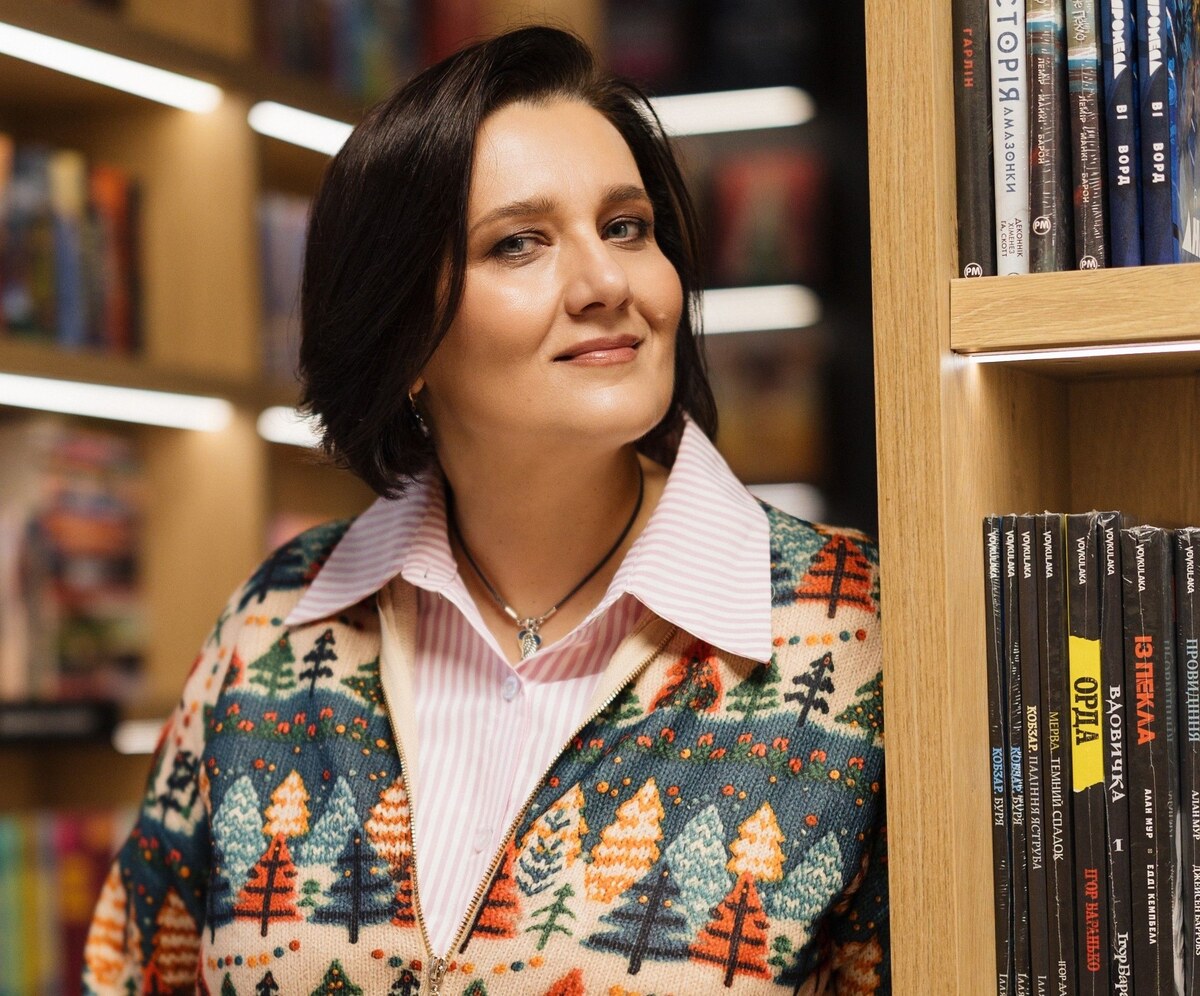
Kateryna Holtsberg. Photo from her Facebook
She emphasizes that limiting children’s time on social media, especially with short vertical videos, is really important. The most prone to «getting hooked» on such content, says Kateryna Holtsberg, are children with ADHD — attention deficit hyperactivity disorder.
At the same time, despite all these factors, the psychologist does not believe that a total ban on social networks, implemented with the participation of the state, will be the best way out of the situation.
«My attitude to such a ban, let’s say, is ambiguous. We are aware of the impact of digital technologies on a child’s brain — it is not useful and it needs to be limited. But, firstly, we are aware that there will definitely be technical problems with this decision. And, secondly, if we want to introduce any restriction, we need to take into account certain psychological aspects. Because any restriction usually causes a backlash, and what is prohibited becomes the most valuable,» the expert adds.
Thus, Kateryna Holtsberg predicts that teenagers prone to protest behavior may, on the contrary, become even more involved in social networks, and the digital world of teenagers will «go underground.»
She sees a potentially negative scenario that after the ban, social networks could pose even greater danger. «If a child hides that he is on a social network, despite the ban, and gets into some kind of danger in the virtual world, he may not share this danger with adults later. After all, he has essentially violated the ban twice,» the psychologist states.
The technical side of this decision may also raise questions that have yet to be answered. «It is not entirely clear how exactly the child will be verified for age. If they have to provide their passport data, that is one thing. If not, will this not contribute to children lying and hiding their age?» the psychologist asks important questions in this context.
In her opinion, it is necessary to limit the time children and adolescents spend on social networks, but, first of all, this issue should be in the field of view of a specific family and the parents of the child or teenager, and secondly, the state.
And the state, according to Kateryna Holtsberg, before introducing any bans, should first conduct an effective educational campaign — and not only for children, but also for their parents.
«I believe that a very large number of things should be regulated not by the state, but by the family. That is, it is the family’s task to regulate how much time their child spends on the Internet and social networks. And shifting this decision to the state looks like parents are abdicating responsibility. Therefore, in my opinion, education should be with adults — how to do it, how to sometimes say „no“ to children, how to limit children from doing dangerous things. We don’t let a child get behind the wheel of a car if they have not reached a certain age and do not have a license,» Kateryna Holtsberg explains her position.
Therefore, the role of the state, in her opinion, should be reduced to «creating such rights for the child» through educational activities and digital literacy. However, literacy and awareness, according to the psychologist, still do not exclude addiction. «A person can be information-conscious and literate, but addicted to some things. Therefore, certain restrictions should be set by parents,» she emphasized once again.
Photo from the website teachme.expert
Which social networks are the most toxic for children?
We also asked the psychologist which social networks she considers the most toxic for children and adolescents.
«Regarding the toxicity of social networks, in my opinion, the most toxic are TikTok and X (Twitter). Instagram is a little less toxic. But it is body shaming or, conversely, showing the „perfect body“ or some other trends regarding appearance that are not useful for teenagers that can be presented on Instagram,» says Kateryna Holtsberg.
Of course, there are very significant questions about Telegram. «This is a network that is not controlled in any way. I also consider it quite toxic, as well as a fraud zone. It is in Telegram that children end up in various groups where they can be recruited or encouraged to do dangerous things — self-harm, roof-stealing, hooking up and other dangerous things,» adds the expert of «Osvitoria».
Among the listed examples of social networks, she considers YouTube to be the least toxic. «There is an opportunity to create content for yourself. And if you do it correctly, a child can still view quite healthy, useful, informative content, including for educational purposes,» Holzberg concluded.
«Not just ban, but create a protective architecture»
The founder of the NGO Dignity Online, which is responsible for the issues of children’s safety on the Internet, former advisor to the Deputy Prime Minister and Minister of Digital Transformation on human security on the Internet, and author of the book «Children and Parents on the Internet» Anastasia Dyakova states that the issue of banning social networks is not currently being discussed by the Ukrainian government, but the introduction of additional tools for children’s safety in the online world would, in her opinion, be especially valuable in conditions of martial law.
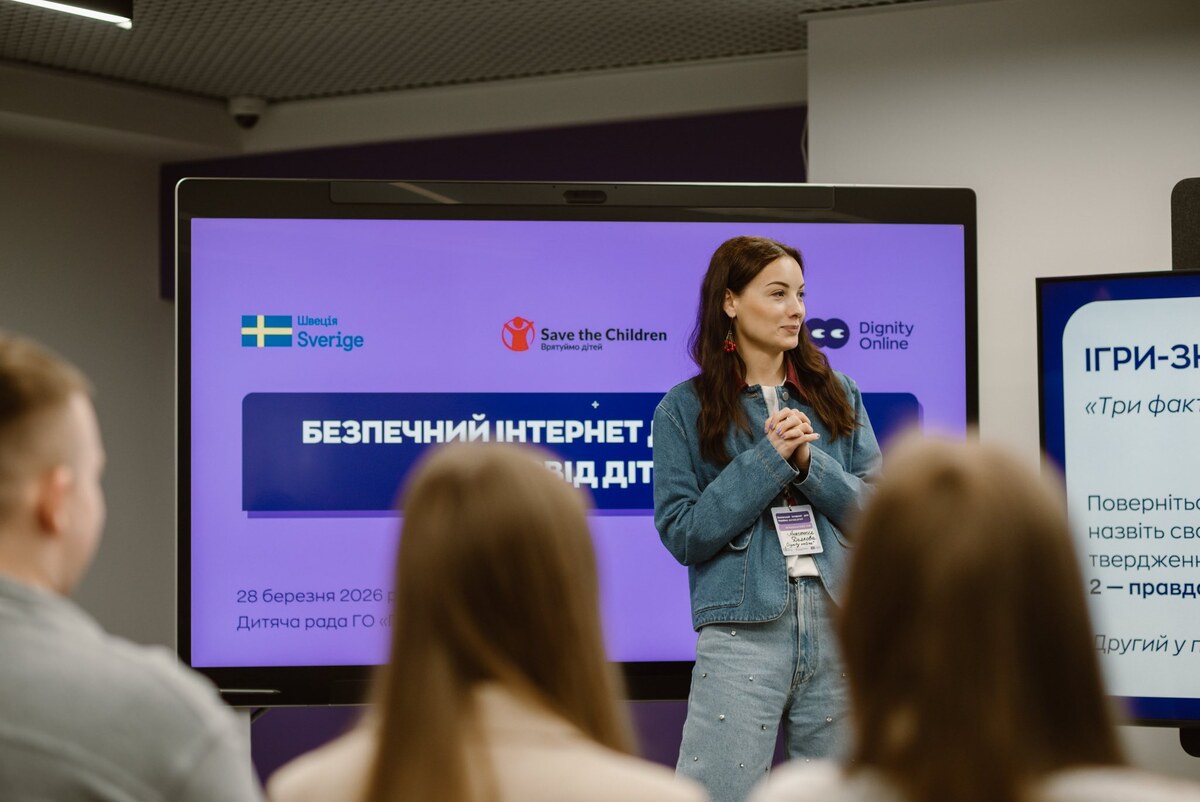
Anastasia Dyakova, photo from her Facebook
According to her, children are currently spending significantly more time in the online world compared to even the COVID-19 period, when all children were in online learning.
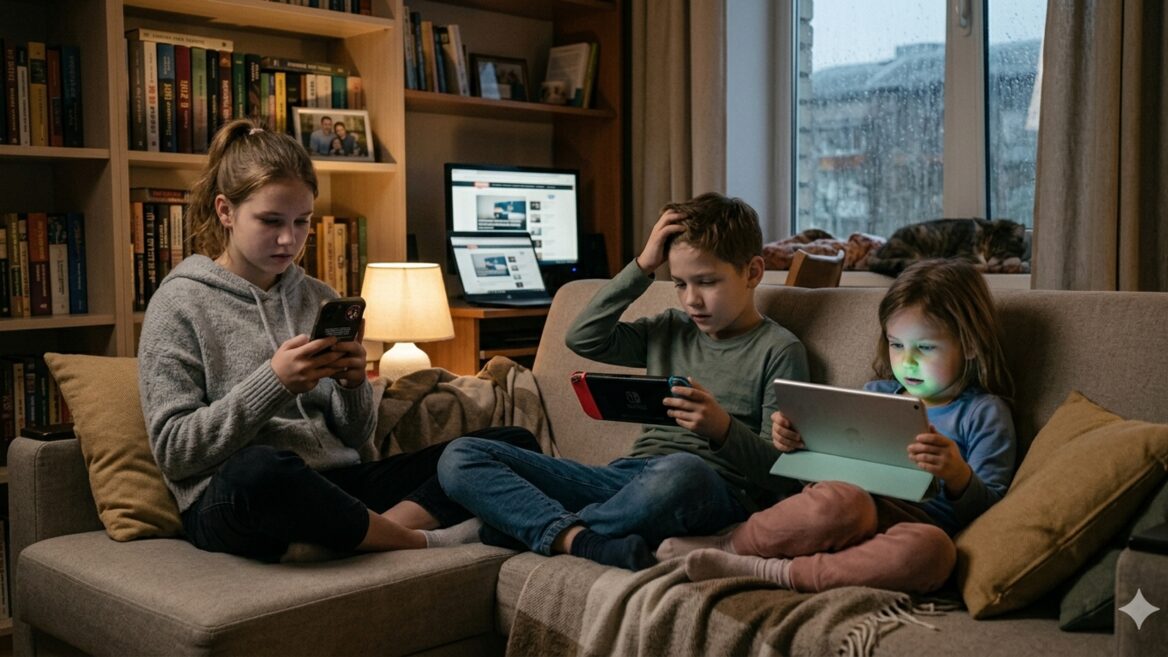
«According to last year’s study by the NGO Dignity Online, three-quarters of children spend more than 3 hours online every day. At the same time, we see a negative impact on the mental health of not only children’s excessive online time, but also the violent and traumatic content that children currently see in unlimited format and quantity: almost every third child sees content about destruction and weapons every day,» Dyakova told dev.ua in a comment.
However, according to the head of the public organization, the Ukrainian context in this issue is special, because for some children, social networks are the only channel of communication with relatives who have temporarily left their homes or parents at the front.
«Therefore, our approach is not to simply ban, but to create a protective architecture: age verification, platform responsibility, media education, and real support for parents in dialogue with children about the digital space. This is exactly what the countries whose community we aspire to do,» says Dyakova.
According to her, the issue of regulating children’s age restrictions on the online world is important not only within the framework of global approaches, but also in the special conditions of a full-scale war.
«It won’t be difficult to bypass access or registration restrictions»
Digital security expert Pavel Belousov supports «some regulation and creation of rules» for children and teenagers on social media, but does not support completely blocking them or making it impossible for this age group to use them.
«In my opinion, everything is simple here: children have grown up with technology, they generally understand how things work, so bypassing restrictions on access or registration will not be difficult for them. We already see how children around the world have learned to „increase“ their age by drawing a beard, or using accounts that older friends created for them,» he commented on this issue for dev.ua.
He compared it to a situation where, due to a ban on the sale of alcohol, teenagers approached random shoppers in a store and asked them to buy them a prohibited product.
«It worked quite often. Or, if you remember, during Covid they simply made a fake „Act“ with a „certificate“. Now it’s even easier when you have access to powerful LLMs,» says the expert.
Pavel Belousov, photo from the website osvita.nakypilo.ua
Instead, Pavel Belousov supports a model in which minors' accounts should be strengthened with default security settings: these could include restrictions on contacts from strangers, stricter privacy settings, less or no personalization of recommendations, and parental control tools where appropriate.
«And all this must be combined with educational activities in schools and through parents themselves. And through communities/channels that are more „attractive“ to young people. This will not throw children back into the 20th century, will not create for them the need to migrate to completely decentralized/uncontrolled environments, but will allow them to understand the dangers and continue to use popular services,» he suggests the optimal way to solve this issue.
Commenting on the technical aspect of a possible «ban» of social networks for children and teenagers, Belousov noted that there are practically no full-fledged representative offices of tech giants in Ukraine and we have no influence on them either.
«If we follow a separate national path, outside of broader European regulation, implementation will be much more difficult — both legally, technically, and in terms of forcing platforms to comply with the requirements. Perhaps, even by the time we implement all this, everything around us will change radically again and simply stop working. States almost always move slower than technological changes, so excessively strict or narrow norms are especially risky here and are unlikely to work,» he expressed his forecast.
Therefore, a total ban on social media for children and adolescents, in his opinion, would be more of an imitation of a solution to the problem, while considered age restrictions, safe default settings, and systematic digital education could have a real effect.
Do the Ukrainian authorities see a problem?
First of all, it is worth saying that the press services of the Ministry of Education and Science and the Ministry of Digital Transformation did not express a desire to comment on this topic, ignoring our requests for comment. We also sent an information request to the Advisor-Employer of the President of Ukraine on Children’s Rights and Children’s Rehabilitation Daria Gerasymchuk. As of the date of publication of the material, no response has been received, but we will publish it if received.
However, recently, the Verkhovna Rada began to talk about the need to introduce a bill to restrict children and adolescents' stay on social networks. According to Yulia Hryshyna, a member of the Verkhovna Rada’s Committee on Education, Science and Innovation, there is currently no question of a complete ban on access. «Our task is to find balanced solutions without total bans, but with real protection and responsibility, adopting the best world experience and adapting it to Ukrainian realities,» the deputy notes on her Facebook page.
According to her, at her request, the research service of the Verkhovna Rada prepared analytical information on this topic, and it shows that currently every fourth Ukrainian teenager spends more than 7 hours a day online, and 4 out of 5 children have accounts on Telegram and TikTok.
At the same time, according to the information released by the deputy, every third child encounters dangerous situations online, and 60% of children do not tell anyone about it.
At the same time, during her speeches on this topic in parliament and in comments to the media, Grishina has not yet named either the timing of the introduction of such a bill or specific options for how this restriction will be implemented, noting that these decisions are still being worked out.
We can conclude that if Ukraine does eventually introduce restrictions on children and adolescents' use of social networks, it will most likely not be strict — neither the authorities nor the expert community are inclined to do so yet.