Хочете будувати кар’єру в Data Science та AI? Vodafone Big Data Lab відкриває новий набір —>
Оксана СтепураScience Pop
7 September 2026, 12:14
2026-09-07
Scientists have found a way to reduce the energy consumption of writing data to memory by a thousand times. What could this mean for computers and data centers?
Researchers at the University of Edinburgh have found a way to significantly reduce the amount of energy needed to write information to future computer memory. If the method works in real chips, the memory will consume less power and generate less heat. For laptops, this could mean longer battery life and less heat, and for servers and data centers, lower costs for server power and cooling.
Researchers at the University of Edinburgh have found a way to significantly reduce the amount of energy needed to write information to future computer memory. If the method works in real chips, the memory will consume less power and generate less heat. For laptops, this could mean longer battery life and less heat, and for servers and data centers, lower costs for server power and cooling.
This could be especially important for AI and other systems that constantly move and process large amounts of data, as this consumes a lot of energy. So if you can make each write or data movement even a little cheaper, the savings over billions of such operations can be very significant.
In some simulations, the costs were thousands, and in some cases even millions, of times lower than those of modern DRAM. However, so far the technology has only been tested in simulations, so the next step should be to test it on real devices.
How does it work?
Any data in a computer is ultimately stored in the form of bits - zeros and ones. To record new information, you need to change the state of such a bit. And each such change requires a certain amount of energy. In their study, scientists worked with magnetic memory. It uses a special material that can be magnetized in two different directions. One direction can be considered "0", and the other - "1".
To change the recorded information, you need to switch the material from one state to another — for example, from “0” to “1.” This uses a magnetic field, and it takes energy to create it. So the researchers figured out how to use much less of it. Instead of simply applying a strong magnetic pulse, they used mathematics to calculate the most economical pulse for each switch.
In simulations, this allowed switching between “0” and “1” very quickly — in a few picoseconds, or trillionths of a second. So the required magnetic field was in some cases more than ten times weaker, and the switching itself consumed about 100 times less energy than with conventional magnetic pulses.
According to the authors' calculations, this could even bring memory closer to the so-called Landauer limit. This is a physical limit that shows how little energy can be spent on working with a single bit of information.
The researchers also say their method could potentially be used beyond magnetic pulses. The same math could be applied to electric current or very short laser pulses, which are also being considered for future data storage technologies.
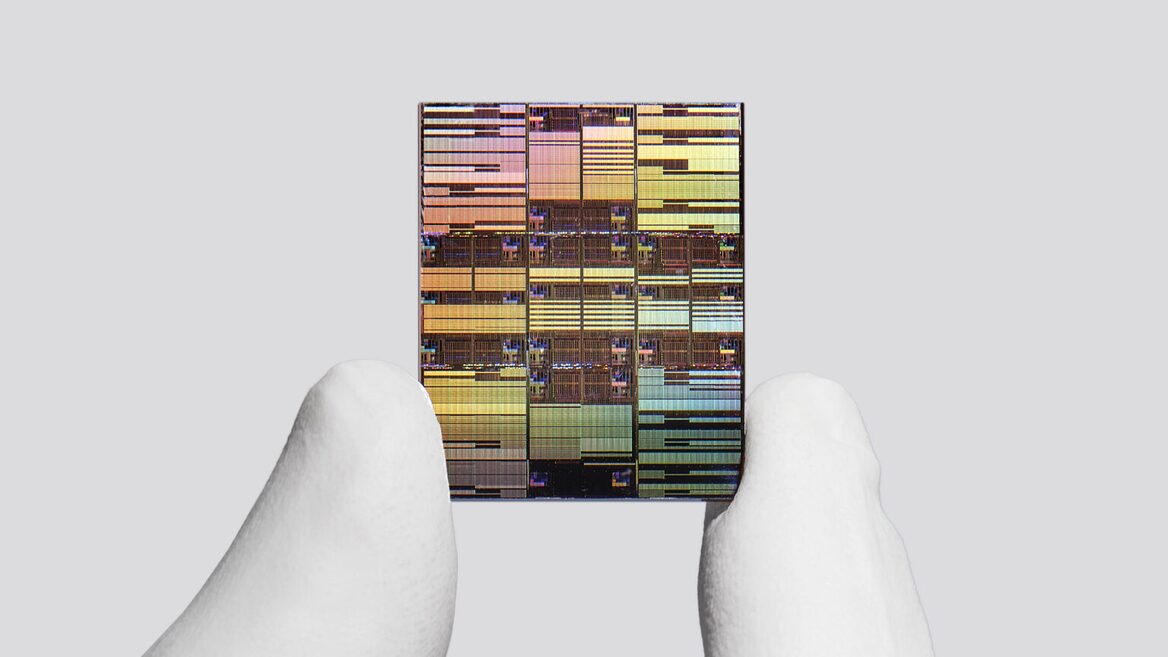
Previously, dev.ua wrote about another development in this direction: TSMC and the Taiwanese research institute ITRI have created a SOT-MRAM magnetic memory chip, which should work quickly and consume significantly less energy than traditional types of memory.