Хочете будувати кар’єру в Data Science та AI? Vodafone Big Data Lab відкриває новий набір —>
Наталя ХандусенкоHot News
27 June 2025, 12:29
2025-06-27
Anker's 3D printer has become the most popular campaign on Kickstarter, raising over $45 million. What's so special about this device?
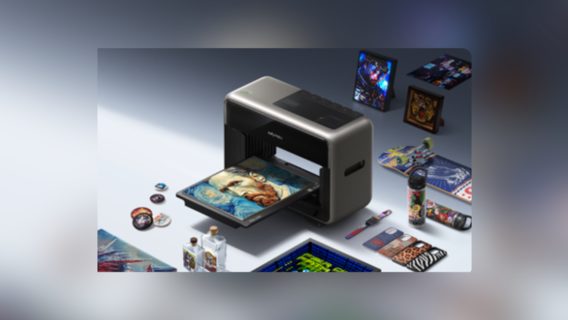
A new 3D printer from Chinese company Anker has raised $45,285,643 from 17,315 backers on Kickstarter, making it the most funded project to date. The device's popularity can be explained by the fact that the manufacturer is advertising it as the world's first personal UV printer with 3D texture.
A new 3D printer from Chinese company Anker has raised $45,285,643 from 17,315 backers on Kickstarter, making it the most funded project to date. The device's popularity can be explained by the fact that the manufacturer is advertising it as the world's first personal UV printer with 3D texture.
The new device that has so impressed Kickstarter is called the EufyMake E1. Unlike your typical home 3D printer, it doesn't use filament to create objects—instead, it uses UV-curable inks and a process Anker calls Amass3D technology to layer the ink onto textured designs on flat or curved surfaces.
Textures can be up to 5 mm thick and can be printed on over 300 materials, including glass, leather, metal and wood.
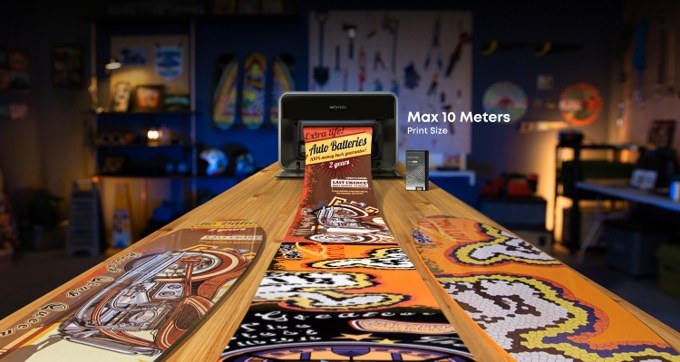
It also supports printing on cylindrical objects through rotary printing and output to film for making custom labels.
From a technical perspective, the E1 is packed with features, including a laser level, an 8-megapixel AI camera, and the ColorMaestro system, which delivers vibrant and long-lasting full-color prints.
The company also promises ease of use thanks to the JetClean self-cleaning system.
The manufacturer claims that 600 ml of ink is enough for approximately 1,000 small prints; there is no detailed information on the number of ml per print for 3D output.
Considering that a set of ink reportedly costs around $299, this means that the average user could spend around $0.50 per print, and possibly more depending on the application — and in the long run, this could prove too expensive for small business owners, writes TechRadar.