Наталя ХандусенкоGadgets
3 June 2026, 10:41
2026-06-03
Apple improves iPhone camera: company patents technology to prevent sensor overheating
Apple's leadership in mobile photography remains one of the iPhone's key strengths, and the tech giant doesn't seem to be giving up, according to a new patent that promises to dramatically expand the photo and video capabilities of future iPhones.
Apple's leadership in mobile photography remains one of the iPhone's key strengths, and the tech giant doesn't seem to be giving up, according to a new patent that promises to dramatically expand the photo and video capabilities of future iPhones.
As mobile cameras become larger and more complex with each new generation, heat generation is becoming a serious issue that threatens to halt further progress in mobile photography.
And now, Apple has just received a new patent that involves using a heat-absorbing liquid to solve this new dilemma, reports Wccftech.
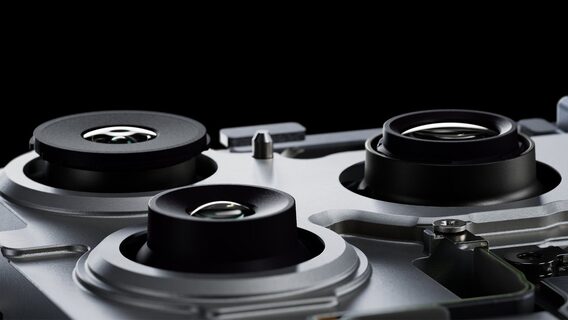
The patent describes a camera module equipped with a special housing, a lens unit, a movable substrate with a matrix (image sensor), and a flexible seal that divides this module in half.
In this case, the zone located on the optical axis may contain air, nitrogen, or another optically suitable medium, while the remaining volume of the module may be filled with a dielectric liquid (e.g., mineral oil), which will act as a heat sink.
The idea isn't to create a liquid lens or optical effect using a liquid. Instead, Apple intends to divert excess heat generated by image sensors, actuators, processor chips, and other electronics outside the camera module. This will allow the system to operate at optimal temperature conditions for a long time.
Importantly, this solution allows for reliable heat dissipation from moving components, which are usually difficult to thermally bond to the rigid camera body.
Apple's liquid-filled module could also make it more practical to use actuators made of shape memory alloys, such as nitinol. These alloys change their shape when an electric current is applied, allowing precise movement of internal camera components, but they generate excess heat during operation.