Хочете будувати кар’єру в Data Science та AI? Vodafone Big Data Lab відкриває новий набір —>
Марія БровінськаWar
12 August 2026, 09:00
2026-08-12
Wet seals, American ADIS and Mesh networks: how Ukrainian MilTech companies disassemble the enemy's trophies and prepare responses
Ukrainian Defense Tech is not just R&D in the rear, but a continuous race to get ahead. While the enemy tries to pressure with numbers and meaty assaults, our engineers seek technological advantage: disassemble Russian «Eagles», analyze enemy communications and redesign their products right during serial production.
We spoke with representatives of three Ukrainian MilTech manufacturers: Pavel Kosolapkin (CTO and co-founder of Frontline Robotics), Valery Zarubin (co-founder of BlueBird Tech), and Oleg Fedoryshin (R&D director of DevDroid). They told us how Ukrainian weapons manufacturers get enemy trophies, what is really surprising about Russian «analogs», and why the life cycle of a successful product in this war is sometimes measured in weeks.
Where to get a trophy: buy, exchange or get it «with wet seals»?
The path of enemy hardware to the laboratories of Ukrainian developers varies. Some receive it directly from fighters on the front lines, while others use fresh centralized programs.
Oleg Fedoryshyn, R&D director of DevDroid, says that the company does not buy Russian samples, although, of course, engineers would be interested in studying them. «By the way, recently the Brave1 cluster launched a program that should help developers access captured samples. But it is in the segment of ground robotic complexes (GRC) that the Russians have not yet used them so massively that there is a satisfied demand for analysis,» he told dev.ua.
BlueBird Tech notes that the trophy market lives by its own laws: the military sometimes brings products for research, and sometimes offers to exchange or sell individual samples. However, a physical hardware copy is not always needed for electronic warfare or detection equipment.
According to Valery Zarubin, co-founder of BlueBird Tech, analysis of the radio frequency spectrum, control signals, and battlefield data is often sufficient. «Sources of knowledge include not only hardware, but also data from engineers in units, electronic intelligence, and constant monitoring of open sources. But access to the enemy’s serial products still provides additional insight into how certain technological solutions are implemented,» he notes.
But Frontline Robotics recalls epic cases from the first months of the great war. «We don’t buy Russian captured samples. Sometimes the military hands us something interesting for inspection — we analyze them, of course. At the beginning of a full-scale war, interesting trophies came across. For example, we received a captured complex with all the documentation and passports, which was manufactured almost in January 2022, and in March it was with us — with all the wet seals,» recalls Pavel Kosolapkin, CTO and co-founder of Frontline Robotics.
«Analognet» under the microscope
Our engineers are usually not technologically shocked by enemy technology. Most often, it is a mix of Soviet heritage, Chinese civilian imports, and Western chips purchased to circumvent sanctions. However, some details make us raise our eyebrows.
For example, the American luxury in the Orlan. «At the beginning of the full-scale one, we had a captured Orlan. Of course, we disassembled it and saw the American ADIS (high-precision inertial module) in it. We were surprised that there was such an expensive component there, which was most likely integrated to obtain redundant characteristics. However, the accuracy of the calculations was still not enough,» recalls Pavel Kosolapkin.
Hostile communication and Mesh networks are sometimes another subject of envy for Ukrainian engineers. According to Oleg Fedoryshyn, if the Russians are not yet impressive in the hardware of NRC, then in communication systems they act systematically. «They are quite actively developing Mesh networks and trying to scale this approach. This is an area in which they are consistently working and achieving good results,» explains the R&D director of DevDroid.
Valery Zarubin from BlueBird Tech, in turn, emphasizes: rethinking is a two-way process. After all, in his opinion, in Defense Tech, innovation often consists not in creating something from scratch, but in quickly rethinking existing solutions. «It is difficult to single out one specific product that would become a real technological shock. We follow the evolution of solutions: the enemy actively combines Soviet heritage, Chinese components and our own developments. For our engineers, the value lies in the ability to understand the logic of creation and application on the battlefield,» the entrepreneur admits.
The race to adapt: how quickly technologies on the frontline become obsolete
The main rule of modern warfare: if your product becomes effective, the enemy is guaranteed to create a countermeasure. And this has long been known to all weapons manufacturers. The development life cycle during a full-scale war has been reduced from years to months or even weeks, manufacturers state.
The survival formula in Defense Tech currently consists of several stages:
Development v1.0
Going to the front
The emergence of enemy countermeasures
Obsolescence v1.0
In parallel, v2.0 and v3 are ALREADY being prepared in R&D.
Valery Zarubin from BlueBird Tech confirms: «Cases when a product becomes obsolete before mass production occur regularly. A team can go through a difficult development path, bring the product to a high level of readiness, receive positive feedback from the military, and already at the stage of preparation for mass production understand that the requirements of the front have changed.» The reason for such speed, according to him, is not always the developers' mistakes — the situation on the battlefield itself changes. «Companies that can work on several generations of products in parallel and maintain an active R&D cycle win,» he states.
At Frontline Robotics, R&D flexibility is built in advance to avoid the «death» of a product on the assembly line: «Specifically, this has not happened to us. Our R&D process is quite flexible, we do everything to actively respond to military feedback and try to predict in advance,» says Pavel Kosolapkin. He adds that products relevant to the front are allowed into mass production, and all updates are prepared for further iterations.
«Now, for example, they have begun to actively use drones that shoot down enemy drones or drop something on them with the aim of shooting them down. This is important, and it is necessary to react to such adaptations, which our team is consistently doing,» added Kosolapkin from dev.ua.
Philosophy of Competition: Man vs Iron
The main difference between the Ukrainian and Russian military-industrial complex lies not only in the speed of R&D, but also in the basic values and market structure, according to the arms manufacturers with whom dev.ua spoke.
Oleg Fedoryshyn from DevDroid argues that Ukrainian engineers are trying to compete with technology. «Our main task is to make sure that Ukraine suffers as few losses as possible, even if it is sometimes more expensive,» he says.
DefTech leaders admit that Ukrainian technology development is largely driven by the private sector, which quickly responds to the needs of the front. In Russia, the approach is different. «They think much less about preserving personnel there, and many tasks are solved at the expense of human resources. This is exactly what we see on the battlefield,» Fedoryshyn summarizes.
«I would advise those IT professionals who are hesitant about moving into Defense Tech to change their mindset.» 7 questions for DefTech CEO: owner of SKIF NVK about industry problems, personnel, and product evolution
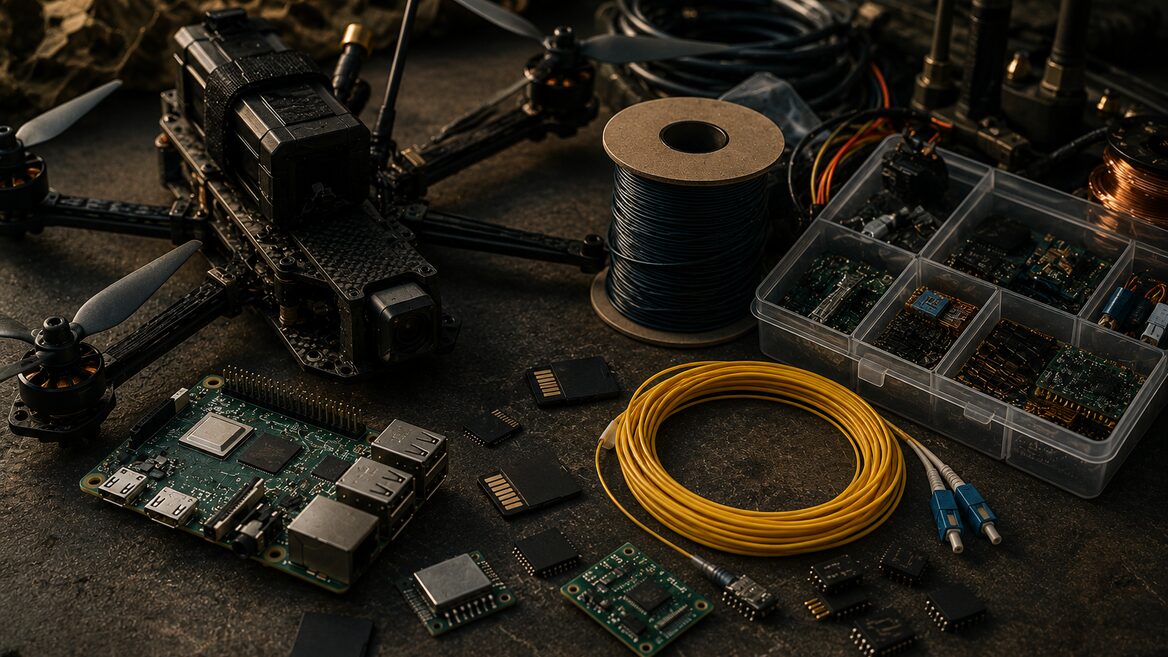
«Sometimes we compete only with the Russians.» Ukrainian DefTech manufacturers on global component shortages, seven-fold increase in fiber prices, and the war economy during downtime
Німеччина передасть Україні 14 наземних безпілотників THeMIS. Що це за машини та як вони працюють
Німеччина передасть Україні 14 наземних безпілотників THeMIS. Імовірно, 7 таких транспортних засобів прибудуть до України до кінця цього року, вони призначені для евакуації поранених. Інші очікуються у 2023 році — їх будуть використовувати для очищення доріг. Нагадуємо, що це за зброя і що вона вміє.
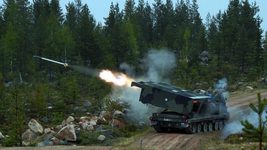
Атлас зброї: Німеччина передає захисникам чергові MARS II. Які ще РСЗВ отримала Україна від західних партнерів та як вони працюють
Федеральне міністерство оборони Німеччини повідомило у Twitter, що у найближчі кілька тижнів Україні будуть передані чергові системи залпового вогню MARS II.
Раніше ми розповідали про те, які РСЗВ партнери надіслали на допомогу українським воїнам. Нагадуємо про це знову.
(Текст від 26 липня)
На український ударний дрон PUNISHER зібрали понад 1,3 млн грн. Що може гроза командних центрів ворога
Дмитро Томчук повідомив, що найлегші та найменші ударні дрони PUNISHER, які не мають аналогів у світі, тепер коштують $70 000. Виробник додав у комплекс ще одного безпілотника, і тепер їх там два. Дмитро пише, що Юлія Черешня та Павло Харузов зібрали на комплекс більше 1,3 млн грн.
Раніше він розповів журналісту dev.ua, що вміють ці «пташки», та чому саме вони можуть переламати хід війни на користь України.
(текст від 1 червня 2022 року)
США в черговому пакеті допомоги надасть Україні дрони Switchblade 600. Подробиці про ці та інші «пташки», якими користуються українські захисники
Серед списку допомоги, яку пропонує Пентагон, є дрони-камікадзе Switchblade 600, які офіційний Київ просив передати раніше.
Контракт на дослідження та розробку для 10 дронів SwitchBlade 600 виробника Aerovironment, очікується протягом наступних 30 днів, заявила прес-секретар Пентагона Джессіка Максвелл в електронному листі до News Defense.
Ми зібрали список дронів, які використовують українці проти ворога, в тому числі і подробиці про Switchblade 600.
(текст від 17 травня 2022)










Comment hidden for violating commenting rules.