Хочете будувати кар’єру в Data Science та AI? Vodafone Big Data Lab відкриває новий набір —>
Ігор Вишневський Історії
22 September 2025, 09:00
2025-09-22
“I closed the last two fundraisings in less than a day.” PM SoftServe was a blogger in civilian life and became one for his brigade: now he helps close fundraisings quickly and attract volunteers
Artur Dmytryshyn, a Project Manager at SoftServe, joined the army about 10 months ago through recruitment. Although he is only 24 years old now, he decided not to wait until he reached military age, but to join the Armed Forces of Ukraine right away.
Thanks to his blog Keep Going, Artur is known to a fairly wide audience outside the IT bubble, and some of his posts have hundreds of thousands or even millions of views. It was his blogging experience that Artur decided to use to the maximum for the army, conducting meetings, solving recruiting issues, and creating viral content for the 63rd Separate Mechanized Brigade of the Armed Forces of Ukraine.
Artur Dmytryshyn, a Project Manager at SoftServe, joined the army about 10 months ago through recruitment. Although he is only 24 years old now, he decided not to wait until he reached military age, but to join the Armed Forces of Ukraine right away.
Thanks to his blog Keep Going, Artur is known to a fairly wide audience outside the IT bubble, and some of his posts have hundreds of thousands or even millions of views. It was his blogging experience that Artur decided to use to the maximum for the army, conducting meetings, solving recruiting issues, and creating viral content for the 63rd Separate Mechanized Brigade of the Armed Forces of Ukraine.
dev.ua spoke with Artur Dmytryshyn about his experience of joining the army; how and with what his employer SoftServe supports him and how he manages to quickly close the meetings in the conditions of the fourth year of a full-scale war and a certain apathy in society. The 24-year-old IT worker also said that he is thinking about allowing 18-22-year-old men to travel abroad and shared his thoughts on the possible mass emigration of IT workers after the borders are opened.
— Let’s start from the beginning — how did you get into the army and what was your main motivation?
— I’ll start with motivation, because that’s the most important thing. Ever since the full-scale invasion, when I was 20 years old, I’ve been constantly under pressure. I’ve been berating myself for not being brave enough to join the Ukrainian Armed Forces.
On one of the first days of full-scale conscription, I went to the military registration and enlistment office, but they told me that since I had no military service experience or a driver’s license, there would be no point in me. There were queues, I left my phone, but, of course, no one called me.
Since then, there has been a little worm inside me that constantly says, «What I’m doing is not enough.» Although we held large gatherings, assembled drones, and helped the Armed Forces in other ways.
When recruiting started actively, two messages were being promoted very strongly: that everyone would fight, and that now you can choose your position. Sitting at home and constantly having these feelings, as well as seeing these messages, I decided to look for an opportunity to take a position that matches my skills. I thought — if I can do the same thing as in civilian life, but for the army, then why not?
As for how I got into the army, I didn’t go through the CCC. It was then that they allowed recruiting directly to the brigades.
Even if you go to the TCC with an attitude, there is still a certain risk when you get to the training center — they may say: we need another brigade, and you are being sent there. That is, the attitude did not give a 100% chance of getting into the chosen unit.
So I arrived at the brigade without a CCC, immediately ended up in Lyman, Donetsk region. They started all the processes there and then sent me to the training center.
— How was the brigade selected?
— When I was thinking about joining the Armed Forces of Ukraine, I was focused on two areas. The first was project management in the profession in which I worked. The second was the media field. So I was looking for vacancies in both options.
I monitored Lobby X, but at the same time I simply told friends, acquaintances, military personnel, and volunteers I met that I was looking for a team. Lobby X didn’t have anything related to project management at the time, nor did my acquaintances, but there were quite a few vacancies related to the media sphere.
One of my friends said that he had contacts in the 63rd brigade, and they were looking for someone for the press service. I was like, «Great, let’s talk.» We chatted, there was one online interview, then another in person. We talked about how I see the brigade developing in the media component, and we agreed.
There was a certain priority to join the army for an IT profession, because blogging for me is a side hustle. But since I had advanced skills in this, and I didn’t have any IT options, I made the choice this way.
— How did your employer SoftServe behave in this context? Did they keep your salary, or were there any other support steps?
— In this regard, I consider SoftServe to be the best company I have ever worked for. Of course, they keep my job. And when the war is over and demobilization takes place, I understand that I will have a month of paid leave to gather my strength, recover, and return to work. And yes, they keep part of my salary.
This helps a lot, considering the salaries in the Armed Forces for non-combat positions. I really can’t imagine what I would do if it weren’t for this support. After the war, I definitely plan to return to the company and work there, but for now I’m on a kind of sabbatical leave.
— In addition to keeping the job and part of the salary, perhaps there was support in closing some meetings or providing other things important to the team?
— As for everyday life and military uniforms, in the Armed Forces of Ukraine I didn’t have any problems with getting any items. It’s obvious that the things they issue aren’t top-notch, and they could be better, but you can wear them without any problems.
But for me, it was a really cool bonus that the company gave me a winter uniform. In addition, SoftServe provided my entire department with a set of summer uniforms. Recently, they contacted me because they want to send a gift box for Defender’s Day.
In addition, our company has an Open Eyes foundation that specializes in purchasing ambulances. This foundation cannot spend money on any military items, but we agreed that if our team needs an ambulance, I will contact them and they will be able to provide it for us.
Speaking of colleagues, I often see significant donations to the collection from those I worked with before. It’s very nice and inspiring.
— Is the brigade’s press service closing any specific direction?
— We don’t have a specific scope of duties, but in general I have three key areas that I cover. The first is developing the brigade’s brand, the second is recruiting, and the third is closing meetings.
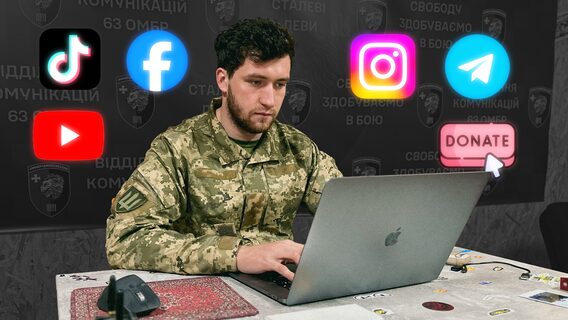
The main format I work with for the brigade brand is short vertical videos. That is,I create content in TikTok, YouTube Shorts, Facebook Reels, Instagram Reels. I closed this direction, and everyone in our communications department knows that I took it upon myself. We have very cool results here.
Next is recruiting. We have a recruiting department in our team, but when there are some unique cases, I also work with them. For example, these are cases where you need to involve Lobby X or some other platforms for finding people.
In particular, we had a case when we were looking for masseurs, hairdressers, and tattoo artists for the team, and I was the one who did it. These are very specific vacancies, like for the army.
And now we already have two tattoo artists, two massage therapists, and one hairdresser. The second hairdresser is due to join us at the end of October. We have completely closed these vacancies, and now we are still looking for a rehabilitation specialist.
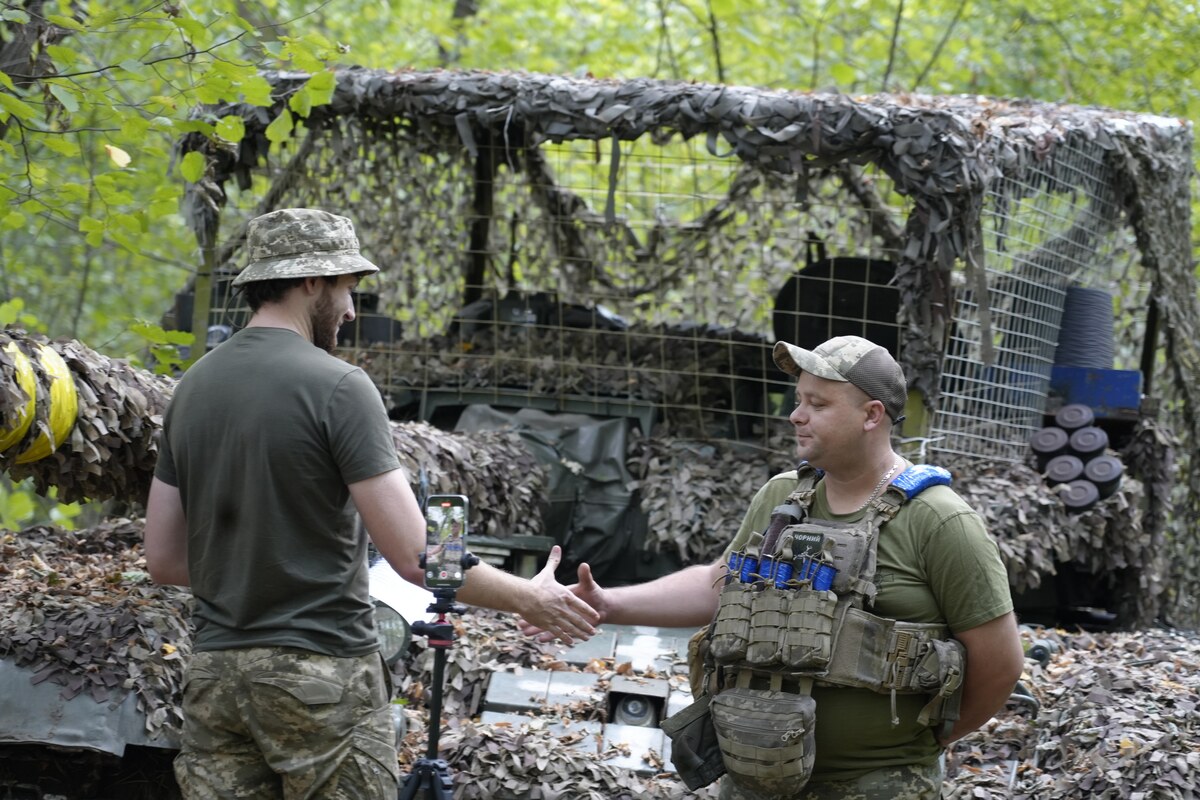
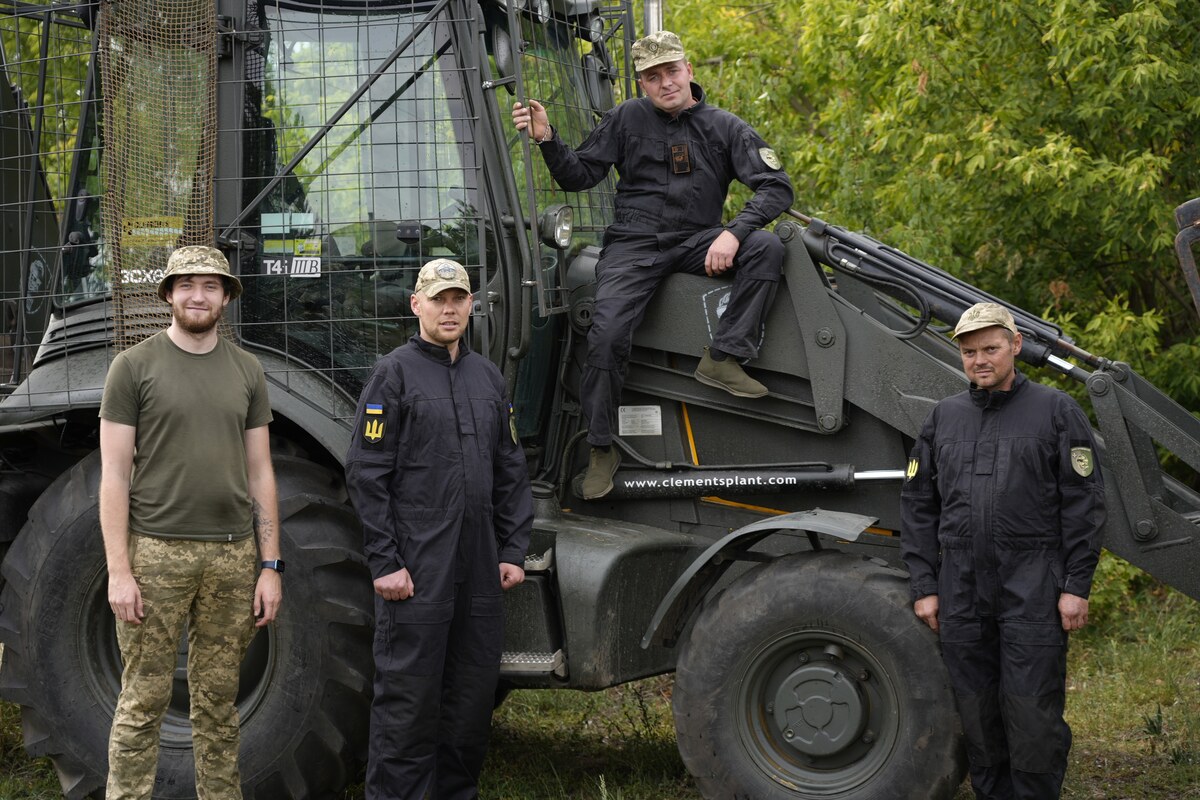
And the third is closing the meetings. We have global large brigade meetings, for example, we recently held a meeting for an excavator. Here I am already involving my audience, we are contacting everyone we can, we are contacting city councils and so on, in order to close these meetings by all possible means.
But now I have decided to move into a slightly different category of small meetings — specifically for the needs of my friends from our brigade. I ask the guys how I can help, and they tell me what needs they have for the meetings. I help them resolve these issues, and this comes from me personally, not from the brigade.
— Interesting, I’ve never heard of full-time tattoo artists in the army. I guess they were enlisted as conditional artillerymen?
— If we talk about tattoo artists, hairdressers and massage therapists, it is obvious that formally there are no such positions in the army. And it is obvious that we put these people in the vacant positions that we have in the battalions: someone as a driver, someone as a cook. But in fact, these people perform their direct work.
Why did we do this at all? It’s been two months since we opened a rehabilitation hub in the brigade, where every serviceman after completing combat missions can come and take a shower, get a massage and a haircut, and if desired, get a tattoo and talk to a psychotherapist. It’s all in one place and it’s completely free.
This is how the brigade shows care for its servicemen, because, conventionally, before, the guys traveled from Liman to Sloviansk for all this and spent a lot of money on it. Even a banal tattoo takes six hours. It is also expensive, and we take it all on ourselves, even paying for consumables.
We will finish the repairs a little more, and when it is completely ready, we will show it in the media. When we published these vacancies, and it spread across the Internet, there was a shock. «The brigade wants to worry about servicemen. How is this even possible?»
— Do you perform any assembly tasks or other audience engagement goals only through the brigade’s pages or through your own Keep Going project pages? Where do you use your own pages, and do you manage to develop them between your work in the army?
— As of now, I am completely focused on developing the brigade’s pages, and I very, very rarely find time to shoot something for myself. At least because all my mental resources and all my ideas are directed specifically at the brigade. In order to shoot something about books or self-development, there is simply not enough resources. In the evening, I just want to lie down, chat with loved ones and fall asleep. I use everything personal exclusively for closing meetings and, maybe, on Sunday, when I have a little more time, I can post some stories.
— Regarding the meetings, how do you get out of the situation when closing them has become many times more difficult compared to the first year of full-scale operation? After all, this negative trend is noted by almost everyone who deals with meetings.
— I closed my last two meetings in less than a day. To do this, I changed my strategy. It is obvious that «the war has tired everyone out» and so on, but we need to adapt to that. We need to give people those offers that they cannot refuse to accept.
First of all, now I give people offers of small collections up to UAH 100,000. When you see that this is a collection for UAH 90,000, and UAH 45,000 has already been closed, then dropping UAH 200-300 is psychologically much easier for you than when you see that this is a collection for UAH 2 million, of which only UAH 100,000 has been collected.
Purely mentally, you get a feeling of something concrete, that your contribution is really important. And when people drop 2000–5000 UAH, it gives them the feeling that they bought, conditionally, 1/10 of the thing that the military needs. In addition, I give quick reports. That is, after I have made this collection, in three or four days I give a report, where there is gratitude from the guys.
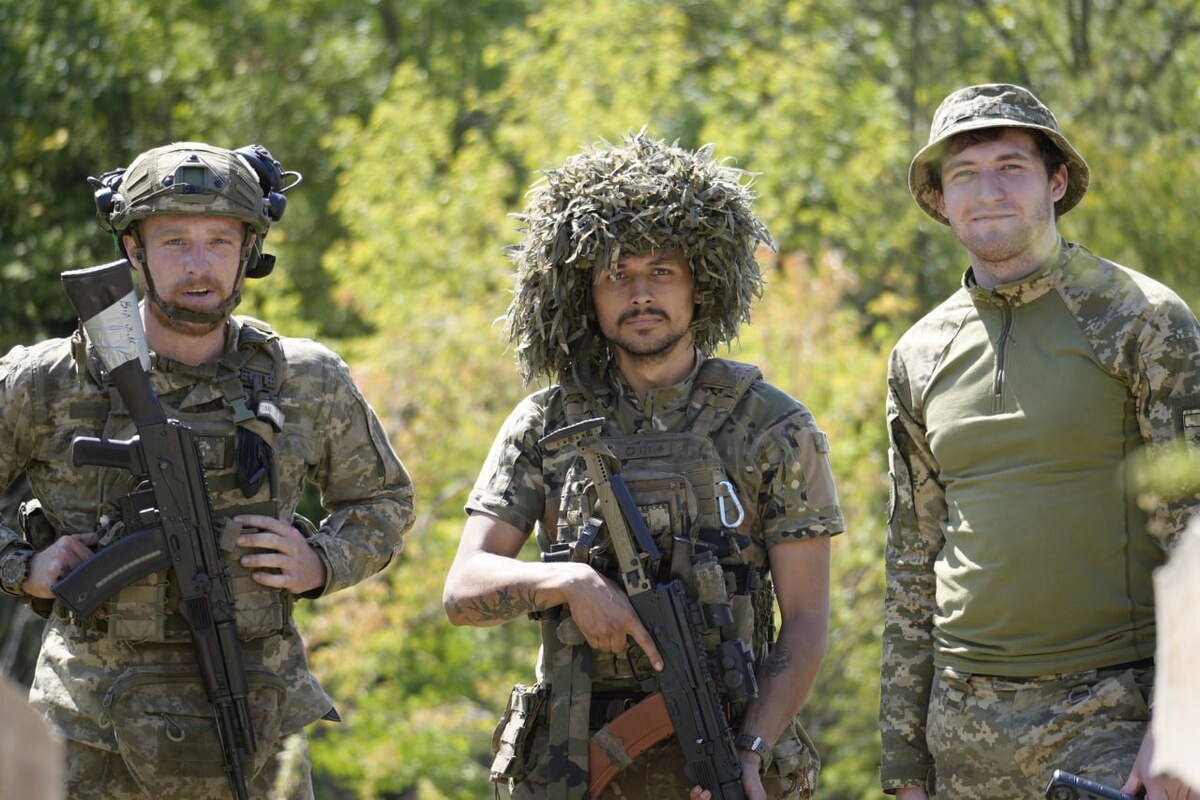
Plus, I try to wrap it up in a story. Recently, I wrapped it up in a story about the Americans who serve in our brigade. I show — look, guys, they’re here fighting for us. So let’s help them fight for us. Another gathering was at the NRK, and the NRK is a very important topic right now, because they save the lives of guys, do evacuations where people don’t need to go. I left on that one and the gathering was also closed in less than a day.
Artur Dmytryshyn with American soldiers serving in his brigade
Obviously, when there are some large-scale gatherings in our brigade, we also turn to large Telegram channels, try to somehow cooperate with them. But in general, as I said, I changed my strategy. Now I no longer hold gatherings for a million or a half, I hold small gatherings. But I do them much more often and they give quick results. And this is such a cool point-by-point reinforcement. Therefore, globally, I would not say that people have become significantly less likely to donate, because specifically in my case I do not feel it or I have adapted to it.
We can see it in the context of the Badstreet Boys, these guys with Anton Tymoshenko and Vasya Baydak, who sing songs and close the meetings. We see it with Monobank, who often does meetings with Lachen after some big shelling. They find these points. Similarly, other people have to find their niche too.
Previously, Azov brilliantly filled the market with its minibanks. They were the first to start charging fees for small banks, there were amounts of 10,000 -15,000 UAH. It’s great that people are adapting. There’s no point in complaining, you need to look for ways to do it.
— Every social network, unfortunately, has either not very fair, in our opinion, community rules, or in some cases even geopolitical influence. Many people talk about Telegram in general as a clear danger when it comes to sensitive military topics. What can you say about all these bans — real and shadow, content restrictions, warnings and shit around these topics?
— We can resist something, or we can lead it. There has already been a lot of talk about Telegram or TikTok being blocked, but this has not happened and it is not a fact that it will ever happen. So instead of giving Russian propaganda the opportunity to spread fake news, we can go onto these platforms ourselves and work with them.
Even if they do get blocked one day, we will know for ourselves that for a long time we tried to displace the huge amount of information thrown in from the outside with our own information and messages. That is why we went to TikTok, because you can stand and wait, or you can take action and do something.
In our TikTok, I aim to destroy myths and hostile narratives. I show that when you join the Armed Forces of Ukraine, you don’t necessarily become an infantryman. After all, there are more than a hundred different positions that you can hold. And very often, half of these positions can be 20-30 km from the front. I show in simple words — not only by my example, but also by the example of other people — that in fact the Armed Forces need people of all professions, and if you join the Armed Forces, you don’t automatically become a «zero» the next day.
You won’t come here naked and barefoot, because you’ll be given a bunch of things. Most of them will be of normal or even good quality. If you want something better, you can buy it, but you can also fight with what you’ve been given. That is, we fill the infospace with ourselves.
The same with Telegram. Our brigade actively works with Telegram, because it is completely different content than what we can afford on Facebook and Instagram. We can post enemy corpses there and various cruel stories about Russians. Conditionally — how as a result of the work of our brothers, one of the occupiers is blown to pieces. And this is great, because it gives people what they want. This helps develop the brand of our brigade, and at the expense of this, we can close various gatherings.
That is, we don’t choose what is good or bad, but we work with everything at the moment, while it is available. If it is banned, then okay, great. Obviously, Facebook blocks some of our posts. And TikTok does it too. But you need to understand what each social network is. Each of them has its own policies and community rules, so whether you like it or not, you need to adapt to these rules. Don’t mention the word «war», don’t show weapons, and so on.
Now our TikTok, according to monthly viewing statistics, is one of the best among all brigades in the Armed Forces of Ukraine.
And this happened because I found this key, how to create content without it being blocked and how to make it popular.
— Can you reflect on the permission for young people to travel abroad? In fact, this is almost your age category, and if this had happened 2 years ago, you would also have had the right to travel abroad.
— I don’t think this decision is logical. Because first you give young people the opportunity to sign a contract on improved terms at the age of 18-24, and then you send young people 18-22 abroad. It’s like the classic «either put on your underpants or take off your cross.»
We are losing young people to an army that still has strength and can contribute to this fight. Because in most cases I see people who have been fighting for three years, and these are mostly older guys. They are tired, and their strength is simply running out. They have a lot of health problems, and someone has to replace them.
It is obvious that those who wanted to leave, they left anyway. We all know this. But instead of working with motivation, instead of conducting cool communication campaigns, and instead of improving the Armed Forces as a structure — giving normal salaries and terms of service — they simply release young people who can be worked with. And the worst thing is communication, because I have never heard an adequate explanation for this decision.
— But, actually, regarding the potential emigration not only of young people, but of representatives of the IT sector in general. What do you think, will this mass emigration of IT specialists occur after the borders are finally opened?
— I believe that this will happen. But I also believe that some IT specialists will return home. I have never in my life thought about moving somewhere abroad permanently. Having been in the Armed Forces for almost a year, I understand that when the war ends, I would like to live somewhere abroad for six months. Just to travel, to relax.
But if you sit down and do the math constructively, my job in IT here in Ukraine provides me with a much higher quality of life than I could afford for this money in Europe. Here, with a salary in IT, I feel great. I am, conditionally, middle class. Abroad, this money is not worth the same as in Ukraine.
Therefore, specifically for myself, I choose to stay here and enjoy the life that is, but regularly go somewhere on trips abroad. At the same time, I am sure that many people, due to the fear of war, due to the fear of a future invasion that may occur, will choose safety. And this is also normal. This is a completely logical decision of people who are worried about their safety and the safety of their children.
— What advice would you give to colleagues from the IT sector who still intend to mobilize, even if it will be a belated decision for some?
— I don’t consider this a belated decision. Everyone needs their own time to get to this point. Specifically, in my brigade, I have never encountered any prejudices regarding who came here and when. It’s normal that people are now maturing, seeing the situation and understanding that, probably, the best decision would be to do it voluntarily. Therefore, my first advice is not to wait and not sit around.
The situation is being actively promoted on the Internet, where people who were waiting and sitting ended up in a bus. And their fate can be difficult from now on.
From a bus, you will have a very low probability of getting into non-combat positions, I know of literally two such cases: one guy is now an office manager, and the other is also involved in organizing meetings.
Now a lot of cool regiments are turning into brigades, and brigades into corps. And everywhere there is a great need for cool specialists. The more adequate, developed, conscious people work here, the sooner this will all end. Because we will offer better technological solutions, we will work better on the battlefield, as a result — we will simply have better results.
The second thing I would advise is to choose a position where you already have some acquaintances, or your acquaintances say that it is good there. And the third is to be mentally prepared, that the army is a large structure, and there can often be changes that you will not like. You need to prepare for everything. When you mentally prepare yourself for the worst, you will be very comforted if everything turns out not so bad. That was exactly what happened to me.
«For someone with a relatively delicate mental organization, this is a very bright and positive experience.» Mobilized developer of the game Tailgate spoke about his impressions of his first month in the Armed Forces of Ukraine
«The army is a discipline and a system of „shelving“. As in IT, in the army you are surrounded by constant changes, so there must be an alternative plan.» The story of a veteran who decided to radically change his life and became an IT worker
«Пастка початківця». 5 найпоширеніших помилок джунів на співбесідах та як їх уникнути
Напевно, кожен хоч раз у своєму житті переживав ситуацію, коли після співбесіди замість запрошення на роботу приходила відмова. «Як же так? Це несправедливо!», — чимало з нас корили долю і не розуміли, що пішло не так. Катерина Нікітіна, SoftServe IT Academy Recruiter, розповіла про п’ять найпопулярніших помилок кандидатів-початківців на співбесідах.
У 18 років «захантив» SoftServe, у 21 — відкрив власну компанію. Історія львівського IT-вундеркінда
Гліб Щур — випускник кафедри систем штучного інтелекту НУ «Львівська політехніка». На молодших курсах його запросила на роботу IT-компанія SoftServe, де він працював майже 3 роки розробником у R&D-відділі. А вже у 2021 році Гліб заснував власну компанію та став CSO у 21 рік. Розповідаємо історію львівського «самородка».